
The Subterranean Question
In our time there is a subterranean question we struggle to ask openly, one we tend to defer: what do we do with our culture? With this entire historical, philosophical, artistic inheritance, so dense as to appear, at times, almost unbearable?
Alongside the more manageable question of how to preserve, fund and transmit culture through institutional channels, a more radical one persists: is the whole patrimony of thought, images, forms and knowledge elaborated over centuries of history still alive? Can it still help us orient our future, or has it itself become a burden, monumental, noble, and in certain respects unworkable?
According to the logic that governs our relationship with the past, the obvious answer is that tradition still serves a function. The honest answer is that we no longer know this with any certainty.
Something, from the second half of the twentieth century onward, has broken. And to go on handling this inheritance as though nothing had happened requires a form of blindness we can no longer afford.
Form Without Function
It is in this space, in this fracture between the weight of tradition and the difficulty of giving it meaning, that the work of Anselm Kiefer wedges itself: not because it offers answers, but because it renders that fracture visible, physical, impossible to ignore.
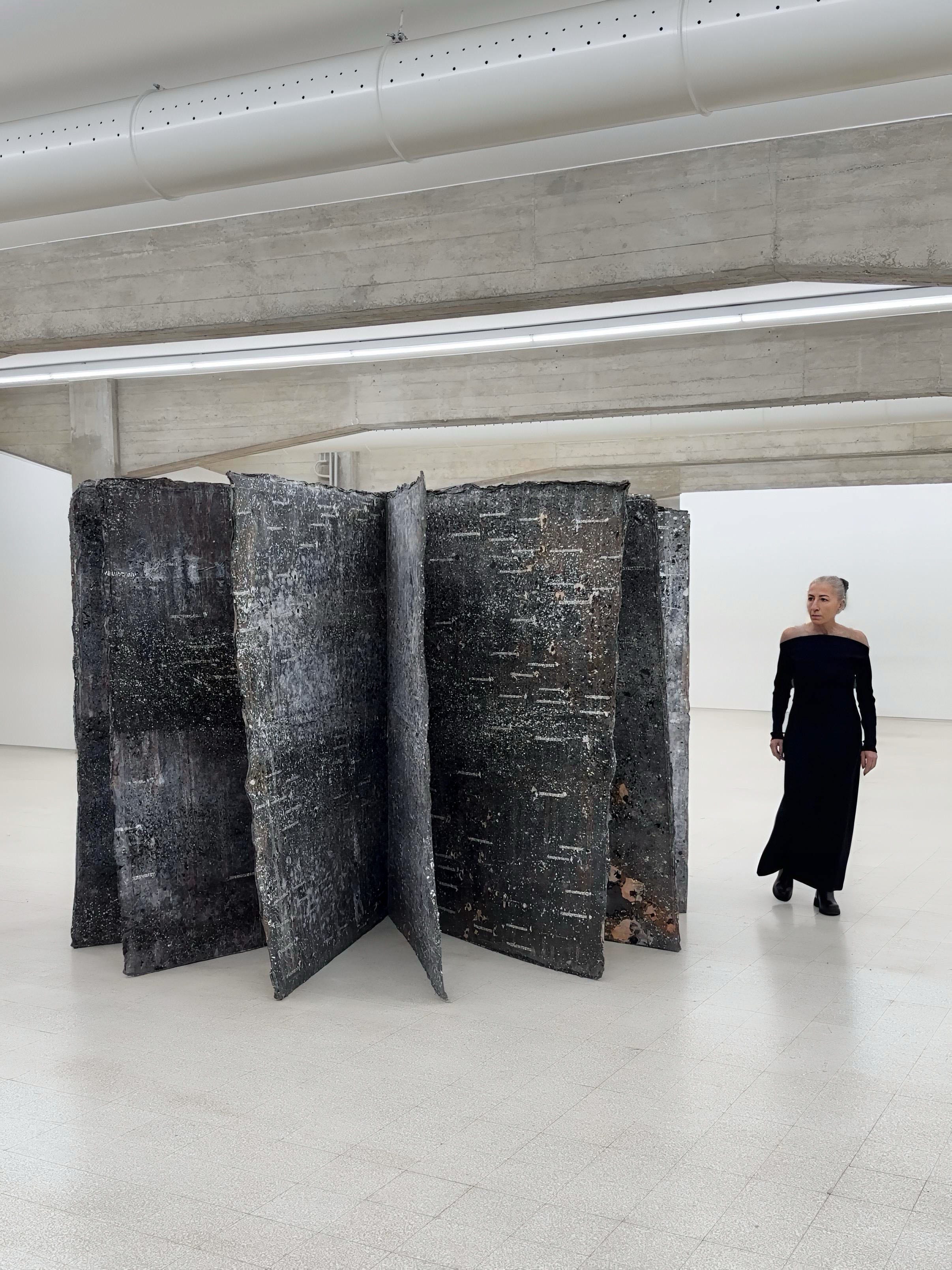
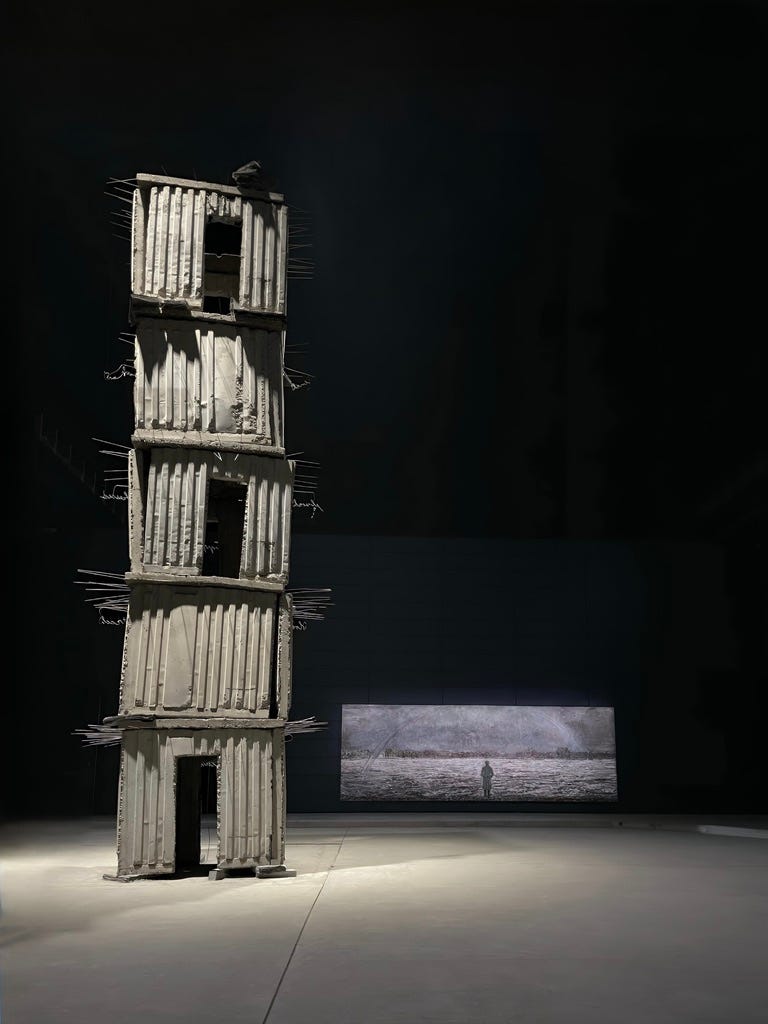
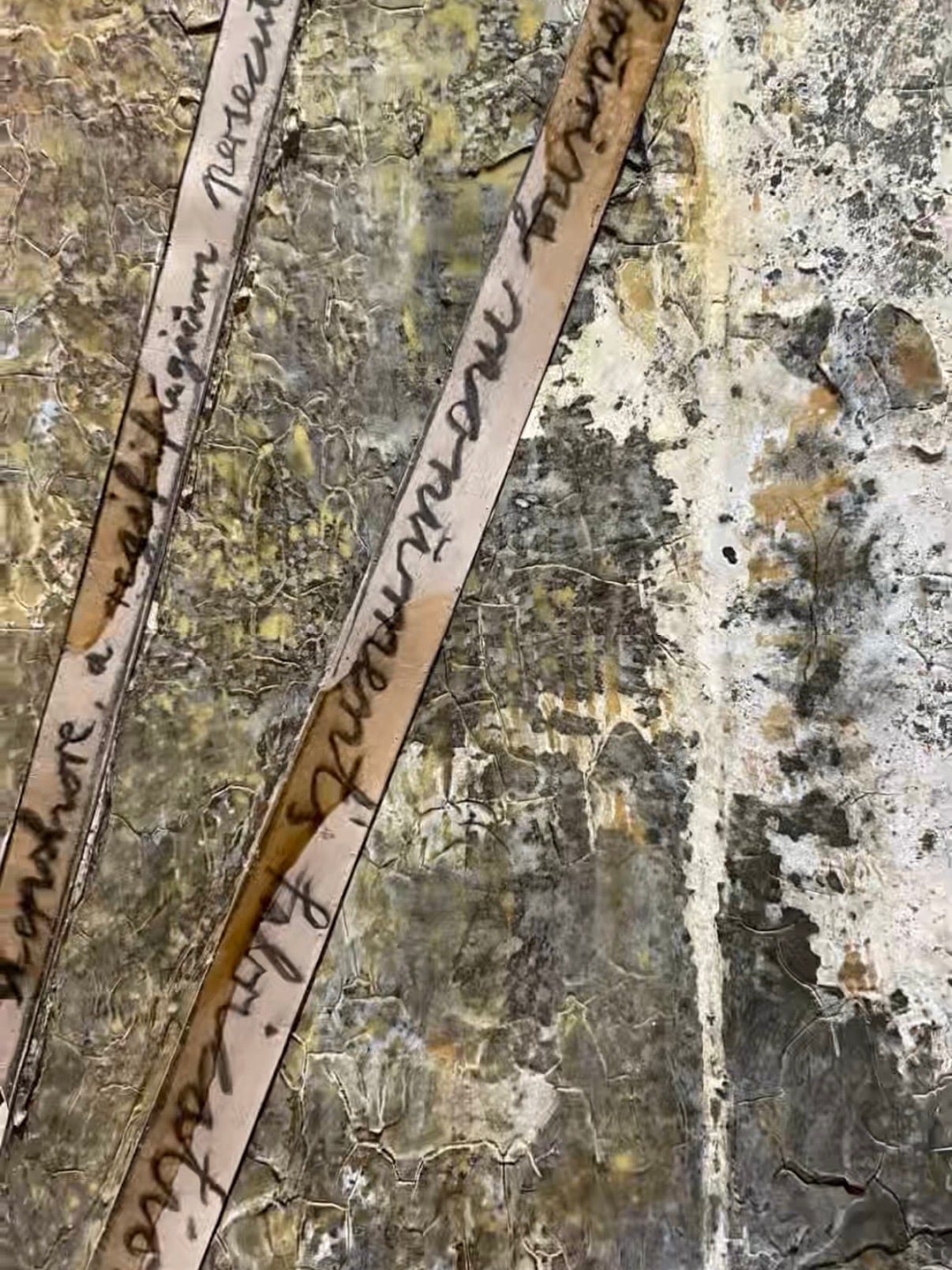
Monolithic and cryptic books, impossible to read or leaf through: the Bleibücher. The Seven Heavenly Palaces, a constellation of precarious, disconnected towers that offer no shelter whatsoever. Burned and incised surfaces, worked with ash and earth, become repellent, post-war landscapes. Kiefer constructs objects that take up the cardinal forms of Western culture (the book, the palace, writing, myth) and bars them shut. He does not subvert them: he seals them. They still exist, but take on the same enigmatic quality as the sphinx: looming, dense, inaccessible.
An open book can also be a radical form of interdiction.
The lead pages do not ask to be deciphered. They ask to be felt. In their weight, their grain, their tactile resistance. They record, line after line, but restore no meaning. Everything has the exact form of a codex, but of a codex become body, matter closed upon itself.
Here the central paradox emerges: these are objects that preserve the structure of transmission while negating its very possibility. In the towers, the same logic expands through space.
Raw concrete. Cells stacked one upon another. Structures that do not rise but accumulate load, that do not ascend despite their imposing verticality. Each level presses upon the one below, as if resisting collapse through sheer inertia.
And then the scale. Kiefer always works large, and the question of gigantism is often cited by critics as his principal venial sin. His works are not made to be contemplated from a distance. One enters them.
The visitor is drawn into a proportion that is not human but geological. The time these works seem to contain is not the time of a life or a generation. It is the time of a sedimentary stratum. Inert, but ready to be unleashed at the first tremor.
Fossil Archive
Kiefer treats the Western cultural tradition as a fossil, not as a ruin. The ruin is narrative: it presupposes a before and an after, a sequence of cause and effect, a fractured discourse, yes, but one that can still be recomposed. The fossil, by contrast, acts as a verdict. It surfaces on the face of time as a foreign element, one that cannot be absorbed into pure chronology: it yields no information and produces no echo. The vital principle has withdrawn into stone. We can only recognise that something was there, and that it is no longer available.
In its case, Benjamin’s dictum might apply: “I have nothing to say. Only to show.” It contains an origin no longer accessible, a fixity and a silence that border on the supernatural.
The fossil has nothing to say: it remains. And in remaining it holds its content in potentia. In this image lies the peculiarity of Kiefer’s nihilism. Not the nihilism that negates, destroys, cancels. But the nihilism that preserves without transmitting. That carries the weight of the inheritance, and its tragic splendour, without yielding to the illusion that this inheritance can still function as an instrument of orientation, a moral compass, a promise of meaning.
And yet something in those towers, in those books, in those burned surfaces is still vibrant. The Kabbalah is there. Celan is there. Mythology, alchemy, Gnostic thought: all of this enters through the titles, the inscriptions, the symbolic apparatus. It is present and locked in lead at the same time. As if Kiefer were saying: I recognise it is there. But I no longer know how to open it.
Paul Celan — whom Kiefer has read, cited, assimilated — wrote in a language that had participated in the extermination of his mother. He continued to write in German because that idiom was the only place in which he could reckon with what had happened. Language as fractured, compromised material to be carried forward, into the dark core of the age.
Kiefer does the same with culture. He does not relegate it to a corner. He does not use it as innocent matter. He carries it with him in lead, in cement, in ash. He inhabits every image of catastrophe, making it unusable as a mere image.
What Cannot Be Opened
Western cultural inheritance is not a reserve of forms and symbols to draw upon freely. It is not material ready for use, available for quotation, deployment, reactivation. It is historically charged matter that has survived what it was supposed to prevent. And that, precisely by virtue of its irreducibility, continues to interrogate us.
Kiefer does not answer the question. He constructs the place where the question becomes impossible to avoid. Somewhere, beneath the lead, in the folds of the surfaces, everything is still there: the writing, the thought, the tradition. But that whole has imploded into a hermetic condition.
It is not obscurity, not reticence, not a refusal of meaning. It is pressure. Knowledge is incorporated into matter, and this closure is not a loss: it is the condition of its endurance. What does not circulate is not consumed. What is not opened is not depleted.
The question is not whether culture still serves a purpose. It is whether we are still capable of carrying it, of sustaining its trauma, its grandeur, its contradiction. The point is whether we are willing to reckon with the fact that we no longer know how to open it, or rather, with the fact that opening it, now, would require something different from what we have always called interpretation.
What remains when matter refuses to forget.
If this resonates, subscribe. New posts arrive occasionally, and always with intention.
No posts
Comments
Nothing yet. Say the first thing.
Sign in to join the conversation.