
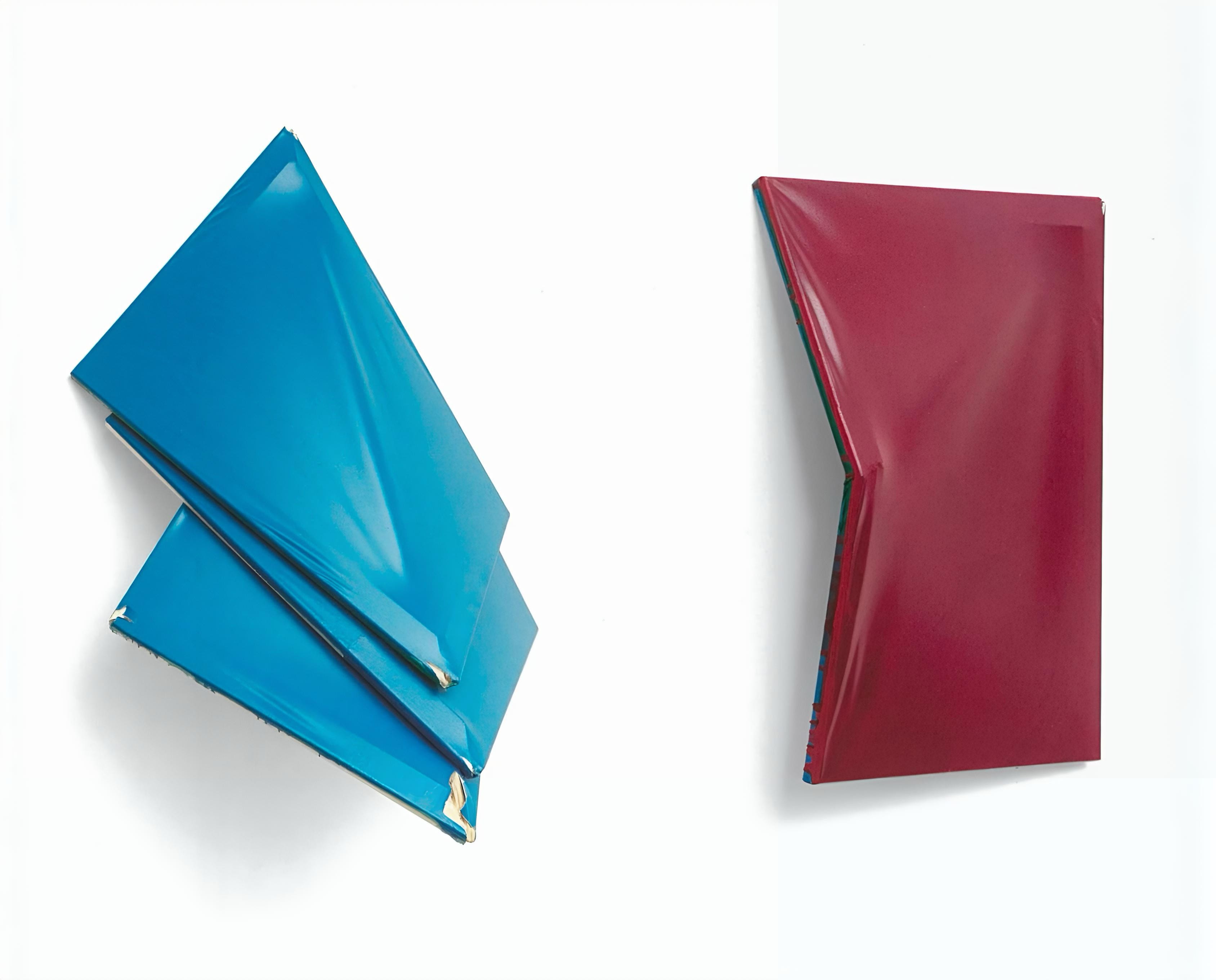
What happens when a painting stops being merely a surface? When it begins to expand, contract, fracture? To stubbornly renounce its own structure?
The origin of this questioning of the pictorial form—and of the destabilization of its very premises—can be traced back to Lucio Fontana. Those cuts across the body of the canvas, those slashes that seemed to anticipate a passage forward, a fundamental inadequacy of the surface of representation, pointed to an opening toward an “elsewhere,” generated by a direct confrontation between the act of painting (or even simply approaching the canvas) and the limit of the still untouched white space.
Fontana’s cut is not an image—it is the visible outcome of an action, the trace of a contact, the residue of a collision.
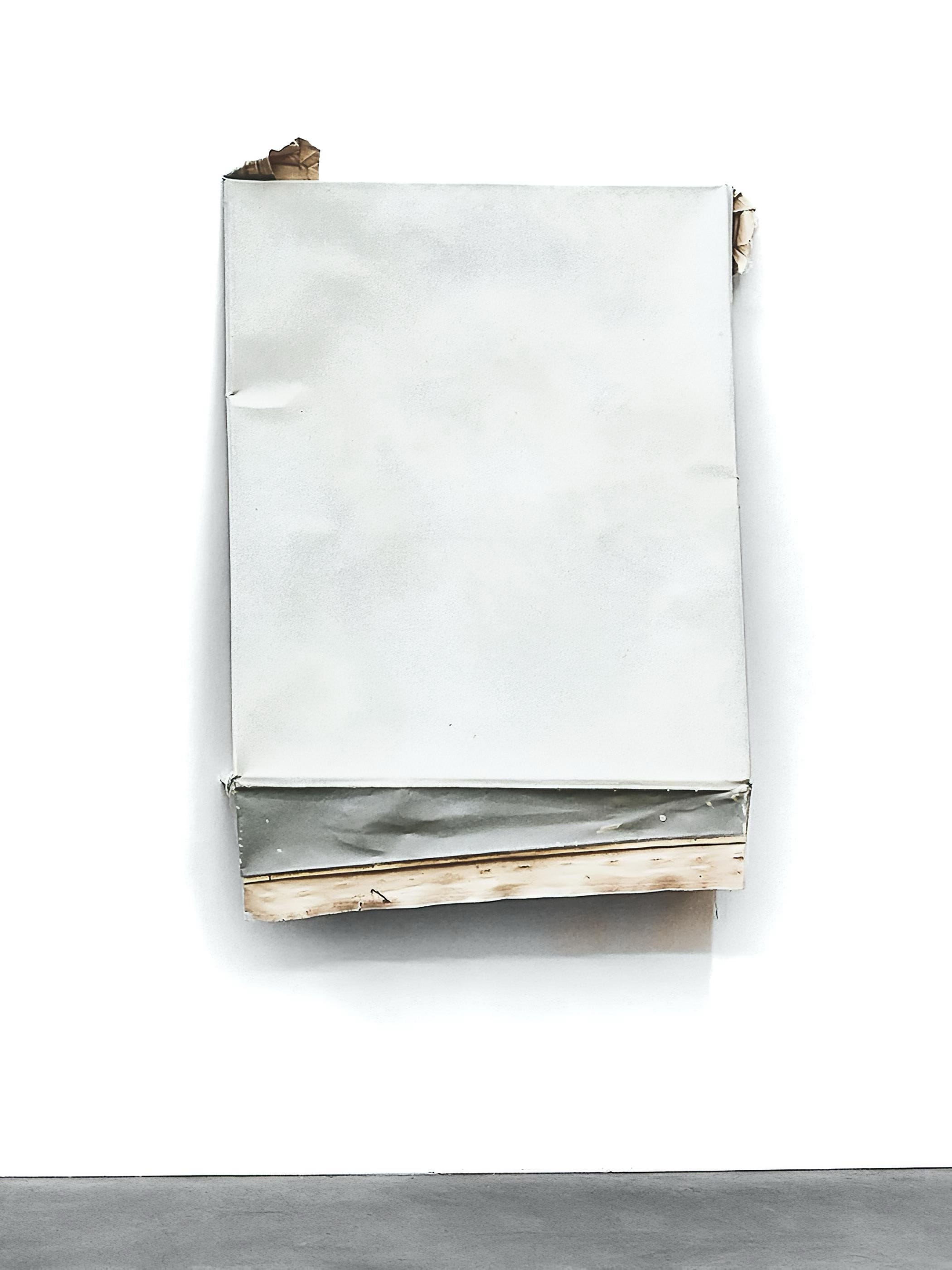
In some of the more recent artistic practices, this trajectory appears to evolve further. This is the case with Franziska Reinbothe, who in her works stages a true deflagration of the pictorial object.
In her works, the support becomes a protagonist, coming to the foreground and almost claiming its own physical expressivity. Even the pictorial application takes on a volumetric character: it thickens, arches, and strives toward a three-dimensional presence.
It is not simply a matter of form exceeding itself—the entire structure enters into an active dynamic. The perimeter of the canvas dissolves as a system, not merely as a physical boundary.
What I find most compelling is not the gesture of rupture, but the threshold it opens: an unstable space in which painting can finally negotiate with its support, with its edge, with the conditions that hold it together. To the point of reorganizing the very possibilities of representation—becoming itself the object of representation.
The painting changes state. It is, and at the same time not yet. It is happening.
No posts
Comments
Nothing yet. Say the first thing.
Sign in to join the conversation.