
Tech has a usefulness problem. We’re surrounded by things that are “impressive” and “AI-powered,” yet nothing important changes. Nobody’s day gets meaningfully easier. The KPI doesn’t move. The system absorbs the new thing and keeps doing what it was already doing.
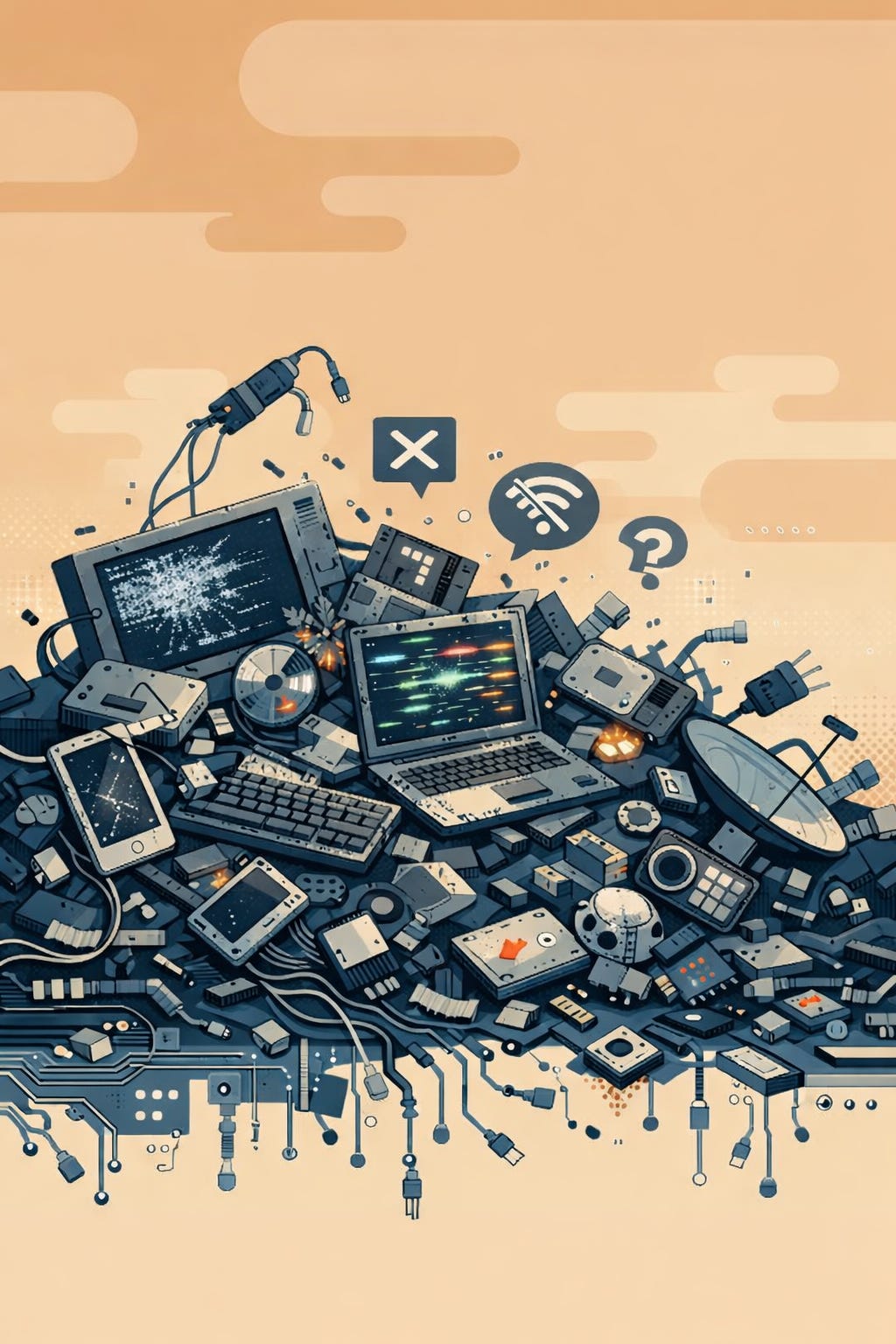
Modern tech feels like mist: dense from a distance, gone when you walk into it.
Usefulness isn’t a vibe. It’s a force. Category-defining companies compress messy, expensive, high-friction reality into something that feels like a cheat code. That compression creates new behaviour, new budgets, new expectations—a new “obvious” way to operate.
To spot real hidden problems, you need to learn where usefulness is being rationed.
A hidden problem is rarely hidden because it’s small. It’s hidden because it’s normal.
The reconciliation takes three days every month. The inspection cycle was done “because that’s how it’s done.” The compliance process has grown like coral reef over ten years. The maintenance schedule that’s half science, half superstition. The inbox that acts as the company’s API.
These are boring on purpose. Boring is how systems protect themselves.
People don’t describe them as “pain.” They describe them as “operations.” If you’re listening for complaints, you miss them. If you’re listening for resignation, you find them everywhere.
The usefulness lens flips the question: not “what could we build?” but “what do people do every week that they would delete from reality if they could?”
Smart people copying and pasting between tools, reformatting spreadsheets, translating emails into tickets, chasing approvals across chat threads. This is usefulness leakage. Software failed to cross the last mile: where information becomes a decision.
Most AI products generate text but don’t close loops. They don’t change what gets approved, scheduled, dispatched, paid, logged, or audited. They create output, not outcomes.
Category products close loops. They turn glue work into a system.
“Everyone can see the downtime, but nobody can agree on why.” “Everyone wants fewer incidents, but incentives punish anyone who slows down production.” “Everyone wants faster onboarding, but legal and security are set up to say no.”
Usefulness isn’t limited by knowledge. It’s limited by coordination.
The opportunity is a new operating layer that makes the right action safe, legible, and easy to adopt. Category companies change behavior, not just sell software.
Maintenance done too early “just in case” and too late “because we didn’t know.” Errors that don’t kill you, just tax you daily. Revenue leakage split across teams. Compliance effort invisible until you fail an audit.
Hidden problems love diffusion. Diffused pain is how organizations stay stable.
The category move: concentrate it, name it, measure it, make a single owner possible.
Entire parallel universes of spreadsheets, Slack rituals, and recurring meetings to compensate for something. Excel sheets treated like sacred objects. The one operator who “just knows” how it works.
Shadow systems are expensive. They only persist when the alternative is worse.
That’s not chaos. That’s product-market fit for the wrong solution.
The best opportunities are inaccessible to outsiders—not because they’re secret, but because you can’t see real data and workflows from the internet. You need tacit context: what counts as a good decision, what gets someone blamed, what the real bottleneck is, what data is trusted versus performative.
Outsiders build for the story. Insiders build for the scar tissue.
Does the problem have scar tissue? If yes, there are usually workarounds, budgets, and willingness to try something credibly safer and measurably better.
Category creation is not primarily invention. It’s recognition.
A category emerges when you take a recurring, expensive, accepted reality and make it feel optional. When people suddenly realize: we don’t have to live like this.
Stop asking “is this a big market?” Start asking:
What recurring decision does this make easier or faster?
Who gets blamed today when this goes wrong?
What’s the minimum measurable improvement that would make someone look good?
What’s the “before” workflow, including all handoffs and exceptions?
When the system fails, who do they call? What spreadsheet do they open?
If this disappeared tomorrow, what breaks first?
If this worked perfectly, what new behavior becomes possible?
Category companies answer these cleanly. They speak in verbs: schedule, approve, reconcile, dispatch, underwrite, inspect, validate, remediate.
A useful product is a verb with a measurable result.
Usefulness is often upstream of the “sexy” thing. Everyone wants the interface. Nobody wants the plumbing. But categories are built by people willing to touch: data rights, workflow integration, security, edge cases, audit trails, human override, procurement, change management, incentives.
The real game isn’t “build a demo.” It’s “make it safe for an enterprise to let this run.”
Sell before you build. Not as hustle—as a truth machine. If you can’t get a serious operator to commit to an LOI, a pilot, a paid experiment, or recurring working sessions with real workflow detail, you probably don’t have a hidden problem. You have an interesting idea.
AI makes novelty abundant, which means novelty stops being valuable. Usefulness becomes the only defensible currency.
If a model can generate an answer, the product isn’t the answer. The product is the system that turns the answer into an action the organization will actually take.
That’s where categories will form in the next decade, especially in high-barrier verticals where the cost of being wrong is high, workflows are complex, and data is messy.
Does the problem create a permanent appetite for improvement?
Some pains vanish when patched. Others are structural—they regenerate. Maintenance, compliance, energy optimisation, asset integrity, claims, fraud, security, procurement, quality, workforce scheduling. Anything where the world changes faster than the organisation can update its rules.
Those are usefulness wells. Reality keeps producing new edge cases.
Pair this with insider access to workflows and data that actually matter, and you’re not just building a product. You’re laying tracks. Once tracks exist, a category has somewhere to run.
The usefulness problem in tech isn’t that people don’t want to be useful. It’s that usefulness is hard to see from outside, hard to prove early, and hard to ship because it forces you into real constraints: politics, legacy systems, procurement, liability, trust.
But if you can get comfortable there—if you can learn to love the ugly middle—you start to notice something.
The biggest opportunities don’t announce themselves.
They’re quietly draining time, money, and attention from the most important systems in the world.
They’re waiting for someone to make them optional…
No posts
Comments
Nothing yet. Say the first thing.
Sign in to join the conversation.