

A doublet earthquake struck north-central Venezuela on 24 June, leaving at least 1,943 people dead, according to the president of the National Assembly, Jorge Rodríguez.
The country’s most powerful seismic event in over 125 years began with a magnitude 7.2 foreshock, which was followed 39 seconds later by a violent 7.5-magnitude mainshock centred in the state of Yaracuy.
Damage to buildings is severe, particularly in Caracas and the coastal state of La Guaira, which remains under strict military control to keep roads clear for first responders.
According to Desaparecidos Terremoto Venezuela (translated by Missing Persons Venezuela Earthquake), a website where Venezuelans can report missing relatives, more than 50,000 people remain unaccounted for.
“My entire life is gone: everything, my grandmother and my pets; all of them are my family,” said Daniela Mangiafico, who lives in La Guaira, in an interview with The Guardian on Sunday.
“What happened is that help arrived late. It’s taking too long and, obviously, how can you ask people who are trapped there to wait?”
Discontent and criticism are growing among the population towards the Venezuelan army for its negligible role in the rescue efforts for the tens of thousands of people missing under the rubble.
“While thousands of people are voluntarily organizing to try to find survivors, it is striking to see armed soldiers guarding the roads instead of playing a central role in responding to this humanitarian crisis”, explains Venezuelan newspaper La Izquierda Diario.
More than 2,000 rescuers from 27 countries are working alongside local teams in challenging conditions, which were exacerbated by a magnitude 4.6 aftershock on 29 June that caused widespread panic.
With an estimated 50,000 damaged buildings, the United Nations has calculated that the earthquakes caused approximately €5.87 billion ($6.7 billion) of direct physical damage, equivalent to around 6% of Venezuela’s gross domestic product.

Chinese dissident reunites with wife in Canada after fleeing to South Korea by dinghy: Dong Guangping, a Chinese political dissident, landed in Toronto on 26 June, reuniting with his wife and daughter after a decade-long quest for asylum and three failed attempts to flee China. “He previously escaped to Thailand and Vietnam, but authorities there deported him back to China,” explains the Associated Press. “Dong also tried unsuccessfully to swim to a Taiwanese island.” This time, Dong endured a 40-hour journey across the ocean on a motorised rubber dinghy from the Shandong Province, bordering the Yellow Sea. After his phone navigation system failed, he ended up in South Korea, where swift diplomatic intervention by the UN and Canada secured his resettlement. The 68-year old former police officer “has been a thorn in Beijing’s side for advocating political reform and human rights”, explains Hong Kong Free Press, “and served multiple prison stints over the years,” such as for commemorating the 1989 Tiananmen Square crackdown.
Serbian president announces his intention to finally resign: “These are my last days and weeks as the republic’s president. After that, I will resign,” Serbian President Aleksandar Vučić declared in front of his supporters in Belgrade on 27 June, without specifying the date of his resignation or when the new elections will be held. “Serbia has been witnessing anti-government protests, sparked by the deadly collapse of a railway station roof in Novi Sad, for more than a year and a half”, notes RFE/RL. The tragedy in Novi Sad on 1 November 2024 killed 16 people and triggered massive protests against corruption, leading to the resignation of the prime minister and other ministers. Vučić is expected to run for the position of Prime Minister in the next election and maintain his grip on the country.
State of emergency in occupied Crimea amid Ukrainian airstrikes: Russian-installed authorities in occupied Crimea declared a state of emergency on 26 June “following days of intense Ukrainian attacks that have knocked out power in parts of the peninsula”, reports the Moscow TImes. The Russian-appointed governor, Sergey Aksyonov, said that the measure was primarily aimed at “restoring order in economic affairs — specifically financial, monetary, credit, and contractual relations, as well as damage recovery” (via Meduza). Ukrainian airstrikes have hit energy infrastructure and supply lines, leaving half of Crimea without power and triggering rolling blackouts while critical fuel shortages forced authorities to suspend all civilian gasoline sales. On 25 June, Ukrainian President Volodymyr Zelensky announced a 40-day operation aimed at pressuring Russia to end the war.
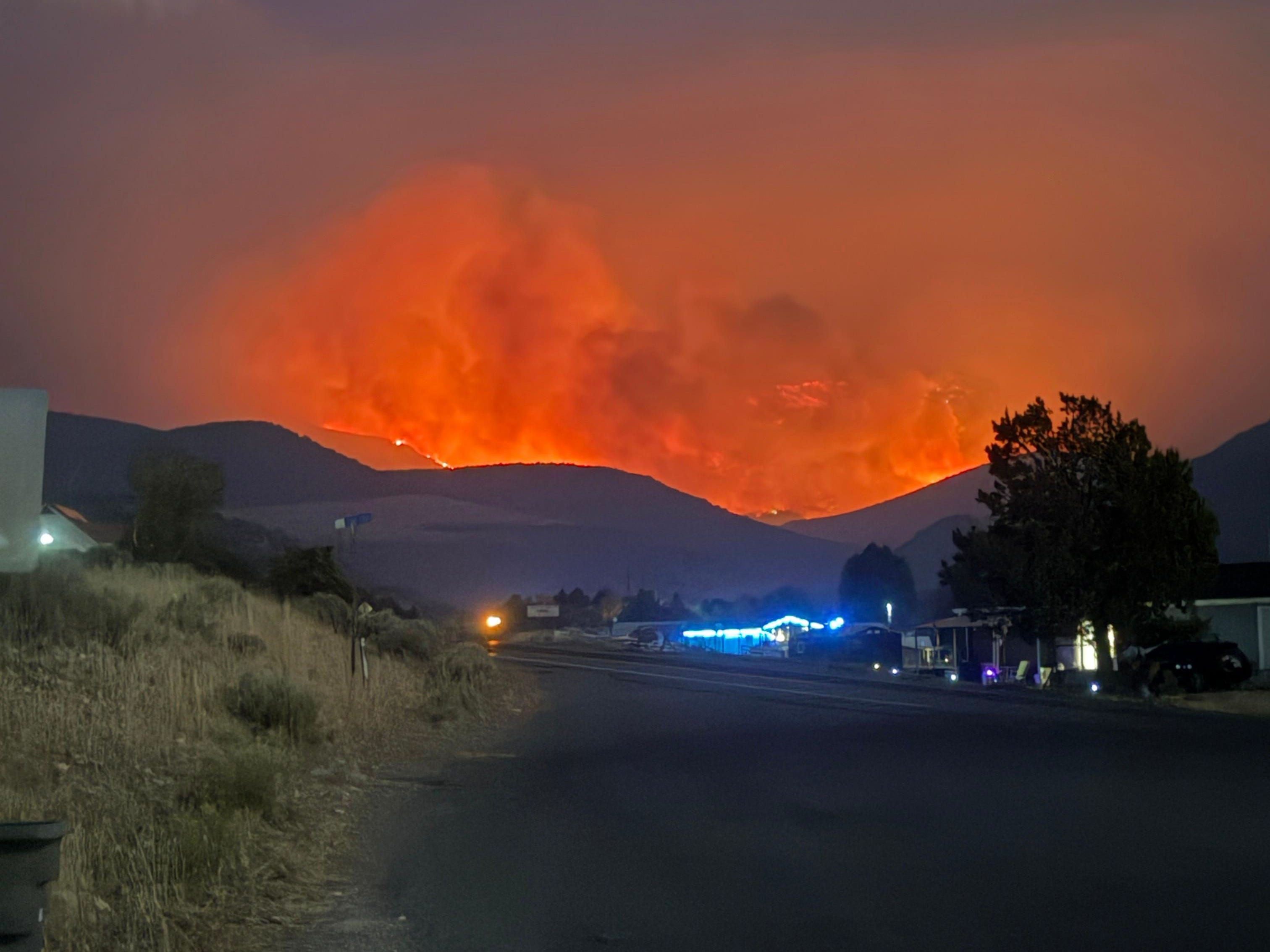
Utah’s Cottonwood Fire turns into US’s largest active blaze: The relentless blaze has rapidly expanded to become the largest active wildfire in the United States, having scorched 92,000 acres (37,231 hectares) across Utah’s mountains. Fuelled by extreme, wind-driven conditions and single-digit humidity, the human-caused Cottonwood Fire tore directly through Eagle Point Resort on Elk Mountain, completely destroying over 100 condominiums, luxury cabins and private summer residences. As of 30 June, the wildfire was still 0% contained, forcing mandatory Level 3 evacuations for over 1,000 residents and tourists. “We’re seeing fires spread farther and faster under conditions that defy historical expectations”, said Jamie Barnes, director of the Utah division of forestry, fire and state lands. “Some of the fires we’ve responded to this year are behaving in ways veteran firefighters simply haven’t seen before.” Governor Spencer Cox declared it the “most destructive fire in the state’s history” in terms of property loss.
Unprecedented heatwave shatters historical temperature records across Europe: The extraordinary “Omega Block” heat dome, originating from subtropical air masses that engulfed France and Spain, drifted eastward in late June 2026, forcing 191 million people to endure temperatures above 35°C (95°F). Meteorological agencies confirmed that historic thresholds were broken consecutively: the Czech Republic hit an absolute high of 41.9°C (107.5°F), while Germany reached 41.7°C (107°F). Poland broke a 100-year-old record with 40.5°C (105°F), while the United Kingdom broke its June maximum for three consecutive days, reaching 37.3°C (99°F). Denmark recorded 37.0°C (98.6°F), its warmest temperature since records began in 1874. World Weather Attribution scientists noted that such extremes would be “virtually impossible” without the current climate crisis.
The same heatwave triggers 1,000 excess deaths across France: As the exceptionally intense heatwave comes to an end in France, preliminary data shows 1,000 excess deaths, the national public health agency announced on 28 June, warning that the toll is bound to rise. Between 24 and 26 June, daily fatalities spiked sharply above the historical baseline as three-quarters of the country sweltered under top-level red warnings. The increase in deaths affects “all age groups, reminding us that the effects of the heatwave can affect the entire population,” notes the agency. “Nevertheless, 85% of the deaths observed concern people aged 65 and over.” A stark 40% increase in deaths occurred inside private homes, predominantly across the urban Paris region.
Last in: Around 1,000 people in Spain may have died from the high temperatures in June as well.
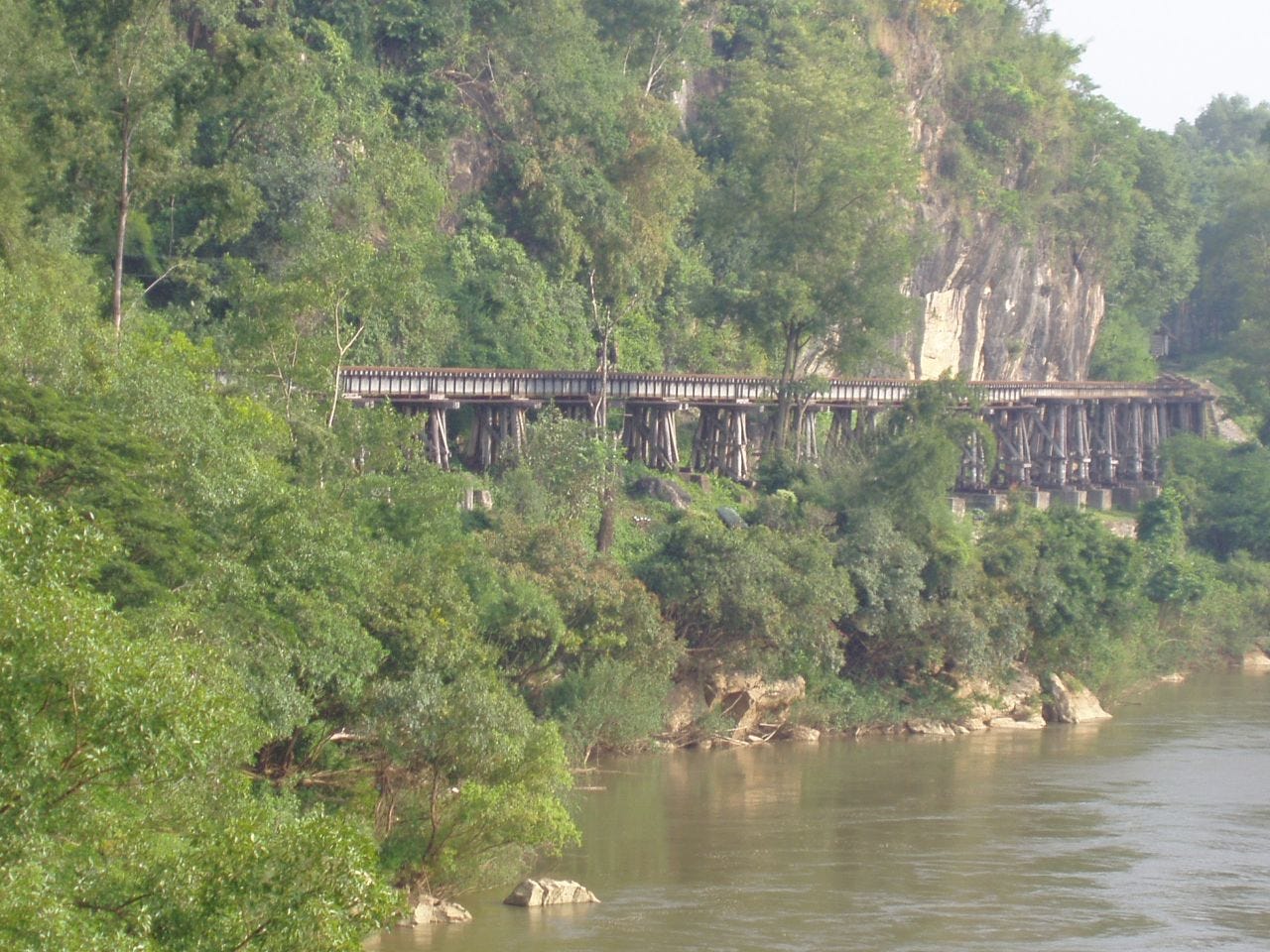
Part of World War II’s infamous “Death Railway” has resurfaced in western Thailand after more than 40 years underwater.
Nithe Station, located in Kanchanaburi province, was exposed when the Electricity Generating Authority of Thailand drained the Vajiralongkorn Dam reservoir for dam maintenance, giving an extraordinary chance to historians to explore the site.
The 415-kilometer railway was built by 60,000 Allied prisonners of war (POWs) and hundreds of thousands of Asian laborers forced into service by Imperial Japan; more than 90,000 Asian civilians died on the railway, as well as 16,000 POWs.
Thank you for reading,
Take care.
No posts
Comments
Nothing yet. Say the first thing.
Sign in to join the conversation.