
Interest of Justice — legal analysis
Today a federal judge has completely and irrevocably denied Jeffrey Epstien accomplice Ghislaine Maxwell's bid to overturn her conviction, called the claims frivolous, and certified that any appeal "would not be taken in good faith."
Judge Engelmayer’s 67-page ruling on Ghislaine Maxwell teaches how a ruling is FINAL. Here’s the ruling, and the two rules that decided it are discussed below.
The judge just told Ghislaine Maxwell that the Epstein files convict her & she can’t even appeal pro se for free.
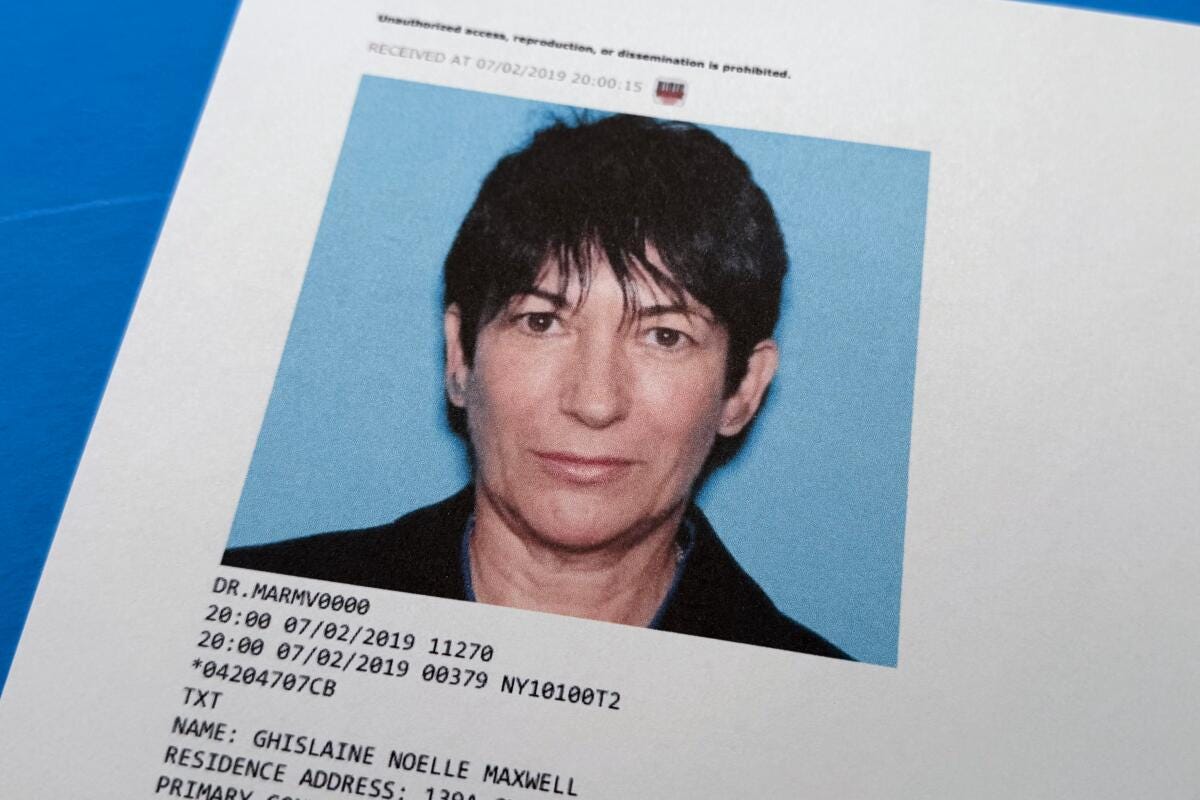
NEW YORK — A federal judge denied Ghislaine Maxwell’s attempt to undo her conviction this week in a 67-page opinion that is worth reading not for who she is, but for what it explains. Judge Paul A. Engelmayer’s order in Maxwell v. United States, No. 25 Civ. 10468 (PAE), was entered on the docket August 24 and signed August 25. It lays out, in one place and in plain terms, the rules that decide nearly every case like it.
She lost on procedure. Nine of her ten claims never got a hearing on whether they were true.
Once a trial is over and the appeal is finished, what remains is the oldest remedy in Anglo-American law, wearing modern clothes. The Great Writ of habeas corpus runs against whoever is holding you, and it is the only remedy the Constitution protects by name, in Article I, Section 9. Federal prisoners used it that way until 1948, filing in whatever district housed their prison, which meant every inmate at Leavenworth filed in Kansas about a trial that had happened a thousand miles away, with the records and the witnesses somewhere else entirely.
Congress fixed the logistics by creating 28 U.S.C. § 2255, a motion filed back in the sentencing court before the judge who already has the file. The Supreme Court approved the arrangement in United States v. Hayman in 1952, holding that it gave federal prisoners the same rights in a more convenient forum. Not a smaller writ. A relocated one.
That is why the caption on Maxwell’s order carries two case numbers, 20 Cr. 330 and 25 Civ. 10468. The criminal case, because the motion goes back to the original prosecution, and a new civil case, because it is a separate collateral proceeding. The final line of the order directs the Clerk to close the civil one (p. 67).
Congress left an escape hatch. Section 2255(e) preserves the original writ where the substitute proves “inadequate or ineffective to test the legality of his detention.” In 2023 the Supreme Court read that hatch very narrowly in Jones v. Hendrix, holding that a prisoner blocked from filing a second § 2255 motion generally cannot fall back on old-fashioned habeas instead, even claiming he is innocent under a later decision reinterpreting the statute he was convicted under. Justice Jackson, dissenting, warned that the majority had left such prisoners with no forum at all.
Which leaves § 2255 as the whole of it. Most people assume it is a second appeal. It is not. Quoting the Supreme Court, the order describes habeas review as “an extraordinary remedy” that “will not be allowed to do service for an appeal” (p. 10), and calls the burden “a significantly higher hurdle than would exist on direct appeal” (p. 11). Harder than an appeal, not easier.
The first is the mandate rule, which says you cannot re-argue what you already lost. A § 2255 motion “cannot be used to relitigate questions which were raised and considered on direct appeal” (p. 11). There is one exception, and it is narrow — the law itself must have changed since your appeal, in a way that would have cleared you (p. 11). New law, not new documents.
The second is procedural default, which says you cannot raise what you skipped. If an argument was available on appeal and you did not make it, you generally cannot make it now unless you show cause, meaning something outside your control stopped you, and prejudice, meaning it probably would have changed the outcome (p. 12).
Or you show actual innocence, which means factually innocent, not that the case was thin (p. 13)
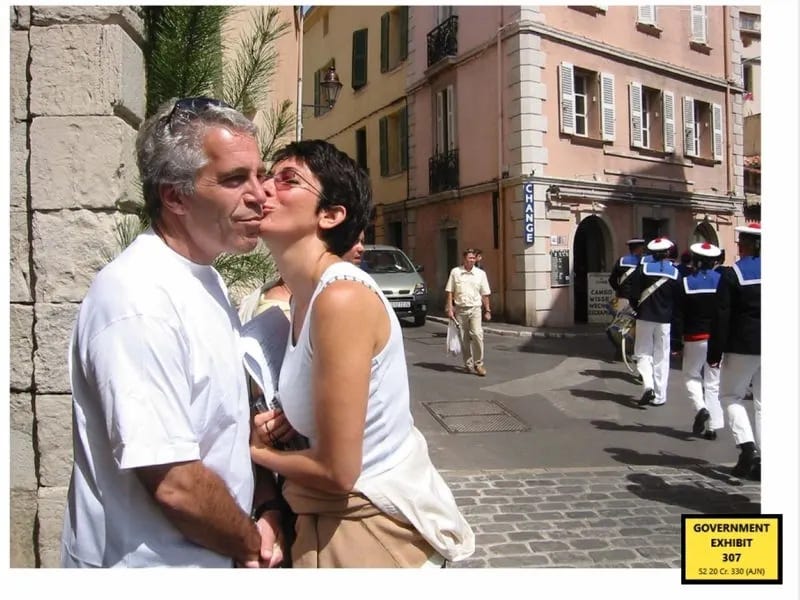
At page 13 the court sorts all ten claims into three piles. Three are barred by the mandate rule. Six are barred by default. One is left over.
Maxwell’s central argument was that the Epstein Files Transparency Act release gave her new evidence. Between December 2025 and January 2026 the Justice Department published nearly 3.5 million pages, more than 180,000 images and 2,000 videos (p. 9). Legally it barely registered, and for two separate reasons.
There is no rule that new documents reopen a case, so new material matters only if it fits one of the two openings described above. And the judge read what she cited. “Far from exculpating her,” he wrote at page 2, “it incriminates her or reinforces the correctness of the legal rulings Maxwell challenges.”
He also caught her cutting a quotation short. She relied on an interview with former U.S. Attorney Alexander Acosta to argue that her 2007 Florida immunity deal shielded her from prosecution in New York. On “the very next page” of that interview, the page she left out, Acosta emphasized that the deal was “limited to” Florida (p. 23). In any event a rule of law had already ended the argument. A deal struck by prosecutors in one district binds only that district, so Florida could not immunize her from New York regardless of what any document said (pp. 21–23).
The tenth claim is the only one the court reached purely on the merits (p. 58), and it is the most instructive.
Maxwell argued the government had hidden a Palm Beach detective’s 2006 grand jury testimony, which she said contradicted his trial testimony about which bathroom in Epstein’s Florida house a green massage table came from. Discredit the detective, she reasoned, and you discredit the table, and without the table the government loses an element of two counts.
Maxwell said the massage table was in the wrong bathroom. The judge pointed out it was her bathroom. The one claim in her petition that got a real hearing on the merits collapsed on a detail she raised herself. This is the cautionary tale of what the 67-page order teaches about how a federal conviction becomes permanent.
The court rejected it four times over. The Palm Beach police were never part of the New York prosecution team, which opened its investigation in 2018, at least eight years after the Florida investigation closed (p. 62). New York prosecutors had asked the local clerk for the transcript anyway and were told it did not exist and the audio was unplayable, which is what they passed to the defense (p. 59). Prosecutors, the judge wrote, “acted with appropriate solicitude for Maxwell’s rights and interests” (p. 62). Beyond that, the old testimony did not contradict anything, because the detective said only that “there was [a] massage table in this [] bathroom” and the transcript never identifies which one (p. 63). And a mistaken answer about a bathroom sixteen years later would be a faulty memory rather than perjury, with the table admitted either way (pp. 63–64).
Then came the part worth remembering. Had the table actually been found where Maxwell claimed, the judge wrote at page 64, “that fact would have further inculpated her, because that bathroom was the one containing Maxwell’s photo, portrait, and personalized stationery.” Her own theory placed the table in her own bathroom. And the element she was trying to knock out did not depend on the table at all, since FedEx records introduced at trial carried her name (p. 64).
What she never argued
The most consequential thing in the order is something absent from it. Maxwell never claimed her lawyers did a poor job.
That omission was fatal. Ineffective assistance of counsel is the ordinary way a defendant explains why an argument was skipped on appeal, and it is the usual source of the “cause” that opens the second door. Without it she had no explanation for the six claims she left out. The order notes at page 1 that she had been “represented by able counsel” and was now filing on her own.
Filing on your own does not suspend the rules. Courts read self-filed papers generously, “liberally construed” and read to “raise the strongest arguments that they suggest,” but a pro se litigant is not exempt “from compliance with relevant rules of procedural and substantive law” (p. 11). Generous reading, same deadlines.
One claim died on her own words. Arguing against a sentencing enhancement, she said she had largely left Epstein’s household by 2002 (p. 51). The court pointed to her July 24, 2025 interview with then-Deputy Attorney General Todd Blanche, in which she described running “all the properties, the staff in the properties, the management of the properties[,] and all the construction” and overseeing the budgets, and said she was paid roughly $250,000 a year until 2009 (p. 52). “Maxwell herself recently repudiated the factual premise of this claim,” the judge wrote.
Her request for an evidentiary hearing was denied. A hearing requires “specific facts supported by competent evidence,” not “airy generalities, conclusory assertions and hearsay statements” (pp. 65–66). Her petition, the court concluded at page 66, “falls very far from the mark,” with claims “generally based on speculation, distortions, and/or outright falsehoods,” and “no fact that Maxwell fairly puts in dispute that has any potential to disturb the outcome of her trial.”
The order closes with two findings, both at page 67. Maxwell “has not made a substantial showing of a denial of a constitutional right, and appellate review is therefore not warranted.” And the court “certifies that any appeal from this order would not be taken in good faith,” denying her the ability to appeal at public expense. She may still try. She cannot do it for free.
None of this is unusual. Defense firms that handle these cases advertise § 2255 success rates under five percent, and the closest rigorous data, from a Justice Department–funded study of the state-prisoner equivalent, found federal courts granting relief in fewer than half of one percent of non-capital cases. That study also found that an evidentiary hearing was associated with a 21 to 32 point jump in the likelihood of relief, which is worth holding next to page 66 of this order. The hearing is where these cases get won. Maxwell never reached one.
What the case teaches has little to do with Epstein. Post-conviction rulings turn on what was argued, when, and by whom, rather than on what surfaces afterward. Before a court will look at new evidence at all, three questions have to be answered — why it could not have been produced earlier, what legal claim it establishes, and whether the verdict would actually have been different. Nine of Maxwell’s ten claims failed before the third question. The tenth failed on it, and took her own bathroom down with it.
Her case is now down the toilet with all the other excrement and human waste.
Lady Xylie - IoJ
United States v. Maxwell, 118 F.4th 256 (2d Cir. 2024) — the appeal she lost first
United States v. Hayman, 342 U.S. 205 (1952) — how § 2255 replaced the Great Writ for federal prisoners
Jones v. Hendrix, 599 U.S. 465 (2023) — the 2023 ruling that narrowed the backup route
Bousley v. United States — why habeas is not a second appeal
United States v. Frady — the cause and prejudice test
Coppedge v. United States — the good faith standard for appealing free of charge
IoJ is 100% non profit and in service of humanity - your support is very appreciated!
All paid subscriptions and current contributions go directly to the mandamus legal fund! THANK YOU FOR SUPPORTING GRASS ROOTS JUSTICE EFFORTS!
Our mRNA mandamus is filed. Justice for humanity must be fought for & hard won! Our case also had procedural errors (causing delays) - PROCEDURE MATTERS! JUSTICE MATTERS!
Comments
Nothing yet. Say the first thing.
Sign in to join the conversation.