
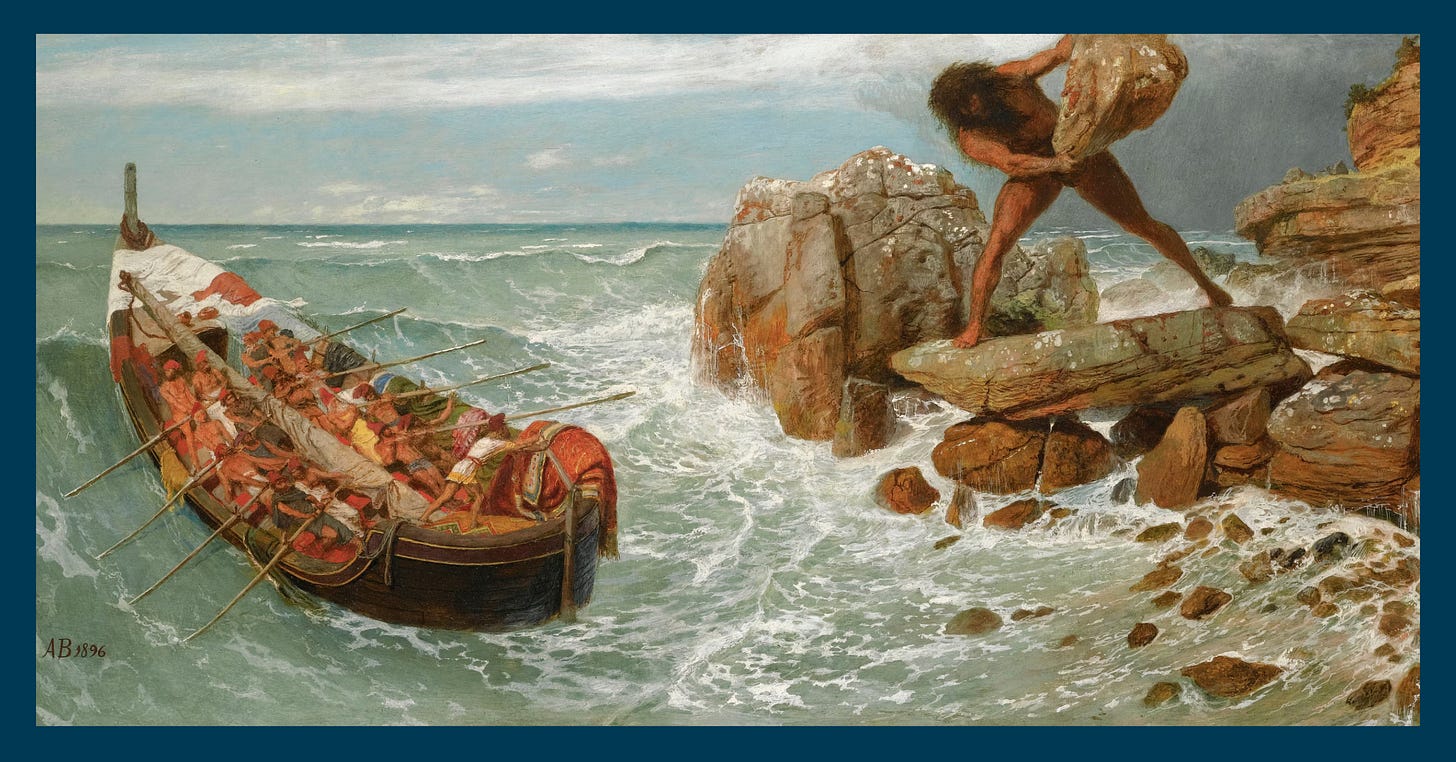
Last week, acclaimed director Christopher Nolan released his latest film: a big-screen retelling of Homer’s The Odyssey. Starring Matt Damon, Anne Hathaway, and Tom Holland, the film earned a huge opening at the box office and sparked worldwide conversations about the ancient Greek epic and the future of moviemaking. In a society that often rejects its cultural inheritance, why has this ancient story resonated so powerfully?
Spencer Klavan argues in The Free Press that Nolan’s stark depiction of good and evil is the key. He portrays Odysseus, Penelope, and Telemachus as heroes worth rooting for, while casting the scheming suitors as unmistakable villains.
Klavan contrasts Nolan’s depiction with the moral ambiguity common in modern storytelling. In an age of antiheroes and sympathetic villains, he argues that audiences still long “to see justice done” and that the film’s success reflects the enduring appeal of good triumphing over evil.
Read Klavan’s full piece here.
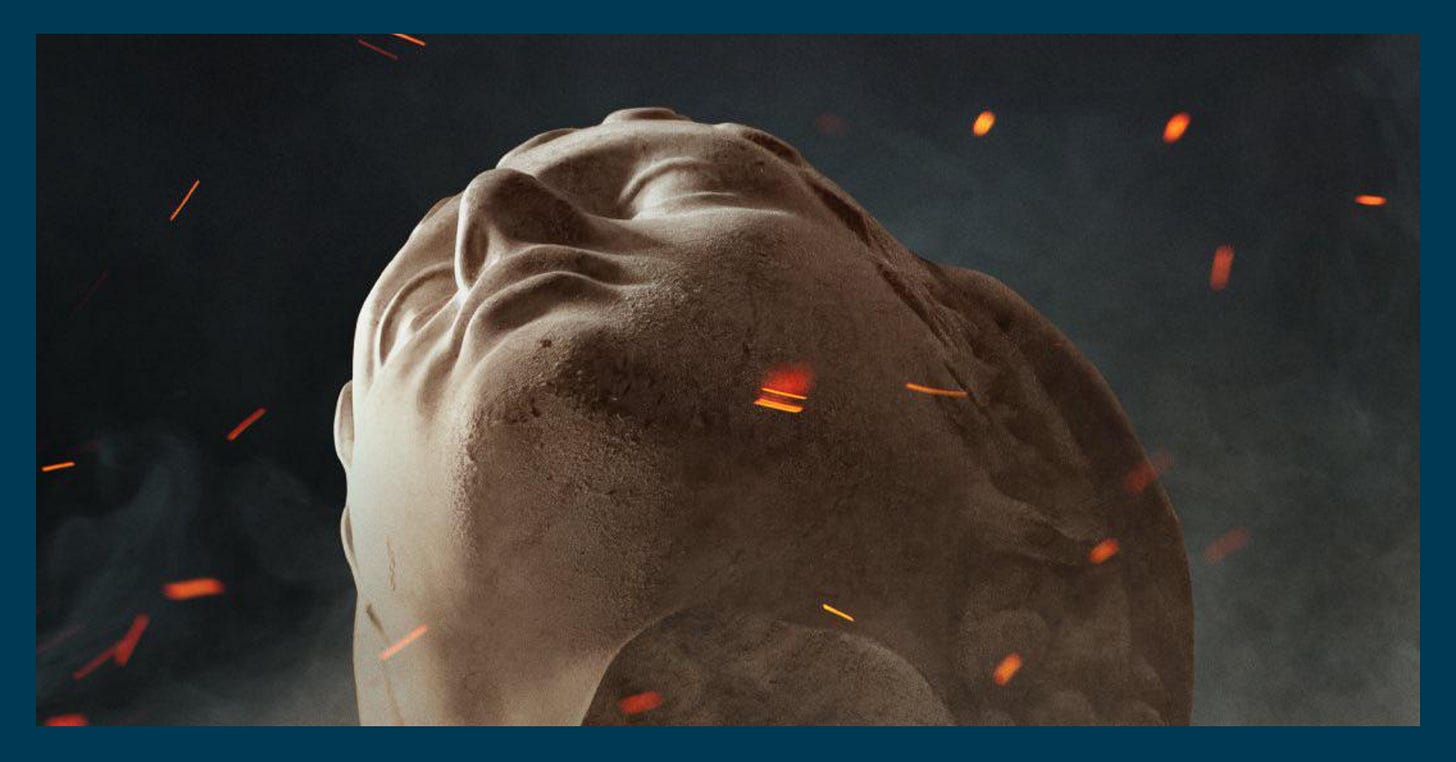
Although we often think of morally complex heroes and villains as a modern innovation, they have existed for centuries. In Homer’s other great work, The Iliad, characters like Achilles are deeply complex, combining heroic deeds with villainous behavior. The same is true of many other stories that have stood the test of time.
Writing in The Daily Wire, Rob Henderson argues that Christopher Nolan needed to soften Homer’s original depiction of Odysseus and his men to appeal to modern audiences. As Henderson puts it, Homer’s Greeks “rape, rob, enslave, and pillage without displaying anything like modern guilt.” He argues that a more faithful portrayal of the ancient epic’s brutality might have alienated moviegoers.
Henderson explains that Homer wrote before Judeo-Christian ethics came to shape Western culture. Ancient Greek society emphasized honor, shame, and reputation rather than mercy or moral guilt. To Henderson, Nolan needed to create an Odysseus with a moral compass modern audiences could embrace, one he describes as a blend of Machiavelli and Christianity.
Read Henderson’s full article here.
Every article we feature here is available to read for free. Articles from paywalled publications are available through gift links.
Ross Douthat on the competing American and Chinese visions for AI in The New York Times.
Nathan Pinkoski on the rise of the information state in First Things.
Matt Elmore on why digital freedom has left us exhausted and unhappy in The New Atlantis.
Matt Duffy on how AI could restore rigor to American education in Palladium.
Emily Eakin on the lasting legacy of French Theory in Compact Magazine.
Megan McArdle on why academia is losing the public’s trust in The Washington Post.
Travis Kavulla on how America can meet AI’s growing demand for electricity in American Affairs.
Ted Gioia on why Netflix’s decline could reshape the tech industry in his Substack.
Our national conservative community of over 90,000 members—students, academics, and patriotic citizens—is united by a commitment to the ideas that make America free and prosperous.
Members get access to events with like-minded conservatives, educational resources, scholarship opportunities, and a professional network rooted in enduring ideas.
Take the first step by clicking the button below.
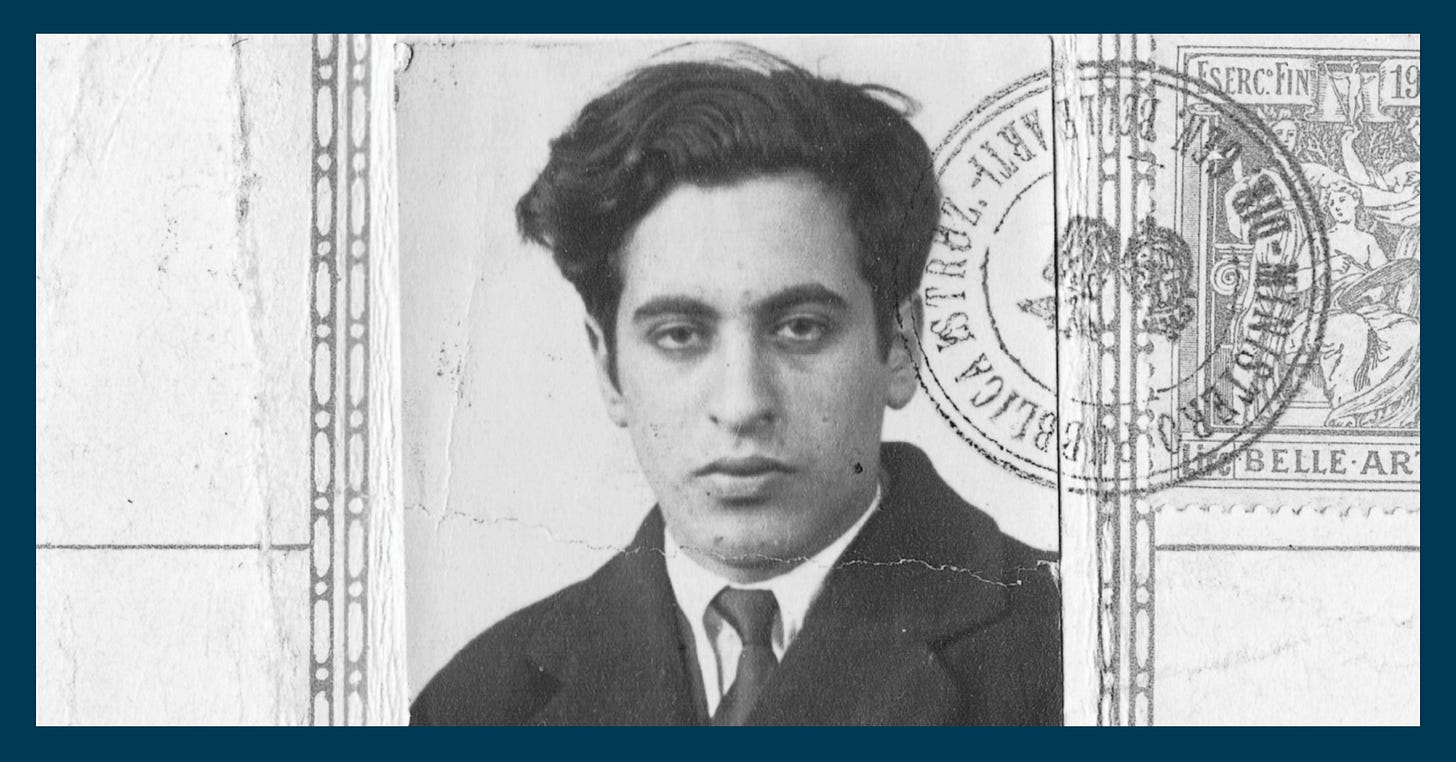
The modern American conservative movement owes much to a diverse group of thinkers, many of whom were not lifelong conservatives. Instead, they arrived at conservatism only after exploring competing ideologies.
For this week’s article from Modern Age, Paul Gottfried reviews Daniel J. Flynn’s The Man Who Invented Conservatism: The Unlikely Life of Frank S. Meyer, published by ISI Books last fall. Flynn traces Meyer’s transformation from communist intellectual to one of the leading voices of postwar American conservatism. Once a favorite of the progressive elite, Meyer made a dramatic turn toward anticommunism after World War II.
Gottfried argues that Meyer’s ideological journey was shared by many early conservatives, giving them a unique understanding of the ideas they opposed. He suggests Meyer may have been the “single most significant inventor of post–World War II conservatism” and says Flynn’s book carries forward the conversation Meyer began.
Read Gottfried’s full review here.
Modern Age is ISI’s flagship publication. Visit modernagejournal.com and subscribe to receive a free daily newsletter.
“No man can act morally unless he is free to choose good from evil.” ― Frank S. Meyer
Comments
Nothing yet. Say the first thing.
Sign in to join the conversation.