
Lithium-ion cathode materials are always a hot topic, but we rarely dedicate as much page space to their sister, sodium-ion cathode active materials (CAM). This week, Vinita Ahuja, a battery scientist who has spent over a decade researching sodium-ion batteries, most recently at Humboldt University of Berlin, will take us on a whistle-stop tour of the different sodium-ion families.
The three families: a structural cousin of NMC, a 300-year-old pigment, and a framework built on one of the strongest bonds on the periodic table are competing in the race for the next generation of grid batteries. Sodium-ion isn't just one single technology - it's three, each solving a different problem while creating a new one. The technology is mainly classified by the cathodes that govern it: the layered oxides, Prussian blue analogues, and polyanionic compounds. Let's take a deeper dive into it and unpack the pros and cons one by one.
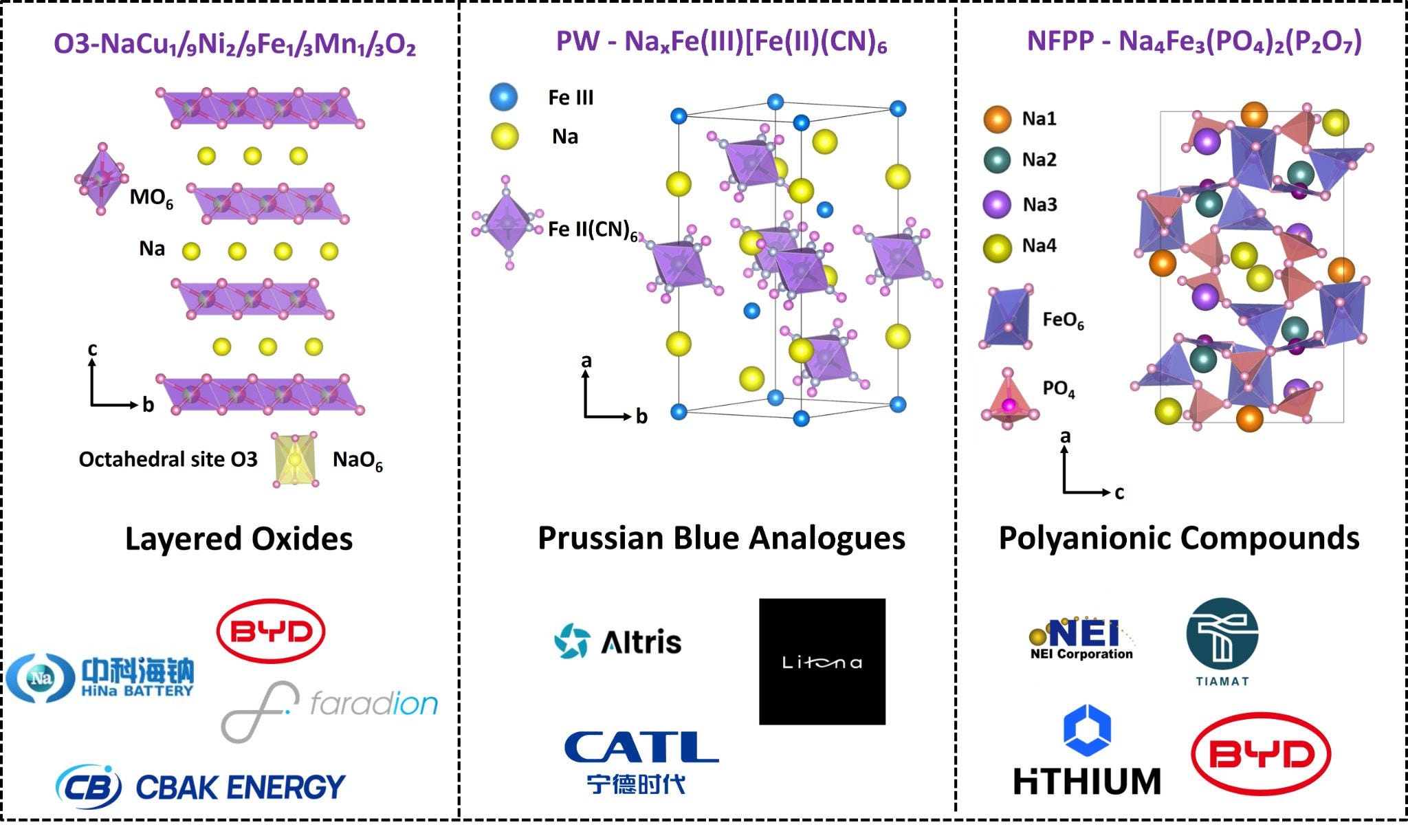
Layered oxides are among the most familiar classes of cathodes: structural relatives of the Li-ion-based LCO and NMC families, which have been powering our lives since the 1990s. They promise high specific capacity, high compaction density, and ease of translation to the existing pilot manufacturing lines, basically meeting the needs of the present-day high-end market. In fact, they are now the most widely employed SIB cathode chemistry, used by about 65% of all sodium-ion-generating businesses, with an average cell-level energy density of up to 149 Wh/kg (Status and prospects of the sodium-ion battery production system until 2030, The 2025 update).
Unsurprisingly, China is leading this industrialization wave, with players such as HiNa, CBAK Energy, BYD, and Highstar racing to commercialize Mn/Fe/Ni/Cu-based layered oxide cathodes, deviating from the transition metal choices in the layered oxide lithium equivalent of nickel, cobalt and manganese. One such striking example, identified through cell teardown analysis, is a NaCu₁/₉Ni₂/₉Fe₁/₃Mn₁/₃O₂ cathode paired with a hard-carbon anode. This is a multi-cation O3 layered oxide that spreads redox activity across copper, nickel, iron, and manganese simultaneously rather than relying on a single transition-metal couple. Faradion, the formerly UK-based company now owned by India’s Reliance, uses a Na-Ni-Mn-Mg-Ti (NMMT) layered oxide reaching up to 160 Wh/kg today, with 190 Wh/kg targeted for its next generation.
However, this class of materials is governed by material crises such as air sensitivity, unstable cathode electrolyte interface, transition metal dissolution, low sodium content, phase purity, and gas evolution at higher voltages. The most life-threatening of all issues is the irreversible P2–O2 or O3–P3 phase transitions, which cause structural fatigue and capacity decay. This presents the two-fold problems related to manufacturing and stability, thereby hampering the industrial processes, which shape the entire supply chain. Instead of designing new high-capacity compositions, efforts are directed towards optimizing processes and their reproducibility, such as introducing co-precipitation synthesis routes, calcination/sintering, surface treatment, doping measures, and cathode powder processing.
Ningbo Ronbay Industries, in Zhejiang Province of China, has concentrated its pilot-scale production efforts towards air stability, gas suppression, morphology, and compaction density metrics—the parameters that affect the manufacturing yield and long-term durability. In Germany, IBU-TEC commercialized a sodium-layered oxide cathode at a large scale, launching IBUvolt® NMO (Na₀.₇MnO₂) in November 2023 through a patented two-stage process. They are using a pulsation reactor, followed by rotary-kiln refinement, their proprietary technology, which they have perfected over a decade of lithium-ion cathode production.
In other words, the real bottleneck to its production is not perfecting the structural formula of these materials, but rather asking if the same crystal structure can be reproduced with identical morphology, performance, and chemistry every single time. Unlike their lithium counterparts, the successful adoption of layered oxides in sodium-ion technology will not be determined by Wh/kg numbers but rather by whether companies can industrialize stable surfaces, optimize controlled synthesis, generate low gas, and achieve reproducible full-cell aging.
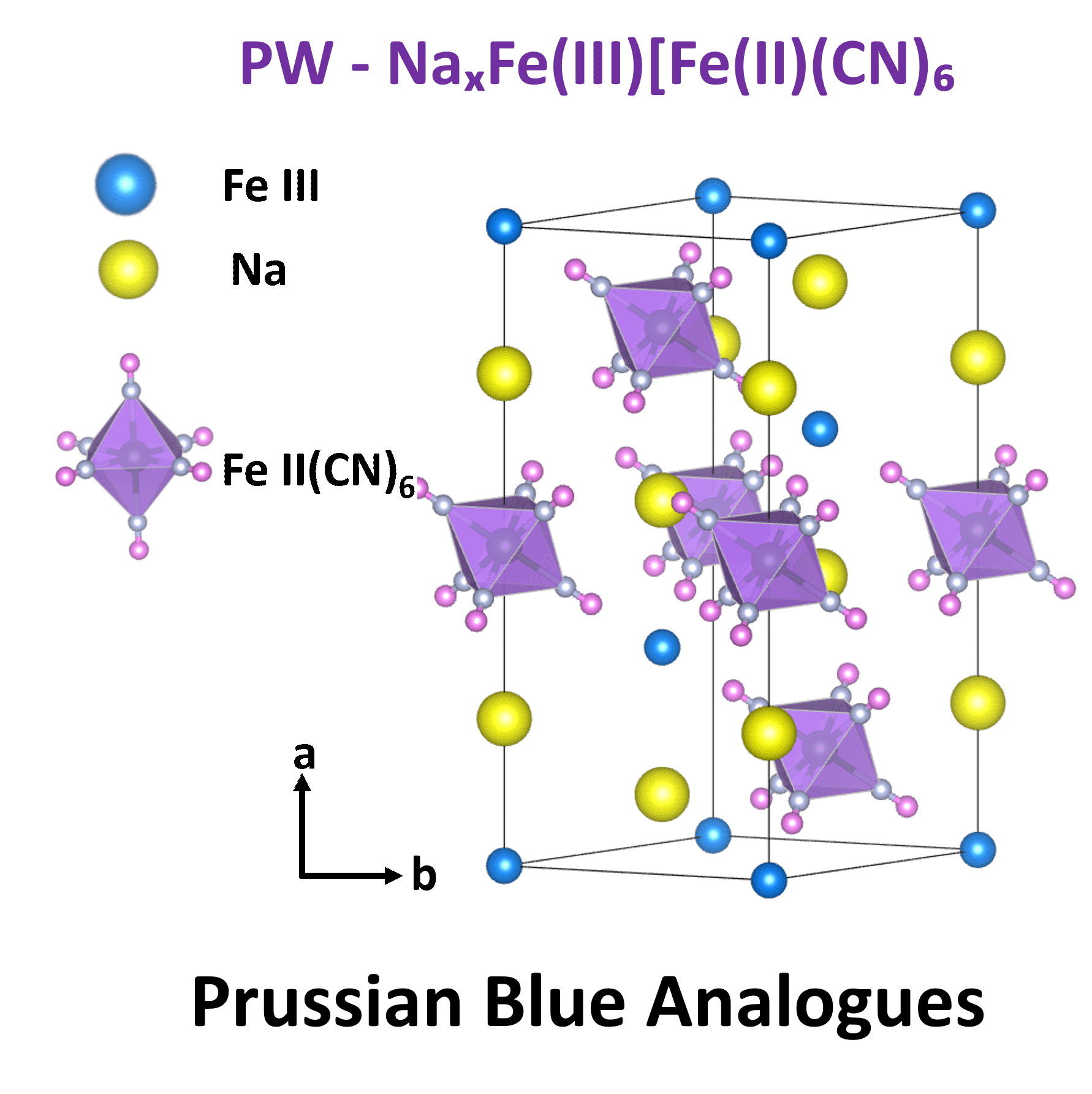
Next to layered oxides, we have PBA based battery materials that are currently filling the vacuum at the structural front. These are unique, versatile, open three-dimensional structures (AxM[M'(CN)6]y·nH2O (0<x ≤2, 0<y ≤1), hosting alkali ions in the interstitial sites. A represents alkali metal ions (such as Na⁺, K⁺, etc.), and M and M' denote transition metals; x tracks alkali-ion content, and y captures the fraction of hexacyanometalate sites left intact after synthesis.
There are two related but distinct structures in this family. Prussian blue (PB) is the original, oxidized form, Fe₄(III)[Fe(II)(CN)₆]₃, a mixed-valence lattice of Fe³⁺ and Fe²⁺ bridged by cyanide groups, which gives it the distinct deep blue color and hence the name. On the other hand, Prussian white (PW) is its reduced, alkali-inserted counterpart, NaₓFe(III)[Fe(II)(CN)₆]: when sodium ions flood into the same open framework and both iron sites drop to Fe²⁺, the lattice turns pale and becomes electrochemically “full” when x approaches 2; this is the discharged, sodium-rich state that is desirable to begin with when assembling full cells. The blue-to-white transition is the redox reaction that a PBA cathode undergoes every time the battery charges and discharges, showing excellent rate capabilities while exhibiting low strain.
The choice of the transition metal in the framework is pivotal for tuning the cathode’s operating voltage. Classic Fe-based PW frameworks show 3.2 V, but adding manganese in the structure pushes the redox couple closer to 3.5 V, as Mn³⁺/Mn²⁺ sits at a higher potential than Fe³⁺/Fe²⁺. Thanks to straightforward solution-based co-precipitation synthesis routes, these methods provide precise control over particle size, sodium content, defect concentration, hydration, and morphology, making them highly desired cathodes in manufacturing lines. As a result, two very different companies on two continents have placed their bets on the same crystal structure, driven by this combination of process control and tunability.
Blazing a trail in Europe, leading material manufacturers Litona from Germany and Altris from Sweden have been commercializing Prussian White. The patented technology by the Altris team at Uppsala in Sweden, uses a low-temperature, low-pressure synthesis route to synthesize a fully sodiated form of PW, offering benefits over the sodium inventory when coupled in full cells.
In January 2026, Clarios, a global leader in advanced low-voltage battery solutions, and Altris announced an expanded partnership, followed by a roadmap to accelerate production lines, with InoBat, a Slovak battery company, assembling prototype cells while Clarios then validates against OEM requirements. On the eastern front, CATL’s first-generation sodium-ion battery, launched in 2021, used Prussian white as the cathode material, achieving a cell-level energy density of 160 Wh/kg and rapid charging with 90% discharge capacity retention even at -20°C. Its second-generation cell, Naxtra, is also Prussian-white based and currently holds the highest energy density of any commercial sodium-ion battery at 175 Wh/kg, with production estimated to scale from 10 GWh in 2025 to 30 GWh in 2026 and potentially 100 GWh by 2030. This marks a significant milestone in the industrialization of this technology, showing that it is no longer just a materials topic; it is becoming a grid-storage and low-cost mobility platform.
The Achilles’ heel of Prussian blue analogues is hidden in the structure itself. Water molecules in the crystal structure can occupy sodium sites, reacting with the electrolyte during cycling and leading to side reactions. These reactions further consume active sodium ions and electrolyte, generate gas, and compromise the electrode structure, ultimately leading to reduced battery cycle life. Additionally, during synthesis, [Fe(CN)6] vacancies produced in the material not only reduce the sodium content but also tend to increase crystalline water content, further compromising the material’s stability. PBAs are easy to make badly and hard to make perfectly.
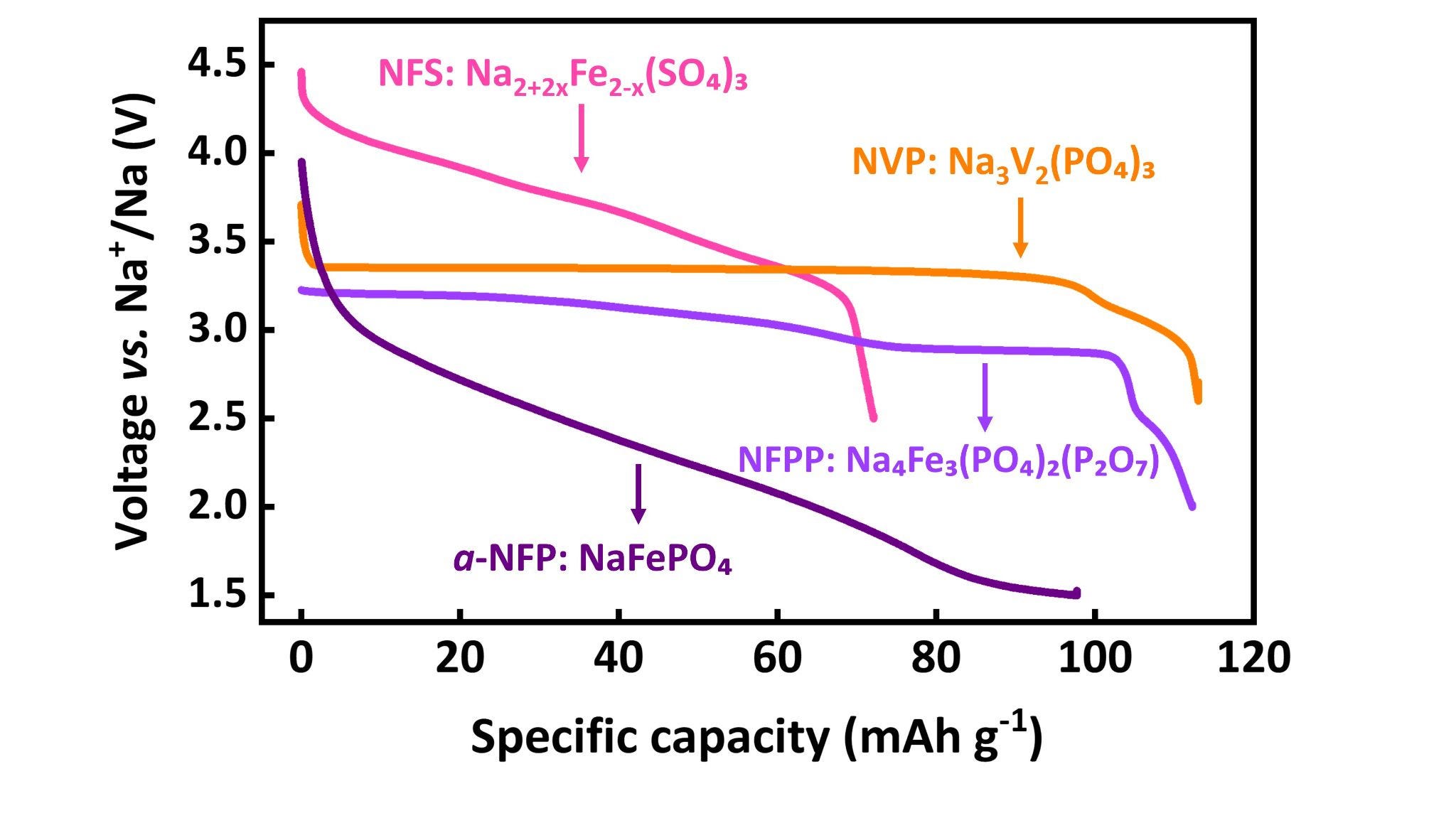
This brings us to one of the oldest and most disciplined classes of sodium-ion technology i.e, polyanion compounds. Here, strong P-O and S-O bonds bring safer oxygen chemistry at high temperatures and stability to the structure during long-term cycling. NVP (Na₃V₂(PO₄)₃) and NVPF (Na₃V₂(PO₄)₂F₃) are two of the early favorites because NASICON-type sodium vanadium phosphate and sodium vanadium fluorophosphate has good average voltage, structural stability, fast Na-ion transport, and good rate capability. NVP has a stable voltage plateau near 3.4 V and a theoretical capacity of 117.6 mAh/g, while NVPF pushes the voltage higher and is attractive for high-power sodium-ion systems.
TIAMAT, a CNRS (French National Centre for Scientific Research) spin-off, develops, industrializes, and sells sodium-ion batteries based on NVPF chemistry for power and high-power applications. Their generation 1 reaches only 80–110 Wh/kg, with generation 2 targeting 140–160 Wh/kg, and production scaling cautiously from 0.7 GWh in 2026 to just 5 GWh by 2030. However, as elegant and high-power as vanadium may look, its procurement and cost have become a visible issue. Industries always ask one question: can this chemistry be cheap enough and abundant enough to integrate into grid storage? This is where the paradigm shifted from expensive vanadium-based polyanions to iron-based polyanions. The trade-off started for lower material costs and a better supply chain. However, this comes with more difficult synthesis, lower electronic conductivity, and sometimes lower energy density limits as well.
NaFePO₄, the sodium twin of LiFePO₄, is a good place to start in the Fe-based polyanion family. At first glance, the comparison seems straightforward: replace lithium with sodium and keep the familiar iron phosphate structure. But it’s not that simple; its electrochemical behavior strongly depends on the phase structure. For instance, the olivine- or triphylite-type phase is electrochemically attractive but very difficult to prepare, whereas the thermodynamically stable maricite phase has been under discussion for ages due to its limited sodium-ion mobility. However, recent work on amorphous or quasi-amorphous NaFePO₄ has reignited interest in this material, especially as a low-cost iron phosphate cathode and as a possible bridge between spent LFP recycling and sodium-ion cathode synthesis.
This bridge is essential because if sodium-ion is to become a truly complementary storage technology, it should not only avoid lithium and critical metals during operation but also align with circular battery manufacturing. Recent studies and patents (https://doi.org/10.1039/d5ta04067a and US12548803B2) suggest that delithiated or recycled LFP residues can be chemically or electrochemically converted toward NaFePO₄/FePO₄-type materials and, in some cases, used as precursors to make more complex iron-based polyanions such as Na₄Fe₃(PO₄)₂(P₂O₇), commonly known as NFPP (refer to Fig. 1).
NFPP has become one of the most commercially interesting iron-based polyanionic cathodes for sodium-ion batteries in recent times. Its mixed phosphate–pyrophosphate framework combines the structural stability of phosphate groups with the redox-potential tuning of pyrophosphate units, giving an average operating voltage of about 3.1 V vs Na⁺/Na and reversible capacities around 100 mAh g⁻¹. The 3D framework can facilitate sodium-ion diffusion with relatively small structural change during cycling. NFPP currently shows the strongest industrial pull, with companies such as BYD (targeting 130 Wh/kg in 2024), Peak Energy, HiTHIUM, NEI Corporation, and Alsym™ Energy positioning iron-based phosphate-pyrophosphate sodium-ion systems for stationary storage. HiTHIUM launched its ∞Cell N162Ah, which is built on sodium iron ortho-pyrophosphate cathode technology, highlighting >20,000 cycles and grid-storage suitability. Peak Energy, a US-based company, explicitly states that its systems rely on sodium-ion (NFPP) battery cells to reduce the average cost of energy by $70/kWh and calls its product the world’s first fully passive grid-scale energy storage system, targeting 20 GWh of production by 2030.
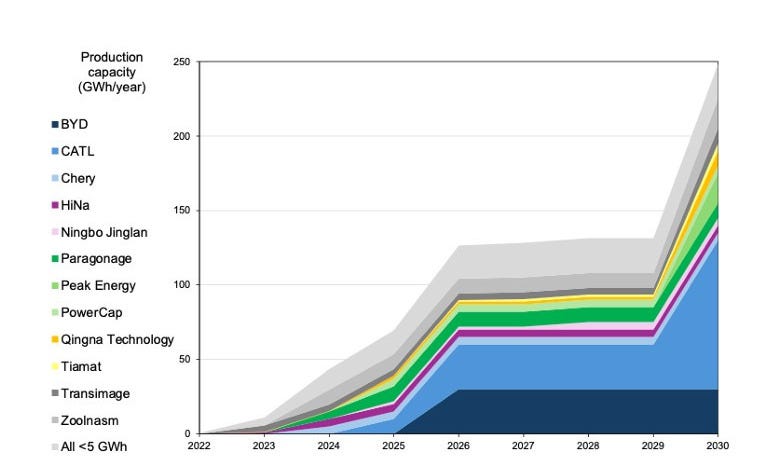
Unlike their phosphate cousins, iron-based sulfate polyanionic compounds are still in their infancy, but one emerging alluadite compound, i.e., sodium iron sulfate (Na2+2xFe2-x(SO₄)₃, or NFS), is approaching the starting line fast. Structure-wise, the strong inductive effect of sulfate groups in the polyanionic framework pulls electron density from the Fe-O bond, pushing the Fe³⁺/Fe²⁺ redox couple to the high voltages (3.6 - 3.8 V; refer to Fig. 2). Zoolnasm, a Chinese company founded in 2021, has emerged as the pioneering player here and has officially entered large-scale production, aiming to reach 10,000 tons of material production in 2025 (Fig. 3).
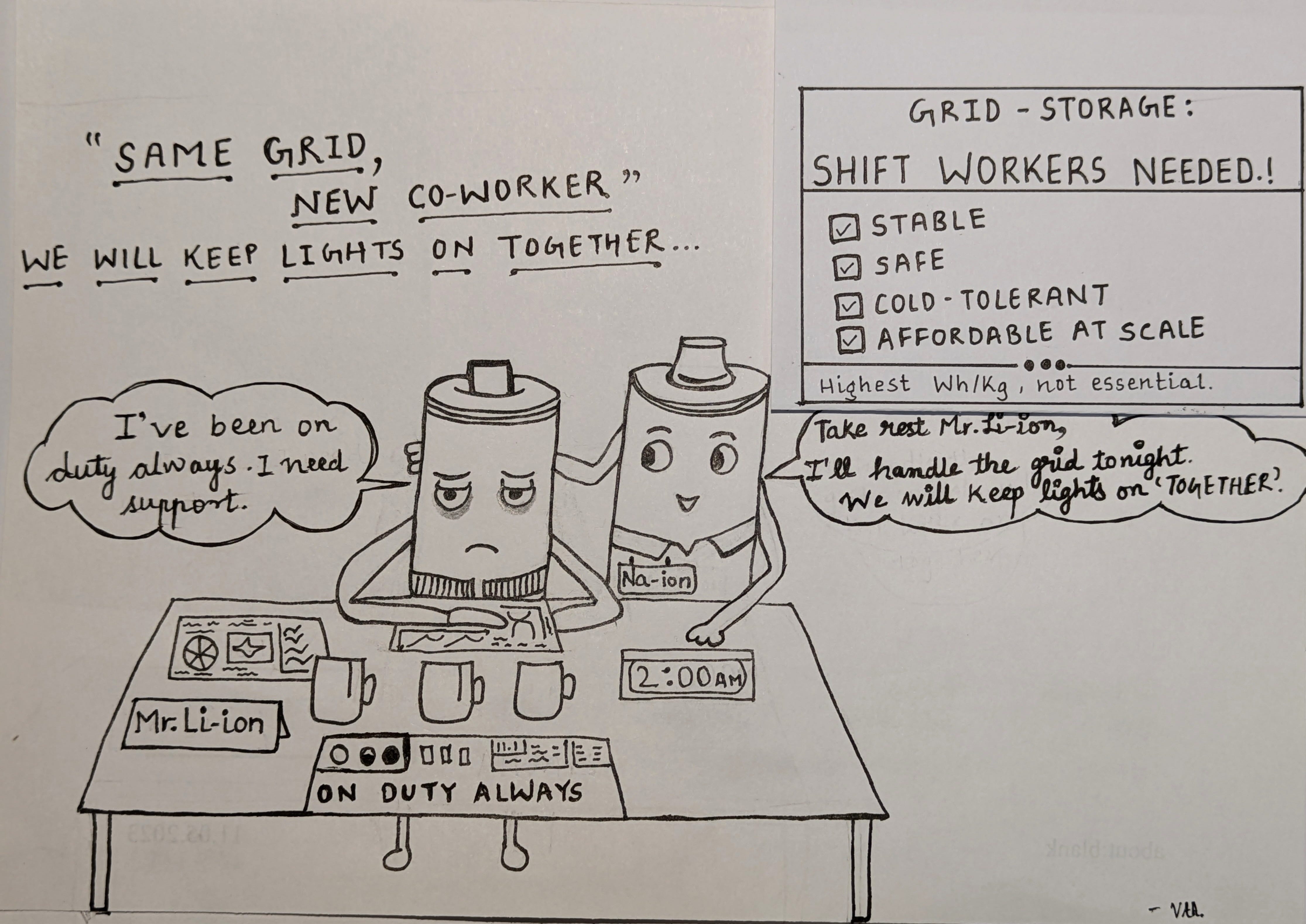
To replace or to complement—that is the question!! The point of sodium-ion is not to beat the lithium-ion in every aspect, but rather to find out where each chemistry fits best. For instance, cost, safety, cycle life, and predictable degradation processes matter more than high energy density in low-mobility, low-voltage, and stationary storage systems, while the reverse is true in high-mobility systems. In that sense, sodium-ion battery technology doesn't need a winner; all it needs is three imperfect chemistries willing to share the burden and an industry that is willing to admit that the manufacturing lessons it needs already exist. They don't need to start from scratch.
🌞 Thanks for reading!
📧 For tips, feedback, or inquiries - reach out
📣 For newsletter sponsorships - click here
Comments
Nothing yet. Say the first thing.
Sign in to join the conversation.