
Please note I’ve included affiliate links for these books. :)

I’ve read a LOT of books over the years, but every now and then you come across one that doesn’t just give you new information – it changes the way you see yourself and the world around you.
These are those books.
They’re the ones that made me question things I had accepted as normal. The ones that helped me notice my thoughts instead of automatically believing them. The ones that gently (and sometimes quite forcefully) pulled me out of autopilot and into a more conscious way of living.
I almost didn’t want to share them because the experiences I’ve had with these books have felt incredibly special and personal.
But wisdom is not something to hoard.
If even one person picks up one of these books at exactly the right moment in their life and has an epiphany of their own, then sharing them is worth it.
A quick note before we begin: the ideas explored here are spiritual, but not in the sense of following a particular religion or adopting a set of beliefs.
They are about something much simpler:
Learning to see your own mind clearly.
Understanding why we suffer.
Recognising the stories we tell ourselves.
And remembering how to actually experience the life happening right in front of us.
As Anthony de Mello says:
“I challenge anyone to think of anything more practical than spirituality as I have defined it – not piety, not devotion, not religion, not worship, but spirituality – waking up, waking up!
But instead, you have people thinking that big business is more practical, that politics is more practical, that science is more practical. What’s the earthly use of putting a man on the moon when we cannot live on the earth?”
That idea is the thread connecting all five of these books.
They are not books you simply read and put back on the shelf. They are books you return to because, each time you revisit them, you notice something you weren’t ready to see before.
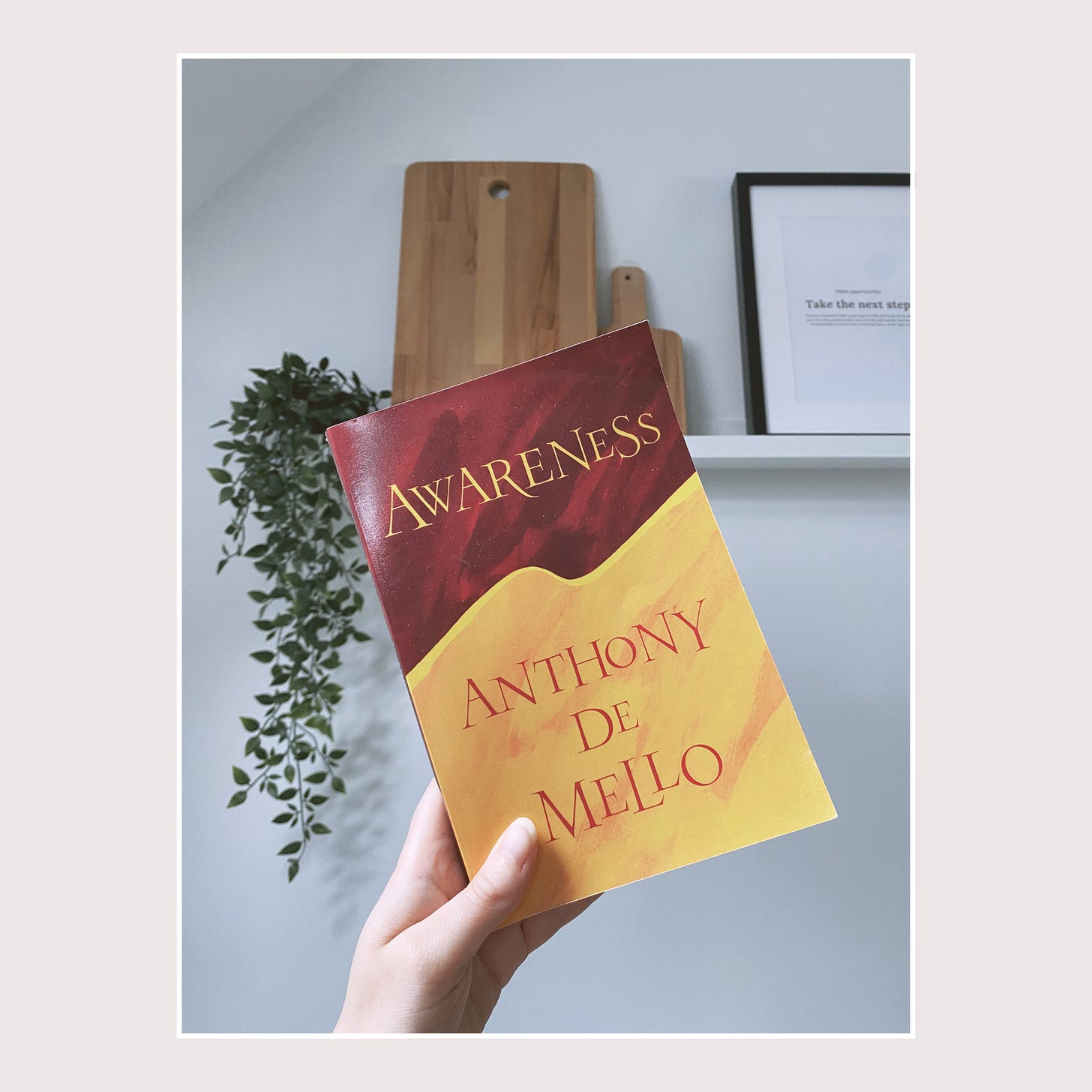
I’m not sure why I waited so long to read this.
Perhaps I assumed nothing could surpass the impact of books like The Power of Now or The Untethered Soul. I was wrong.
Awareness might be one of the most direct, challenging, and strangely beautiful books I’ve ever read.
Written from talks given by Anthony de Mello, an Indian Jesuit priest and psychotherapist, this doesn’t feel like a traditional self-help book. It feels like sitting across from someone who has spent a lifetime observing the human mind and is determined to help you see what you’ve been missing.
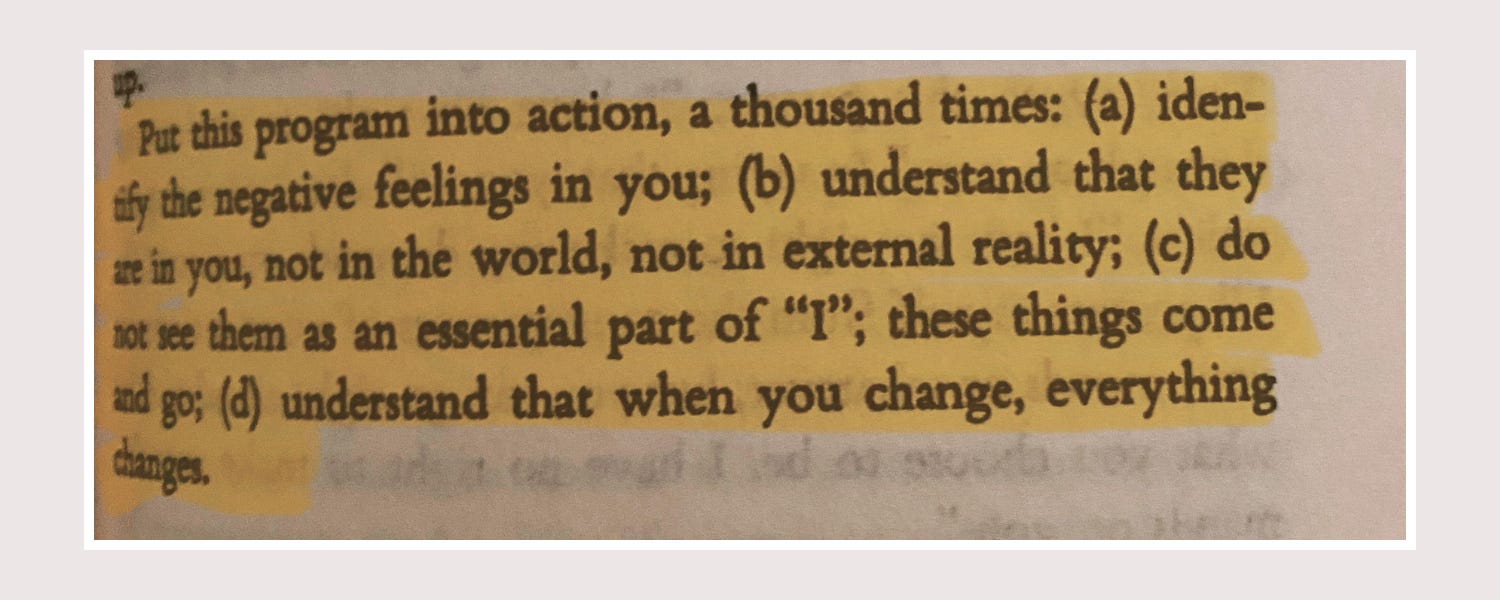
The chapters are short and the ideas are profoundly simple, but the impact is enormous.
I found myself eventually doing something I almost never do with books: finishing it and immediately starting again. In fact, I read it three times back to back because I felt there was so much to absorb!
The reason it stayed with me is that it doesn’t try to make you become a “better” version of yourself.
It challenges the assumption that there is something wrong with you that needs fixing in the first place.
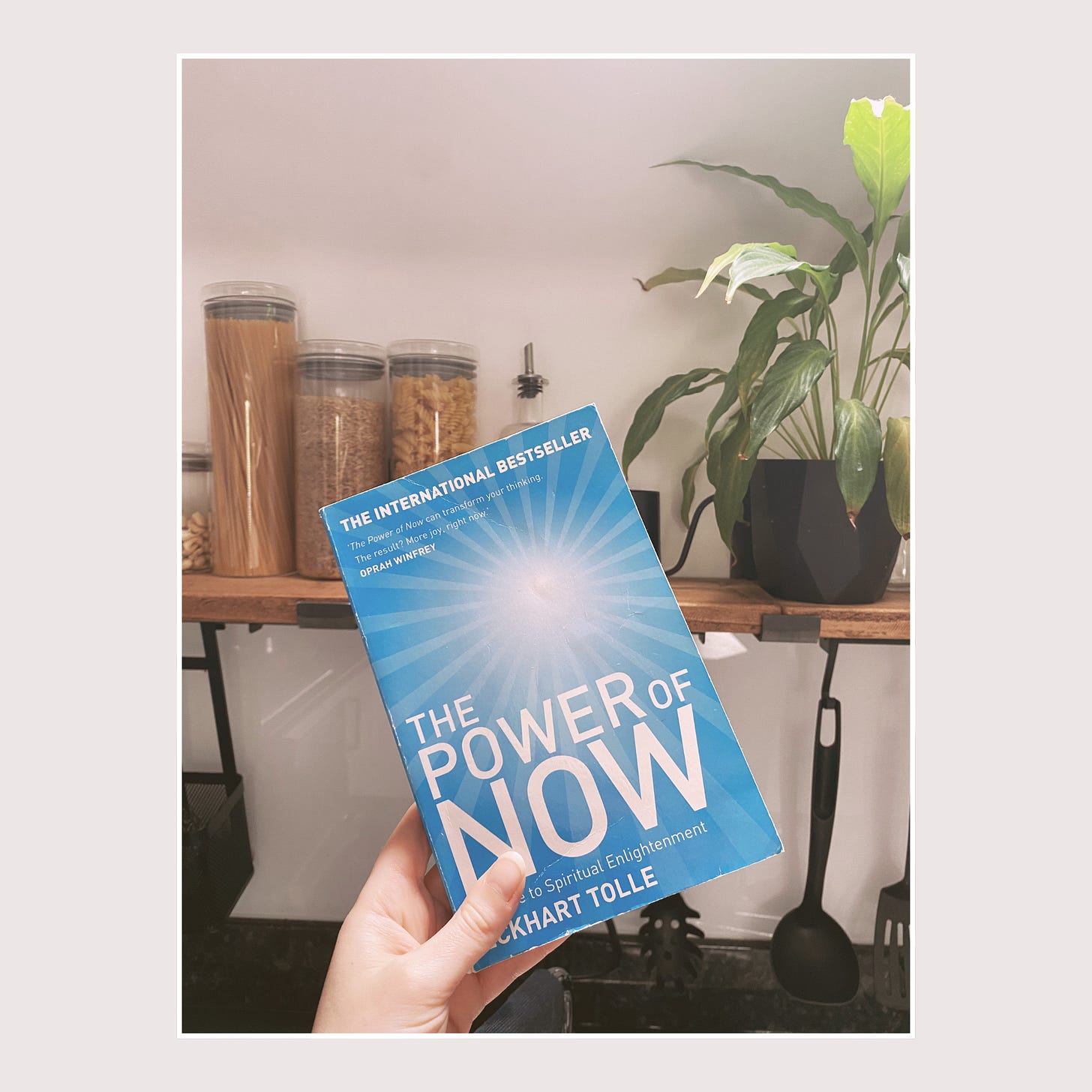
This book was my gateway into this entire world.
Like many people, I knew The Power of Now by reputation long before I actually read it. It sat on my bookshelf collecting dust, despite countless people telling me how powerful it was.
Perhaps books like this find you when you’re ready for them.
From the opening pages, where Eckhart Tolle describes his own profound shift from deep suffering into a state of awareness, I was completely drawn in.
The central idea sounds simple:
The only moment you ever truly have is this one.
But living that idea is much harder than understanding it intellectually.
This is not a productivity book. It won’t give you a ten-step system for improving your life.
Instead, it invites you to question something much more fundamental:
How much of your life are you actually experiencing, and how much of it are you trapped inside your own thoughts?
That question alone is worth sitting with.
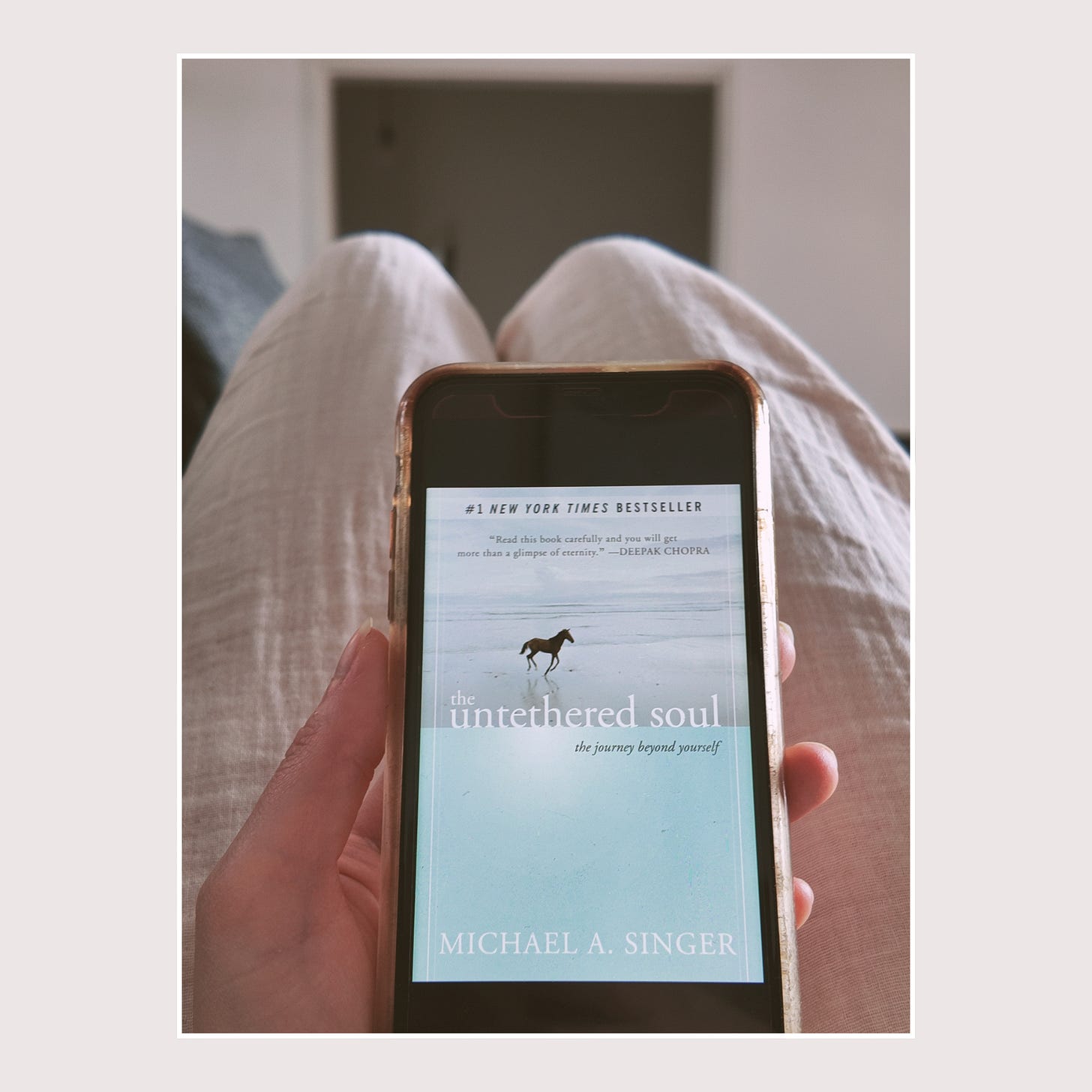
This was another book that sat on my “I really should read this someday” list for far too long.
Perhaps it was the title. The Untethered Soul sounds like it might be a dense philosophical text that requires a lot of concentration.
Thankfully, it isn’t.
What I found instead was one of the clearest explanations I’ve ever read of something we all experience every day:
The voice inside our head – that constant stream of opinions, worries, judgments, memories, and stories that seems to narrate our entire existence.
Most of us spend our lives completely identified with this voice. If it says we should be worried, we worry. If it says someone upset us, we feel upset. If it says we are not good enough, we believe it.
Singer introduces a different possibility:
What if you are not the voice?
What if you are the one listening to it?
That shift sounds simple, but it can completely change the way you relate to your own mind.
One of my favourite concepts in the book is the idea of our “inner thorns” – the emotional wounds and sensitivities we carry that make us react strongly to certain situations. Rather than organising our lives around avoiding these painful places, Singer encourages us to notice them and begin releasing the resistance around them.
This book gave me a different relationship with my thoughts and emotions, allowing me to observe them with more space and curiosity rather than feeling the need to control or eliminate them.
If you enjoy this book, I’d highly recommend exploring Michael Singer’s other work, especially his fascinating autobiography The Surrender Experiment. I also love listening to The Michael Singer Podcast – his warmth, humour, and wisdom shine through in everything he does. I could honestly listen to him all day!
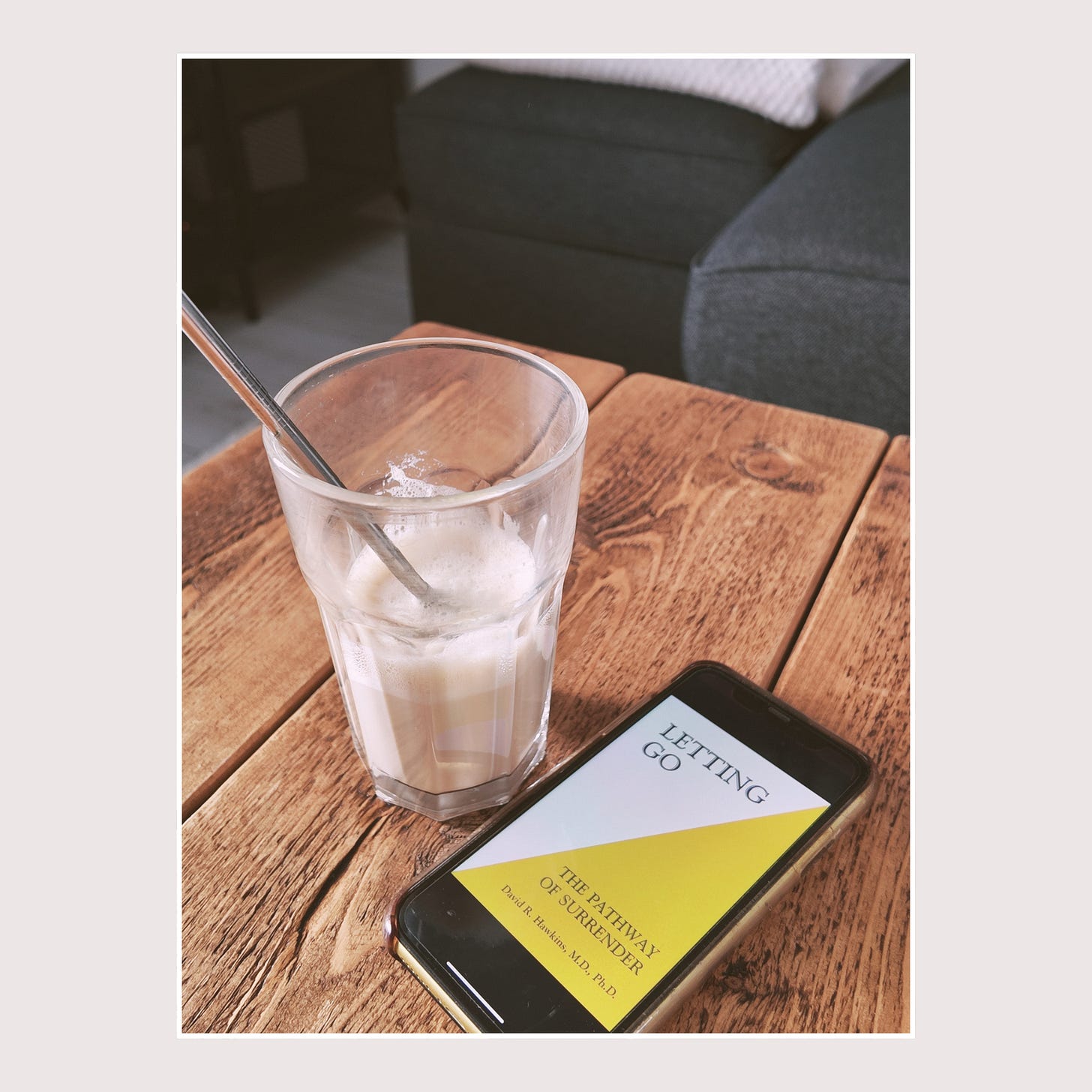
I almost didn’t read this book (actually, I nearly didn’t buy it!).
After reading the description and seeing references to things like consciousness levels and muscle testing, I wasn’t entirely sure what to make of it. Some parts sounded a little new-agey, even for me.
But I’m so glad I looked beyond that.
Because underneath the ideas I was unsure about, I found something incredibly practical:
A deeper understanding of how emotions work.
Letting Go explores the idea that much of our inner struggle comes from resisting what we feel. We push emotions away, suppress them, distract ourselves from them, or try to mentally solve them.
But what we resist often remains.
Hawkins suggests another approach:
Allow the feeling to be there.
Experience it fully.
Let it move through you without feeding it with stories.
This idea sounds almost too simple, but it’s surprisingly powerful when you begin to practice it in your own life.
So often, we add layers of suffering on top of the original pain. Someone disappoints us, and before we know it, our mind has created an entire story around what happened – replaying the situation, imagining future scenarios, and building an identity around the hurt we’re carrying.
The original emotion becomes tangled up with all the thoughts and meanings we attach to it. Learning to let go is about gently unravelling those layers and allowing the feeling itself to move through us without the added resistance.
I don’t think you have to agree with every single concept in this book to gain something valuable from it. For me, the biggest takeaway was learning that emotions don’t necessarily need to be fixed, explained, or fought.
They simply need to be felt.
And when we stop resisting them, they often lose their power over us.
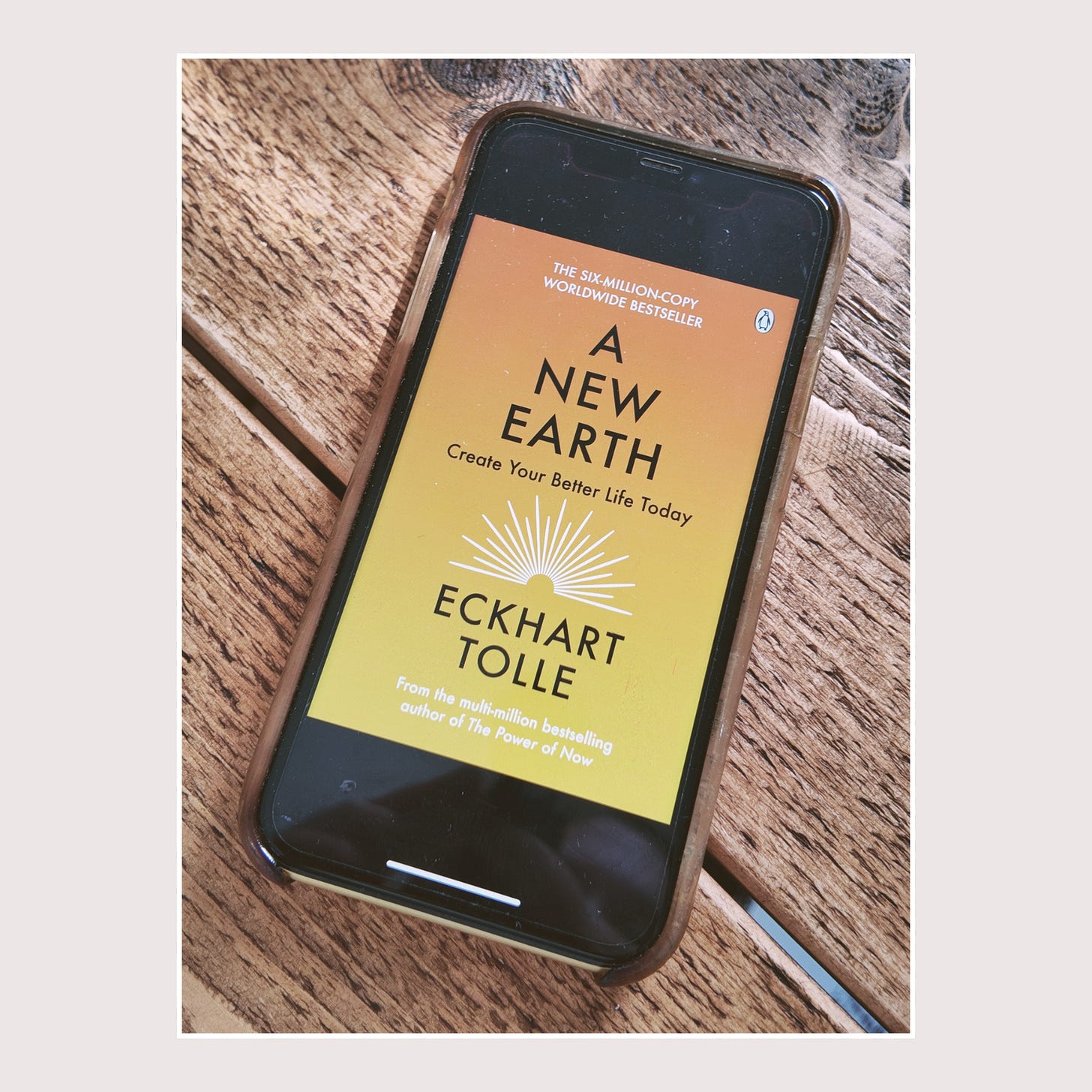
I know what you might be thinking: “Two Eckhart Tolle books?!”
Yes, and I stand by it.
While The Power of Now introduces the idea of presence to step out of the constant stream of thought, A New Earth goes deeper into one of the biggest obstacles that gets in the way of that awareness:
The ego.
The ego is the part of us that builds an identity around our thoughts, achievements, opinions, possessions, roles, and the stories we tell ourselves about who we are.
This book made me look at my own reactions in a completely different way.
Why do certain comments bother me so much?
Why do I feel the need to prove myself or be seen in a particular way?
Why do I sometimes find myself resisting situations simply because my mind has decided they shouldn’t be happening?
One of the most fascinating ideas in the book is Tolle’s concept of the “pain-body” – the accumulated emotional energy we carry from past experiences that can become activated in certain situations. I definitely recognised this in myself, and simply becoming aware of those moments was incredibly valuable.
I genuinely believe the world would look very different if more people read this book. So many conflicts – in relationships, communities, and even across nations – come from unconscious reactions and the desperate need to be right.
A New Earth is ultimately an invitation to live differently: with more awareness, more compassion, and more freedom.
You may be wondering whether you really need to read all five.
The short answer is no – they all explore similar territory from different angles, and you may naturally find yourself connecting more deeply with one author than another.
But there is something powerful about encountering these ideas repeatedly.
These are not concepts you simply understand once and then master forever; they are ideas you return to throughout different seasons of your life.
You might read one of these books today and take away one particular insight, then return to it years later and find that a completely different passage speaks directly to where you are now.
That, to me, is the beauty of these books – they grow with you.
Although they all touch on similar themes, each author brings their own unique voice, perspective, and way of expressing these ideas. Sometimes hearing the same truth explained in a slightly different way is what allows it to finally land, and together they create a much richer understanding than any one book could offer alone.
Ultimately, they are all pointing towards the same invitation: to wake up from the unconscious habits that shape our lives, see ourselves more clearly, and return to a more intentional way of being.
I sincerely hope you enjoy these books as much as I have. If you’ve already read any of them, I’d genuinely love to hear what you thought.
And if you have any other book recommendations that explore similar themes, I’m all ears!
Comments
Nothing yet. Say the first thing.
Sign in to join the conversation.