
UPI has been a game changer for Indians. The proliferation of QR codes across the country has been nothing short of extraordinary. It has helped a lot in making small transactions frictionless.
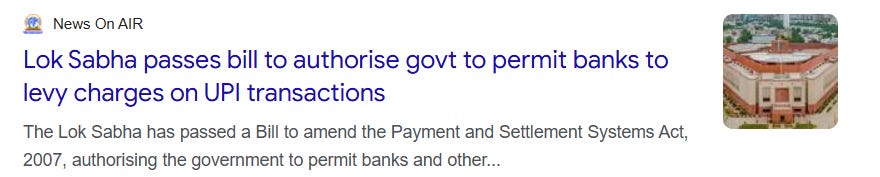
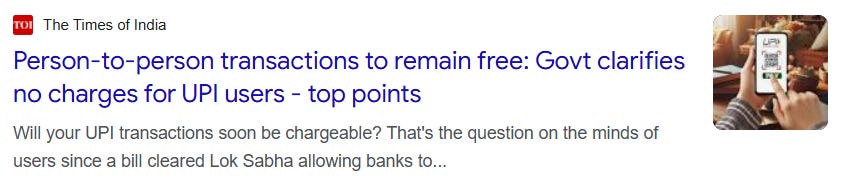
The recent Lok Sabha Bill to amend the Payment and Settlement Systems Act authorises the government to make UPI fee-based, even if the fee is a very small percentage of the amount.
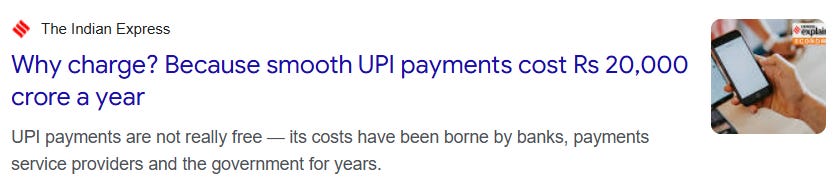
There are sound arguments to be made both for and against a small fee for UPI. Banks have to spend significantly to set up the infrastructure for UPI.
According to government data, UPI’s user base reached 55.49 crore in June and processed 24,162 crore transactions worth Rs 314 lakh crore in FY26. So, it is understandable that there is a significant push from the banks to recover a part of their costs from UPI.
But today I will not talk about the economics of UPI for banks. Instead, I will focus on why there has been such a disproportionate reaction to this bill.
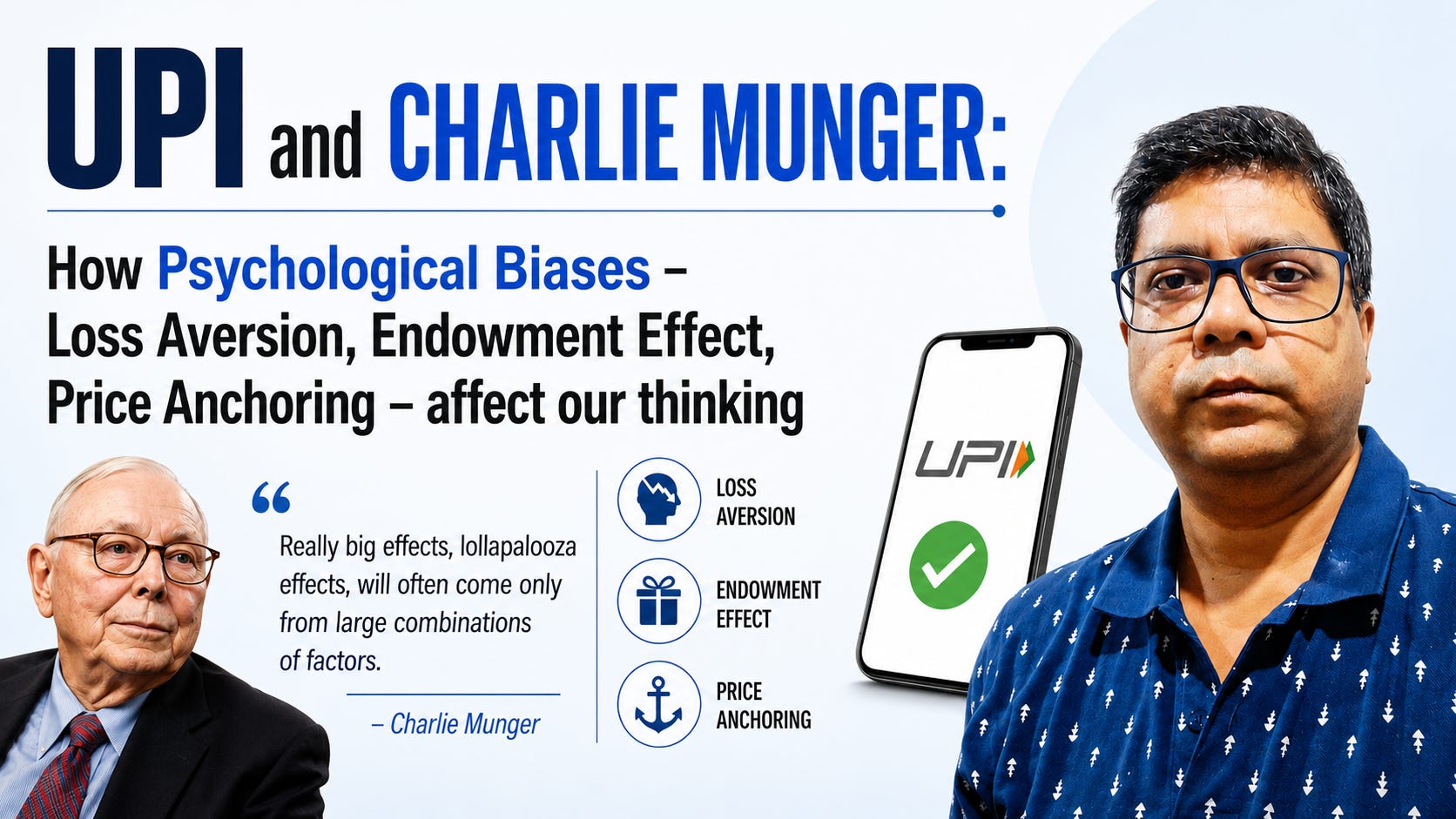
Behavioural psychology can explain. There are three biases entrenched in humans that are at play here.
We are used to not paying for UPI. Anytime that equation changes, the anchored price in our mind gets triggered. And in this case, the anchored price is zero. Any deviation triggers a loss aversion bias.
Amos Tversky and Daniel Kahneman, who later won the Nobel Prize for Prospect Theory, explain that the pain of a loss hurts twice as much as the joy of an equal gain. In this case, the pain is of a benefit, which I was enjoying, being taken away. UPI is the default way Indians transact. Once something becomes the status quo, even a small change feels like a step back.
People give more value to something they already have. Simply having an item creates a quick emotional bond with it. So, when someone tries to take it away, loss aversion bias kicks in. The negative reaction is not just to a small fee today, but to the fear that this could increase in the future.
When you have one or more mental biases working together, you get the special “lollapalooza effect” popularised by Charlie Munger. You can see the same across various other areas. This is the same reason why many other policies are difficult or impossible to change once they are in place. In India, agricultural income tax, electoral handouts, etc. are such policies which, once started, can rarely be rolled back even if the utility of the policy diminishes or completely stops.
If you prefer video, a short version is here.
https://youtube.com/shorts/cLvj-nKTl7E?feature=share
Twitter/X Profile: @A_Basumallick
For investing in our PMS, drop us an email at equity@shreerama.co.in
For our research services, visit https://intelsense.in
Subscribe to our free blog https://intelsense.substack.com
DISCLAIMER:
Intelsense.in is owned by Cupressus Enterprises Pvt Ltd (SEBI Registered Research Analyst) with Registration No. INH000013828
Research Analyst or his associates or his dependent family members may hold a financial interest or actual/ beneficial ownership in the financial products/ securities advised herein.
Investment in the securities market is subject to market risks. Read all the related documents carefully before investing.
Shree Rama Managers LLP is a SEBI-Registered Portfolio Management Services Company (SEBI Reg. Number: INP300007341).
Stocks discussed, if any, are for EDUCATIONAL purposes only and should NOT be construed as investment advice.
Please consult your financial advisor and do your own due diligence before investing.
No posts
Comments
Nothing yet. Say the first thing.
Sign in to join the conversation.