AI labs have been restructuring their business and enterprise licensing models recently from user-based subscriptions to consumption-based metrics (tokens). CIOs and CFOs are feeling the pressure as costs have increased 10x for most organizations. The days of Silicon Valley’s tokenmaxxing and leaderboards as proxies for AI-driven productivity are history, making way for tokenomics, a much closer monetizing of AI spend.
The release of DeepSeek last year once again popularized an economic principle: Jevons’ Paradox. As the cost of a good decreases, its consumption increases. 18 months ago, the assumption was that using AI models would become cheaper, thereby fueling demand. DeepSeek is seeing increased popularity, especially in Europe, but recent developments have been hampering the IPO and revenue aspirations of U.S.-based frontier AI labs. Here’s what it means for business leaders, and what to do about it.
Anthropic’s release of Fable 5 introduced a new model class that is much more capable than its predecessors. It performs extremely well on complex, long-running research tasks, evaluates and corrects its own output, and consumes significantly more tokens in the process. Anthropic included limited-use quotas in its Claude subscriptions until July 7 (and has just extended them until July 12). Nevertheless, the real cost without subsidizing is $10/M input tokens. That is twice the cost of the current Opus 4.8 model. I recently used Fable 5 for a range of tasks (from building business simulation games to structuring courses and content, and running web audits), and it has been rapidly eating up the token quota within the 5-hour window that Anthropic allocates per user.
A few days after Fable 5’s initial release, the U.S. Department of Commerce issued an export control directive, prompting Anthropic to revoke access to the model for all its customers. It seems that the U.S. government’s decision was based on fears of cybersecurity vulnerabilities and on preventing foreign actors from creating similar models by reconstructing Fable 5’s model (via a process called distillation). As a result, AI leaders worldwide must now address how to mitigate risks of sudden model revocation when AI models become part of their business’s technology fabric.
Geopolitics, combined with changes in pricing models and higher token costs, is driving organizations to lean on cheaper models, such as Chinese DeepSeek and Qwen, and to make self-hosting open-source models a viable option. (For AI labs looking to go public this year, this is anything but welcome news.)
New LinkedIn Learning Course: Lovable 101: From Prompt to Product
Building a business app used to require a development team, a budget, and months of work. Today, AI-assisted tools like Lovable make it possible for any business professional to go from idea to published app in under an hour with no coding experience required.
In this course, instructor Andreas Welsch walks you through the complete process of building a Wins Journal app, a personal tool for logging professional achievements and generating an AI-powered year-end summary.
Along the way, learn how to validate an app idea, write effective prompts, add user authentication, store personal data securely, and publish your finished app. Walk away with a working, published app and the confidence to build your next one.
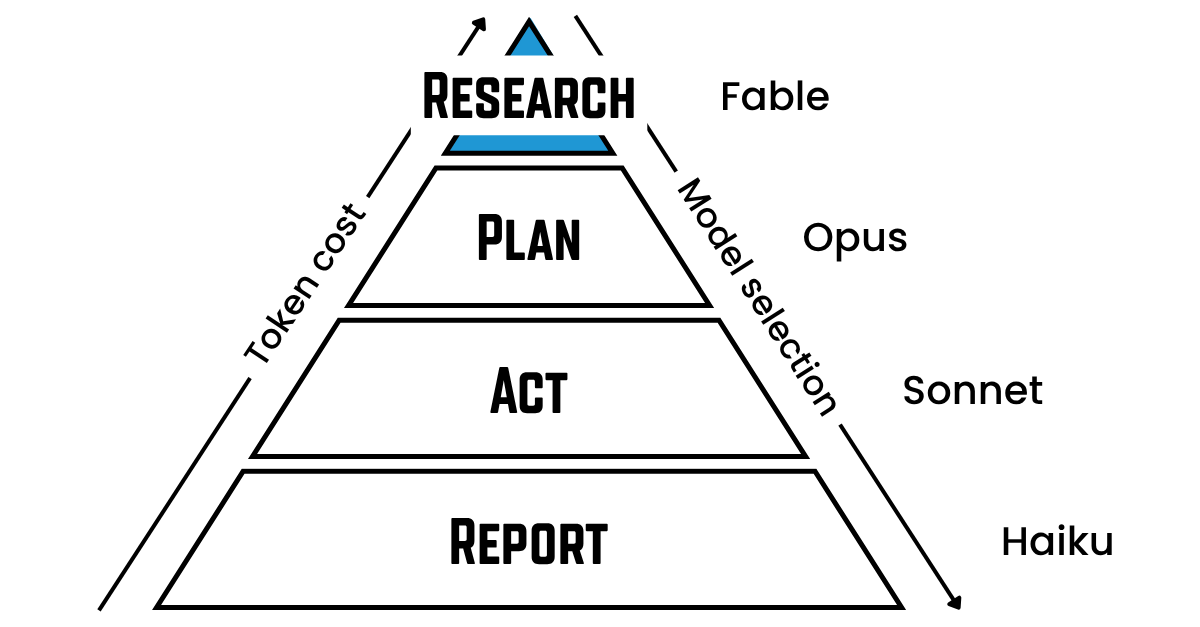
Voracious models like Fable 5 trigger comparisons to human organization in business: relying on scarce, expensive resources for highly complex tasks like research, highly capable models for planning, solid models for implementing the plan, and core skills for communicating information.
Compartmentalizing tasks and users and facilitating handoffs between models are becoming more important in the short term. For example, select Fable as the model for a research or planning task in Claude Chat, and switch it to Opus or Sonnet for subsequent tasks in the same chat. Ask Fable to save its results in a Markdown file (plain text with simple formatting) that a lower-tier model can process and act on. This allows you to balance your token spend between high-value (complex research and reasoning) and lower-value (acting upon or summarizing):
Task vs. Cost Impact of AI Models
Not only are token costs increasing for frontier models, but also selecting Fable for a task that Haiku could do perfectly for a fraction of the cost creates unnecessary spending. At the moment, understanding when to select what is largely a user enablement challenge. Going forward, the most capable models will flexibly route requests to simpler models to save tokens and costs. Fable 5 already delegates certain responses to lower-tier models, for example, in cybersecurity and for biochemical compounds.
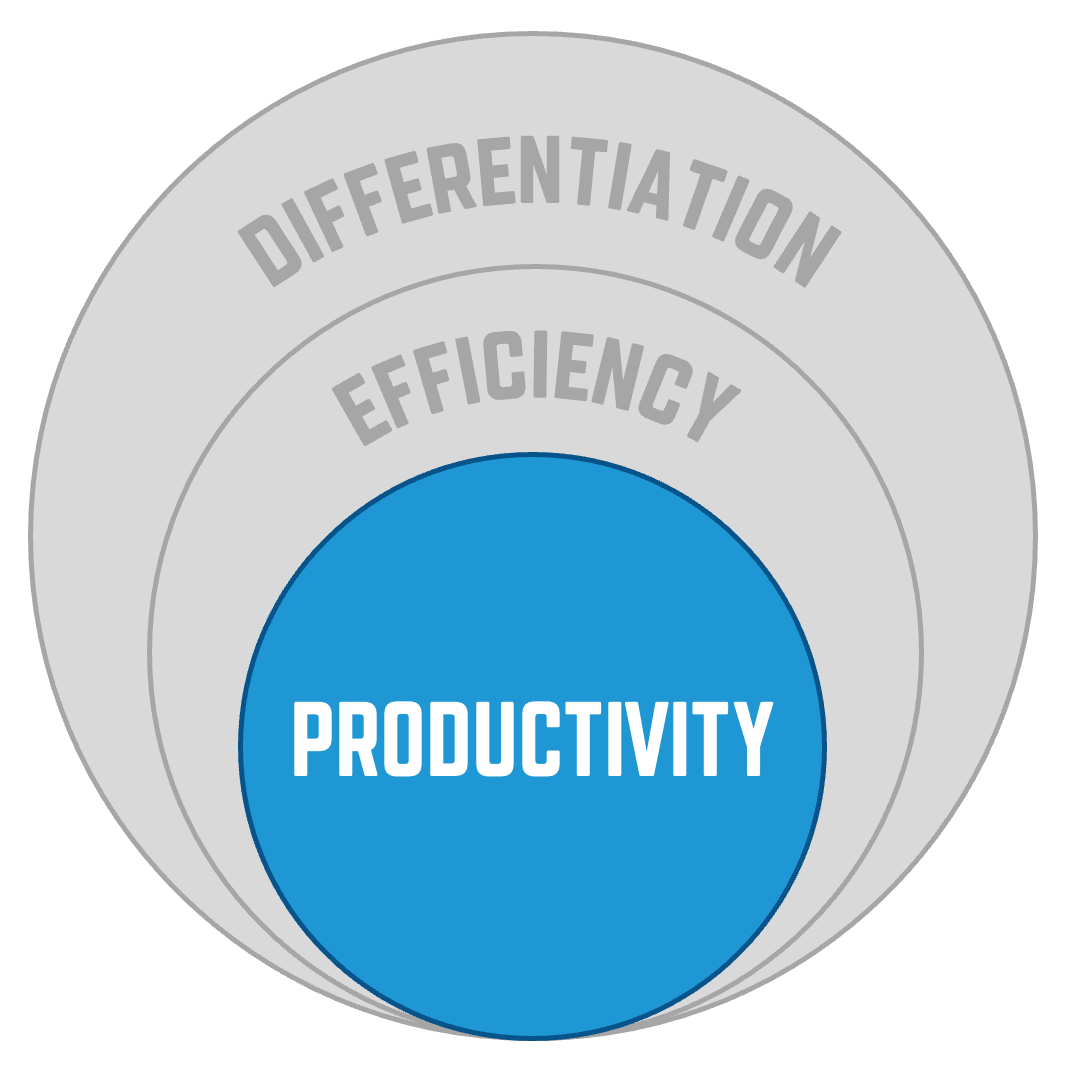
For the past three years, Generative AI has been stuck in the productivity arena. Individual users can use the technology to summarize meeting minutes, draft emails, sketch out slide decks, and so on. It has been a great enabler for business users who otherwise would not have had access to AI without being data scientists or needing lots of data. But simply focusing on productivity as the KPI to improve leads to several flaws that slow momentum, adoption, and impact.
AI’s potential for business as a technology lies in the next two layers, operational efficiency and strategic differentiation. Leaders need to create intentional opportunities for team members to collaborate and implement AI in their business processes that address team- or organization-wide tasks beyond productivity. This typically requires changing or even re-thinking the process with AI as a key enabler.
Focus of Generative AI Use in Teams (Source: Welsch, 2026)
For example, you might ask your team members to have Claude (switched to the Opus model) interview them about the state of a process, its steps, stakeholders, and where it breaks down. Ask Claude to save it in a Markdown file. Using the Fable model, analyze the provided Markdown files and propose suggestions for improvements based on AI capabilities or agents. That allows you to leverage the capabilities of the latest frontier AI model to impact your business.
The latest generation of frontier AI models, such as Anthropic’s Fable 5, comes with both increased capabilities and higher costs. For most organizations, higher levels of capability increase the cost of accessing AI’s intelligence without a clear return. AI enablement leads need to inform their users about when and how to use these models, as otherwise users may incur high costs. Breaking down tasks into research, planning, action, and reporting is a simple framework users can apply. However, the biggest question leaders need to keep in view is whether the rising cost of access to AI-driven intelligence will outweigh the cost of human intelligence.
Equip your team with the knowledge and skills to leverage Agentic AI effectively. Book a consultation or workshop to accelerate your company’s AI adoption.
Join my bi-weekly live stream and podcast for leaders and hands-on practitioners. Each episode features a different guest who shares their AI journey and actionable insights. Learn from your peers how you can lead artificial intelligence, generative AI, agentic AI, and automation in business with confidence.
August 04 - Grant Ecker (Founder & CEO of Chief Architect Network) will share how IT executives can prepare their technology stack for agentic transactions and volume. [More details to follow on my LinkedIn profile…]
August 18 - Michael Carroll (Fellow at LNS Research) will share how to adapt traditional approaches for AI agents to recommend and buy your product. [More details to follow on my LinkedIn profile…]





Comments
Nothing yet. Say the first thing.
Sign in to join the conversation.