
There’s an important difference between a rebellion and a revolution: rebellion involves fighting against a leader to whom one ostensibly owes allegiance, while revolution aims to overthrow the system itself (the heroes of Star Wars would arguably be more accurately characterized as the “Revolutionary Alliance”). [I find it similarly ironic that big businesses will characterize their products as “revolutionary” when they are reinforcing the entrenched market leaders or, perhaps, changing market share; I suppose we think of “rebellion” as a contrarian attitude rather than an attribute, so calling a new smartphone “rebellious” would feel silly, even if it’s arguably more accurate]. The stories we tell about revolutions are often about “freedom” and ideals, while rebellions may seem to be more motivated by greed or grievance, but those lines aren’t bright. The American revolution was at least in part driven by anger at taxes; the taxes were seen as part of a broader set of impositions and abuses, but it’s hard to think of a more self-interested move than to overthrow the governmental structure because sugar got more expensive. Similarly, the nobles who led earlier rebellions would have described their grievances as reactions to oppression or tyranny, and I think they probably believed it; as I have touched on previously, viewing financial considerations as an independent variable from “honor” or “power” is a relatively recent phenomenon. To this day, these exist in mutually-reinforcing dynamics: power can enable a successful lawsuit, yielding financial rewards, and sufficient wealth can allow someone to acquire a company, providing additional avenues for influence through its employees and customers.
n France, long before the Revolution, the king was threatened by rebel nobility. Charles de Bourbon was one of the most important men in early 16th-century France, winning glory and the friendship of King Francois 1 on the battlefields (most notably Marignano), then defecting to ally with Emperor Charles V, and eventually defeating Francois at the Battle of Pavia. Vincent Pitts’ The Man Who Sacked Rome is a lengthy, in-depth biography of Bourbon, but Pitts’ prose is engaging and readable, and paints a clear picture of the high-stakes decisions for honor, power, and wealth faced by nobility of the era. Bourbon was, above all, a warrior. He distinguished himself on the battlefield as a teenager, and was promoted by Francois to the rank of Constable (essentially the head of the army) in his mid-twenties. These campaigns, however, were astonishingly expensive, taxing even the royal treasury. As part of an effort to recover these costs, Francois challenged Bourbon’s inheritance claims following the death of Bourbon’s wife; feeling insulted and aggrieved, Charles defected to Emperor Charles V (and in alliance with Henry VIII of England). Bourbon captured Francois, but according to Pitts, financial constraints imposed themselves again, leading Bourbon to negotiate a settlement with Francois at the treaty of Madrid. When Francois refused to honor the concessions of the treaty, Bourbon led Imperial troops in Italy, where the opportunities for plunder were greater to pay off his debts to his troops, and eventually their demands for their owed payments seemed only satisfiable by a sack of Rome. Bourbon himself was shot and killed trying to scale the walls at age 37. His men, however, succeeded, and devastated the city, robbing the cathedrals of invaluable artifacts, killing the Swiss guards to the last man, and violating the women. Bourbon, at least, had a reputation for limiting his troops’ excesses in prior victories; his combination of personal charisma and promising financial rewards to the troops seems to have restrained them somewhat, but the power dynamic was clearly complicated. While he set the military agenda and had the authority to direct them, the troops demanded payment, and his selection of Rome as a target was clearly influenced by that financial need.
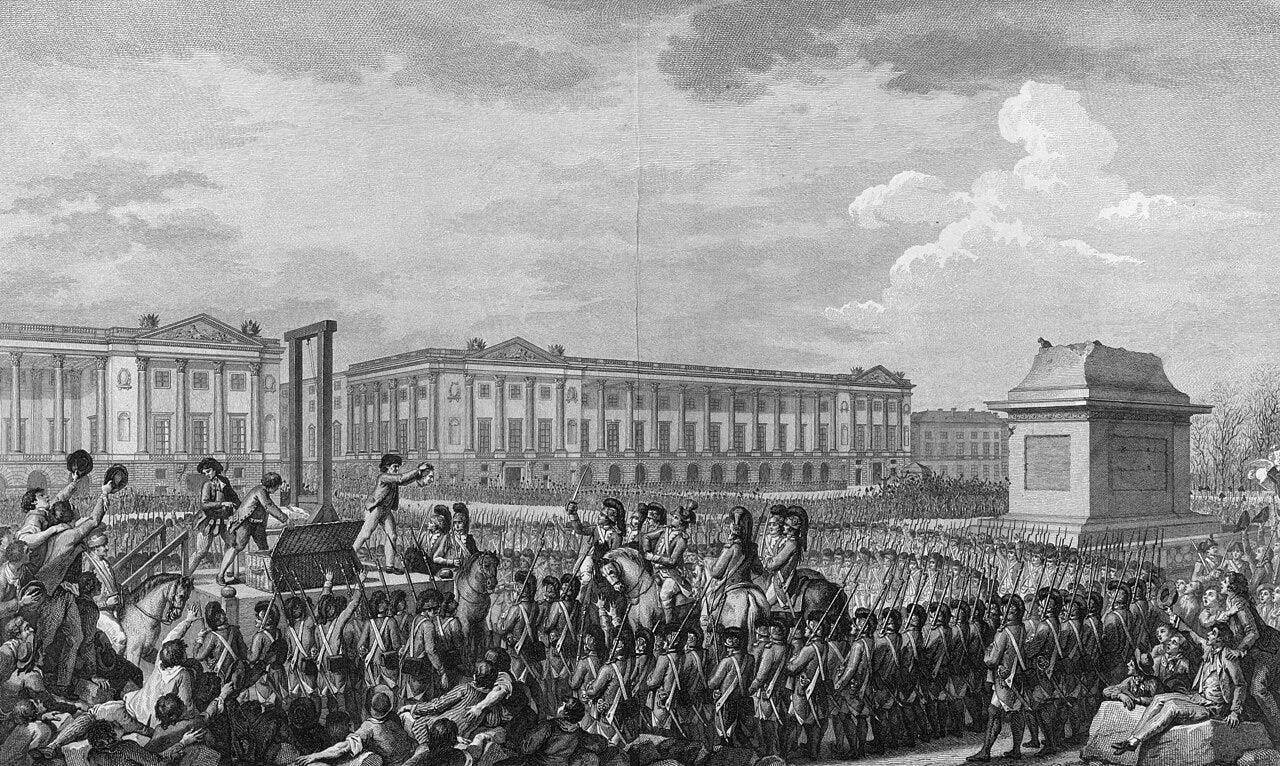
A quarter of a millennium later, another French king Jeremy Popkin’s A New World Begins is an immersive history of the French revolution through Napoleon’s establishment. It’s still a chunk, and by following certain “characters” through different events (the glazier Jacques-Louis Ménétra’s life forms a counterpoint to Louis XVI’s, with the respective contrasts in power and freedom, not always moving in concert; the king may have had greater power, but also faced constant scrutiny and pressure to live up to his title in a way that a journeyman artisan did not). Popkin evokes the richness and complexity of the era, but perhaps at the cost of a clear, singular thesis. I was left with the overwhelming impression of a) changes throughout society being under consideration, and b) that the audience had changed. While Bourbon prosecuted his claims for an audience of his fellow nobles (in France and throughout Europe), the writers and thinkers in the Revolutionary era were often trying to articulate not a specific redress of a particular grievance, but rather a set of foundational principles that would form a better society. Of course, for all the social theory, an economic crisis and the attendant misery were still major contributors to the 1789 eruption. Yes, the storming of the Bastille was symbolically important because the prisoners held there lacked the ability to appeal their indictments, but it was the dismissal of the finance minister Jacques Necker (who was friendly to the Third Estate) that led ordinary Parisians to take to the streets. In both eras, specific financial pressures at the level of the kingdom led to tremendous violence and loss of life, and the kings seem to have grossly overestimated their subjects’ willingness to finance their endeavors in the name of “loyalty” or “patriotism. And Louis XVI wound up being guillotined (along with thousands of others in the Reign of Terror), while Francois I was able to sign a treaty, despite having been captured on the battlefield. If your rival is a rebel, maybe you can negotiate. If they are a revolutionary, all bets are off.
It’s easy to be cynical about others’ motivations and see their claimed principles as covers for naked self-interest, while formulating our own claims in terms of principles and lofty goals, with any tangible benefits we may derive as merely incidental to “the cause.” I’m upset about not getting a raise because I met my targets and it represents failure to recognize talent on the part of my organization’s leadership… not because I’m greedy and just want more money. But this is disingenuous and unnecessary. I don’t think that benefiting from the outcome negates the justice of the claim (Charles de Bourbon certainly didn’t). And yet in contemporary discussions of policy we seem to have forgotten that: I get deeply aggravated, when, for example, CEOs of AI companies oppose regulation “because they want to make sure that America beats China in the AI race” without even acknowledging that they also don’t want to bear the responsibility.
I wrote this reflection as part of my ongoing effort to read one book from every aisle in Olin Library.
If you know someone who might find this of interest, please share it:
And to support this effort and read more of my writing, please subscribe:
Yours on the journey,
Jacob K. Lehman
No posts
Comments
Nothing yet. Say the first thing.
Sign in to join the conversation.