
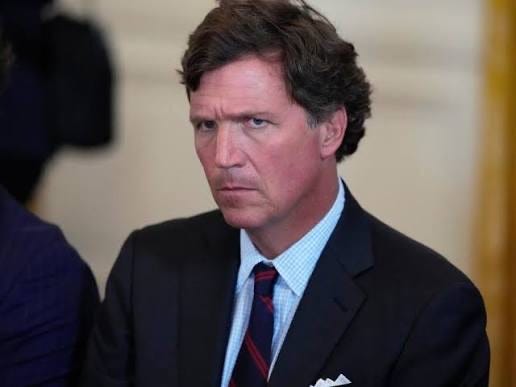
Tucker Carlson is not merely attacking corrupt televangelists, shallow megachurches, dispensationalism, Christian Zionism, or liberal mainline churches. Those are the individual controversies, but taken together they point toward something much larger: an effort to dismantle the Protestant religious and political framework that has shaped American conservatism and replace it with a more nationalist, hierarchical, anti-liberal, postliberal form of Christianity.
That does not mean Tucker has issued a formal manifesto announcing that he intends to destroy Protestantism. Nor does it mean every guest he interviews is consciously participating in a coordinated campaign. But political projects do not begin with a written blueprint. They emerge through repetition, editorial choices, guest selection, selective historical framing, and the gradual normalization of one explanation for everything that has gone wrong.
The pattern is now difficult to ignore:
The immediate scapegoat is evangelical corruption.
The doctrinal target is Protestant authority.
The historical target is the Reformation.
The constitutional target is political Protestantism.
The political objective is to replace the old American conservative coalition with a nationalist, anti-interventionist, postliberal form of civilizational Christianity.
The best way to understand what Tucker is doing is as a twenty-first-century, media-driven counter-Reformation. It is not an official Roman Catholic movement of course and Tucker does not have to convert to Rome or Eastern Orthodoxy . His project is political not denominational. He does not need Baptists to venerate icons or Presbyterians to submit to the pope. He needs Protestants to stop trusting the political instincts their tradition helped produce: freedom of conscience, divided authority, religious liberty, constitutional restraint, suspicion of concentrated power, and the conviction that no fallen human institution has the right to bind another person’s conscience.
Postliberalism cannot fully dominate the conservative right if the people in the conservative right still believe those things.
Why political Protestantism stands in the way
Historic Protestant political thought begins with a deeply inconvenient truth for every movement that wants greater power: every human authority can error.
A pope can err. A patriarch can err. A council can err. A pastor can err. A king can err. A legislature can err. A majority can err. A political movement calling itself Christian can err. A government claiming to pursue the common good can become corrupt, coercive, or tyrannical.
That produces a political instinct toward limits on human power. Power must be divided because man is fallen. Civil and ecclesiastical authority must remain distinct because neither possesses total jurisdiction and government may punish crimes and protect public order, but it cannot manufacture faith. Conscience belongs to God. Rulers remain beneath law. Churches can admonish governments, but churches can not possess the civil sword. Governments may regulate conduct, but they cannot compel genuine worship.
Those principles helped produce a culture in which Americans instinctively ask:
Who authorized this power?
What is the government’s jurisdiction?
What protects the dissenter?
What happens when the people claiming to represent the common good are wrong?
Who judges the ruler?
But Postliberalism asks a different set of questions. It argues that liberalism has weakened the family, church, local community, moral tradition, and shared public life. It therefore wants government to take a more active role in directing society toward a substantive concept of the good. The conflict is not merely over policy.
Political Protestantism asks:
Who gave fallen human beings the authority to compel the conscience?
Postliberalism asks:
How can society recover moral order unless political power is permitted to enforce the common good?
Political Protestantism obstructs the postliberal answer at every turn. So before postliberalism can be sold as Christian restoration, Protestant limits must be redefined as the source of Christian decline.
That is the project in play.
Step one: Create moral disgust
The campaign begins with real failures because propaganda always finds a kernel of truth.
American Protestantism has supplied no shortage of them: prosperity preachers, private jets, celebrity pastors, financial scandals, political ministries, commercialized churches, compromised denominations, shallow sermons, cowardly leaders, abuse concealed by institutions, and congregations that have exchanged biblical truth for cultural approval. But a corrupt prosperity preacher proves that the preacher is corrupt. It doesn’t prove that sola Scriptura is false.
A liberal Episcopal bishop does not prove that the Reformation made doctrinal faithfulness impossible.
A badly governed independent congregation does not prove that without central hierarchy there will always be corruption.
A wealthy pastor does not prove that Protestant church government itself is the cause of all evil.
Yet Tucker’s content repeatedly encourages the audience to move from one particular failure to general condemnation.
Every week his content says:
Look at the money.
Look at the private jets.
Look at the political manipulation.
Look at the compromised churches.
Look at the shallow theology.
Look at the progressive denominations.
Conclusion: Protestant leaders cannot be trusted and if Protestant leaders cannot be trusted, perhaps Protestant institutions cannot be trusted either.
Step two: Turn corruption into a structural indictment
Once the audience distrusts the leaders, the indictment expands to the actual Protestant structure.
The implied argument becomes:
The pastors are corrupt.
Their churches cannot restrain them.
The churches cannot restrain them because Protestantism lacks the necessary binding authority.
Protestantism lacks binding authority because the Reformation rejected the historic church.
The Reformation replaced ecclesiastical authority with private interpretation of the gospels.
Private interpretation then created fragmentation.
Fragmentation then created doctrinal novelty.
Doctrinal novelty made manipulation inevitable.
Therefore, corruption is not merely the result of sin or of men who fall short of the glory of God, it is the predictable poison fruit of Protestantism.
That is how Paula White becomes evidence used against Martin Luther.
That is also how the collapse of liberal Episcopalianism becomes the evidence against the doctrine of sola Scriptura.
That is how a megachurch scandal becomes the argument for a mandatory centralized ecclesiastical authority.
He doesn’t extend the same logic to Catholic and Orthodox institutions who have also experienced financial corruption, clerical abuse, political capture, moral scandal, concealment, national fragmentation, and leaders who violated their own doctrines. Hierarchy can restrain misconduct, but it also hides it, protects it, and punishes those who expose it.
Every human and man made institution is fallible and therefore every institution needs limits, accountability, transparency, and judgment.
But his counter-Reformation narrative turns the existence of Protestant failures into evidence that Protestant authority itself is a failure that must be corrected.
Step three: Identify the cause: the Reformation
Once Protestant institutions are presented as defective, the audience is led to:
Protestantism rejected the final authority of the historic church.
Sola Scriptura allowed Christians to judge religious authorities by Scripture.
Competing interpretations created competing confessions.
Religious division made one authoritative national faith impossible.
Governments were forced to tolerate disagreement.
Toleration elevated individual conscience.
That produced religious liberty, pluralism, constitutional limits, divided jurisdiction, and individual rights.
Those principles expanded into modern liberalism.
Modern liberalism detached freedom from truth and conscience from God.
It produced secularism, feminism, sexual autonomy, consumerism, globalism, and social dissolution.
Therefore, the original sin was the Reformation.
Catholic, Orthodox, and postliberal thinkers have advanced versions of this for years. The Reformation is blamed for fragmenting Christianity. Religious liberty is portrayed as a political accommodation to doctrinal chaos. Individual conscience is the ancestor of radical autonomy and liberalism becomes code for Protestantism.
Freedom of conscience is always moral relativism. The right to reject compelled religion is the belief that every religion is true.
The postliberal story collapses these distinctions because it needs the Protestant achievement of limited jurisdiction to look like the first stage of social collapse.
Step four: Attach Protestantism to blood and war
Christian Zionism is the perfect wedge because it connects religion, politics, foreign policy, and the old conservative coalition.
It brings together:
evangelical Protestantism;
dispensational theology;
Republican politics;
support for Israel;
American exceptionalism;
interventionist foreign policy;
the postwar Judeo-Christian consensus.
Tucker could argue that American foreign policy must be governed by constitutional authority, strategic prudence, national interest, moral limits, and the needs of American citizens. Instead, he repeatedly attacks the theology underlying evangelical support for Israel.
Why?
Because:
Dispensationalism is comparatively recent.
It developed in a fragmented Protestant world.
It spread through independent interpretation and popular study Bibles.
It assigned modern Israel a unique prophetic role.
It captured evangelical political leadership.
It supports American foreign policy.
It encouraged military intervention.
Therefore, Protestant theological fragmentation has produced war and death and that is rhetorically powerful. Even though it is dishonest. But a theology is no longer simply a mistake. It has geopolitical consequences. Decentralized biblical interpretation is no longer just messy. It’s dangerous. It’s killing Palestinian babies. It’s responsible for genocide.
Christian Zionism is the bridge connecting Protestant theology to the political order he wants to dismantle.
Step five: J. D. Hall as the internal witness
J. D. Hall is essential because he is Protestant and an Orthodox apologist criticizing Protestantism can be dismissed as an outsider defending his own tribe but a Reformed Baptist criticizing dispensationalism provides an internal witness.
Hall allows Tucker to say, in effect:
This is not merely a Catholic or Orthodox criticism. Serious Protestants admit that a major part of American Protestantism was built on eccentric, and politically destructive ideas.
Dispensationalism is portrayed as:
recent;
sectarian;
historically rootless;
detached from inherited authority;
politically manipulated;
improperly centered on modern Israel;
and responsible for destructive foreign-policy commitments.
Hall is the witness called from inside the house to condemn it and the audience is meant to conclude that even Protestants recognize that Protestantism has become corrupted .
Step six: Use Jay Dyer as the external prosecutor
Jay Dyer performs a different role.
Hall says that dispensationalism corrupted Protestant Christianity.
Dyer suggests that Protestant Christianity itself departed from historic Christianity.
That is why discussions of icons, councils, apostolic succession, the church fathers, liturgy, and the first millennium matter. They are not random explorations of Christian history. They construct the case against the Reformation.
The narrative is simple:
Protestantism is only five centuries old.
It broke from Roman Catholicism, which had already separated from Eastern Orthodoxy.
Protestants know nothing about the first thousand years of the church.
They rejected practices ancient Christians accepted.
They separated Scripture from authoritative tradition.
They replaced the historic church with private judgment.
Orthodoxy therefore represents continuity, while Protestantism represents rupture.
The icon discussion is a revealing example.
Archaeology shows that some third-century synagogues contained biblical paintings. That does not establish that the apostles kissed icons, prayed before them, venerated portraits of saints, or taught the developed theology that was later defended at the Second Council of Nicaea.
Yet the argument is:
Ancient Jews used images.
Therefore religious images are biblical.
Christ became visible in the Incarnation.
Therefore Christ may be depicted.
Therefore the devotional veneration of icons is legitimate.
Therefore Protestant rejection of icons proves Protestant historical ignorance.
The existence of art is not the same as veneration. Depicting Christ is not the same as praying before an image. Third-century evidence is not apostolic evidence but the rhetorical purpose is to teach Protestant viewers that their tradition erased Christian history and that Scripture cannot be interpreted safely apart from the institutional authority their ancestors rejected.
Step seven: Compare Protestantism at its worst with Orthodoxy and Catholicism at their best
The emotional power of this depends on a deliberately uneven comparison.
Protestantism is represented through:
prosperity preachers;
private jets;
liberal Episcopalians;
celebrity pastors;
dispensational excess;
Christian Zionism;
commercialized worship;
shallow preaching;
political manipulation;
denominational conflict.
Catholicism and Orthodoxy are represented through:
ancient liturgy;
fasting;
monks;
martyrs;
church fathers;
sacramental seriousness;
beauty;
reverence;
institutional continuity;
resistance to modernity;
historical depth.
That is not a fair comparison between traditions. It is Protestant failure compared with Catholic and Orthodox aspiration and a fair comparison would include Protestantism at its strongest:
Luther, Calvin, Tyndale, Hooker, Cranmer, Bunyan, Edwards, Wilberforce, Bonhoeffer, C. S. Lewis, serious Reformed theology, confessional Lutheranism, Anglican political thought, Methodist reform, Baptist defenses of conscience, Bible translation, literacy, missions, abolitionism, constitutional limits, education, charity, and resistance to tyranny.
It would also include Catholic and Orthodox failure:
Corrupt popes.
Inquisitorial coercion.
Forced conversion.
Clerical abuse.
Financial scandal.
National churches captured by political rulers.
Orthodox ethnonationalism.
Church-state entanglement.
Jurisdictional conflict.
The use of ecclesiastical authority to justify state violence.
The selective comparison is necessary because Tucker is not merely presenting denominations. He is relocating moral prestige. Protestantism is cheap, modern, fragmented, and unserious. Orthodoxy and Catholicism are ancient, rooted, disciplined, masculine, and authoritative.
That emotional framing prepares the audience to distrust Protestant limits on power and desire stronger authority.
Step eight: Preserve Protestants who serve the new order
Douglas Wilson demonstrates that Tucker’s project is not simply denominationally anti-Protestant. Tucker remains willing to platform Protestants who reject liberal neutrality, favor a more explicitly Christian public order, and share the postliberal diagnosis of America.
The real dividing line is not:
Catholic and Orthodox good, Protestant bad.
It is:
Christianity that defends pluralism, limited jurisdiction, constitutional restraint, and the older American settlement is weak and exhausted. Christianity willing to use public authority to enforce a more comprehensive conception of the good is serious and useful.
A Protestant may remain confessionally Protestant while abandoning political Protestantism.
He may still affirm sola Scriptura, reject icons, and deny papal authority while adopting the claims that:
pluralism is decay;
neutrality is fraudulent;
individual rights have become socially destructive;
religious liberty has been extended too far;
the state must enforce Christian morality more comprehensively;
stronger political authority is necessary;
constitutional restraints obstruct restoration.That is enough.
The conversion Tucker’s project requires is not sacramental. It is political.
J. D. Hall attacks one Protestant faction from within.
Jay Dyer attacks the Reformation from outside.
Douglas Wilson shows that Protestants remain welcome when they reject the old constitutional settlement.
Each guest plays a different role.
Step nine: Redefine Protestant achievements as failures
Political Protestantism helped develop and defend ideas such as:
freedom of conscience;
resistance to compelled worship;
divided civil and ecclesiastical authority;
constitutional limits;
rulers beneath law;
institutional fallibility;
religious pluralism;
local authority;
suspicion of centralized power.
The postliberal project cannot simply acknowledge these as achievements and then ask for broader government authority. It must reinterpret them negatively.
Freedom of conscience becomes individualism.
Religious pluralism becomes relativism.
Limited government becomes libertarian indifference.
The separation of jurisdiction becomes secularism.
Individual rights become social atomization.
Institutional skepticism becomes rebellion.
The Reformation becomes original sin.
Once those substitutions are accepted, the Protestant political order no longer looks like a Christian response to human fallibility. It looks like the theological origin of collapse.
Step ten: Break the old Judeo-Christian conservative coalition
The postwar American right was not exclusively Protestant. It was a broad coalition of Protestants, Catholics, and Jews united around:
anti-communism;
constitutional government;
religious liberty;
support for Israel;
traditional morality;
free enterprise;
national defense;
American exceptionalism;
the language of Judeo-Christian civilization.
And Christian Zionism was one of the strongest bonds within that coalition. It linked evangelical Protestants to Israel, Jewish conservatives, Republican foreign-policy leaders, and a broader story of America as a nation morally aligned with biblical history.
Attacking Christian Zionism therefore does more than change policy toward one foreign country.
It weakens:
the evangelical-Republican alliance;
the Protestant-Jewish alliance;
the old national-security consensus;
the Judeo-Christian public identity;
and the theological foundation of the pro-Israel conservative movement.
The replacement is a narrower form of Christian civilizational nationalism: more anti-interventionist, less attached to the Judeo-Christian consensus, more suspicious of liberal pluralism, and more comfortable treating Christianity as the defining political identity of the nation.
This is why the debate over Israel cannot be separated from the debate over Protestantism. Christian Zionism is the wedge used to split the old coalition apart.
Step eleven: Replace the old right with a postliberal Christian coalition
The older conservative coalition was built around:
constitutional originalism;
limited government;
free enterprise;
evangelical electoral organization;
strong support for Israel;
anti-communism;
religious liberty;
pluralism within a Judeo-Christian civic order;
suspicion of centralized authority.
The emerging coalition is more:
nationalist;
economically populist;
anti-interventionist;
hostile to the Republican establishment;
skeptical of the Enlightenment;
suspicious of classical liberalism;
attracted to Christian nationalism;
comfortable with stronger state authority;
favorable toward Catholic and Orthodox critiques of modernity;
hostile to the old evangelical-Israel alliance;
oriented toward civilizational Christianity rather than procedural constitutionalism.
That new coalition can include traditionalist Catholics, Eastern Orthodox converts, Christian nationalists, anti-dispensational Protestants, national conservatives, postliberals, and anti-interventionists.
They do not need to agree on the sacraments, the papacy, icons, or apostolic succession. They only need to agree that the old liberal constitutional settlement has failed and that political authority must be used more directly to restore moral and social order.
That is why the religious realignment matters. Political movements require moral legitimacy. Tucker cannot merely tell Christian conservatives to abandon their pastors, distrust the Republican establishment, reject the old Israel consensus, and accept stronger government.
He needs to give them a religious explanation for why the old order failed.
The explanation is Protestantism.
The alternative is postliberal Christian authority.
The emotional appeal of the project
This project is not driven only by abstract theology. American Protestant churches are:
shallow worship;
therapeutic sermons;
institutional cowardice;
commercialism;
frightened pastors;
weak male formation;
absent fathers;
progressive accommodation;
celebrity culture;
theological ignorance;
corruption without accountability;
a lack of beauty, discipline, sacrifice, and historical depth.
Catholic and Orthodox traditionalism is then presented as the opposite:
ancient;
masculine;
disciplined;
sacramental;
mystical;
aesthetically serious;
historically rooted;
resistant to modern culture;
certain of its authority.
The unspoken message is:
Protestantism gave you strip-mall churches, celebrity pastors, doctrinal chaos, political manipulation, and cultural surrender. Ancient Christianity offers authority, beauty, order, courage, and continuity.
That is a tremendously powerful conversion narrative, even when the historical comparison is selective and the theological claims are disputed.
Tucker understands the emotional force of that contrast. The project condemns Protestant private judgment while depending heavily on Tucker Carlson’s private judgment.
Tucker decides:
which Christian leaders are authentic;
which pastors are corrupt;
which church historians are trustworthy;
which councils deserve respect;
which foreign policies reflect Christianity;
which guests represent the ancient church;
which Protestant doctrines are dangerous;
which forms of Christian nationalism are acceptable.
He is not submitting those editorial decisions to a pope, patriarch, bishop, synod, council, or confession. He is exercising the very individual discernment that his Orthodox guests describe as Protestant chaos. Tucker condemns evangelical pastors who use theology to serve foreign policy while elevating theological arguments that serve his own foreign-policy position.
The real issue is who sits on the throne
The debate is ultimately not about icons, megachurches, Israel, or even Martin Luther.
It is about authority.
Political Protestantism says that God alone possesses absolute authority, and therefore every human ruler, church, council, pastor, and institution must remain limited, accountable, and subject to judgment.
Postliberalism says society cannot recover moral order unless political authority is empowered to direct the community toward a substantive common good.
The Protestant response is not that moral truth does not exist. It is that truth does not grant one group of fallen human beings unlimited jurisdiction over everyone else.
A righteous cause does not make a ruler infallible and Christian language does not eliminate sin. The common good does not become safe merely because Christians define it. And man willstill falls short of the glory of God.
That is why confident political Protestantism must be weakened before postliberalism can thrive. Protestantism keeps asking the question the project needs people to stop asking:
Who gave fallen human beings the authority to sit on the throne and bind everyone else’s conscience?
Tucker Carlson’s counter-Reformation is therefore not an attempt to persuade Protestants to become Catholic or Orthodox. It is to relocate political and religious authority. The immediate scapegoat is evangelical corruption. The theological target is Protestant authority. The historical target is the Reformation. The constitutional target is political Protestantism. The political objective is a postliberal, nationalist, civilizational Christian order. And the reason the campaign must proceed through Protestantism is simple:
The postliberal project cannot dominate a people who still believe that no fallen human institution, however righteous its stated purpose, has the authority to sit on the throne or own another person’s conscience.
No posts
Comments
Nothing yet. Say the first thing.
Sign in to join the conversation.