
You wake up on a regular March morning in 2026, check your phone, and see oil prices jumping $15 overnight.
Tanker rates have skyrocketed.
Headlines scream “Strait of Hormuz at risk.”
Your first thought?
“Will this affect my fuel bill, my kitchen cylinder, or my mutual fund?”
That scenario is playing out right now. And unlike past crises, this one is different because the entire world’s energy lifeblood flows through a single 24-mile-wide strip of water. This is the Strait of Hormuz, and it is currently the most dangerous flashpoint in the global economy.
Let’s walk through exactly what is happening, why it matters to you as an Indian investor, and what the chain reaction looks like step by step, without the noise.
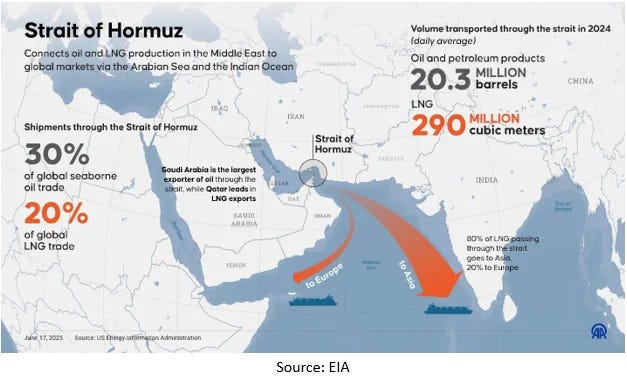
The Strait of Hormuz is the world’s most critical oil chokepoint, acting as the only gateway to the open ocean for many Gulf-based energy exporters. Its strategic importance cannot be overstated:
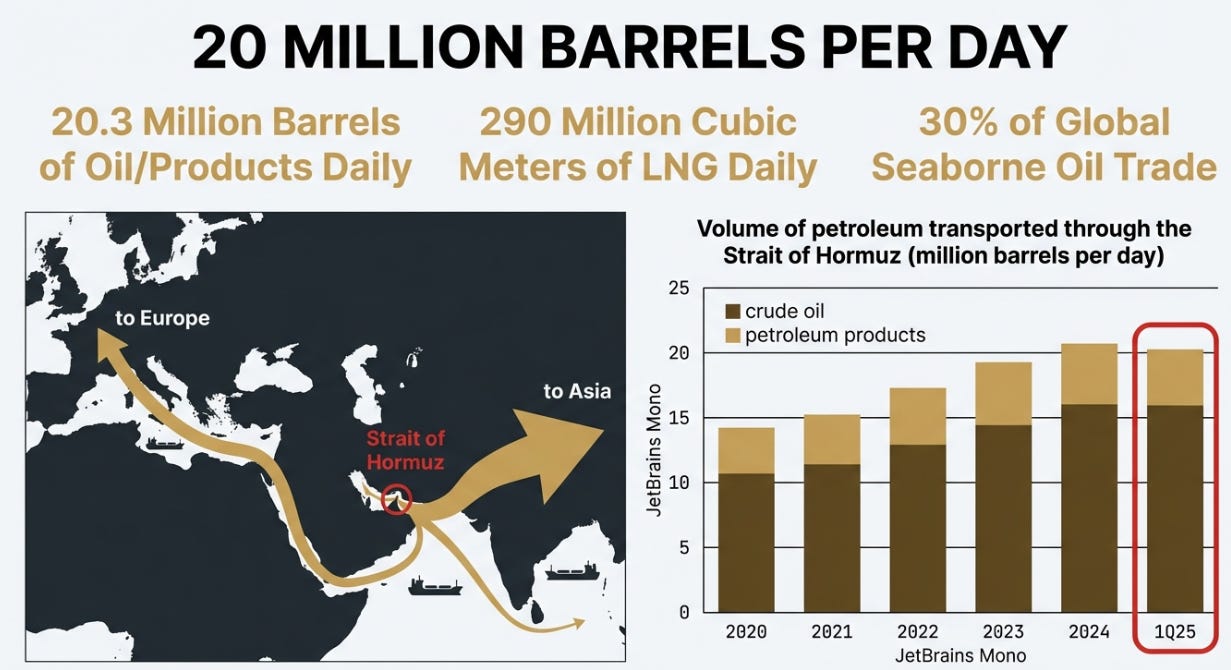
Massive Volume: Approximately 20 million barrels of oil flow through the strait every single day.
Global Share: This represents 20% of the world’s total oil supply and roughly one-third of all global Liquefied Natural Gas (LNG).
Geopolitical Trigger: Following recent U.S. strikes on Iran, the U.S. has officially recommended that ships avoid the area, and tankers are already beginning to divert.
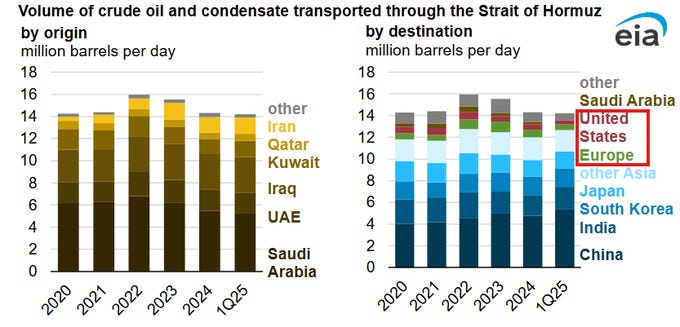
Below is a breakdown of the origin and destination of oil exports through the Strait of Hormuz. In 2024, exports of crude and condensate from Saudi Arabia accounted for 38% of total Hormuz crude flows (5.5 million b/d).
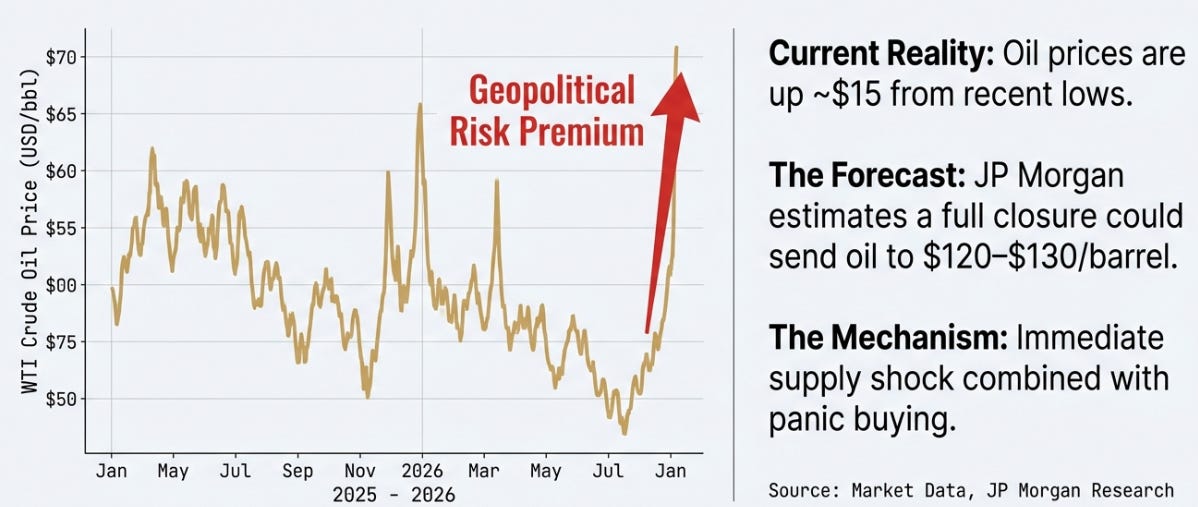
Markets hate uncertainty.
So they started pricing in the worst before a single barrel was actually stopped.
Financial giants like JP Morgan have long modeled this as the ultimate “worst-case scenario”. If the Strait closes, we aren’t just looking at a price hike; we are looking at a market in freefall.
The Price Spike: Analysts estimate that oil prices could immediately skyrocket to $120–$150 per barrel.
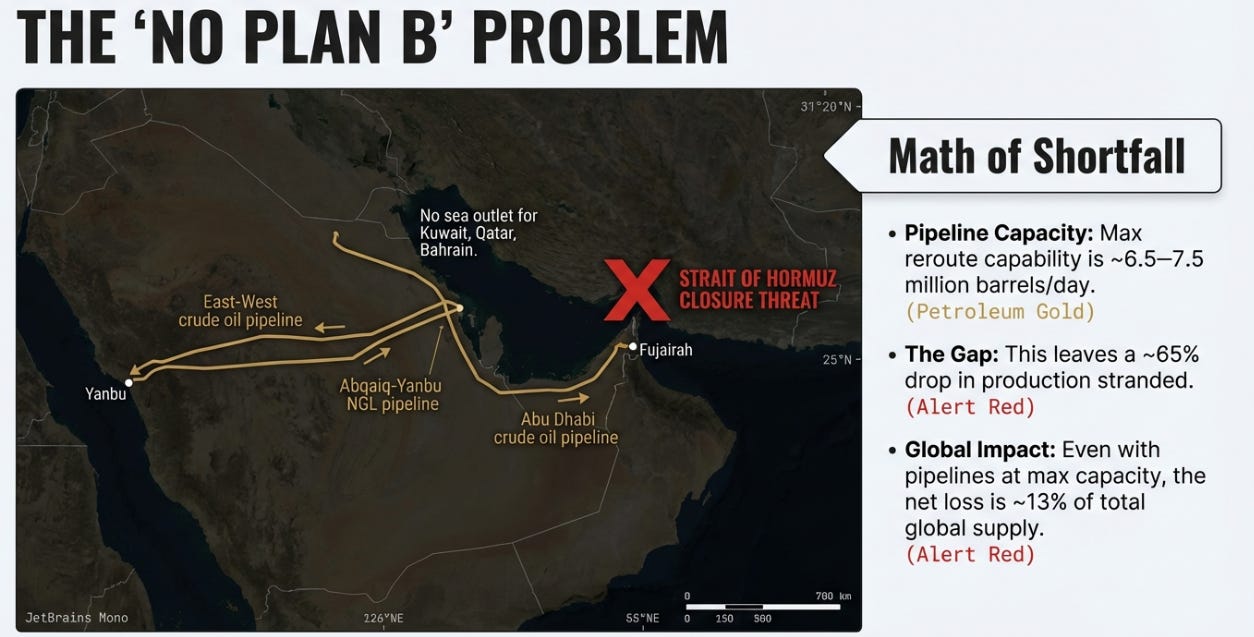
The Supply Gap: While some production (about 6.5 to 7.5 million barrels per day) can be rerouted through pipelines, this still leaves a massive 65% drop in production for the region.
Global Supply Loss: This translates to a sudden 13% disappearance of the entire world’s oil supply.
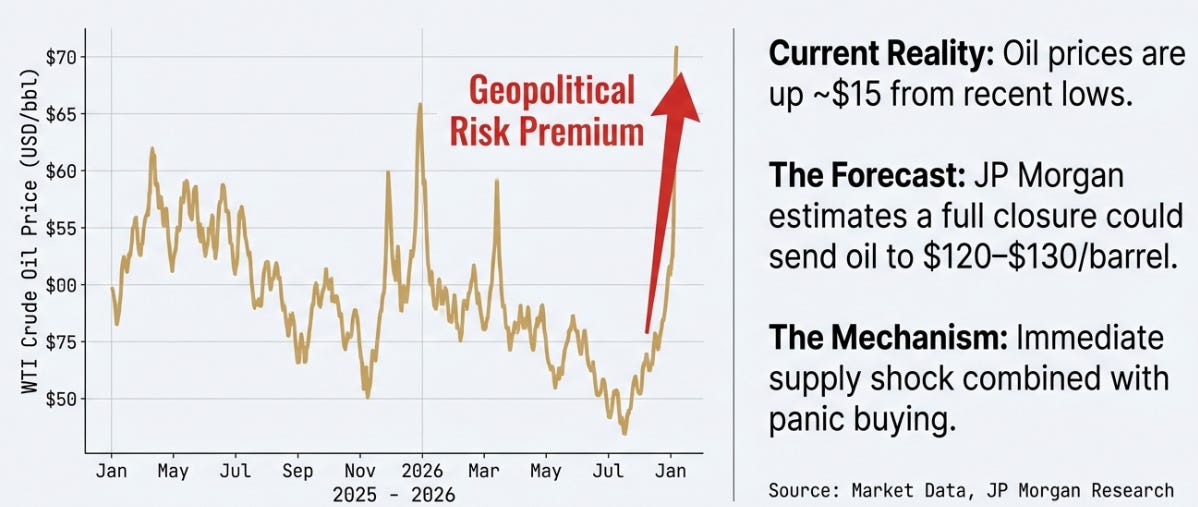
The reason central banks are watching this with bated breath is the direct link between energy and the Consumer Price Index (CPI).
The 20 bps Rule: According to a Federal Reserve study, every $10 rally in oil prices has the power to increase inflation by 20 basis points

The 5% Target: JP Morgan estimates that a full closure could spike U.S. CPI inflation to ~5%.
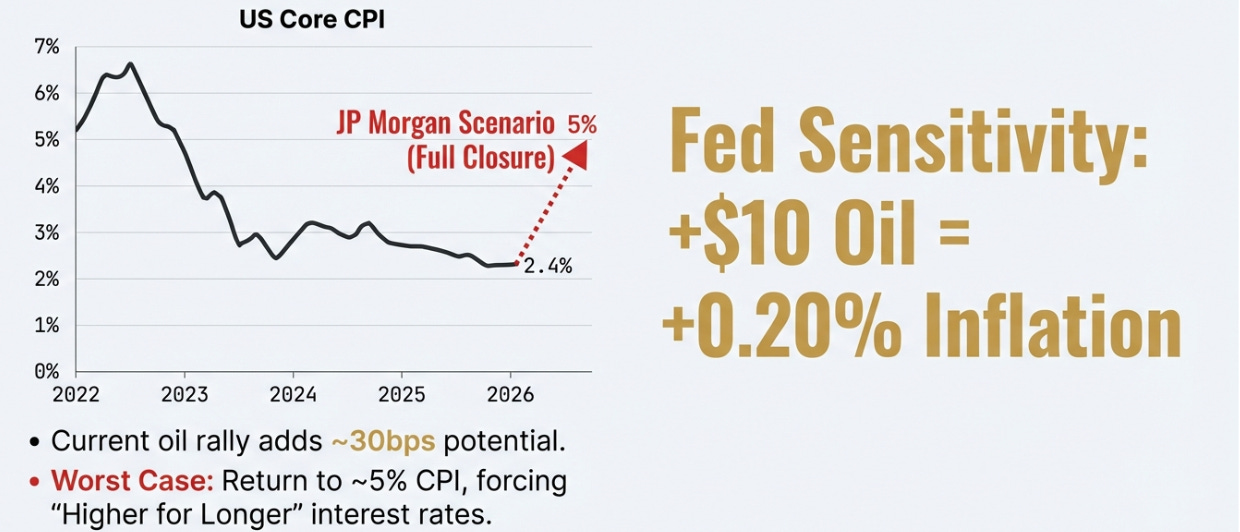
Echoes of 2023: The last time we saw 5% inflation was in March 2023, a period characterized by aggressive interest rate hikes that nearly broke the banking sector.
While the West will feel the pinch at the pump, for the “Asian Giants” China, India, Japan, and South Korea, a closure is a direct threat to national security.
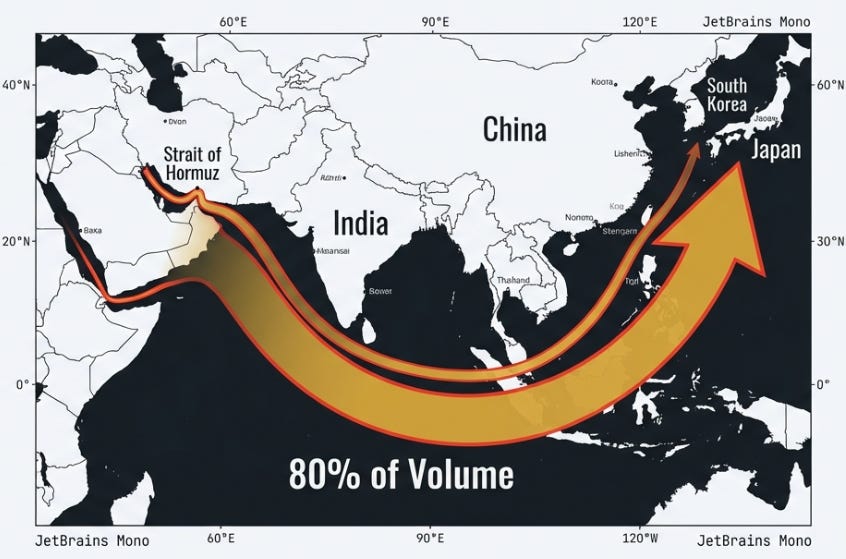
Concentrated Dependency: These four nations receive over 80% of the exports that move through the Strait.
Industrial Paralysis: Because there are no efficient pipeline alternatives capable of handling this volume, any sustained disruption threatens their national power grids and industrial output.
Recession Risk: A closure of Hormuz is widely predicted to trigger a global recession within weeks due to the sheer scale of the energy deficit.
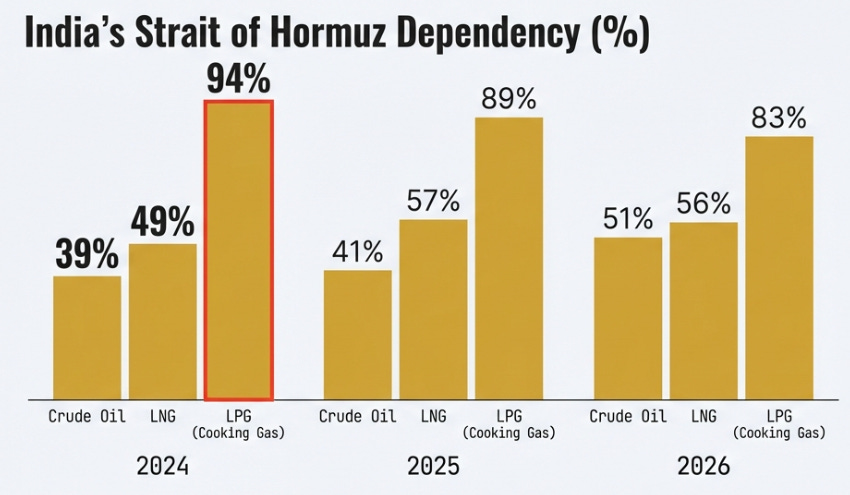
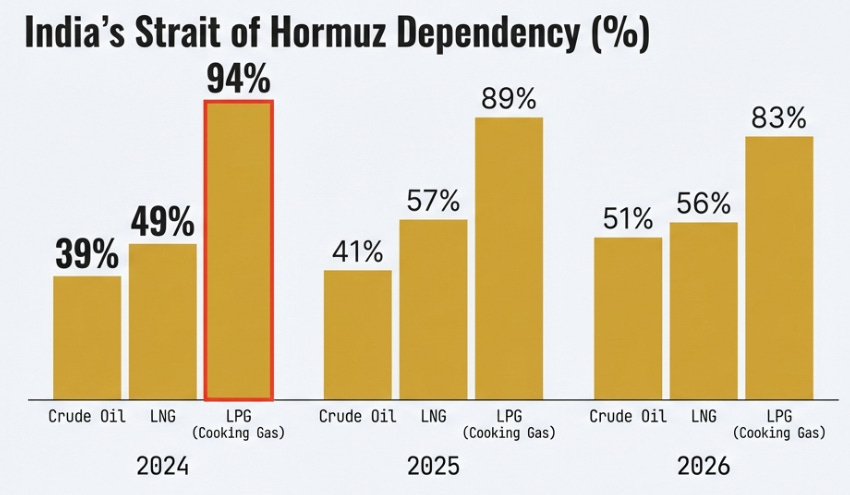
India’s dependency over Strait of Hormuz:
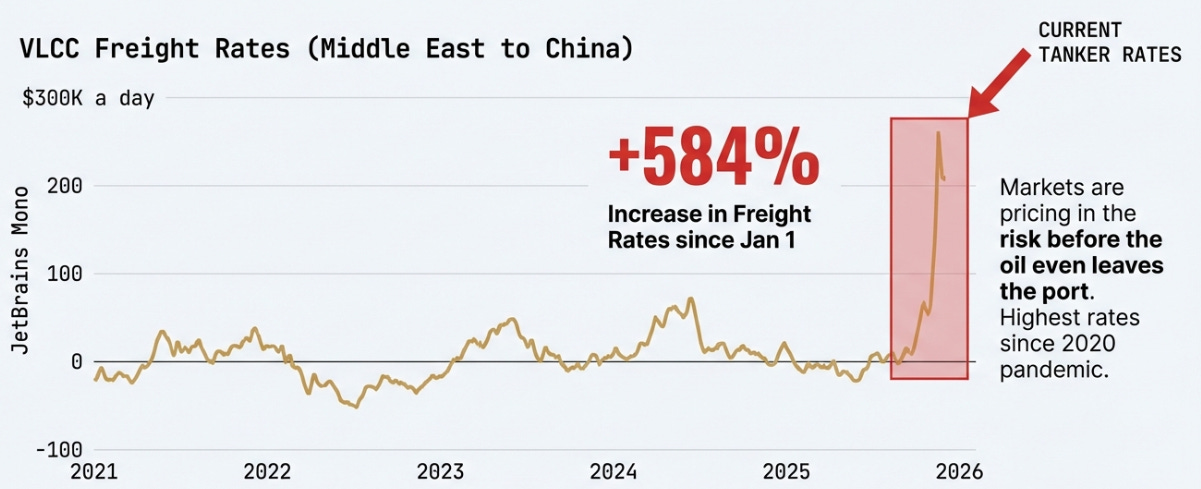
Even before a single vessel is blocked, the markets are pricing in the chaos.
Freight Rates: The cost of shipping 2 million barrels of crude from the Middle East to China has surged to $200,000 per day.
January Surge: This is a staggering 584% increase since the first week of January alone.
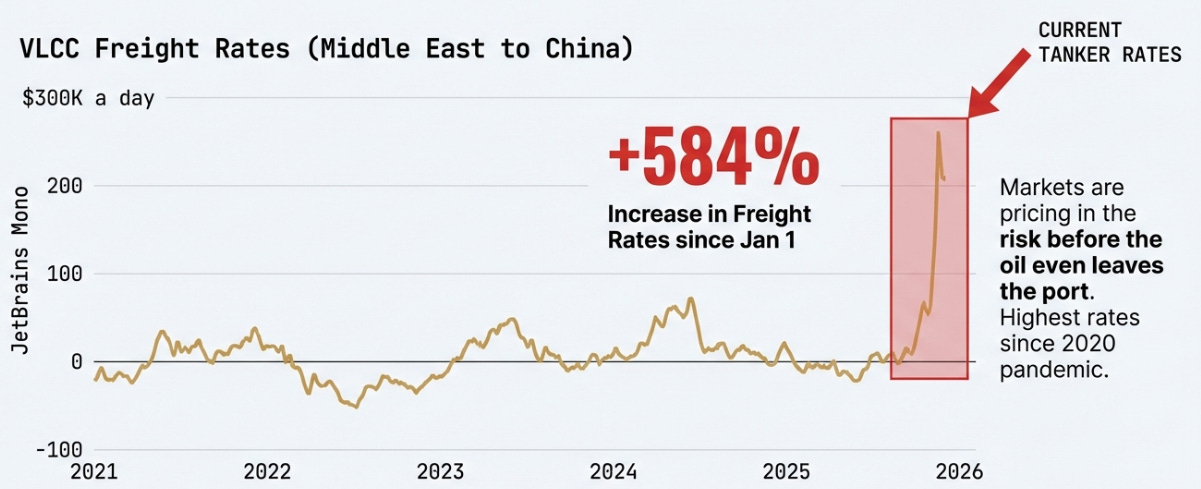
Avoidance Tactics: Radar data shows that tankers are already beginning to avoid the passage, and the U.S. has recommended that vessels stay clear of the region.
The Strait of Hormuz has never been fully closed in modern history.
However, as geopolitical risk premiums reach record highs, the next 24-48 hours are critical. Whether the path forward involves a new diplomatic deal or continued military pressure, the world is currently standing on the edge of a 24-mile-wide precipice.
So what does this mean for your portfolio?
The market is already reacting.
Energy stocks, fertiliser companies, and shipping-related names moved first. The rupee came under pressure as the oil import bill outlook worsened. Inflation expectations are being repriced.
And the biggest unknown remains: will the strait actually close fully?
____
Stay informed, stay diversified, and keep your risk management tight.
Markets reward those who understand the story before the headline changes.
No posts
Comments
Nothing yet. Say the first thing.
Sign in to join the conversation.