
On 10 October 1937, at approximately three o’clock in the afternoon, three men arrived at a dugout in rural Washburn County, Wisconsin.
One of them knew what was coming. The other two did not.
What happened next, we only know from the account of the one man who walked away from it. Which means we should hold it carefully, because it is the version of events that served him best, shaped in the hours after the fact by a man who understood, at some level, that the story he told would eventually matter enormously.
According to Seadlund, the only survivor, a fight broke out over the ransom money. Gray hit Seadlund with the butt of his pistol. Ross tried to intervene. All three men fell into the pit.
A struggle in a hole. Three men and a gun. The story has the quality of something assembled quickly under pressure, the details just specific enough to be credible, just vague enough to be impossible to disprove.
Seadlund shot Gray multiple times. He said Ross had died in the fall, but shot him anyway. He later claimed this could not be called murder because Ross was already dead.
The autopsy, when it eventually came, told a different story. Ross had suffered three skull fractures, five broken ribs, and a bullet wound to the head. That is not the body of a man who died in a fall. That is the body of a man who was killed.
Seadlund covered the pit with dirt and brush. Two men buried. One man standing over them in the Wisconsin woods with fifty thousand dollars and a very long road ahead of him.
He got in the car and drove.
What followed was three months of a peculiarly American kind of fugitive existence. Seadlund moved. Constantly. The money was the problem and the freedom simultaneously... it was what he’d killed for, and it was the thing most likely to destroy him. The FBI had supplied lists of the serial numbers from the $50,000 ransom package to public-spirited citizens across the country, and as the bills were turned in, the trail of the kidnapper was followed step by step.
He stopped in Denver, Colorado, where he bought a wire-haired terrier. I find that detail astonishing. Two men dead in a pit in Wisconsin, the largest manhunt the young FBI had mounted now in full swing, and somewhere in Denver, John Henry Seadlund bought a dog.
He kept moving. Omaha. Spokane. He disposed of the car he’d used in the kidnapping and got a replacement in November. He used the ransom bills carefully, scattering them across different states, trying to avoid creating a pattern. But he had one habit he couldn’t shake.
He loved the races.
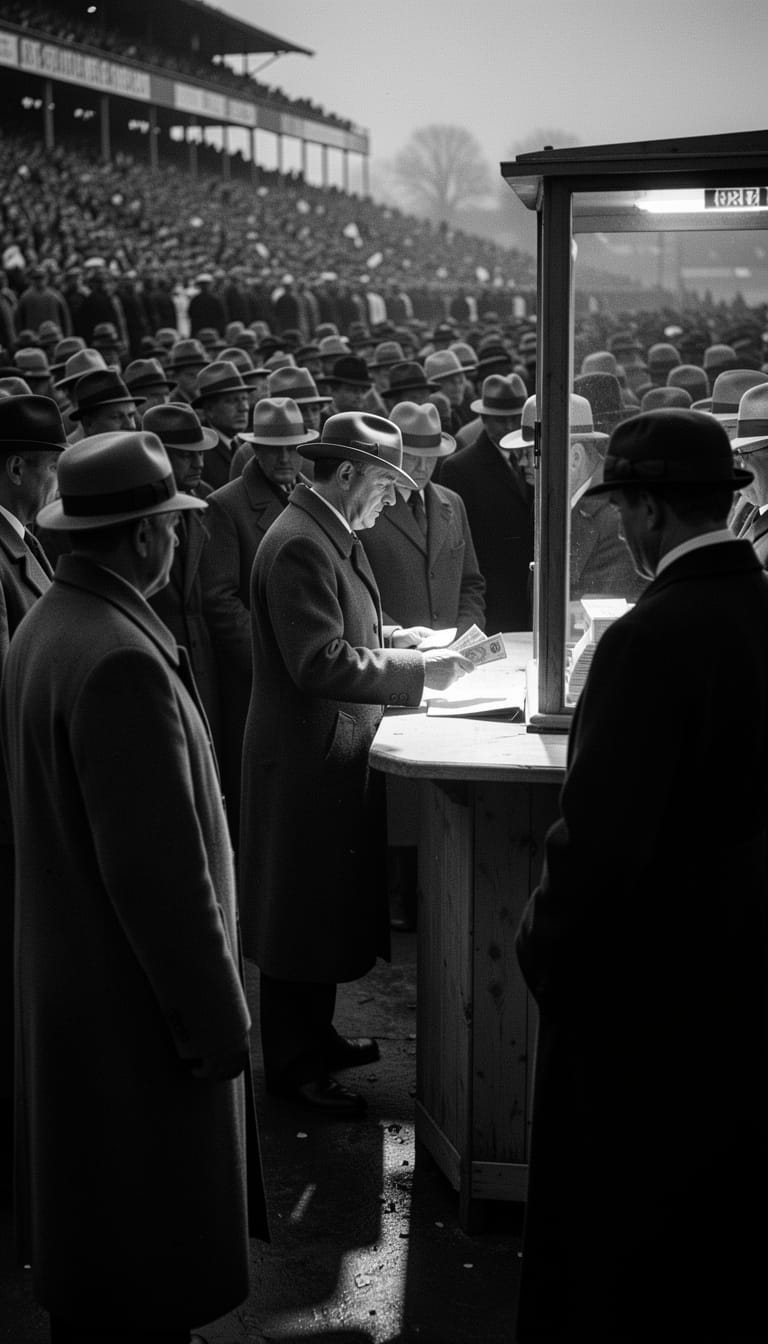
His uncontrollable desire to gamble at the racetrack resulted in his detection, location, and apprehension. The bills were showing up not in shops or banks or petrol stations, but at racetracks. Hoover flew to Los Angeles to personally supervise the operation. He set up a command post at Santa Anita Race Track. FBI agents posed as mutuel tellers at the betting windows.
They waited.
Seadlund was nabbed trying to buy tickets with the ransom bills. He had uncashed winning tickets worth about $18 in his pockets when they arrested him.
Eighteen dollars in winnings. That is what John Henry Seadlund was collecting when the FBI closed in. A man who had killed two people for $50,000, caught because he couldn’t stop betting on horses and couldn’t walk away from a winning ticket.
In his hotel room, agents found a large sum of the ransom money. He had $900 in a pocketbook on his person.
The dog, incidentally, is not mentioned again in any account I can find. I hope someone looked after it.
Upon interrogation by Hoover himself, Seadlund confessed immediately. “Dead, of course. I shot him. I also killed that fellow with me, a punk named James Atwood Gray. They’re dead in a hole up in Wisconsin.”
Just like that. No negotiation, no deflection, no attempt at the kind of elaborate performance he had managed throughout the kidnapping. The confession came in a single breath, as if he’d been carrying it and had simply grown tired of the weight.
The confession that followed ran to twenty-eight pages. A signed statement that included the details of his entire life of crime. Twenty-eight pages. The whole thing... the woods and the mines and Tommy Carroll and the restaurants and the banks and the hitchhiker and the pit and the dog and the racetrack... reduced to twenty-eight pages of signed confession in a federal building in Chicago.
Seadlund was then flown to Minnesota, where he led FBI agents into the snow-covered north woods. He pointed out road signs pierced by bullet holes and other trail markers. When the group could continue no further by car because of snow, they proceeded on foot through the fields and trees. In a clump of trees near a deserted stretch of railroad track, Seadlund pointed to a small pile of snow. When they brushed it away they found a typewriter case packed with $32,645 of the ransom money.
And then he led them to Spooner. To Washburn County. To the second pit.
They called it the “crypt of death,” according to newspaper reporters of the time. The bodies of Ross and Gray were recovered on 20 January 1938.
Charles Ross had been in that pit for more than three months. His wife had buried him quietly... secret funeral services were held at Rosehill Cemetery, one hour before Seadlund’s arraignment in federal court. There is something almost unbearably lonely about that detail. A secret funeral. No fanfare, no crowds, no public grief. Just a man put in the ground while his killer was being walked into court on the other side of the city.
Next time in The Extra Zero: The trial. The chair. The undertaker from Minnesota. And a grave beside a father’s grave, two miles south of Ironton.
If this series has stayed with you, I’d love to hear your thoughts. Hit reply, as always. And if you’re new here and want to go back to the beginning, Edition 1 is where the letters start.
Until Next Time
Comments
Nothing yet. Say the first thing.
Sign in to join the conversation.