
Programming note: As I wrote yesterday, most of August has become a working vacation for me, which means a slower cadence for Inside Medicine this month, with occasional dispatches.
But after learning what newly confirmed CDC Director Dr. Erica Schwartz told her colleagues during her first all-hands meeting yesterday, I had to stay up and write this.
Thanks for being here.
—Jeremy
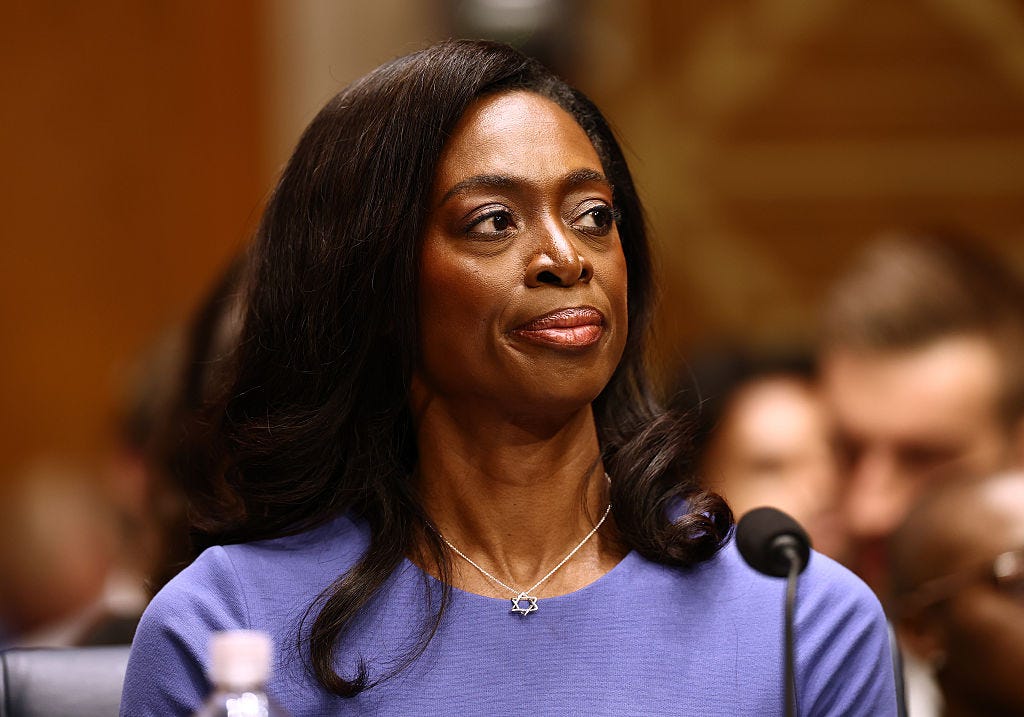
During her first all-hands meeting as CDC Director yesterday, Dr. Erica Schwartz assured her new colleagues that she would “speak truth to power.”
It was a nice thought. But it was the wrong one.
Whether Schwartz speaks truth to power doesn’t actually matter much. This thought occurred to me because I happen to have been rereading Christopher Hitchens’ Letters to a Young Contrarian this week. In it, Hitch relates an insight previously offered by Noam Chomsky.
“Chomsky…wrote that the old motto about ‘speaking truth to power’ is overrated. Power, as he points out, quite probably knows the truth already and is mainly interested in suppressing or limiting or distorting it. We would therefore do better to try to instruct the powerless.” —Christopher Hitchens, Letters to a Young Contrarian.
This identifies the problem precisely. We don’t need Schwartz to tell Secretary Kennedy and President Trump the truth. They either refuse to know or refuse to admit the truth. We need her to tell the American people the truth—MAHA followers in particular—especially when Kennedy and Trump have it wrong, an unfortunately frequent circumstance, if you haven’t noticed.
Discouragingly, Schwartz’s words indicate that she has already misunderstood her terribly important assignment. Quite specifically, CNN reports that Dr. Schwartz told her CDC colleagues that “she wouldn’t hesitate to disagree with U.S. Health Secretary Robert F. Kennedy Jr. if necessary — but said she wouldn’t do so publicly.” Citing her military background, CNN further said that Schwartz intends to avoid disagreeing with her superiors “in front of the media,” stating that “that’s just part of the uniformed service person in me.”
So, now we know what we’re dealing with: a “good soldier” who won’t break ranks in public. That’s a huge, huge problem. In her role as CDC Director, Dr. Schwartz is no longer “just” an officer in the various uniformed-service roles she previously held. She’s now a Senate-confirmed public servant leading our nation’s largest public health agency. If she disagrees with her superiors, Kennedy and Trump, that is, she owes it to us—her actual employers, the American people—to convey those beliefs truthfully and transparently. Otherwise, her presence at the CDC has no purpose. As long as Kennedy is at the helm of HHS, deferring to hierarchy and decorum will only serve to undermine her solemn duties to us.
For the most part, the public discourse following Dr. Schwartz’s disastrous Senate confirmation hearing last month orbited whether she would have the spine to go against Secretary Kennedy. After all, her predecessor, Dr. Susan Monarez, lasted 29 days in the job precisely because she stood up for vaccines. Would Schwartz similarly risk her new job?
In an apparent effort to assuage the doubts that her horrific confirmation hearing created—during which she lost my support—she told her new CDC colleagues yesterday that she has already had several meetings with Secretary Kennedy. That is meaningless news, at best. I sincerely doubt Secretary Kennedy has suddenly changed his tune. Instead, it’s likely that Dr. Schwartz has either decided to be agreeable for now, or that, so far, nothing substantive has come up. I’d be much more interested to learn whether Schwartz has yet had an opportunity to disagree with Kennedy on anything. That is the only test that matters, if and when it happens. Of course, Schwartz told her CDC colleagues that she won’t deign to inform the American people about any such spats, owing to a sense of duty and respect for hierarchy that her military service apparently ingrained in her. This is hardly encouraging. As of today, August 20, a CDC webpage still states that “‘vaccines do not cause autism’ is not an evidence-based claim,” an atrocious, unscientific change that Secretary Kennedy insisted be made during his tenure. As long as any CDC webpage continues to spout such nonsense, Schwartz’s promise to return the agency to scientific rigor and to restore public trust cannot be taken seriously.
In covering Dr. Schwartz’s confirmation process, I wrote about an inevitable tension that confronts well-meaning Trump administration officials: the conflict between mission and ambition. If a worthy mission is the goal—in this case, restoring the CDC’s flagging reputation for scientific integrity (which is different from expecting perfection, I should mention)—then some ambition is not such a bad thing. But if someone’s goal, above all, is self-preservation, then there’s scarcely any point. Ambition prioritized above mission (or absent it) quickly and inevitably degrades into a soulless exercise carrying no higher purpose than the “honor” of having been selected to rubber-stamp predetermined policies and to mog for photo ops in the Oval.
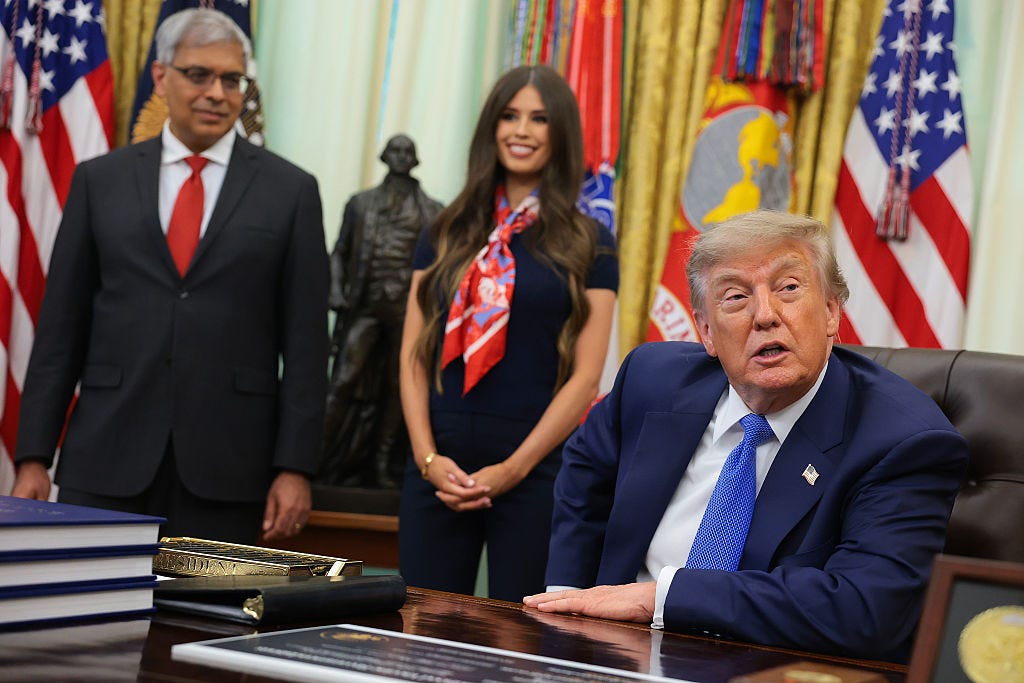
The previous top official at the CDC (and current NIH Director), Dr. Jay Bhattacharya, personifies this losing battle impeccably. Dr. Bhattacharya appears to have mistaken public service for servitude in public. In order to maintain his status, he must routinely disgrace himself at Secretary Robert F. Kennedy Jr.’s every behest. Bhattacharya is frequently and regrettably seen lending his imprimatur (such that it is) to whatever Secretary Kennedy’s latest deranged antiscientific campaign stipulates—including most recently during President Trump’s unveiling of an executive order seeking to weaken America’s vaccine standards for children. I can’t quite tell whether Bhattacharya’s characteristic impish smile in these moments is smug satisfaction at being “in the room where it happens”—conveniently looking beyond whatever it happens to be—or the sheer humiliation of having ascended to the tippy-tippy top of it all, only to find…this.
Let us hope that Dr. Schwartz does not suffer the same fate. More than that, I hope that she chooses a better path.
Why upgrade to Inside Medicine?
“He’s very thoughtful and careful. He doesn’t just blast out against something; he gives it a fair evaluation and makes a helpful and useful comment. So he’s emerging as one of the most respected medical public health commentators.”
—Dr. Anthony Fauci
If you value independent reporting and analysis, please consider upgrading to a paid subscription. Your support makes Inside Medicine possible. Thanks!
Comments? Questions? Ideas? Venting? Please share your views in the Comments section.
Thank you for reading! If you have information about any of the unfolding stories we are following, please email me or find me on Signal at InsideMedicine.88.
No posts
Comments
Nothing yet. Say the first thing.
Sign in to join the conversation.