
Starting today, Alex Cox’s latest feature begins a short run at New York’s Roxy Cinema — just one stop on an ongoing tour across the U.S. I was eager to write about the film, titled Dead Souls, because I love Westerns, and because Cox has a righteously angry streak in him. So, instead of offering a quippy take on some timely tidbit of today’s film culture, I’m giving our readers a sneak peak at a short essay I wrote on the occasion of Cox’s new film, which, coincidentally, is aimed firmly at our current moment anyways. Mark your calendars for this coming Monday when we’ll publish the essay in full — for free — on the Substack.
I wish you happy reading and happy watching.
Substack editor
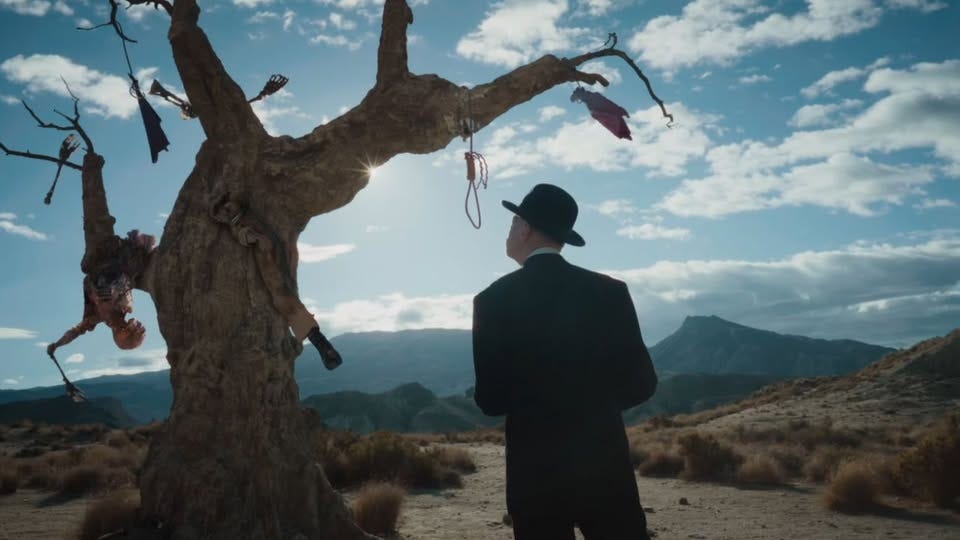
Alex Cox loves to make movies. He doesn’t get to do that very often these days, but when he does, they’re more likely than not to land with an unceremonious clunk. His last three features, Tombstone Rashomon (2017), a Rashomon-style retelling of the Gunfight at O.K. Corral; Bill The Galactic Hero (2014), an adaptation of Harry Harrison’s novel of the same name, made with Cox’s University of Colorado film students; and Repo Chick (2009), which reforms the basic milieu of Repo Man around a Paris Hilton-esque celebutante named Pixxi de la Chasse (a corruption of “chassis”, or the structural frame of a car) bear this out. Interesting though their narrative conceits may be, they all arrived with little fanfare, enjoyed minuscule theatrical releases, and weathered critical derision.
In 2026, Cox seems to be enjoying a little bit more fanfare and a larger theatrical release for his latest film, Dead Souls, an 1890 Arizona-set Western of peculiar tone and formal experiments that has been touring cinemas across America this summer. The film follows Strindler (Cox), a mysterious man who, when we meet him, is traveling across the American Southwest to buy up the names of Mexicans who have died in the territory. In his quest, he adopts a variety of personas, a priest here, a government official there; in a pinch, he passes himself off as a tombstone and grave salesman specializing in the Mexican-American market — whatever means necessary to get what he wants from whoever happens to have it. As a connoisseur of the Western genre (his explosive, furious Walker [1987] was an unconventional, Central America-set Western bent towards the anti-imperial Left), Cox understands the cultural power that myth holds, for the image of the West in popular imagination is, itself, just imagination.
Cox’s own imagination is angry and politicized, and it finds an effective home in this tale of swindling and confidence. Like all Westerns worth their stuff, its construction and deployment of types help it speak to our current, corrupted moment. And make no mistake, Cox knows his references. Dead Souls makes liberal use of his Rolodex, at once evoking the calcified anger of John Sturges’ Bad Day at Black Rock; the cynical, myth-busting lamentation of John Ford’s The Man Who Shot Liberty Valance; and the low-budget scrappiness and burning greed of Budd Boetticher’s Ride Lonesome.
Strindler is a quick judge of character, and even quicker to exploit it; a supreme flatterer of egos, and a confident assuager of fears. In pursuit of the names of these poor, dead souls he churns his way through a veritable checklist of Western character archetypes: the mayor, a limp man with a lazy disposition; the town doctor, a man of humble tastes and inclinations; the Sheriff, unexpectedly well-read (he owns a copy of Moby Dick and With Walker in Nicaragua, the book on which Cox’s own Walker is based); Oso, the mining boss of few, gruff words and a love of dynamite; and Rose (Amariah Dionne), the devout daughter of the town’s powerful rancher, Chandler (filmmaker and collaborator Geoff Marslett). Only the town drunk, Borracho (frequent Cox collaborator Zander Schloss channeling his best amalgamation of Stagecoach’s Andy Devine and Thomas Mitchell), is an incorruptible ally. These traits, and his easy access to them, may make Strindler as suspicious as he is likable. As in Black Rock, Strindler eventually gets in trouble because he asks too many questions of people who don’t like strangers meddling in their business. It’s only a matter of time (though it’s rather a long time) before someone acknowledges the likeness between “Strindler” and “swindler”.
To be continued Monday…
Cinematic highlights, from the multiplex to the arthouse
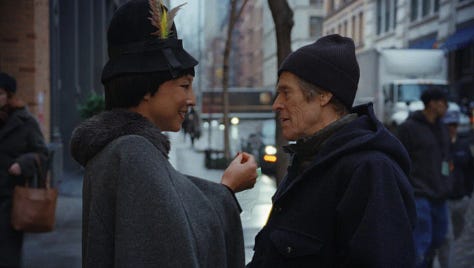
Abe Beame reviews the latest from Kent Jones, Late Fame, a story of a rediscovered poet played by Willem Dafoe, that “questions the relative and arbitrary nature of success in the arts”. With a satirist’s eye, Jones and screenwriter Samy Burch (of May December and the upcoming Coyote vs. Acme fame) never rest on cliché. The star of the film is also, indeed, the star of the film. “Dafoe lovers know he’s best when he is restrained, when he’s warm and gentle, when he’s vulnerable, when he takes his time…as he does in Late Fame, turning in what might be his best work since The Florida Project.” Out now via Magnolia Pictures.
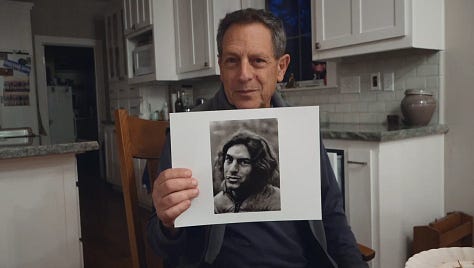
Robb Moss revisits a now cycle of films documenting the varied and divergent lives of his friends in Bend in the River. At times joyful and melancholic, what’s most apparent is Moss’s unique treatment of time as a formal device, which finds reflections in the varied film material used to capture the lives of these aging friends; from 16mm to video, to digital photography, time hits you with the force of a new invention. But Bend is more lyrical than this clinical description. As Michael Sicinski remarks in his review, “We are caught up in the flow of forward propulsion, and it’s never easy to know exactly where we are when we are being swept along in the current.” Out now via self-distribution (streaming later this year on Netflix).
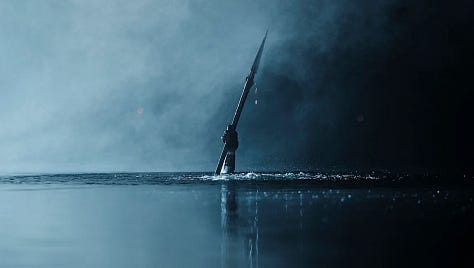
Perhaps one of the most anticipated and significant films of the year, Jane Schoenbrun’s Teenage Sex and Death at Camp Miasma continues their cinephilic, introspective fascination with our identification with media and the worlds they both inhabit and conjure. Reviewing out of Cannes, Hugo Emmerzael argues, “Schoenbrun…has unpacked these ideas in a near-miraculous manner, as the film is somewhat of a miracle itself.” Out now via MUBI.
Straight from the source
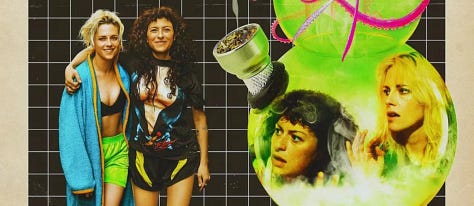

Partners in life and art, Dylan Meyer and Kristen Stewart appear to have revived and revamped the once ubiquitous stoner comedy with The Wrong Girls, a lovably stupid romp about mistaken identity, making rent, and, of course, drugs. As a group, Brandon Streussnig sat down with Meyer, Stewart, and co-star Alia Shawkat to talk about a woman’s take on the genre, and much more:
“We put a lot of pressure on women to be pretty and tidy, and not be an idiot. I think that it took me a long time to come to terms with the fact that if being an idiot wasn’t part of my charm, I didn’t have any charm.” — Dylan Meyer
Hugo Emmerzael sat down with filmmaker Poh Si Teng to discuss a film of extreme circumstances in much more serious register: American Doctor. This bracing look at doctors operating on victims of Israel’s genocide in Gaza and the American media’s complicity in denying this reality is sure to make a mark on audiences for the rest of the year and beyond. In Teng’s own words:
“When there is so much happening that you have no control of, focus on what you can do. Which is already a lot, whether it’s filming or trying to save a life. And even when it’s not possible, it is in the trying.”
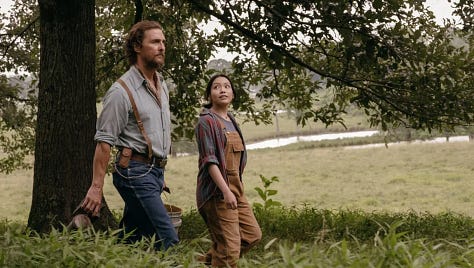
Andrew Patterson made a splash in 2019 with his debut feature The Vast of Night. In 2026 he returns with The Rivals of Amziah King, a film with bright star power, deep personal dimensions, and a history of revisions and permutations, about a beekeeper and bluegrass musician (played by Matthew McConaughey) who’s roped into a honey-thieving racket and reunited with his former foster daughter. As Patterson says of the film’s long gestation in a conversation with Gayle Sequeira:
“That whole process was the greatest thing that could’ve happened to this movie because things that were never in the first version came through in the second and third.”
Dispatches from around the world
At the time of publication, the Locarno Film Festival is about to finish its latest edition. Awards will be handed out soon, and maybe we’ll hear about some distribution deals (no, Cinema Guild picking up Hong Sang-soo’s latest doesn’t count).
Over here, we’re less interested in the awards than we are in the films themselves. The problem is that this year has seemed quieter than last, with fewer films inspiring the raves we saw from last year’s edition, particularly around new classics like Sophy Romvari’s Blue Heron and Alexandre Koberidze’s Dry Leaf. There were several big names at this year’s edition, as usual, including the ubiquitous Hong Sang-soo with his second feature of the year, and Albert Serra with a new mid-length film starring Ingrid Caven. Nevertheless, there have been fewer, if any, masterpieces declared by the end of the festival.
Highlights from our Substack-exclusive coverage did, indeed, include Hong Sang-soo’s latest, Nowhere to Lay my Eyes. Another was Isabelle Stever’s I Rarely Wake Up Dreaming —
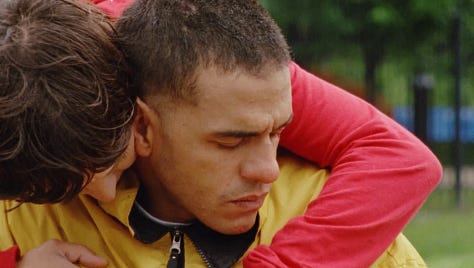
Michael Sicinski’s review argues that Stever’s film questions what it means to be a man in war-torn Ukraine when you don’t perform the traditional characteristics of your gender.
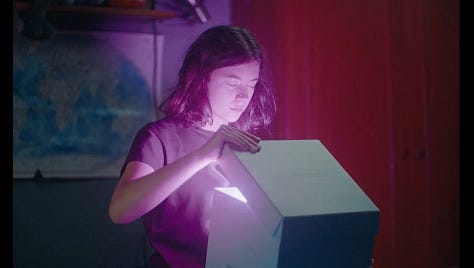
Robert Stinner reviewed The Days Off, the debut feature by Argentine director Lucila Mariani. Set in a near and recognizable future, it follows 12-year old Bego who has been introduced to an online community of “shifters”, people who believe they can access a liminal space between sleep and wakefulness that will allow them to ward off the trance-inducing powers of an impending solar eclipse (what brilliant timing to coincide with a real solar eclipse that has transfixed most of Europe this week). As we see over the course of the film, the notion of shifting is, for Mariani, an apt metaphor for the transition between adolescence and adulthood.
Erin Vassilopoulos made a splash with her debut feature, Superior, in 2021. She returns with Destroy All Girls, which operates in a much different, more naturalistic register to tell the story of Alex, a young woman from New Jersey on the cusp of college, who falls in with a rag tag group of inline skaters hoping to make it big in California. Alex’s attachment to this group, however, ends up being less about her fast, fickle love for the group’s de facto leader, Cameron than with her rejection of her conservative family’s expectations — particularly around her gender expression. The film goes places you expect most coming-of-age films to go, but this unoriginality is assuaged by lovely, unfussy performances, and a velvety image, thanks to a mix of 16mm film and DV camera work.
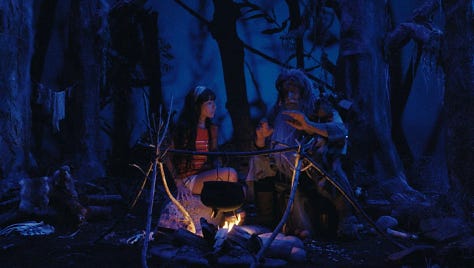
The latest from The Wolf House filmmakers Cristóbal León and Joaquín Cociña, Donkey Princess continues their virtuosic practice, as Sonya Vseliubska argues in her review: “Drawing on a plurality of animation techniques, their cinema builds a densely layered realm of fantasy, folk, horror, and existentialism, one where the constructed space feels like a protagonist, always mutating, accreting and collapsing.” As filmmakers Leon and Cocina hope to upend expectations of fantasy cinema — this goes some way in doing just that.
This is just a taste of what we covered, all of which you can read about in our first and second dispatches. Though the festival is about to end, there will likely be more reviews to come, so stay tuned.
A look at some of the reviews, interviews and festival coverage you may have missed
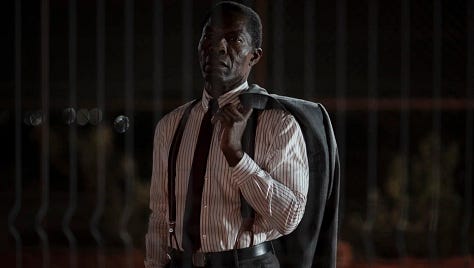

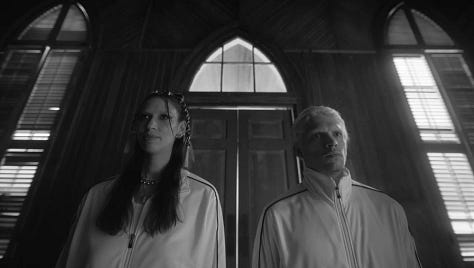
Claire Denis’ latest film, The Fence, premiered to extremely mixed reviews out of the Toronto and New York Film Festivals. That’s probably why very few have heard from it, and why its avid supporters have been making noise for a release, ever since. We got one very recently, a quiet week-long run at New York’s IFC Center that you might have missed if you blinked too long. A week-long run is long enough for us to consider a review, but luckily we covered it during its UK premiere at the London Film Festival. Of the film, Padaí Ó Maolchalann says:
“It’s easy to see what drew her to Koltès’ play — she’s covered the topic of white people interfering in post-colonial territories before in movies like Chocolat, White Material, and Stars at Noon, and grew up in several countries in French colonial Africa. But it’s also hard to see what Koltès’ play brings out in her that she hasn’t brought out more persuasively in those movies.”
Ahead of the theatrical release of its new restoration, Brandon Streussnig spoke with the great Stanley Kwan about Center Stage, a biopic about the Hong Kong silent film star Ruan Lingyu. As one of very few gay filmmakers working around that time, especially in Hong Kong, Kwan seemed to have some personal and resonant insight into the struggles of a life rarely seen on screen. In his own words:
“The women in my films also come from something very personal. I became aware of my sexuality when I was around 14 or 15, the same age my father died. My mother, who had been a housewife, suddenly had to support five children. She worked day and night, but she never cried in front of us. I never saw her shed a tear. Her strength stayed with me. Combined with my own perspective as a gay man, it gave me a deep appreciation for women. The contrast between an outward softness and an incredible inner resilience inspired me.”
Finally, while the festival wrapped up officially a few weeks ago, some of our coverage of Fantasia Fest had yet to trickle in. Read reviews of standouts Godhead (Mark H. Rapaport, director of 2024’s Hippo), No Rest for the Wicked (Kasper Kalle), Unholy Night (Michael Gabriele), and Inecstasy (Angus Silver). Or you can read all our reviews in the final two dispatches here and here.
No posts
Comments
Nothing yet. Say the first thing.
Sign in to join the conversation.