
Hello there. I believe I owe you some answers.
I promised (here, when I introduced this research) I’d explain “what it is about, what does its pompous title mean, why are people so obsessed with nuns these days, and why is there a photo of me holding a stereo field recording setup at a lake in the Pyrenees—and do I actually know where I’m taking you with all this? (Short answer: yes. Long answer: no. Wrong answer: I’ll explain later)”. Today I’ll try to tackle at least the first two questions. But first, a story.
Exactly three years ago, just around Advent, I took this blurry photo in the chapel of the Discalced Carmelite monastery on the top of Olive Mountain, Jerusalem.
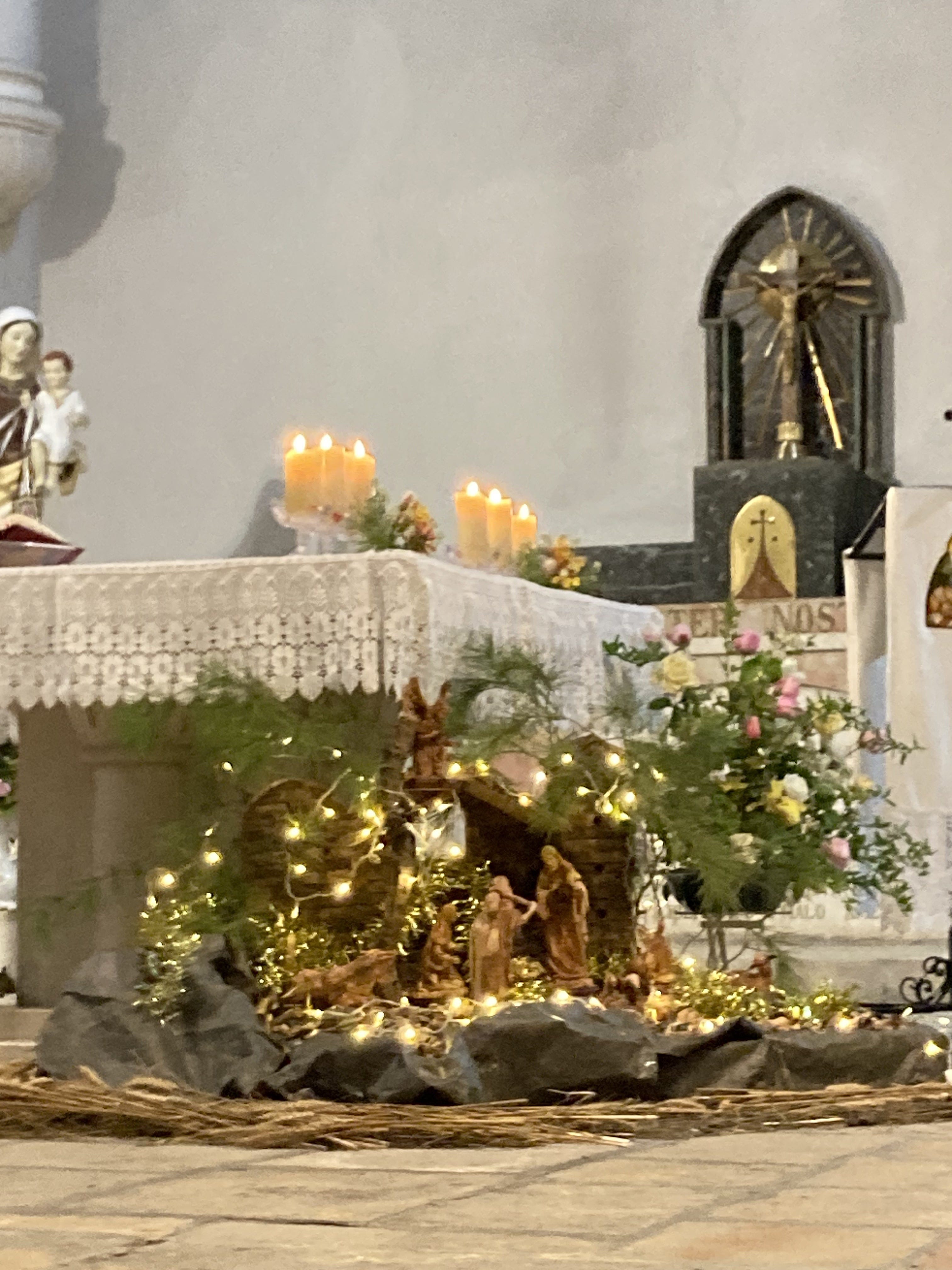
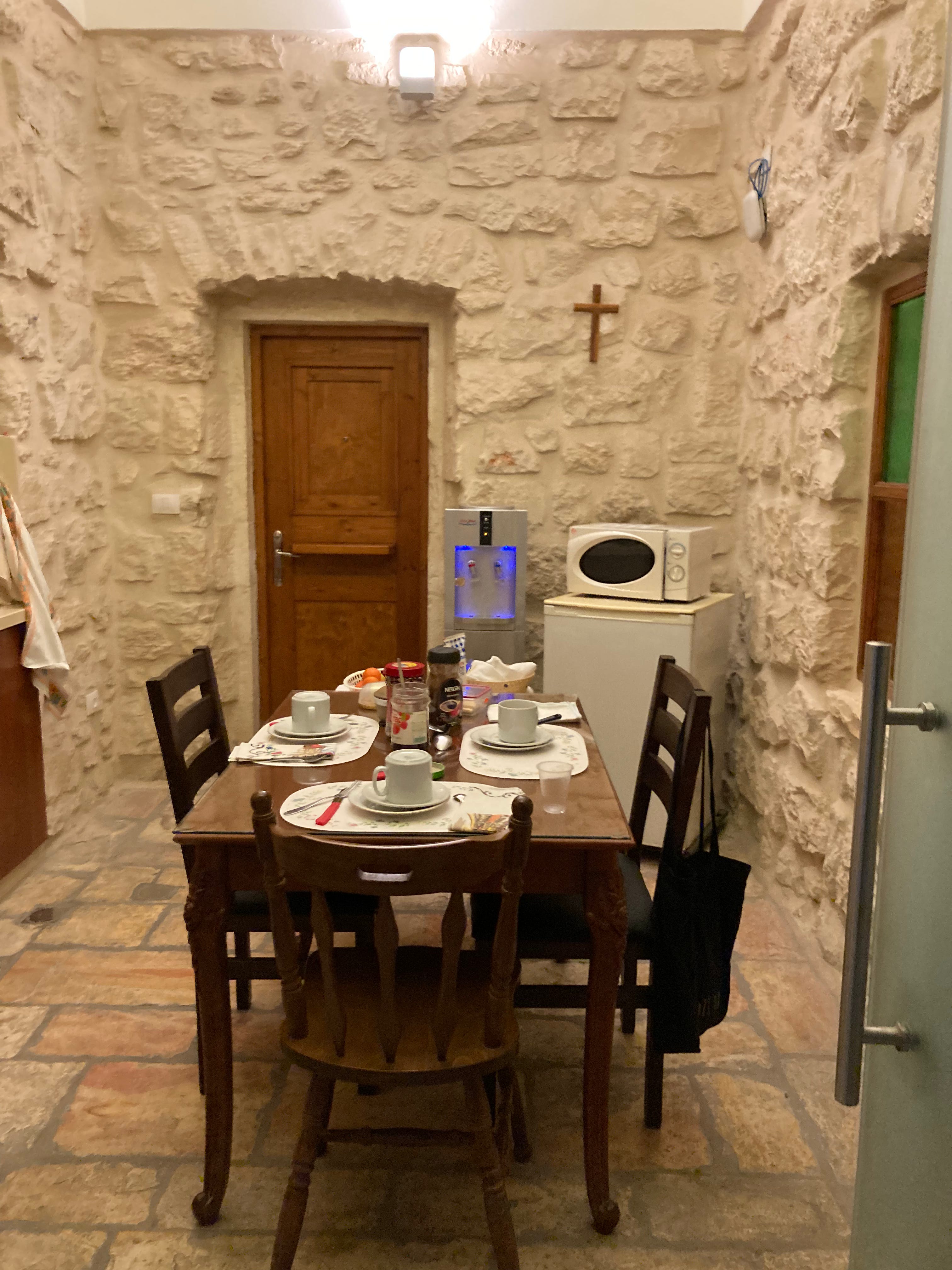
Today, sitting at my window watching the nadalenc (Català) or navideño (Castellano) rain, falling on the chestnuts and holm oaks and Baix Montseny hilltops, I feel just about as estranged as I did then towards the Christmas decorations. I still lived in Jerusalem that winter and, knowing this was the closest I could get to living Carmelite nuns, I went to sing the prayers with them during the holiday period. I would wake up in the darkness of 5:00 AM, sneak out of bed, into the car, cruising the empty streets of the city so allegedly holy, and (after being let in by a bored maintenance guy) into the cloister. Sometimes the sisters offered me a modest breakfast, which I took alone, in silence:
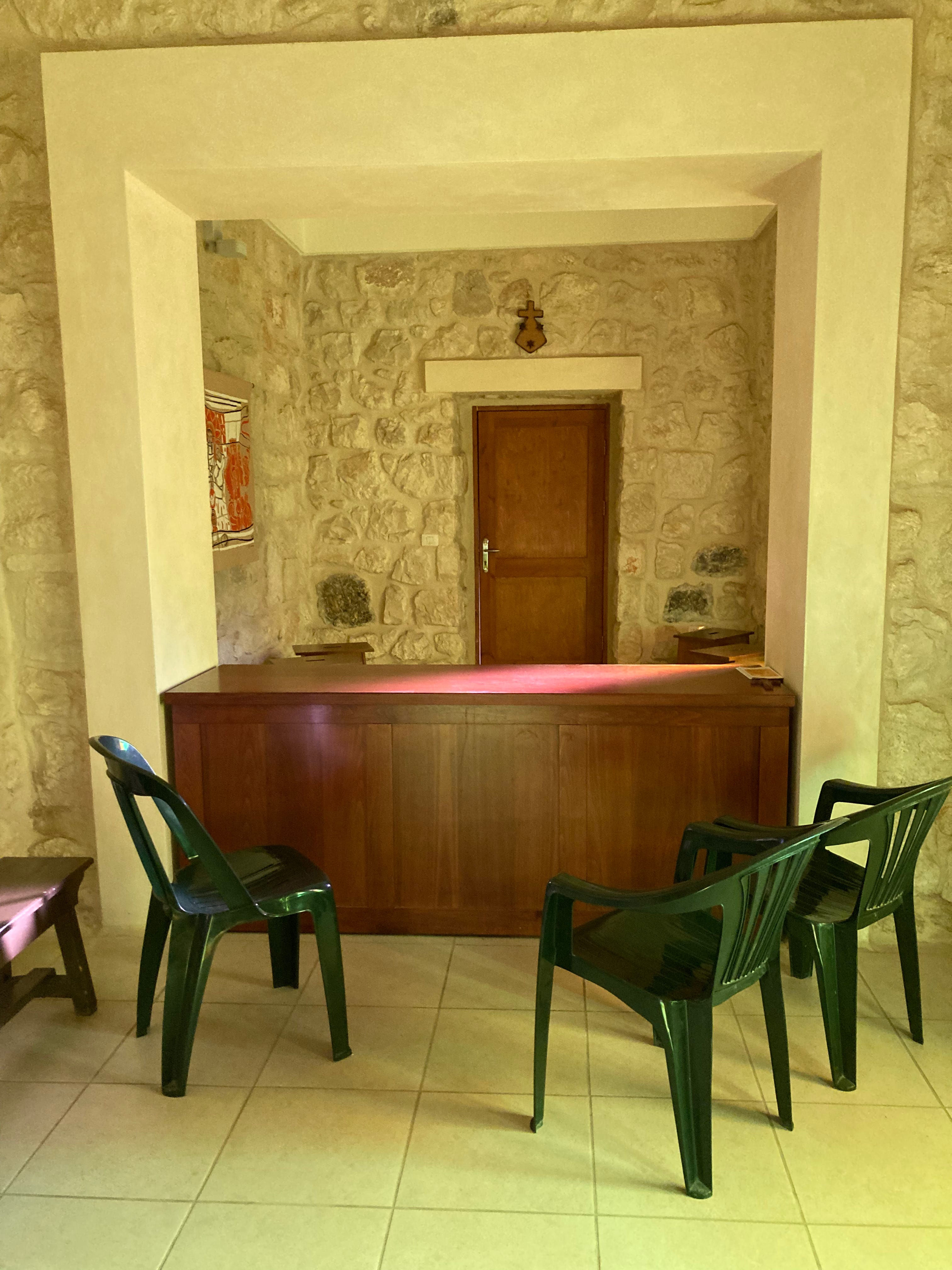
And sometimes the prioress, Sœur Agatha, would agree to have a chat with me in this room (in the Spanish convents they’d call it el locutorio), to which the nuns would emerge from within their chambers, remaining separated from the visitor by a wooden counter continuing the wall. We’d talk in broken English with their heavy French accent about life as a nun, about Jerusalem, about singing, praying, hearing voices, and the spiritual doctrine of their founding mother, Teresa of Avila.
Once, they even invited me to join their vocal coaching class with a French music teacher who lived nearby, in this room:
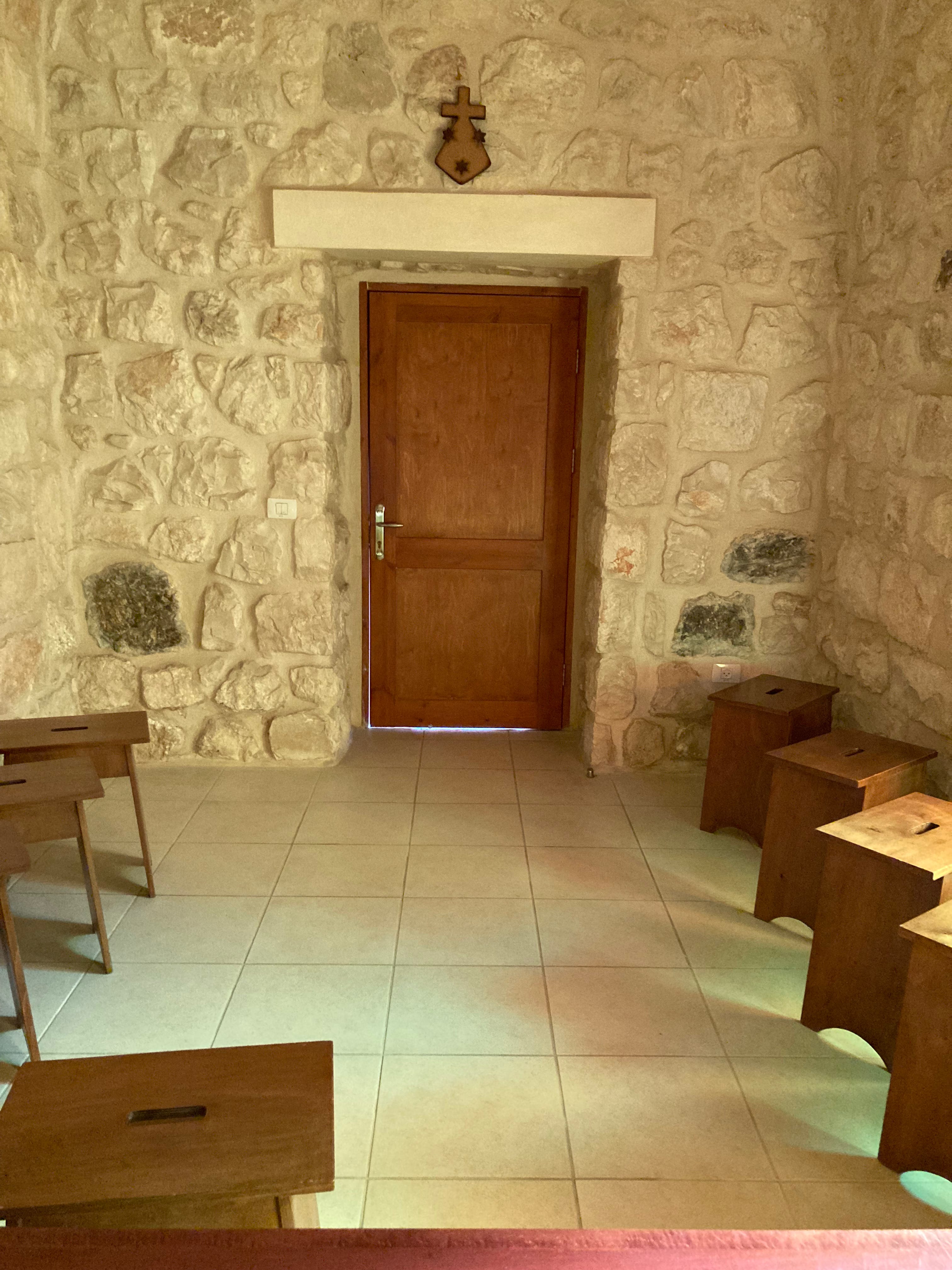
And they even asked for my help in finding someone to fix their decaying harmonium:
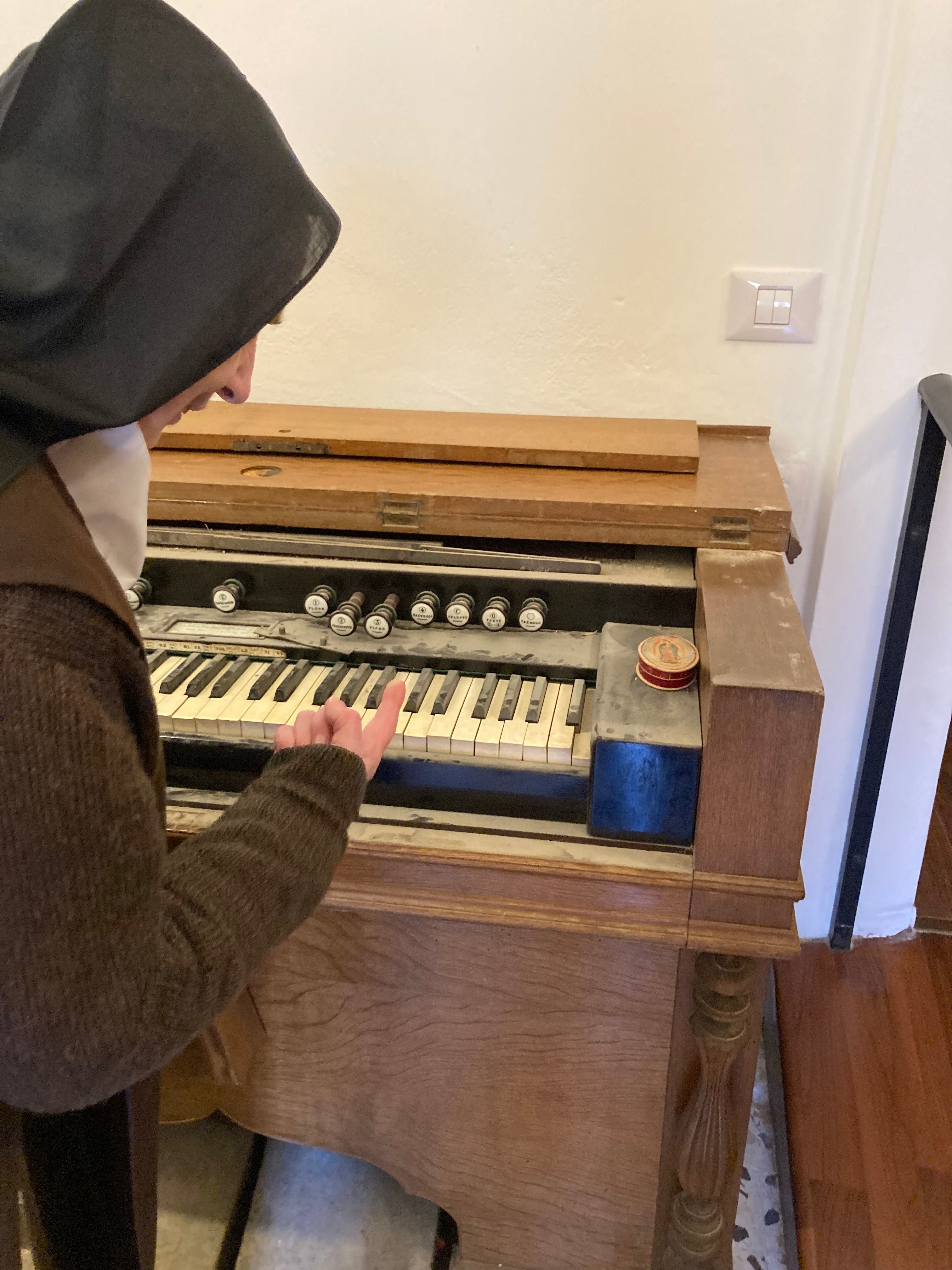
But, as lovely and inspiring as these encounters were, they occurred under a heavy blanket of the language barrier: even though I was studying the mystical doctrine of their founding mother, Teresa of Avila, the convent at Olive Mount was Francophone, which meant that on top of the geographical and temporal distance from the order’s origins in 16th-century Castile it was entirely separated from the Teresian acoustemological system, ruled by the sonic spells and mischiefs of the Spanish idiom.
I promised I’d tell you what this research is about and what its title means, and for that, this word, “acoustemology,” comes in handy. It’s an amalgam of acoustics + epistemology, a term coined by the (by now famous) anthropologist and sound studies pioneer Steven Feld, who used it in the context of his deeply attuned ethnographic work in the Bosavi rainforest of Papua New Guinea in the 1990’s to denote how sound is a way of knowing the world, or put simply, knowing-through-sound. Go and look up his decades of inspiring seminal work on that topic; I’m not going to elaborate here.
Now, you may have read somewhere in this blog or my research site that the project is titled “The Voice of Many Waters: Acoustemopoetic Composition of Carmelite Mysticism.” Let’s break it down: “The Voice of Many Waters,” or la voz de muchas aguas, or קול מים רבים, is a metaphor found all over the Bible in descriptions of the divine sound—or God’s voice, if you will. I found in several places when looking for literary representations of voices and hearing in the Carmelite corpus (which is part of what I’m doing). “Carmelite Mysticism” is a very generalizing term for the mystical doctrine gleaned from that corpus—namely, spiritual writings by the first generation of Spanish Discalced Carmelite nuns (aka the order as reformed by Santa Teresa). These writings could take many forms and genres—I’ll get to that sometime later. Regarding what is the “mystical” (or as De Certeau called it, the mystic—la mystique)… Pfff! That would be too much for one post. Then we’re left with “Acoustemopoetic Composition.” Dios, I hate explaining this bit! Remember acoustemology, or knowing-though-sound? So there’s an added dimension to it: acoustics+epistemology+poetics. A combination of auditory perception, the construction of knowing, and literary (or creative) expression, it’s a term that helps me explore how sound—as a means of knowing the world—is expressed in words. Why? Because after a few years of probing the ancient Carmelite nuns’ universe through their literary testimonies (which is the most that we have left from them), I came to believe that sound for Teresa and her nuns was a means to make sense of the world, and their words offer powerful metaphors that describe it. This double meaning of making sense as both “understanding” (related to knowledge, or reason) and “sensing” (related to the sensory) is not coincidental: in Spanish, like other Latin languages, the verb sentir is both feeling and knowing. Just as in English something can “make sense” or “be sensed”. In fact, in Teresa’s ecstatic states (famously immortalized below by the male gaze of Bernini), she testified: “in no way can I use the senses… so much that if it wasn’t for hearing—and that not in order to understand—no other sense is of any avail.”

Text within this block will maintain its original spacing when published
En ninguna cosa puedo usar de los sentidos, tanto que, si no es oír—y eso no para entender—otra cosa no aprovecha.
(Teresa de Jesús, Cuentas de conciencia)
What does it mean to hear, and not in order to understand? If hearing is knowing, how can it not lead to understanding? What is understanding through the body, through the senses? And how is it not re-intellectualized when such an experience is attempted to be expressed in words? How to eff the ineffible?
More on that, in the next transmission…
Happy winter solstice and happy holidays, of whatever ritual you may be practicing <3
Comments
Nothing yet. Say the first thing.
Sign in to join the conversation.