
Every Administration leaves its mark on the U.S. Department of Energy (DOE), including by reorganizing the agency. Over the last few months, Secretary of Energy Chris Wright and his team at DOE have been reshaping the agency through organizational shifts.
In November, the Secretary announced a realignment of the agency, as seen below.
Figure 1: DOE Organizational Chart Effective November 2025
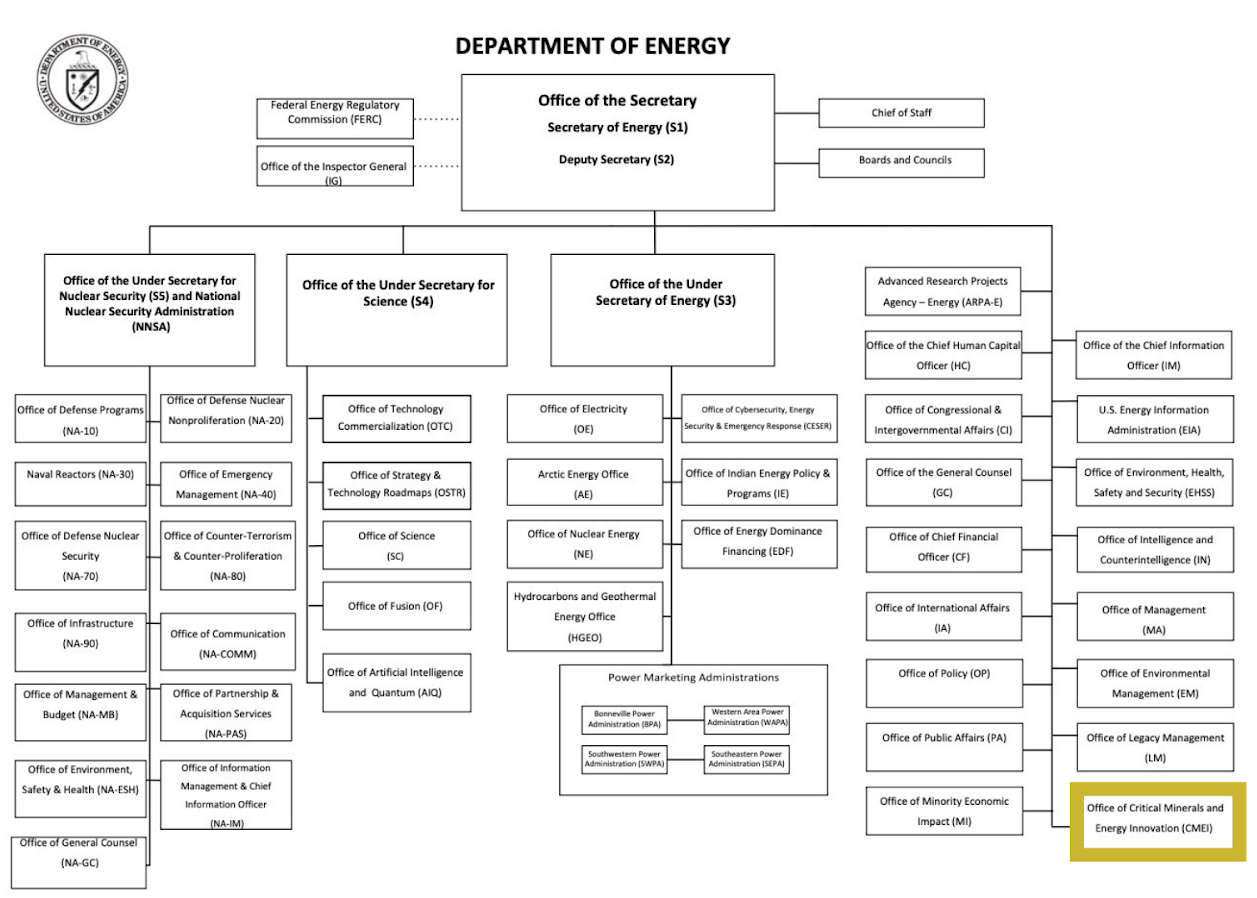
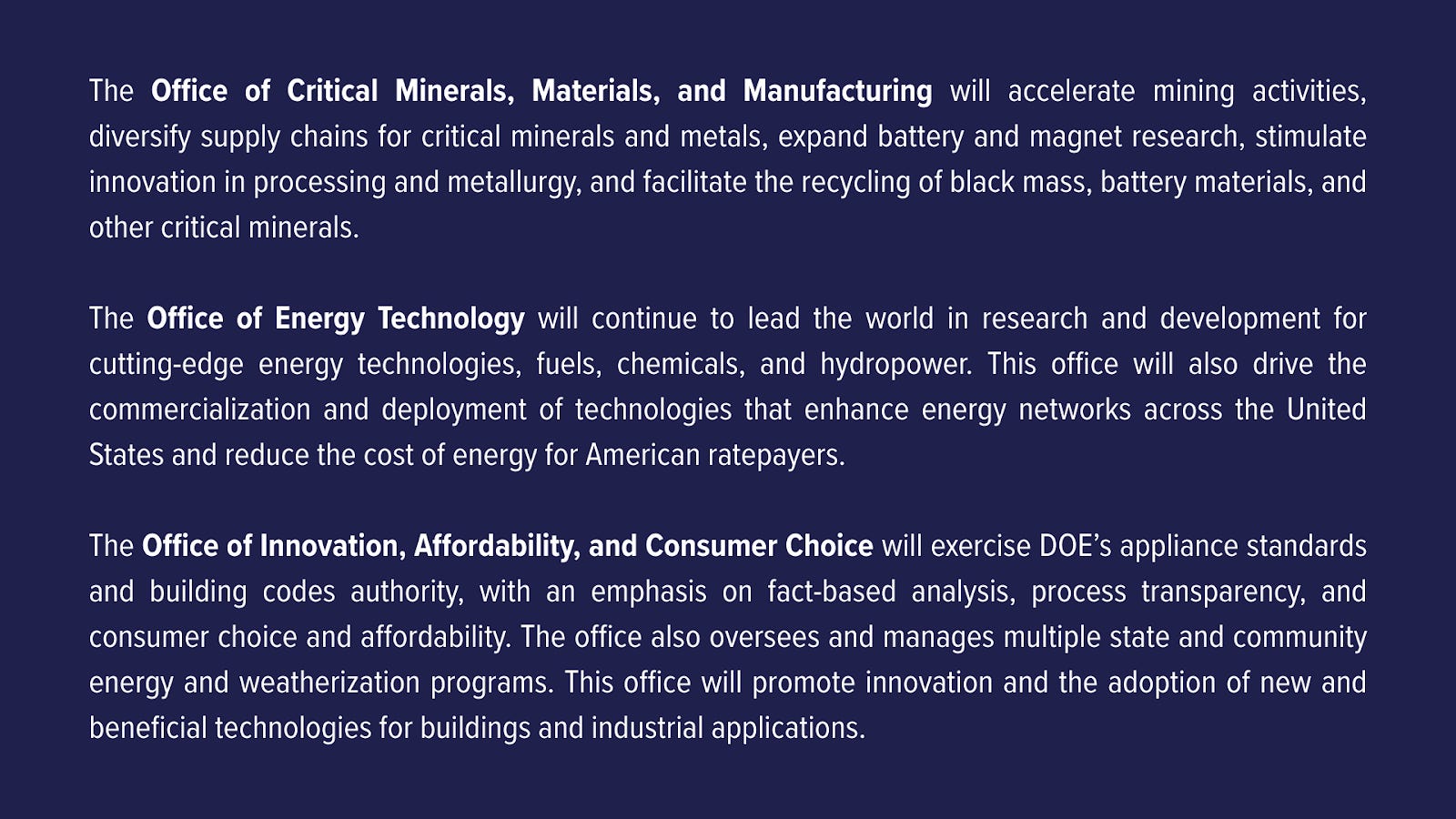
When the realignment was announced, several offices disappeared from the organizational chart, but a new one appeared - reporting directly to the Secretary - the Office of Critical Minerals and Energy Innovation (CMEI), highlighted above. While it was generally understood that several offices would be realigned under this new office, details on the structure of CMEI were still pending. This week, DOE announced the structure of CMEI:
Figure 2: Missions of the Offices of CMEI
But what does that mean in terms of where the previous work - and appropriated funding - go within this organization? Taking a step back, to explain the new office requires a walkthrough of the other offices now realigned under CMEI.
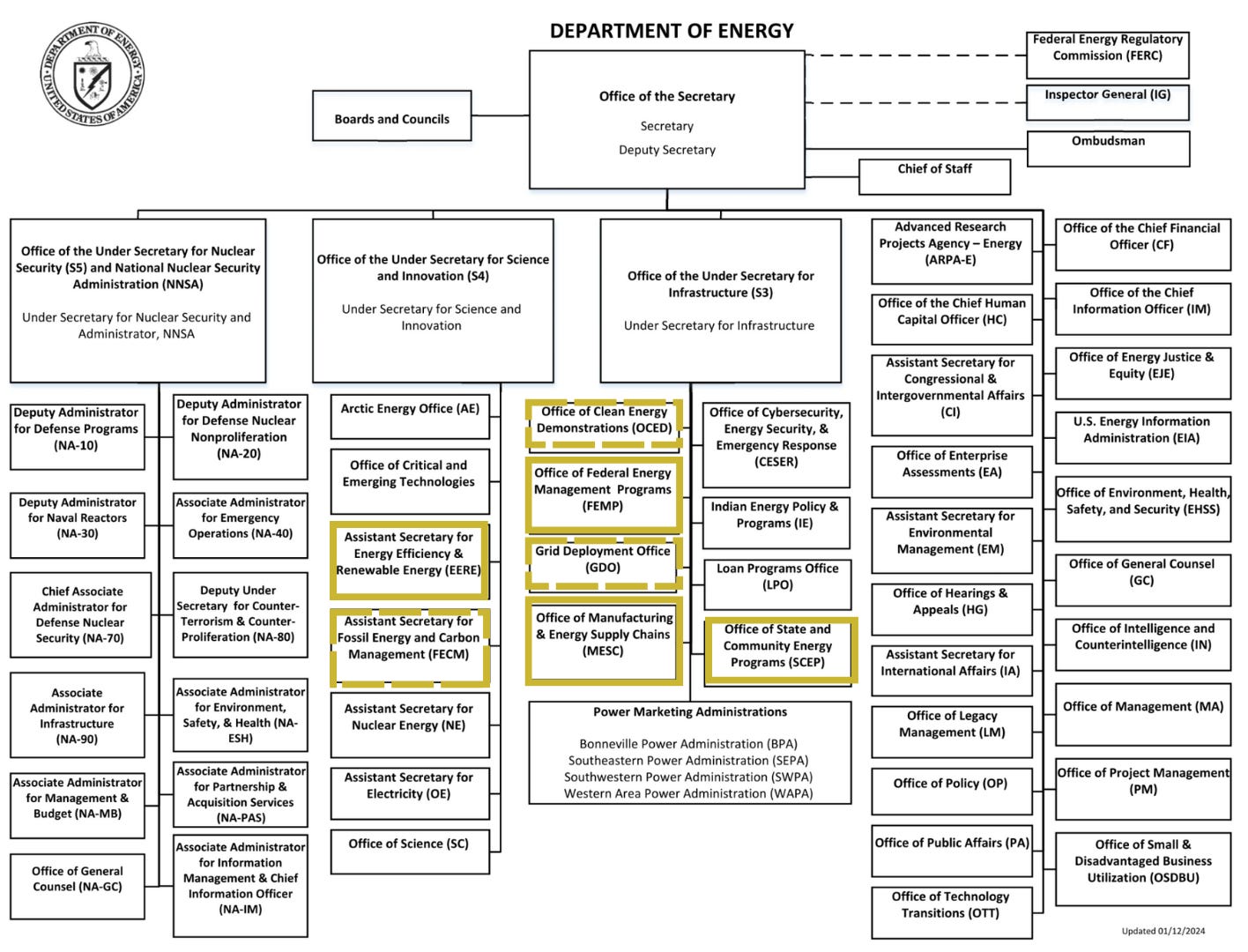
CMEI is a combination of several offices, including: the Office of Energy Efficiency and Renewable Energy (EERE), the Office of State and Community Energy Programs (SCEP), the Office of Manufacturing and Energy Supply Chains Office (MESC), the Office of Clean Energy Demonstrations (OCED), the Federal Energy Management Program (FEMP), and parts of the Grid Deployment Office (GDO) and the Office Fossil Energy (FE).
Below is an org chart reflective of the Biden Administration. The highlights include the various offices that now are realigned under CMEI. Note that pursuant to the org chart below, offices with dashed lines represent offices that are only partially realigned. As an example, portions of the Office of Fossil Energy are also housed now under the new Hydrocarbons and Geothermal Energy Office (HGEO).
Figure 3: DOE Organizational Chart Effective January 2025 with CMEI Highlights
Several of these offices - GDO, MESC, SCEP - were created in February 2022 by the last Administration, principally in response to the substantial investment into the Department through the Infrastructure Investment and Jobs Act (IIJA). FEMP and parts of SCEP - including the Weatherization and Intergovernmental Programs Office (WIP) - were actually under EERE under the first Trump Administration, but were spun out into their own offices to tackle larger missions.
The combination of all of these offices represents a substantial portfolio of tens of billions of appropriated dollars - through IIJA, the Inflation Reduction Act (IRA), and annual appropriations.
To tackle this portfolio, the Administration has broken the work out into the three offices as described above, and reflected in the organization chart below:
Figure 4: CMEI Organization Structure Effective January 2026
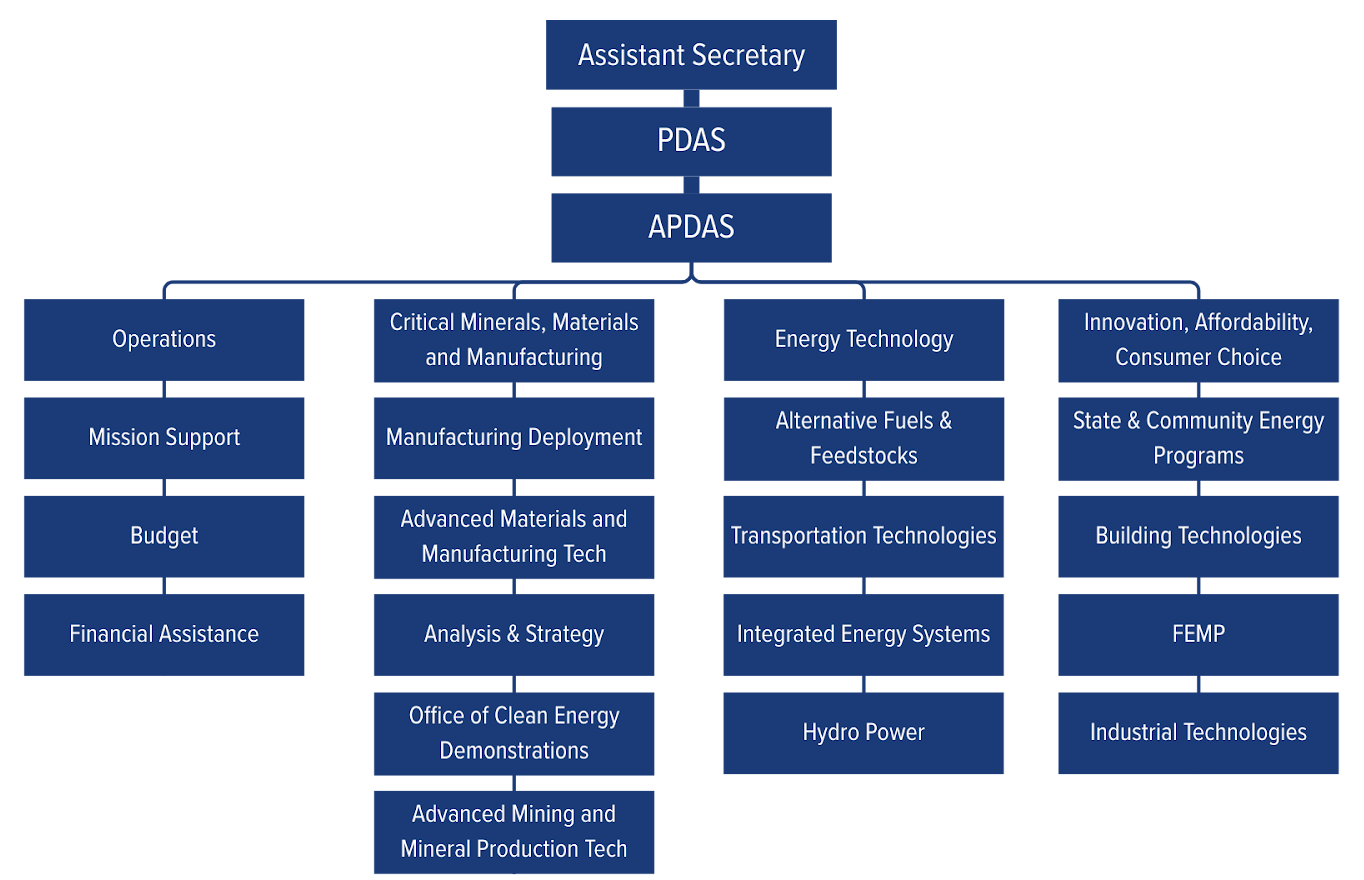
The leadership structure, with an Assistant Secretary, Principal Deputy Assistant Secretary (PDAS), and Associate Principal Deputy Assistant Secretary (APDAS) is largely retained from EERE under the last Administration, with political appointees in the Assistant Secretary and PDAS positions, and APDAS as a career official. This org chart also represents a simplification/consolidation of the Operations pillar.
But where a lot of the change and amendments are made are to the three technical pillars - or as referenced in the announcement, Offices: (1) Critical Minerals, Materials and Manufacturing; (2) Energy Technology; and (3) Innovation, Affordability, and Consumer Choice.
Below is how EERE was structured before the re-org:
Figure 5: EERE Organization Structure Prior to November 2025
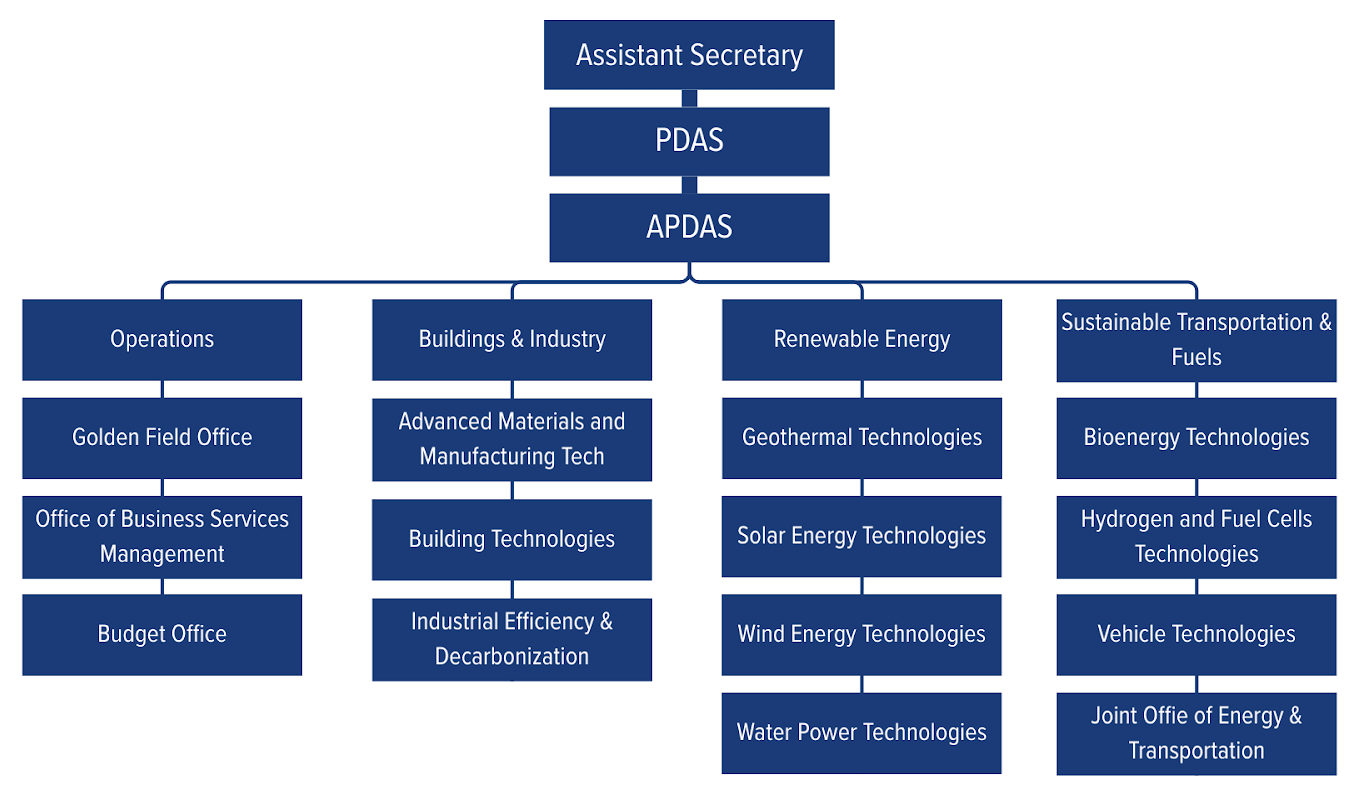
The three pillars were: Buildings and Industry, Renewable Energy, and Sustainable Transportation & Fuels. All of these offices have now been realigned to each of the new Offices under CMEI.
First, the Energy Technology Office:
Figure 6: Office Realignment for Energy Technology Office
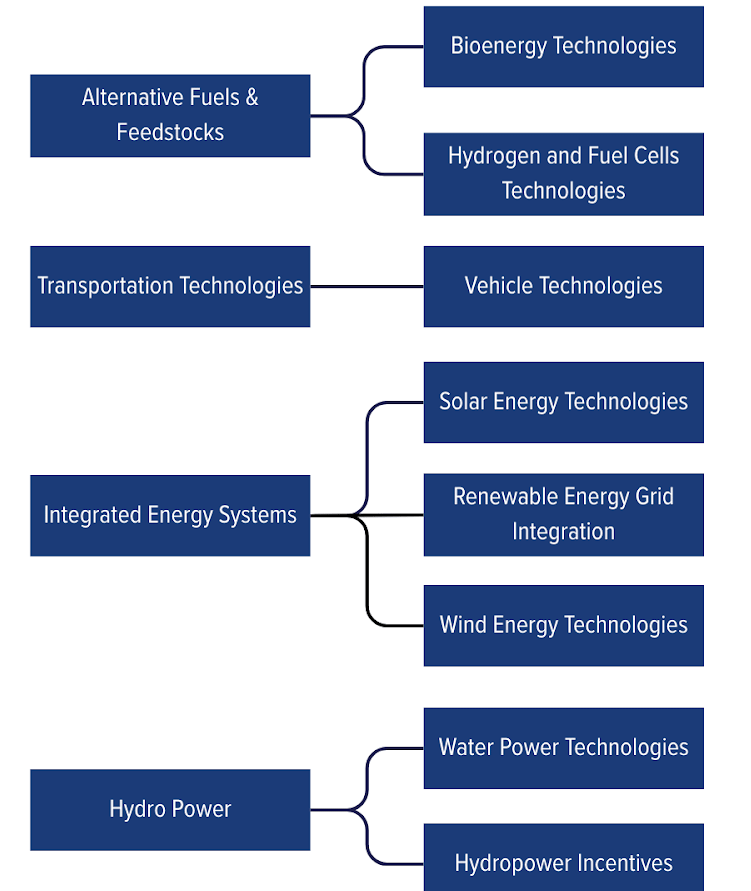
On the left are the new offices under Energy Technology, mapped to their former office titles. This Energy Technology Office now represents most of the former Sustainable Transportation and Renewable Energy pillars. This office spans across clean energy and transportation research and development. Notably, the Geothermal Technologies Office that was in EERE has shifted to the new Hydrocarbons and Geothermal Energy Office.
Bioenergy and Hydrogen have been aligned with Alternative Fuels & Feedstocks, and Integrated Energy Systems now houses the solar, wind, and grid efforts. Transportation Technologies includes the non-battery portion of the former Vehicle Technologies Office. And reflective of the Administration’s prioritization of hydropower, the Water Power Technologies Office has been renamed to Hydro Power and the Hydropower Incentives that were in GDO have shifted to this office as well.
The Innovation, Affordability, and Consumer Choice Office is more straightforward, with principally offices that were separate from EERE now back under the same larger office structure, as seen below:
Figure 7: Office Realignment for Innovation, Affordability, and Consumer Choice
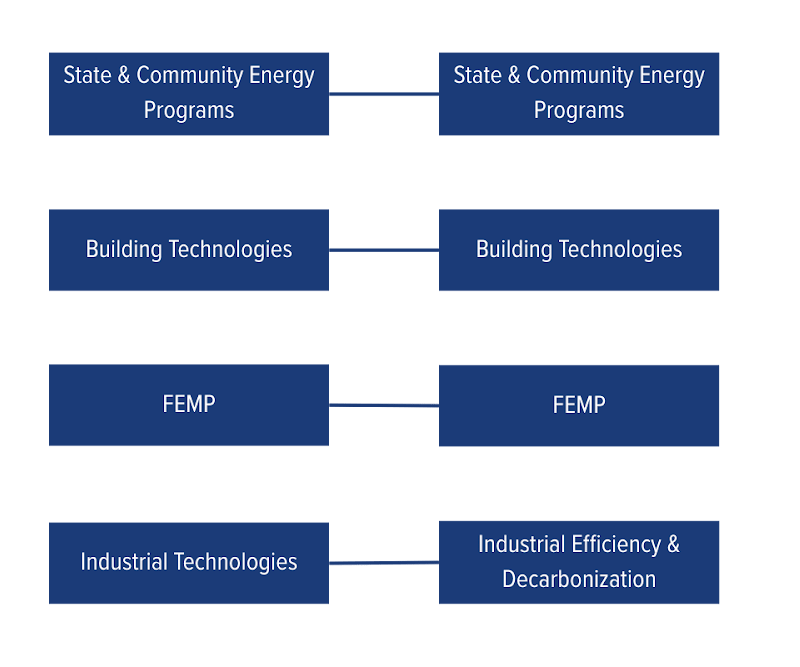
This office will be responsible for administering substantial programs, including appliance standards, energy efficiency rebates, weatherization funding, assisting federal agencies with energy planning, and research and development for industrial and building technologies.
And last - and the most substantial in terms of size and mandate - is the Critical Minerals, Materials and Manufacturing Office.
Figure 8: Office Realignment for Critical Minerals, Materials and Manufacturing
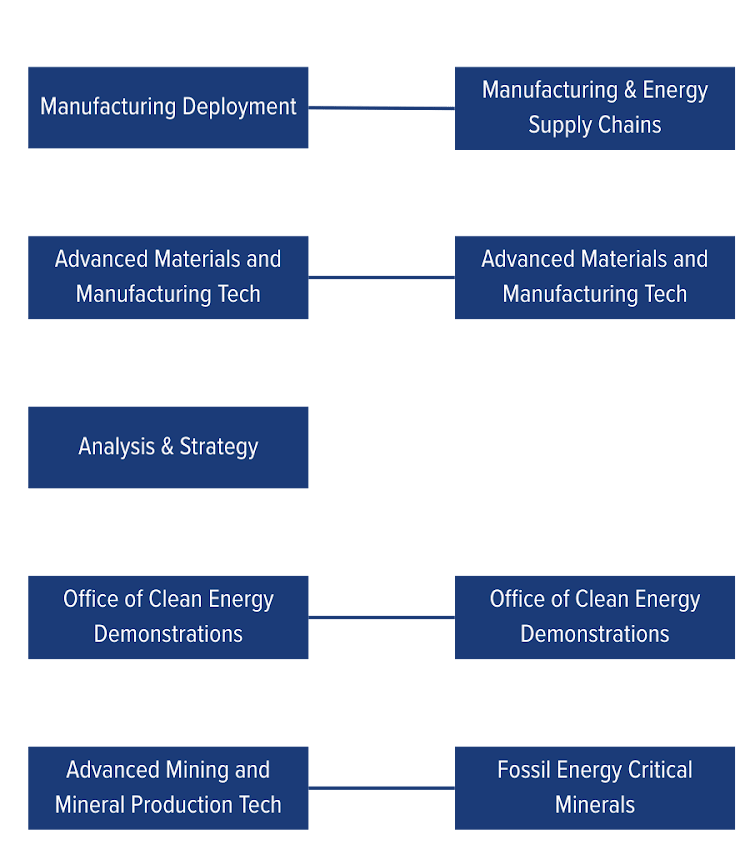
While this looks relatively straightforward, some of these activities being realigned under this Office were very large and complex, with billions of dollars of funds remaining under the IIJA and Inflation Reduction Act. It appears that all of MESC is now a part of this organization. The activities under MESC included all of the battery manufacturing and recycling work funded by IIJA, as well as the execution of the 48C tax credit program.
This new organization is also the new home for OCED. But unlike its previous iteration, not all of the programs that were once housed under OCED will be under management of CMEI. Large programs like the Advanced Reactor Demonstration Program and much of the carbon capture programs have been shifted to other parts of the agency - in the Office of Nuclear Energy and the Office of Hydrocarbons and Geothermal Energy. The full list of projects and programs now under management in CMEI is still forthcoming.
So what does this all mean, in general? It means that while the Administration is realigning much of the Department, a lot of the core work and equities that have been built over decades are still within the purview of the agency. And the reality is that much of what these offices will focus on still remains to be seen.
The upcoming Fiscal Year 2027 budget request from the President, which is expected to be released sometime after the State of the Union, will be one indicator. That may give some insight into the priorities, structure, and key upcoming activities throughout CMEI.
Another will be any forthcoming strategic plans - both at the larger CMEI level, as well as through all of the new offices. This could include meshing together of existing plans, or entirely new strategic plans and directions to reflect the priorities of the Administration. Strategic plans, multi-year program plans, and other planning efforts will be no doubt taking shape during the course of the Administration.
But in general, as a first step, understanding where various activities will reside in the new CMEI is important for all stakeholders who are seeking to work with the agency.
(Note to readers, this is being crossposted with the DOE Alumni Network and views expressed in this post are entirely my own)
Comments
Nothing yet. Say the first thing.
Sign in to join the conversation.