
Early on, when we began working collaboratively between our kindergarten classes on opposite sides of the United States, we discovered the advantages of common vocabulary and class culture when building experiences together. Our curiosity and willingness to share was rooted in the values of each individual class, and would matter as we continued to share about ourselves and learn about each other.
In order to create effective communication between classes, common vocabulary would help us to model appropriate strategies for working with others. This would also help us to expand the opportunities to deepen the roots of our individual class cultures. It was in honor of Martin Luther King Jr. Day that we first developed our Kindergarten Promises (Chapter 4, Innovating Play). In subsequent years we saw value in moving this experience to the beginning of the school year as we established our individual and collective class cultures.
Promise statements were developed based on the work of Sean Covey (The Seven Habits of Happy Kids). Using his habits as a guide, we intentionally developed each statement and phrased it as a promise rather than a rule. This invites the statement to be used as both a way of recognizing a problem (Which promise was not kept when _______ happened?), and as a pathway toward restoration (Which promises might help us to address the challenge?)
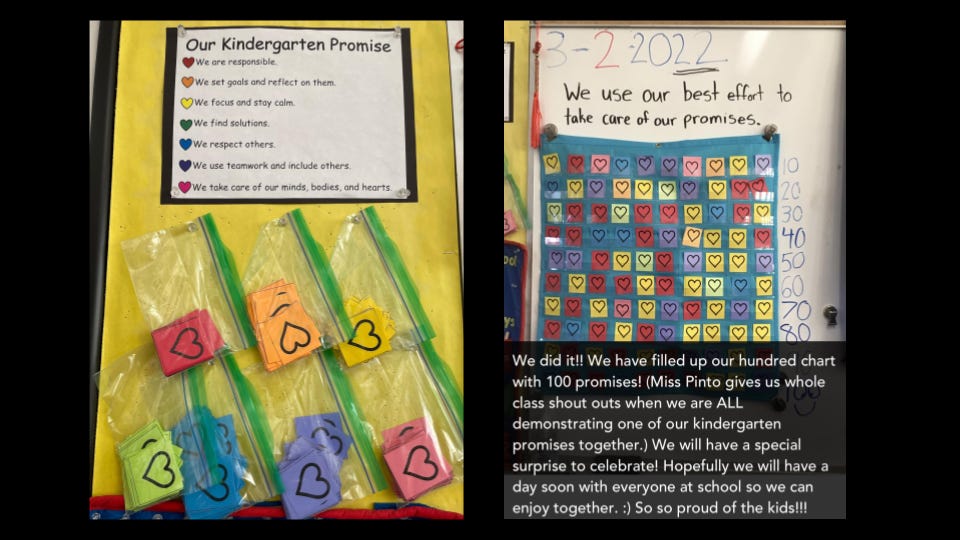
Color coding promises helps us to easily connect experiences visually by adding a colored heart to a chart, handout, or other concrete visual resource. Color coding also invites children to connect with classroom culture through simple language, and reinforces the real life application of promises by referring to the colors throughout the day. For example, “Let’s pause to get a sip of water to keep our Pink Promise.” or “Let’s keep our Blue Promise as we walk quietly through the hallway.”
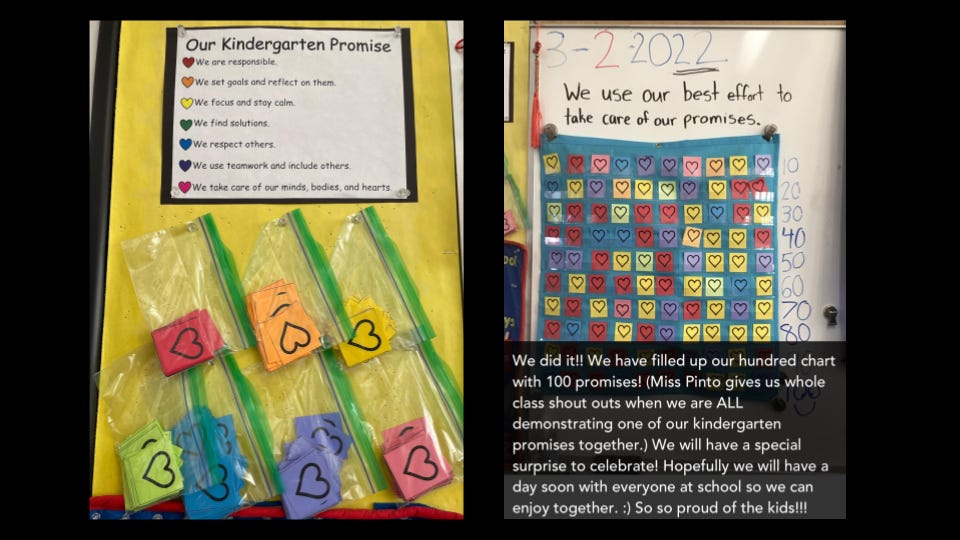
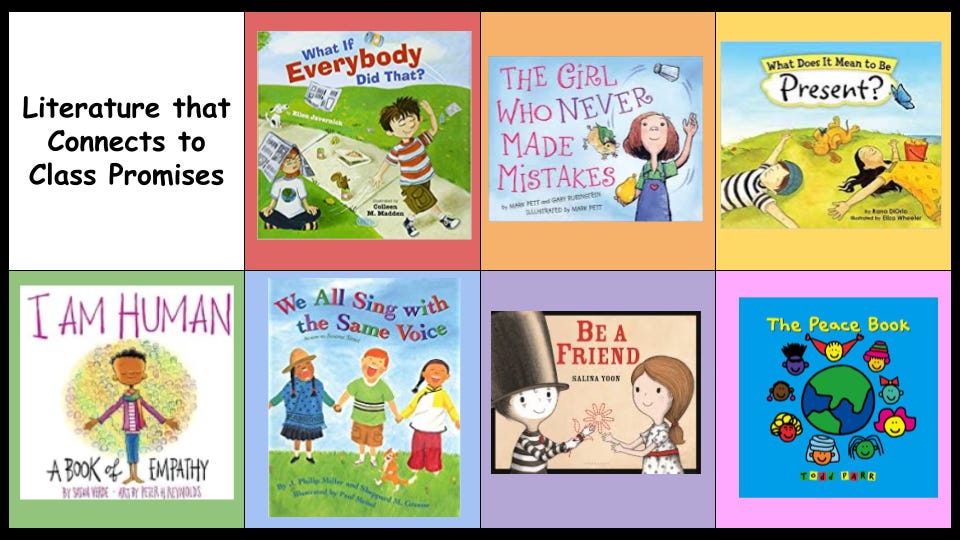
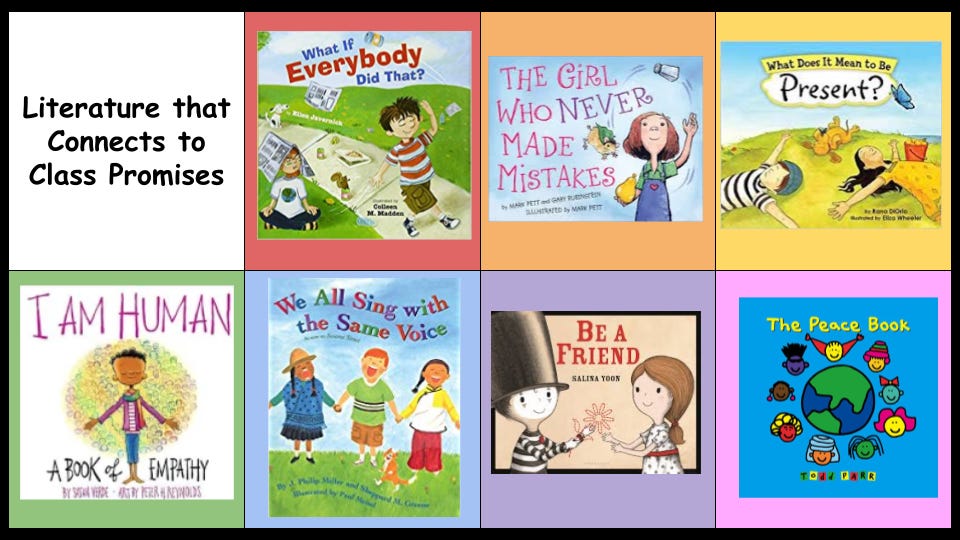
When the whole class works together to demonstrate one of our kindergarten promises, they earn a corresponding heart that gets placed in a hundreds chart. When the chart is filled, the class earns a surprise! As we introduce each promise, we connect it with an authentic picture book that highlights its specific importance within different contexts. This invites children to make text-to-self connections as part of the classroom culture.
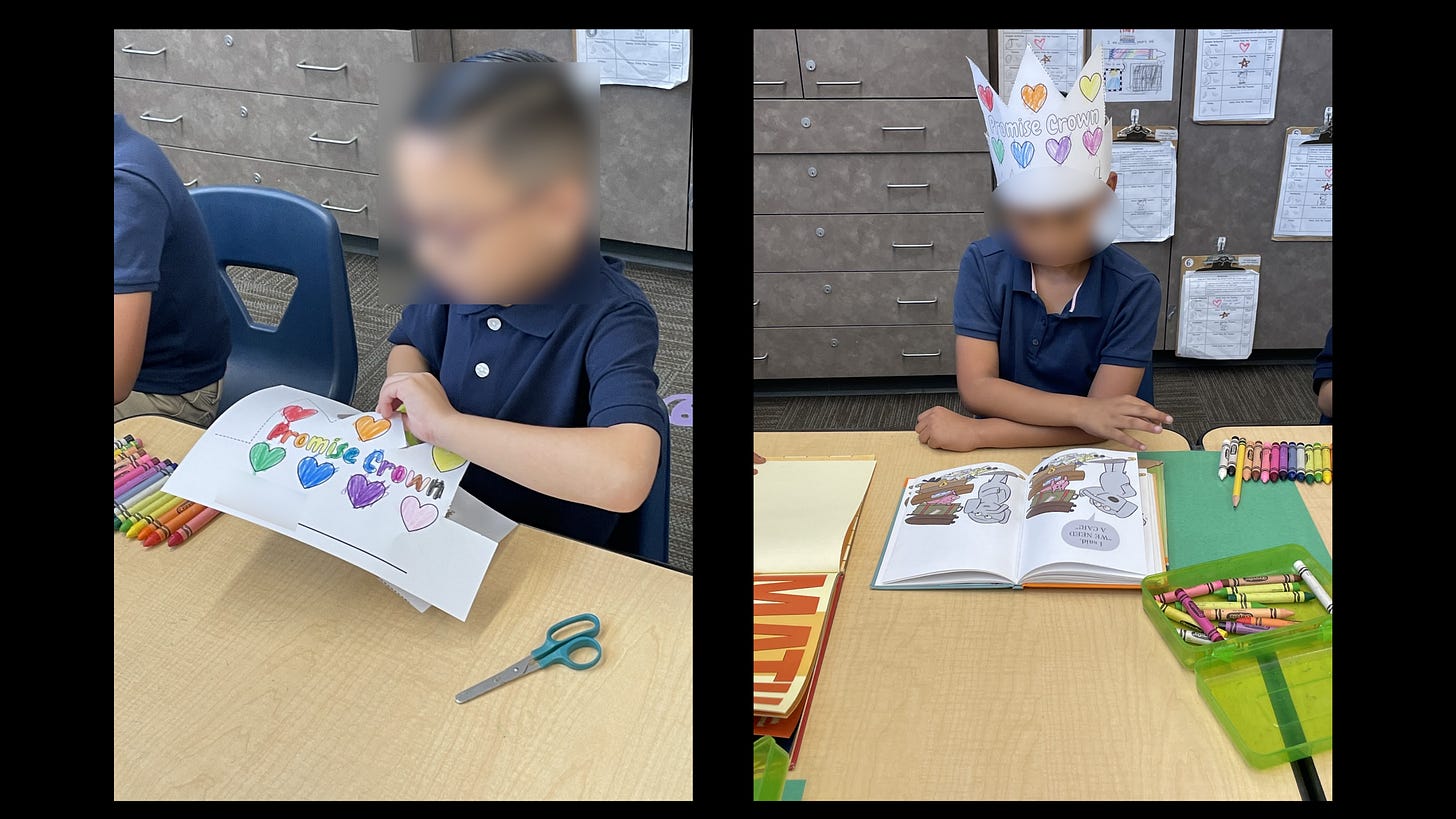
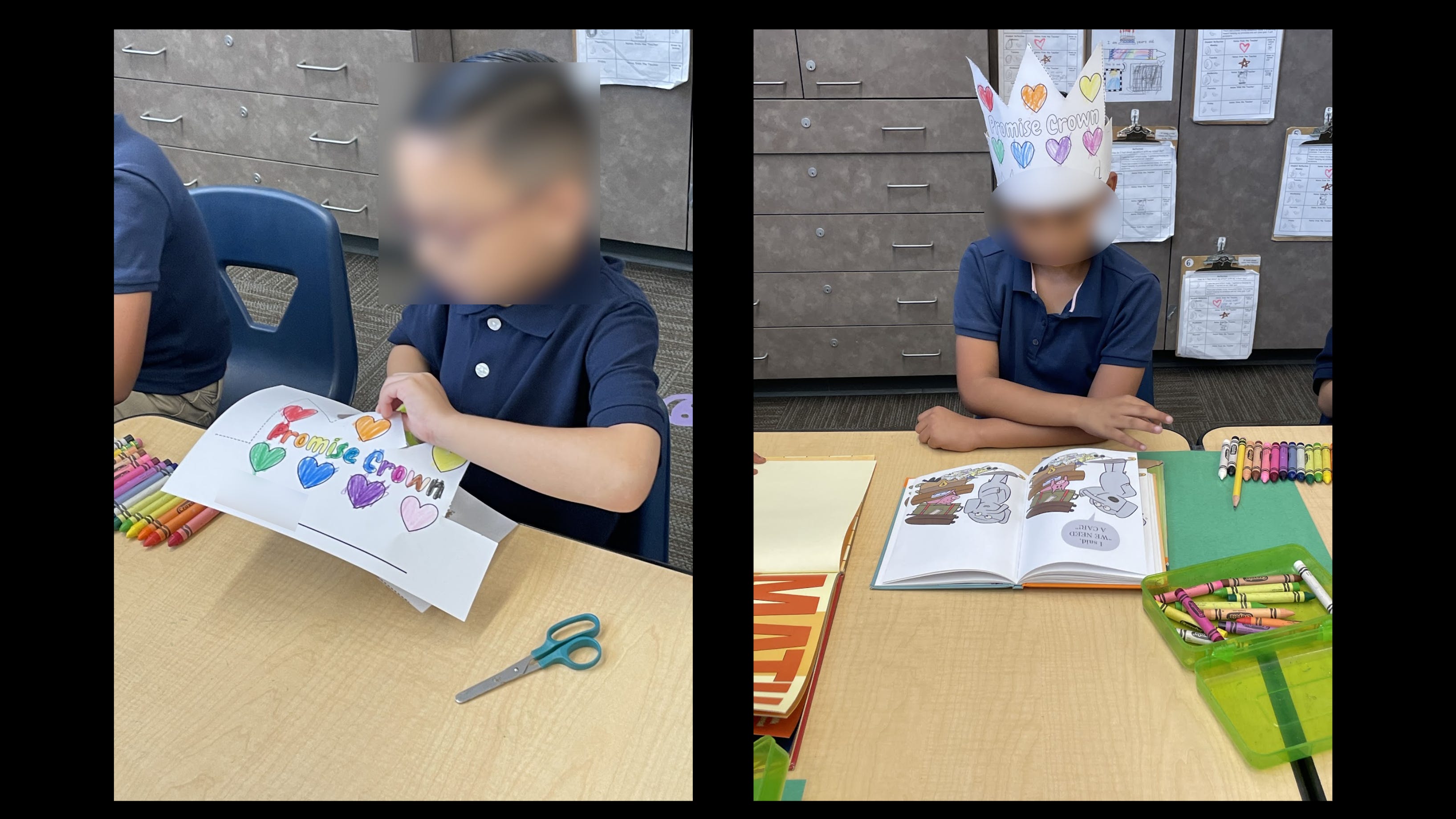
Once our promises have been introduced, children decorate and take home their “Promise Crown” along with a note to families sharing each promise and the connected text. We encourage families to use the same vocabulary when reinforcing family expectations as well. This supports consistency between home and school, and establishes the value of the promises as a way of communicating and caring for ourselves and each other beyond the walls of the classroom.
The language of promises is built into both the flow of routines throughout the day, as well as during learning time. We consistently build the promises into lesson introductions, activities, and closure as we reflect on the learning that has taken place and set goals for moving forward.
Starting the School Year Blog Post
Literature Inspired Class Mission Statement and Crowns - Editable!
No posts
Comments
Nothing yet. Say the first thing.
Sign in to join the conversation.