
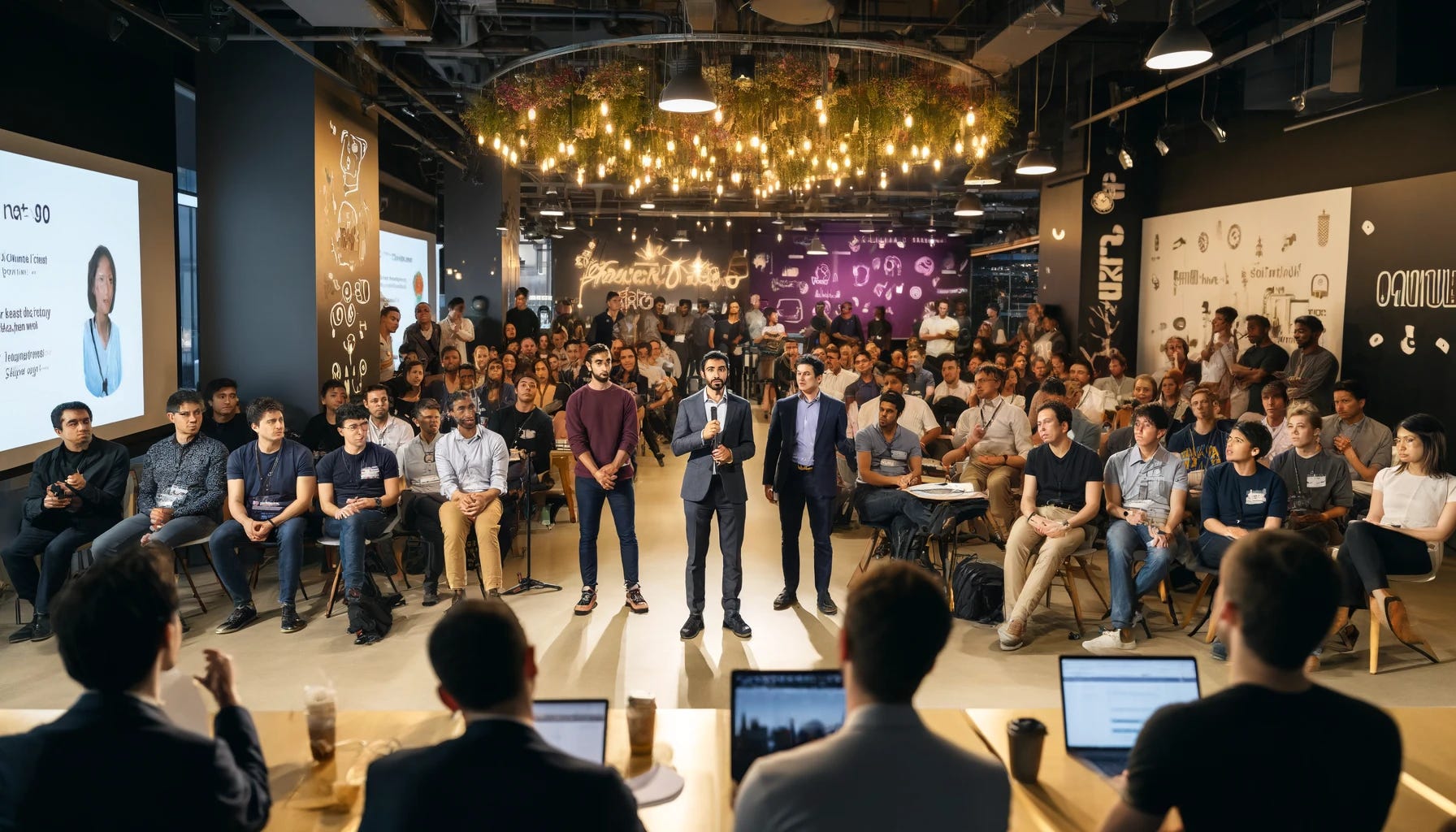
In the dynamic and engaging Startups Pitch and Mix event in Hacker Dojo on May 24, 2024, fifteen entrepreneurs from around the world presented their innovative startup ideas to an audience that included fellow visionaries and a panel of four seasoned investors.
This event can be described as an intensive "pressure cooker" or "incubator" experience.
This session served as a powerful learning experience for the entrepreneurs. They not only had the opportunity to refine their public speaking and pitch skills but also received invaluable, direct, and constructive feedback on advancing their ventures. The investors critiqued each idea's business models, strategies, and scalability potential, offering insights that were beneficial to the pitchers and audience members contemplating similar entrepreneurial journeys.
This interactive environment fostered a rich exchange of ideas, promoting a deeper understanding of the startup ecosystem and the critical factors influencing investment decisions.
Here's a breakdown of the various facets of this experience:
High-Stakes Presentation: Pitching to a room full of people, including potential investors, is high pressure. Entrepreneurs must distill their complex business ideas into concise, compelling presentations, delivering them confidently and clearly. This requires practice, preparation, and thinking on one's feet.
Real-World Feedback: Receiving feedback from experienced investors is invaluable for entrepreneurs. It gives them real-world insights into their business models' strengths and weaknesses, market positioning, financial projections, and overall pitch. This feedback can be affirming and challenging, but it is always instructive.
Diverse Perspectives: The presence of multiple investors ensures a diversity of perspectives. Each investor may have different areas of expertise, investment criteria, and risk tolerance. This means that entrepreneurs receive a wide range of feedback, allowing them to understand their startups' potential and challenges better.
Networking Opportunities: The event is not just about pitching; it's also about networking. Entrepreneurs can connect with potential investors, mentors, advisors, and others. These connections can be invaluable for future fundraising, partnerships, and collaborations.
Shared Learning: The 15 entrepreneurs also learn from each other. Observing each other's pitches and receiving feedback gives them insights into different approaches, strategies, and challenges. This shared learning experience can be both inspiring and motivating.
Growth Catalyst: Overall, the experience can be a catalyst for growth. It forces entrepreneurs to refine their ideas, sharpen their communication skills, and develop a thicker skin. The feedback they receive can help them make critical adjustments to their business models, improve their pitches, and increase their chances of securing funding and achieving success.
In summary, this group of entrepreneurs' collective learning experience can be characterized as a challenging but rewarding journey marked by high-pressure presentations, valuable feedback, diverse perspectives, networking opportunities, shared learning, and the potential for significant growth.
Chatting with the audience on the richness of the learning experience provided by the pitching event, they emphasize different aspects and use varying tones to convey the atmosphere and impact of the event.
One participant described the event as an engaging and constructive forum where entrepreneurs gain exposure and insights while showcasing their startups. It emphasizes the educational aspect of the event, highlighting the opportunity for entrepreneurs to improve their pitching skills and receive practical advice on moving their ventures forward. The tone is supportive and focuses on the nurturing aspect of the experience, suggesting that it facilitates growth through collaboration and the exchange of ideas.
Another participant, on the other hand, characterizes the event as a "pressure cooker" or "incubator," suggesting a more intense, high-stakes environment. This perspective stresses the challenging nature of pitching in a setting where the stakes are high and the feedback can be starkly candid. It details the various facets, such as high-stakes presentation, real-world feedback, and diverse perspectives, framing the event as a critical test that can spur significant personal and business growth. The tone here is more about resilience and the rigorous demands of the entrepreneurial journey.
You can correlate these views with other perspectives. They acknowledge the event as a multifaceted learning opportunity, though they highlight different emotional and psychological experiences. While some descriptions appeal more to those who see value in a supportive and collaborative learning environment, others resonate more with those who appreciate the motivating force of high-pressure, high-stakes challenges. Combining these views provides a balanced picture, recognizing the event as a nurturing ground for development and a critical test of entrepreneurial mettle and readiness. This holistic view helps entrepreneurs prepare for the diverse realities of the business world, blending support with challenge.
The descriptions capture the essence of the entrepreneurs' learning experience, emphasizing the valuable feedback received from investors and the dynamic nature of the event.
However, there are subtle differences in focus and tone while you bounce the point of view from different participants:
Patrick's point of view:
Focus: I highlight the intense, high-stakes nature of the experience, using terms like "pressure cooker" and "incubator" to convey the challenges and potential for growth. I also emphasize the diversity of perspectives multiple investors offer and the shared learning among the entrepreneurs themselves.
Tone: My description is more visceral and experiential, aiming to evoke the emotions and challenges faced by the entrepreneurs.
Julia's Point of View:
Focus: This description emphasizes the educational and networking aspects of the event, highlighting the diverse audience and the opportunity for entrepreneurs to refine their pitch skills and gain a deeper understanding of the startup ecosystem.
Tone: This description is more formal and academic, focusing on the experience's intellectual and professional benefits.
Correlation:
Despite these differences, both descriptions acknowledge the following key elements:
Value of Investor Feedback: Both descriptions emphasize the importance of the feedback provided by the investors, recognizing it as a crucial learning opportunity for entrepreneurs.
Dynamic Learning Environment: Both descriptions highlight the event's interactive and engaging nature, acknowledging that learning occurred through direct feedback, observing others, and networking.
Potential for Growth: Both descriptions suggest that the experience can be transformative for the entrepreneurs, helping them refine their ideas, improve their pitches, and increase their chances of success.
For a descriptive portrayal of each participant in the event based on their respective projects:
1. Peter is the visionary behind a revolutionary flying suit designed to emulate the experience of soaring like a bird. His project, showcased on his webpage, highlights an innovative exoskeleton that allows users to engage in an immersive flying experience, combining aerodynamics, robotics, and wearable technology. This groundbreaking invention taps into the dream of personal flight, appealing to thrill-seekers and technology enthusiasts alike.
2.Henrik co-founded Neuroflash, a cutting-edge platform that leverages artificial intelligence to generate customized marketing content. His startup provides a tool that helps businesses craft tailored messages based on psychological and data-driven insights. This service is invaluable for marketers seeking to enhance their digital presence and engage their audience more effectively, using AI to optimize content creation.
3. Marc represents Energy Robotics, a startup focused on developing an AI software platform for autonomous inspection robots. These robots are designed to perform safety and maintenance checks in hazardous or hard-to-reach environments, such as industrial plants or infrastructure sites. Marc's contribution to the field of robotics promises to improve operational efficiency, reduce human risk, and push the boundaries of autonomous technology in industrial applications.
4. Thomas is the creator of UpAhead, an innovative academic planning tool that assists students in managing their educational journey. This platform offers features to organize courses, track academic progress, and plan for future educational goals. Thomas's project addresses the need for structured and accessible educational planning tools to enhance students' academic experience worldwide.
5. Shagun is the entrepreneur behind Papayain, a startup that produces an advanced women's sanitary pad designed to be rash and odor-free, with antimicrobial properties and zero plastics. Her product addresses significant health and environmental issues associated with traditional sanitary products. Shagun's initiative offers a healthier option for women and contributes to the sustainability movement by reducing plastic waste in hygiene products.
Each participant brings a unique innovation, showcasing the diverse potential of modern technology and entrepreneurship to address various human, environmental, and technological challenges. This is a sample of the fifteen participants in the event.
Each participant in this pitching event got specific learning experiences tailored to their individual projects and entrepreneurial journey. Here's how each one benefits:
1. Peter (Flying Suit Innovator):
Technical Feedback and Feasibility Analysis: Peter learned from investors about the feasibility and scalability of his flying suit technology. He might gain insights into potential engineering challenges, safety regulations, and market readiness.
Networking with Aerospace Experts: By engaging with a room full of diverse attendees, Peter might connect with individuals in the aerospace industry who could provide technical advice or partnership opportunities.
Pitching Complex Technologies: Learning to effectively communicate complex technical details understandably to potential investors and non-specialists is crucial. This event offers him a real-time environment to refine this skill.
2. Henrik (AI Marketing Platform Founder):
Market Differentiation Strategy: Henrik could learn how to position his AI tool in a competitive market, gaining insights on unique selling propositions that resonate with investors and customers.
Customer Acquisition Techniques: Feedback might include strategies for effective customer acquisition and expansion, especially how to appeal to large enterprises versus SMEs.
Data Privacy and Ethics: Given the AI nature of his platform, Henrik could receive valuable feedback on navigating data privacy laws and ethical considerations in AI, which are critical for his company's long-term viability.
3. Marc (Autonomous Inspection Robots):
Industry-specific Applications: Marc could learn more about specific industry needs and how his robots can be tailored to meet these demands, perhaps identifying new targeted sectors.
Regulatory Compliance: Feedback may involve navigating regulatory challenges associated with deploying robots in various environments, which is crucial for operational planning.
Investment in R&D: Investors might provide insights on the importance of continuous research and development to stay ahead in technology innovation, guiding Marc on future investment areas.
4. Thomas (Academic Planning Tool Developer):
User Engagement Strategies: Thomas could learn practical ways to increase user engagement and retention, understanding what features students find most valuable.
Partnerships with Educational Institutions: Insights into forming partnerships with schools and universities could be a major takeaway, potentially expanding his user base.
Adapting to Educational Trends: Feedback also focuses on adapting to changes in educational technology and student needs, which could influence future updates to his platform.
5. Shagun (Eco-friendly Sanitary Pad Creator):
Brand Messaging and Social Impact: Shagun could refine her approach to communicating her product's social and environmental benefits, enhancing brand loyalty and customer base.
Scaling Sustainable Products: It could be invaluable to learn about the challenges and strategies for scaling up the production of sustainable goods without compromising on quality or principles.
Regulatory Insights and Certifications: Feedback may include guidance on obtaining certifications and meeting health regulations, which are critical for products in the health and wellness sector.
These potential learning experiences can significantly contribute to refining their business models, enhancing their ability to communicate their visions, and helping them navigate the challenges of scaling innovative solutions.
In conclusion:
While the descriptions emphasize different aspects of the experience, they are complementary, offering a more comprehensive picture of the entrepreneurs' collective learning journey. One side of the descriptions focuses on the emotional and experiential aspects, while the other highlights the intellectual and professional benefits. Together, they provide a richer understanding of this valuable learning opportunity.
No posts
Comments
Nothing yet. Say the first thing.
Sign in to join the conversation.