
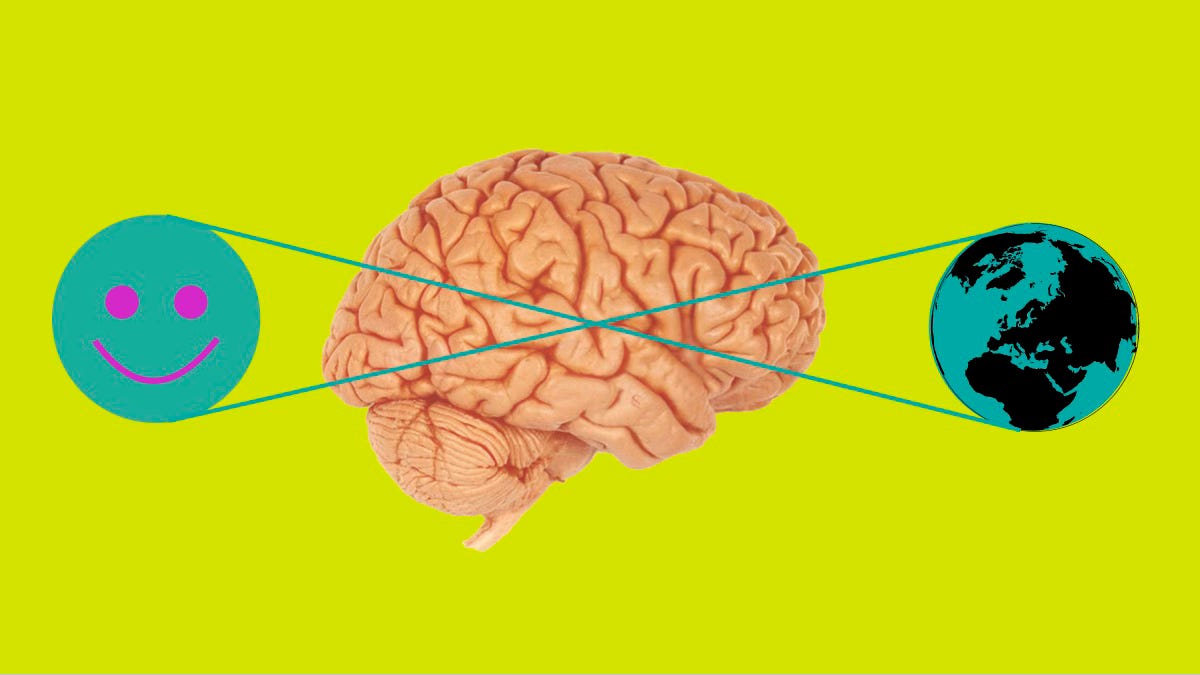
You are being told that you’re powerless over your impulses. If you over-indulge in screens, food, or drugs, you’re told that it’s not your fault. You learn to blame forces outside your control when you make bad decisions. It feels good for a moment, but you end up feeling like a powerless victim of external forces. You are better off finding your power over your dopamine. All it takes is some basic biology.
Your brain evolved to promote survival, not to make you happy. It rewards you with the joy of dopamine when you find a way to meet a survival need. This is hard to accept because people do things for dopamine that hurt their survival, and because we don’t consciously link joy to meeting needs. But our brain defines “survival needs” in a quirky way. It connects all the neurons active in the moment when your dopamine turns on. That wires you to turn it on faster the next time you see something similar.
We’re not consciously aware of our chemicals or our wiring. Our happy chemicals and stress chemicals are controlled by brain structures we’ve inherited from earlier mammals (the amygdala, hippocampus, etc.). Animals can’t talk, so your mammalian limbic system can’t tell you why it’s releasing a chemical. This is why we do things to feel good without consciously intending to.
The talking part of your brain can’t control your emotional chemicals. When you talk to yourself, it’s all in your human cortex. It wants to help, so it comes up with nice explanations for the things you do. It sifts for “facts” that fit these explanations. It seems true because you hear similar things from others.
This mindset is hard to escape because it’s reinforced throughout our culture. But you have a choice. You can keep feeling like a victim, or you can learn to manage your natural urge for dopamine. It’s a skill learned from practice, just like learning a musical instrument or a foreign language. If you don’t learn the skill, you keep doing things that feel good now but hurt you later, and you don’t even know you’ve made a choice.
It’s not easy being a big-brained mammal. This is why societies trained young people to manage their impulses since the beginning of time. But today’s culture asserts that kids should do what feels good, and trains them to point fingers of blame when it goes badly. Can a society dedicated to feeling good long endure? That question is for historians. Your question is whether to believe you are powerless or to lift the hood and find your power.
If you choose the not-my-fault mindset, it’s not your fault in a way because no one has taught you the basic biology. So here it is.
Dopamine creates the great feeling that you’re about to meet a need. If you’re hungry and see food in the distance, dopamine makes you feel good before the food reaches your stomach. And dopamine releases energy that helps you rush toward the food. What an efficient system!
In today’s world, physical needs are easily met, so social needs tend to spark more dopamine. Whatever met a social need in your past paved a pathway to your dopamine. When you see something linked to it now, the “go for it” feeling turns on and your intelligent cortex fills in the blanks.
You don’t always get what you seek, and that triggers the bad feeling of cortisol. We call it the “stress chemical” today, but it helped our ancestors survive in a harsh world. It works by making you feel so bad that you act fast to make it stop. Neurons connect when cortisol flows, wiring you to spot threats and obstacles faster in the future. We are alive today because cortisol alerted our ancestors in time to take action.
When you find a way to relieve cortisol, dopamine is your reward. But it only turns on in short spurts. If it were always on, it couldn’t do its job of alerting you to opportunity. The joy of dopamine never lasts, so we keep striving to spark it. Our hunter-gatherer ancestors were always striving too. Once they met their need for food, they moved on to look for water or firewood because dopamine rewards you for meeting the un-met need. Our brain does not waste dopamine on needs that are already met. This is not a disorder or a societal failure. It’s nature’s motivation system.
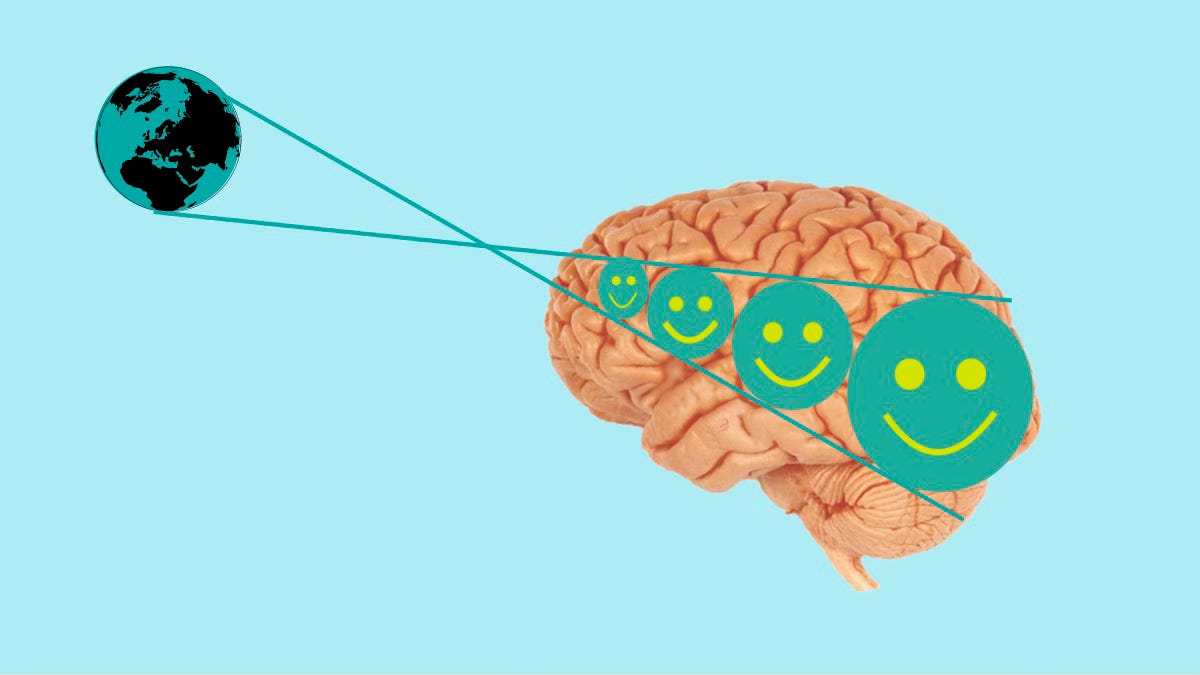
If you were thirsty in the desert, dopamine would fuel the trek toward an oasis. If the oasis is dry when you get there, cortisol surges and wires you to avoid that mistake in the future. Cortisol helps you adapt to reality, but it also wires you to expect the worst. Dopamine relieves the bad feeling, which is why your favorite dopamine habit feels like a matter of life or death.
We are not just robots who slavishly run on old wiring. We have the power to transcend this autopilot. But it’s harder than you expect, so let’s peel back more layers to see how.
The electricity in your brain flows like water in a storm, finding the paths of least resistance. You flow into existing grooves so easily that you don’t realize you’ve made a choice.
The biggest grooves are built in youth because that’s when we have a lot of myelin, the brain’s road-building material. A myelinated pathway conducts electricity a hundred times faster. We rely on these pathways for life because they’re so efficient.
It’s hard to believe we’re wired by a random collection of early experience. We prefer to think genes and rational analysis are the source of our neural networks. It’s important to know that we’re born with billions of neurons but very few connections between them. Connections develop when they’re activated repeatedly. Each of us was connected by a unique set of inputs. These experiences have more in common than you might think, however. We all fall down once we learn to walk, and we all feel the pain of gravity. We all end up wired to repeat behaviors that felt good before and avoid behaviors that felt bad before.
Of course, early experience is not a perfect predictor of what works in adulthood. So we’re all challenged to manage the spaghetti of neurons we happen to have. Fortunately, we all have billions of extra neurons ready to form new pathways. But it’s hard to get electricity to flow into those tiny trails. It’s so hard that people often give up.
We like our old pathways because the effortless flow of electricity gives you the sense that you know what is going on. When you try a new path, you don’t flow, so it feels unsafe even when the new choice is safer. It’s like trying to slash a new trail through a rainforest. A huge effort makes little progress, so you’re tempted to just take the paved road and let your cortex do the ‘splainin. If you get a bad result, you conclude that something is wrong with you or something is wrong with the world. Then you look for an “expert” to fix you or you focus on fixing the world.
This mindset does not benefit you. It doesn’t benefit society either. No greater good is served by telling people they are powerless over their impulses, even if it’s said in the name of the greater good.
Fortunately, you have a choice.
You can build the skill of blazing trails through your jungle of neurons. You can rewire yourself to feel good in ways that are good for you. Basic biology shows that repetition is the answer. Neural pathways grow when they are activated repeatedly. The new pathways we build in adulthood will not be myelinated highways, but when you know how your brain works, you can stay on the trail.
This is probably not the answer you were hoping for. It’s un-fun. Nobody wants to repeat a behavior that feels wrong. We find sexier solutions, even when the price tag is high and the success rate is low.
Blaming external forces will always be an attractive option. You can always find a corporation to blame for your choices. You can always find “proof” to support what you already believe. You can always surround yourself with people who share this paradigm. But cortisol will fill your life if you ignore your brain power.
Instead, you can choose to be accountable. Not to a person or an institution, but accountable to reality. Our ancestors had no choice but to face reality. They would die of cold if they didn’t gather firewood. Today, you can refuse to gather firewood and count on someone else to warm you. Someone will rescue you from the consequences of scrolling or drugging or snacking. Someone will try to meet your needs if you don’t do it yourself.
But you deprive yourself of dopamine when you do that because our brain saves the happy chemicals for action that meets needs.
You only get a small drip of dopamine with each step. You don’t get the jackpot dopamine that you got from a big moment in your past. But chasing jackpots leads to cortisol in the long run, so it’s great to know that a new path to dopamine gets built when you repeat a new choice. You can do it whether your friends do it or not. In time, it becomes your new normal.
I explain how to do this in my books, courses, and free resources at the Inner Mammal Institute. Later this year, check out my new book, You Have Power Over Your Dopamine. Until then, here are some free resources to get you started.
Video You Have Power Over Your Brain
Here are some books and courses to keep you going.
All Inner Mammal Institute books
Courses
Train Your Brain To Feel Good Now
No posts
Comments
Nothing yet. Say the first thing.
Sign in to join the conversation.