
There has been, over the past ten, fifteen years, attempts by movers and shakers in the culture—exhibit A, Elizabeth Gilbert’s 2015 Big Magic which argued that artists didn’t need to be tortured and could in fact be average, normal, well-adjusted people—to “democratize” art. And when I say “art” I mean all the arts, everything from painting to sculpture to, of course, writing. With the rise of the internet generally and digital self-publishing more specifically, this narrative has only become more popular over the past couple decades.
I have argued often—and always will—that there is an actual divide (I know, how pretentious of me) between actual artists and wannabes. Including writers. What do I mean by this? What I mean is: In my opinion artistic talent is inherent: You either have “it” or you don’t. That’s not to say that people can’t generally improve; that’s certain if you work hard at it. But the true, authentic artists, in my opinion, don’t “learn” their art…they have it inborn within.
Of course, just having “it” doesn’t mean you come out of the birth canal and start painting or writing. Every artist needs practice, an apprenticeship (formal or not), supportive people around them (at least one), social connections who can get them to higher levels, etc. But my point is that the thing, the artistic talent-seed, was always there. Anyone can write or paint, and I think that’s a good thing. But not everyone, in my view, is “an artist.” (I know: Controversial in our time now.)
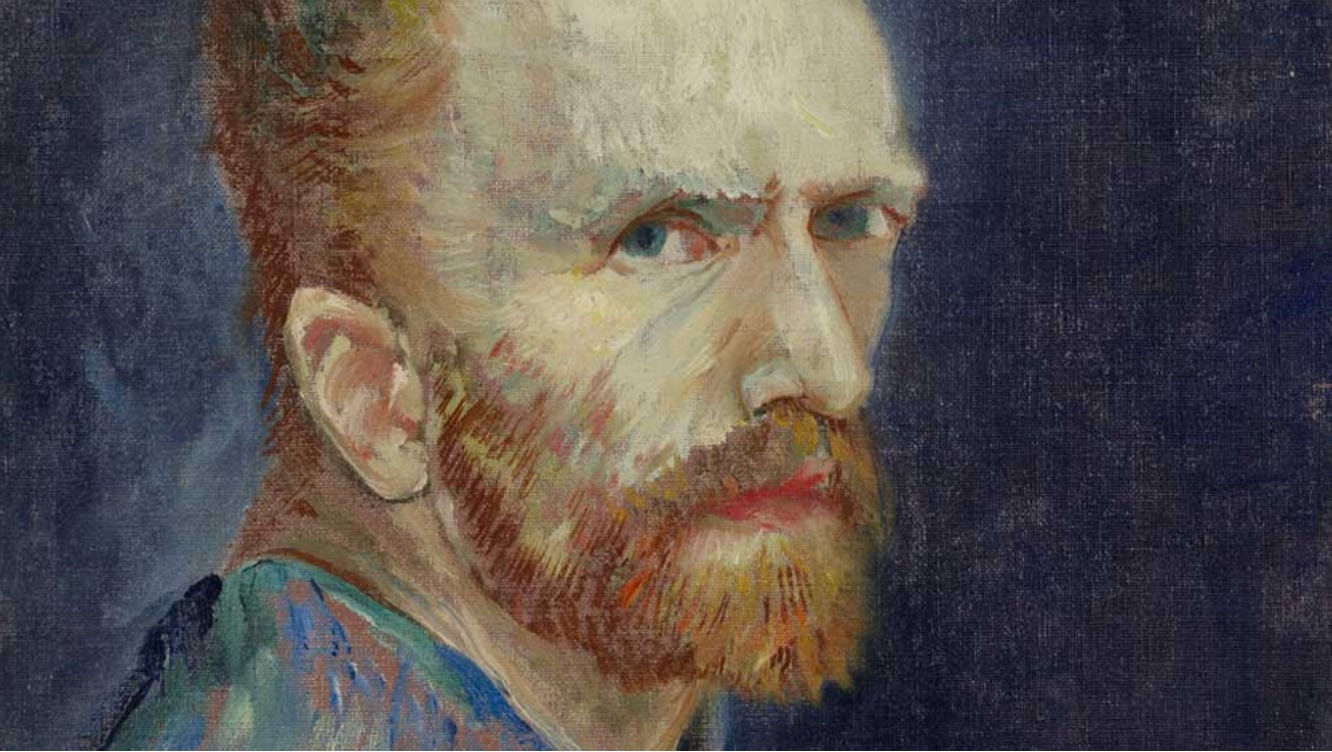
All this is to point out that Vincent Van Gogh—Dutch, 1853 to 1890—was, one hundred-and-twenty-five-percent, a genuine Artist of the highest order. Because here’s my other point: Being a powerful literary writer or profound artist isn’t “just” pictures on canvas or words on a page. It’s a spiritual vision. It’s a way of seeing the world. It’s a violently deep sensitivity. It’s a rich inner life. It’s a deep connection to “God” whatever that means to any individual person. It’s a specific manner of hearing, seeing, noticing, observing. It’s an outsider feeling and ethos, feeling as if one exists “beyond” the limits of “normal people.” It’s also an obsession, a craving, a need, an addiction, even. It’s a darkness which most artists cannot ever fully remove. It means having depth, intensity and, an inner raging fire to create, to communicate as if an alien trying to speak to human beings of which you feel only partially connected to. It’s a need for solitude and being alone. It’s a craving for experiencing as much life as possible in as many ways as possible.
Etc.
Irving Stone’s 1937 book, Dear Theo: The Autobiography of Vincent Van Gogh—a collection of the artist’s intimate letters to his younger brother Theo from 1873 (age 20) to 1890 (his death at 37)—covers seventeen years of Van Gogh’s tortured, reckless, fascinating, and often absurd and perplexing life.
Van Gogh during his life—he most likely shot himself at the end—was rejected by most other artists of his time. In the mid-late 1870s Impressionism was on the rise which Van Gogh partially appreciated yet partly rejected. He has been posthumously labeled as Post-Impressionist, which is fair, but really he was just doing his own thing.
In the beginning, coming from a normal upper-middle class family in Zundert, he thought he wanted to be a clergyman (pastor) like his father. He went to school and lived a more or less normal life. He did for a while work at Goupil & Co. in The Hague for his uncle as an art dealer from 16 until 1876, when he was let go at the age of 23. Then he began, in his very early twenties, his vagabond-like roaming, living in relative poverty in London, Paris, The Hague, Etten, Nuenen, Antwerp, Arles, in rural southern France, and more.
Van Gogh had, as he’d gotten older and formed his own opinions and beliefs, rejected his father’s religious notions and, having witnessed first-hand the hypocrisy of the clergy, decided firmly against becoming a pastor. Instead, he knew he wanted to be an artist. Drawing, specifically. Painting came later, not until his late 20s, hovering close to 30. Theo, his brother four years his junior, still working at Goupil & Co. (name changed to Boussod & Valadon soon) became Van Gogh’s prime benefactor, patron, or, in the parlance of our day, “paid subscriber” if you like. Vincent could not have survived without both Theo’s monthly checks or his emotional and spiritual support and friendship.
Van Gogh was an extremist, as many true artists are. He barely survived with Theo’s money, living in small, spare rooms and spending most of his time drawing and, later, painting. He literally often chose drawing over eating. When he couldn’t afford both, more times than not he chose the art and went hungry. He developed the sincere opinion that a true artist needed to focus exclusively on their art and not have their precious time wasted with dumb, absurd things like having to “work” for a living. (Almost all artists can relate at least to this feeling, even if 99.9% of us can’t actually pull it off, especially today.)
He always called his drawing and painting “work.” And it was. He often worked 10, 12, 14-hour days, from early morning until late at night producing as much work as he could. He starved himself. He paid a small amount of money to people to be his “models.” He walked around whatever towns or cities he lived in looking for inspiration. And, until the very end, perhaps a year before he died, he made more or less nothing for his work. By then he had alienated himself amongst his fellow contemporary artists. He mostly lived alone.
Vincent was—and this is putting it mildly—an eccentric. Having rejected his father and the church, he also rejected the bourgeoisie generally. Money meant nothing to him except as an unfortunate symbol of what he needed in order to draw and paint and eat and survive. Money would be a constant problem for him, a problem which Theo would more or less always resolve by sending more checks to his destitute, wayward, vagabond artist-brother.
For a while Vincent took in a pregnant prostitute named Clasina (“Sien”) Maria Hoornik. She ended up having the baby (from another man, not Vincent) and staying with him in his tiny room, herself, Vincent, the baby and a little girl she already had. Everyone in his family and friend circle thought he was basically crazy for doing this. But he and Sien formed a strong bond and, over the course of a year or year-and-a-half, they lived together, they grew to love one another deeply. (If not “in love” then a deep caring.) Thus, for a brief period, poor Theo was supporting not one but four people. Vincent was constantly running out of money, needing more, mostly for or because of doing his art, which he kept at religiously.
Van Gogh was generally terrible with other people. He just didn’t have people skills. He also drank too much—he was probably an alcoholic—smoked too much tobacco, needed a lot of solitude, and was notoriously intense and difficult. The climax wasn’t even living with Sien. It was when Gauguin somehow managed to be fooled into living with Vincent for a few months in Arles. The two men got along well—this was in the 1880s—but it was during this time that Vincent had his first “attack” or “episode” wherein he had a full, brief break from reality and in a fit of semi-madness sliced off a piece, or possibly even the entirety, of his left ear and gave it to a prostitute (or possibly a cleaner) at the nearby brothel which he had sometimes frequented.
That was the end of he and Gauguin living together and the beginning of Van Gogh’s many trips to the psych ward. The trend slowly bends downward from this point.
Depression had certainly been an issue for Vincent for many years. Surely the poverty—which, strictly speaking, he chose; he could have worked a normal job or taken other steps with financial support from his family—bad health, constant hardcore rate of artistic production (especially the last few years of his life), the vagabond existence, the constant financial troubles: None of this helped. Nor did the heavy drinking. The only person who truly believed in him was Theo. He felt deep guilt about taking his younger brother’s money—especially when Theo got married and then had a baby—but yet he still always took it. His art was everything to him, and that is not an exaggeration.
Most brilliant artists are a big bag of wild contradictions. This is true of Van Gogh. He both felt guilty about taking Theo’s money, yet always did and, furthermore, often subtly guilted Theo when he used the money too quickly and felt he needed more, making it repeatedly clear that the only thing keeping Vincent off the cold, hard streets was Theo. This comes off as narcissistic, self-absorbed, manipulative and controlling.
And yet, Theo wanted to help him. Theo believed in him. All his life Vincent spoke out of both sides of his mouth, on the one hand telling Theo that he (Vincent) didn’t “need” the money if it was totally necessary for Theo to not give it, that he’d find a real job, finally make some income, earn his living, etc…but then in the next paragraph he’d turn around and say how badly he needed Theo’s money to survive and how as an artist it was paramount that Theo keep supporting him. He gave mixed signals because he felt very mixed. Shame, guilt and need often go hand in hand.
As time went on, Van Gogh became more and more productive, brilliant and unique as an artist—by the last few years concentrating mostly by then on painting—and also more and more demanding of Theo that he connect him with the right people, that he (Theo) find a way to somehow sell his art, that Theo be not only his financial patron and younger brother but also his art dealer. It was Theo, after all, who had all the art “connections.” And Theo did try, but no one wanted Van Gogh’s work. No one wanted to be friends with the fledgling artist. He was not fun or easy to be around. He often unintentionally insulted people. He had these “attacks” more and more often after the ear incident. He was drinking more and more and working harder and harder.
The last couple years of his life were tragic and all-consuming. Increasingly he ended up in the asylum hospital (psych ward) for these reality-transgressing attacks. Looking back now he may have had several mental health issues: Bipolar, Personality Disorder, psychosis, schizophrenia, epilepsy, alcoholism, and/or more. We’ll never know for sure. It was the 1880s. They didn’t have the tests and knowledge we do now. That said he spent sometimes days, weeks, even months in various wards in the last couple years of his life. Amazingly, he continued to paint and draw even in these asylums.
Over time, Vincent began to come to terms with his “madness.” He wrote fairly cogently to Theo in the late 1880s about his breaks from reality, hallucinations, voices, his inner fear and terror, and the fact that he felt as if he were slowly losing his mind. (This made me think of Nietzsche’s last few years in the 1890s, slipping away into madness.) Van Gogh feared for his sanity and his safety (his own and others’). Art seemed to be the only thing which calmed him. He admitted he craved the constant distraction of painting and drawing. He also loved to write and read. He had been obsessed with Victor Hugo, Dickens, Tolstoy, Turgenev, Flaubert and many other classics. (Also Shakespeare and others.)
The way he wrote about art was profound. Some consider Van Gogh to be just as powerful a writer as he was a visual artist. This may be true, having now read his letters. His obsession with color, with observations of places and people, his love of the aesthetic beauty of nature, his astounding, unrelenting self-confidence and determination to succeed, his willingness to do art instead of eat, to work 12-14 hour days, to keep plowing ahead day and day out despite never selling anything until the very end of his life: All of this shows a man who had an incredible artistic appetite and a stupendous, almost shocking sense of self-belief.
Surely there was some healthy (and unhealthy) EGO going on here, but I think it was more than that. He must have had some kind of deep inner Knowing, an awareness, an instinctual understanding that he alone was meant for greatness. He often wrote about how his “pictures” (he called paintings “pictures”) were worthless now but would one day be worth a lot of money. He saw himself as ahead of the Impressionists and ahead of his time. It was very important to him that, once it became clear that he couldn’t live on his own after he started going to the asylums, that Theo take his paintings and drawings; he insisted that they would soon be worth a lot more.
There was literally zero evidence in the real world for this belief and yet he possessed it. What could explain that?
It reminds me of the 1960s J-Clan: Jim Morrison, Janis Joplin, Jimmy Hendrix, Brian Jones, all of whom were misunderstood musical geniuses and all of whom weirdly died at the age of 27. It’s as if fate were at play here in a way that magically defied the space-time continuum. Elvis. Albert Camus. Kafka. Rimbaud. The J-Clan folks. And, certainly, Van Gogh. Misunderstood artists who died too young, breaking through the figurative sound-barrier of their respective mediums, trailblazing, showing others the way forward.
Van Gogh did write often about how he understood and accepted the fact that he himself would die a failure but that he was blazing a path for future generations of artists. Boy was that ever true! Some people are simply Called To Art. Van Gogh was like this. Gauguin—who left his wife and kids and a Paris life for Tahiti to live as a primitive artist and outsider—was also this way. So were Dostoevsky, Tolstoy, Chekhov and so many other artists through time. Some have a Higher Calling. In a sense Van Gogh did ironically “become” a pastor like his father. Only he wasn’t preaching the Gospel. He was preaching his own artistic talent, and doing it not through words but through his medium.
He killed himself by gunshot wound in 1890, at the tender age of 37. *(Again, there is in modern times some speculation around whether it was an intentional suicide, an accidental shooting, or even possibly a homicide.) Yet most people who knew him felt he looked and acted a decade older than that, at least. He had not lived an easy life. If anything he had carried on a sort of Christlike, persecuted, misunderstood existence. He sacrificed, one might argue, for The Art. He also manipulated and took advantage of his younger brother, who bizarrely died himself from physical and mental issues only six months after Vincent died.
I don’t want to romanticize or defend Van Gogh’s short, intense, rather hardcore, some would argue pathetic, and definitely grimy life. I don’t think an artist should or needs to live this way, then or now. There are other, much more rational ways of going about it. (Such as simply working a regular job, getting grants, starting a Substack, etc.) And yet: I can’t help but respect Van Gogh in many ways. As an unconventional man and artist myself (writer), I admire his chutzpah, the courage to live his life his way on his own terms doing it the way that makes the most sense to him, especially while being universally rejected by everyone else around him, including the artistic community. It takes great gobs of bravery to stand up to conventional society and flip it the proverbial bird. And that is what Vincent did.
He also lived a profoundly sad, tortured life. He struggled with alcohol, his worsening mental health, physical ailments, and a wild emotional landscape and inner life that seemed sometimes bipolar or worse. His moods swung violently sometimes. He needed to be constantly distracted. Life itself seemed more or less besides the point for Vincent. His one and only purpose was ART. It was as if he existed only for this one solitary purpose, just so that Art could be shaken to the core and shift to the next movement, a movement he himself wasn’t even really directly involved in.
But then again: It’s often the outsiders, the freaks, the unconventional madmen geniuses who shake things up. People with solitary visions. People who push through all the red tape of human existence. People who succeed or fail only by their own inner standards. People who change everything by simply being themselves and doing what they felt called by life to do.
Van Gogh was this man. I do wonder what he’d have been like—what is art might have been like—had he lived in modern times with modern psychiatry, medicine and therapy. Perhaps it would have made the man and the art that much better. On the flipside, maybe it would have ruined him as an artist. He may have been one of those people who needed the poverty, the madness, the spiritual anarchy. Who knows.
Michael Mohr writes Michael Mohr's Sincere American Writing.
No posts
Comments
Nothing yet. Say the first thing.
Sign in to join the conversation.