
I had a maths teacher in school who rejected the idea that some people are not “maths people”. One of my close friends was dyslexic and hated maths, but Mr T simply saw this as a delightful challenge, a welcome incentive to develop new methods of teaching. He’d sit with her and employ the help of his imaginary sidekick Stan to splash some personality over the quadratic equation. Yes, he was also a bit of a sadist, springing his infamous Friday quizzes on us whenever he was in the mood to terrorise, but my friend did end up getting an A in her maths GCSE. And more importantly, she realised she might, after all, be a maths person.
Our ideas about who we are and who we’re not, what we can do and what we cannot, seem to be largely fixed from a young age, the product of how our parents raised us, the educational environment that shaped us, and the cultural backdrop against which we grew up. Throughout my adolescence, I saw myself as a social sciences person. I performed well in maths and science at school, but when I got to choose where to specialise at sixteen, I over-indexed on languages and humanities. Today I identify as a generalist with a plethora of passions, but there are still many things I struggle to believe I can try my hand at, because my mind doesn’t associate “Nikita” with “those troublesome newfangled things”.
Once we set boundaries around our capabilities, it’s very difficult to perforate them with sharp new evidence that suggests we might in fact be capable of more than we think. Let’s imagine you work in tech sales in 2026, working from home from your flat in London. You’re likely to call a plumber when your toilet breaks, rather than trying to fix it yourself, even if you don’t know how severe the problem is. If you’re a surgeon, you’ll probably go to a tailor to mend your favourite blue sweater, rather than darning it yourself. There is a wicked irony in this, given that much of a surgeon’s job involves sewing–albeit a very different kind–the same skill that you’re outsourcing in a different context.
And unfortunately it’s a bit of a vicious cycle. Once we develop a specific skillset, we tend to want to apply that skillset to every problem we come across. This is known as functional fixedness, a cognitive bias that makes it difficult for us to use familiar objects or methods in unfamiliar ways. So the more entrenched an area of expertise becomes, the more we identify with it and the less comfortable we feel moulding the walls of our identity into new shapes.
It is not our experience that limits our belief of what is possible, but the stories we tell ourselves about that experience.
Since the time of Aristotle, we have thought of a classification system as a set of metaphorical or literal boxes into which things can be put to help us make sense of the world.
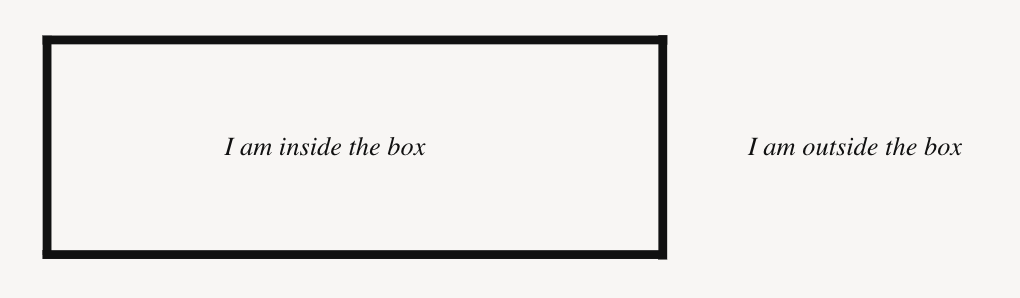
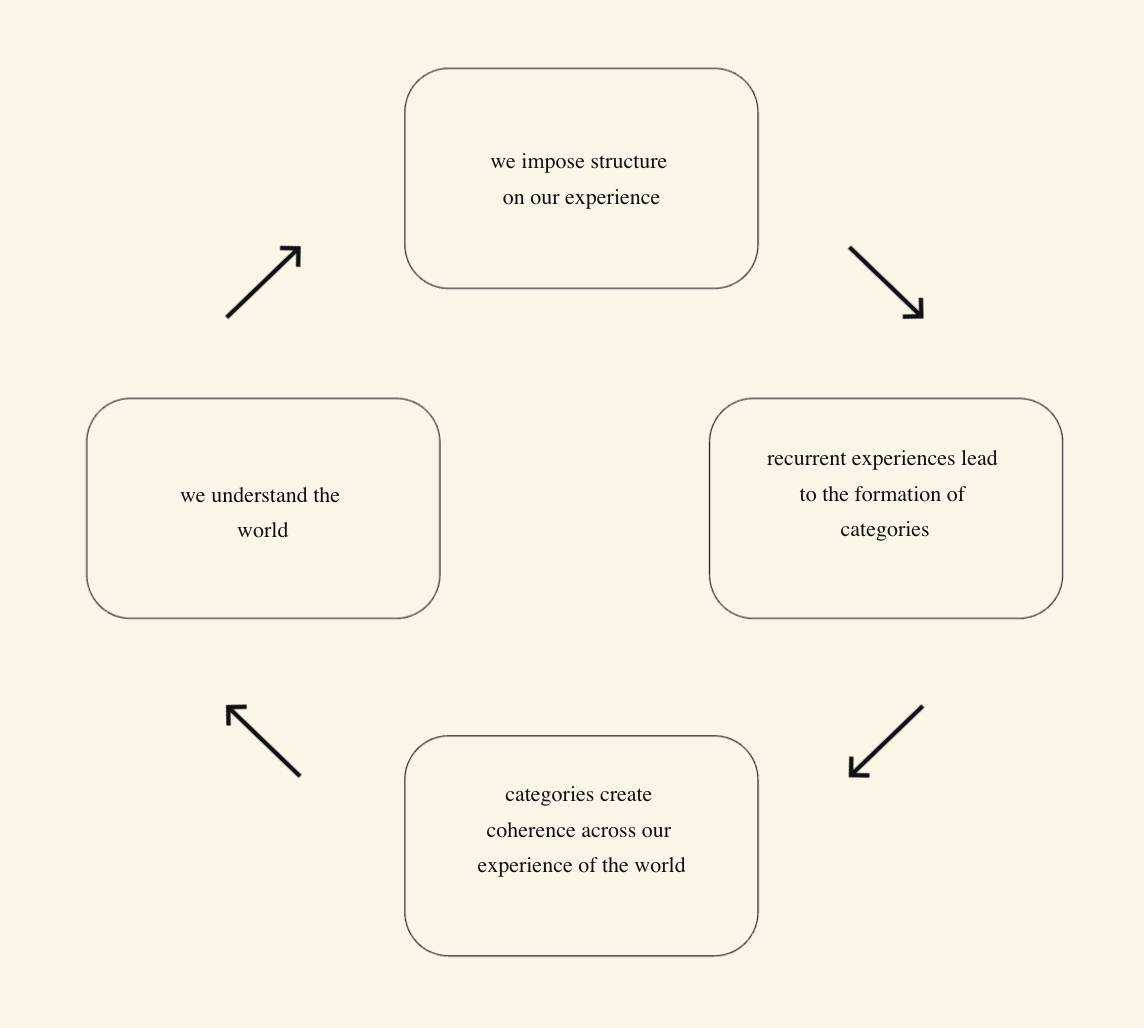
“Dog” is an abstract container that we use to make sense of an animal that we see in the park. There are many breeds of dogs–huskies, labradors, retrievers, pugs–that all fit in this container. And there is a pretty rigid line between the categories “dog” and “cat”. These categories offer us a coherent experience of the world.
This is because we need distinctions to observe anything. It is in the pregnant difference between this and that and before and after that clarity is born. If we didn’t have them, we’d be trapped in a rather painful state of constant ambiguity. I imagine it would feel a little like constant pins and needles in the mind.
Some categories, however, have much less rigid boundaries, like “plant” or “game”. When does a plant turn into a weed? When does a game become a sport? This is where things get spicy. George Lakoff, a very talented cognitive linguist, answered these questions in the 600 pages of his masterpiece Women, Fire, and Dangerous Things. The title is inspired by the Australian Aboriginal language, Dyirbal, in which one major class of nouns groups together women, fire, and various dangerous objects and animals.
Regardless of what you think about women, fire and dangerous objects, Lakoff established that different categories have different conditions for membership. While some categories require you to do a pass/fail test to get in, others just ask you to exhibit some traits that seem similar to others who are already in the category. Others still have barely anything in common. As it turns out, categories can be a lot fuzzier than we thought.
I think we have weaponised our traditional way of classifying the world and now wield the blade to hack off our own jagged edges. Human beings are not fixed entities. We are messy, walking biological processes that become increasingly complex as we drink up more of the possible range of human experience.
As our opinions mature and our relationships evolve, the nuances of what it means to be human should arguably blur the edges of our identity, rather than sharpen them. As Erifili Gounari writes so beautifully in against easy definitions:
“The most interesting people evade categorisation; they are full of fun mysteries and contradictions and resist forming an identity that’s so solid it will hinder them from being explorers.”
The rigidity with which we classify ourselves–from “I’m a leading expert in this” to “I’m never going to touch that knitting needle with a ten-foot pole”–leads us to minimise our potential and reject the natural evolution of our identities. Classifying ourselves blocks us from infinite possibility.
Yes, it is quite terrifying to be a beginner, to admit that, despite being a fully formed adult you have utterly no clue what a deadlift is or how to cut an onion the “correct” way or that you secretly still don’t know the difference between “your” and “you’re”.
But isn’t it more terrifying is declare at the tender age of eleven that you’re “not a maths person” and then watch your life swivel your attention from philosophy to Zen Buddhism and eventually to the cosmic beauty of quantum mechanics, and still tell maths to talk to the hand? I hope not, because it would dramatically limit the emotional and intellectual journey toward your precious and unique understanding of the universe. And your understanding of the universe deserves the richness it desires!
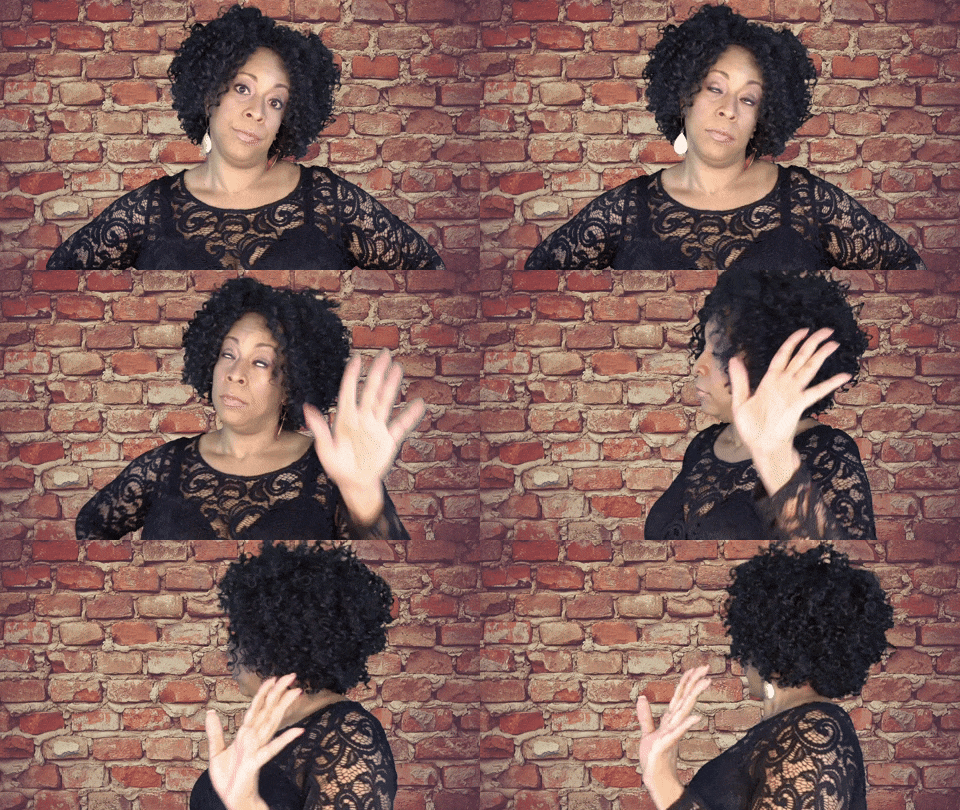
We are fuzzy beings. We learn, we fail, we trip, we fly. To repel these experiences rather than magnetising their essence into our soul feels like a disservice to ourselves and the world around us. Let us not limit our own belief of what is possible for us to do, who it is possible for us to be. If, as Joseph Campbell reminds us, “the privilege of a lifetime is being who you are”, then let us be who we are, in all our unadulterated, uncontainable glory.
This essay was made possible thanks to inspiration, research and long hard thoughts from:
Women, Fire, and Dangerous Things by George Lakoff
Sorting Things Out by Bowker & Starr, 1999
Reflections on the Art of Living by Joseph Campbell
My former maths teacher, Mr T!!
If this essay struck something in you, I’d love to hear more in the comments :)
Comments
Nothing yet. Say the first thing.
Sign in to join the conversation.