
Here in the Washington, D.C. metropolitan area winter fell shortly after New Year's with a precipitous drop in temperature, and Monday morning we woke up to snow falling and several inches of the white stuff coating the tree branches, the walkways, and the roads. If you are watching the soft white flakes out the window, sparkling and changing size and shape as the storm progresses, standing in a fuzzy red robe with a cup of warm tea or coffee in hand, it is beautiful. The scene of soft white blanketing the top of black, bare branches and floating to the ground is the picture of the advent season. The quiet of the snowfall with just the sound of the heater warming my shelter and the short wintry days send your senses inward to hunker down and snuggle in.
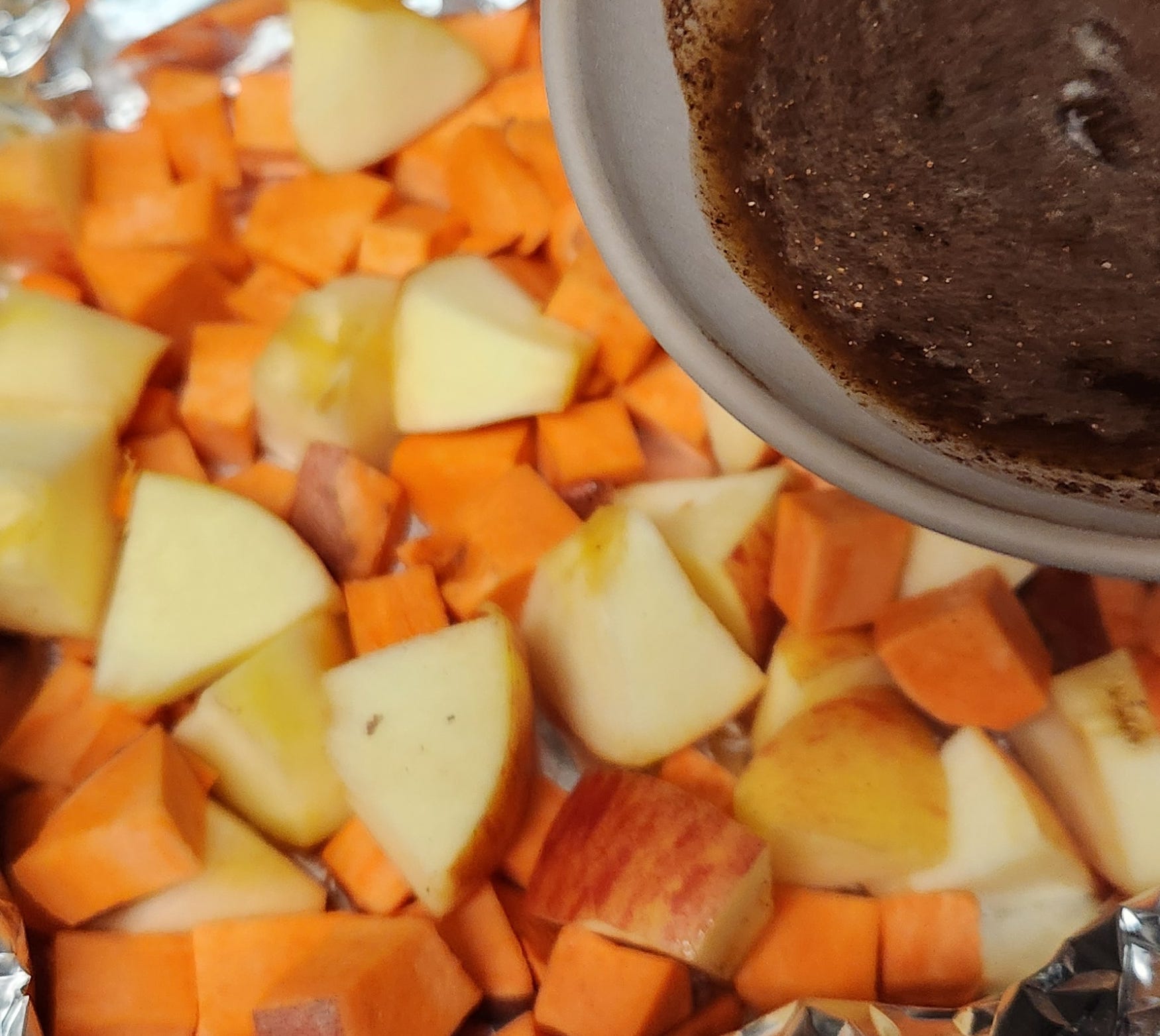
With snowstorms bearing down, it feels comforting to move into the hearty winter foods. Roasted vegetables—sweet potato—sweetened with cranberries and apples drizzled with olive oil and the warming spices—cinnamon, nutmeg, cloves, and allspice in honey are going in the oven. Beets are boiling on the stove to join them when they come out.
When facing impeding storms, another impulse before hunkering down is checking your food stores. Even today, we race to where we store our food with runs on the grocery store before the snow hits. It's an ancient impulse.
One hundred years ago on our family farm the food stores were in the root cellar. Was it called that because of the roots that might penetrate the walls or the root vegetables stored within? When you had to feed yourself from the things that you grew on the farm, your food had to come from what you had stored to get through these winter spaces. The family ate chicken in the summer, but a hog was butchered to get through winter. The meat was supplemented with stored vegetables.
Our cellar down the stairs from the kitchen had shelves lined with Mason jars of vegetables from the summer harvest—tomatoes, string beans, corn. I don’t know what all was cooked and stored in my grandmother’s time. Persimmons and jams we still eat. But though the farm still has the plants, I’ve lost the knowledge of what to do with quince. My grandmother stopped preserving in my early days but the jars outlived her, with the foods that she had “put up” still in the cellar when my parents moved on to the farm.
A big part of the stored vegetables were always the root vegetables, underground plant parts that generally store carbohydrates. They packed in the nutrition and, importantly, stored remarkably well. They were what people ate when all the life around them stopped for the winter.
Root vegetables are versatile to cook—with earthy sweetness and starchy heft, hearty enough to build a meal around or supplement a roast. Beets, potatoes and sweet potatoes, yams, parsnips, turnips, radishes, celery root, and carrots form the basis of hearty winter meals. Although winter squashes like butternut, acorn, and pumpkins aren't root vegetables, their hardness means they are compatibly cooked with the root vegetables. The underground vegetables onions and garlic are technically bulbs, and they’re used quite differently in cooking—for seasoning as well as sustenance. Onions may be one of our oldest vegetables. Referenced in Sumerian cuneiform from around 2400 B.C., they were a root food that was cultivated very early in central Asia.
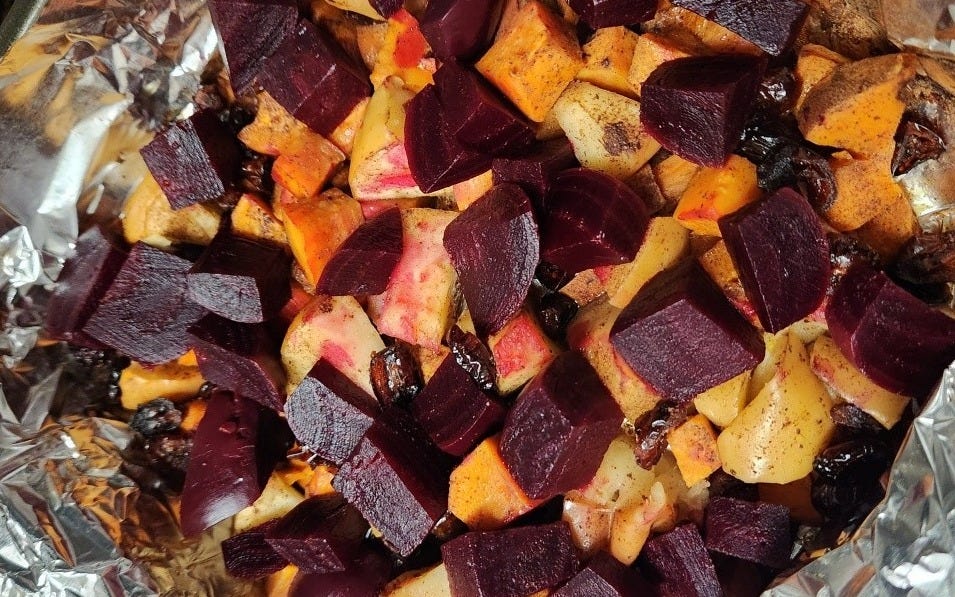
In this quiet time of winter my kitchen is warm and smelling of clove and winter spices. I enjoy the feeling of the slick boiled beets as I easily peel off the rough skin with my hands. I had a hard time not eating all the beets by themselves warm out of the pot, they were so delicious! It was worth waiting to add them to the sweet potato from the oven for this delicious final product. Christmas carols are playing on the stereo, and Christmas lights still shine in the darkness. Let the storms blow! I’m cozy and fortified with the foods rooted deep in winter traditions.

No posts
Comments
Nothing yet. Say the first thing.
Sign in to join the conversation.