
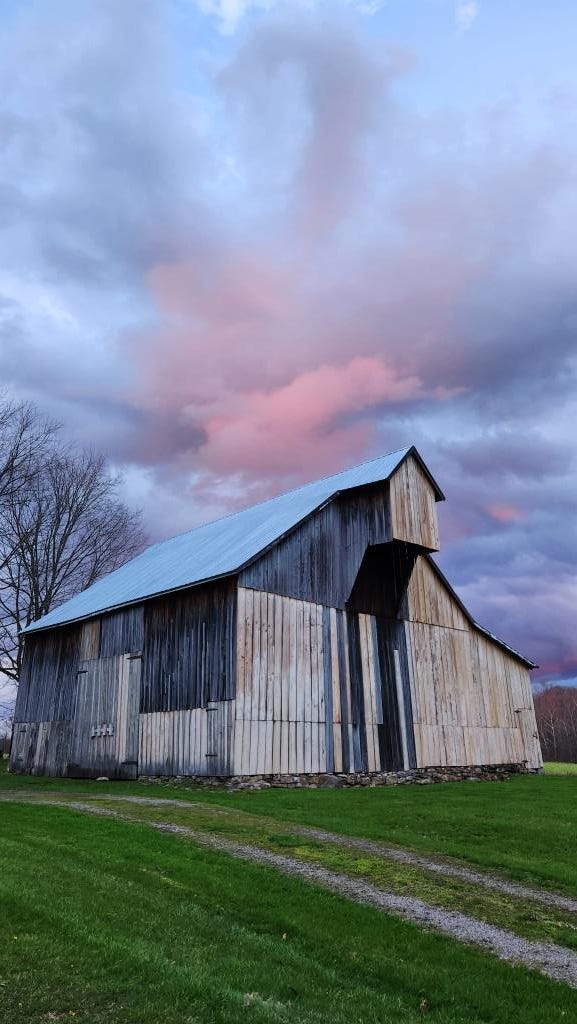
You need to understand that 3 out of 4 people in Jefferson County, Indiana, voted for Trump in 2024, 2024 when we knew who he was. Context is important here. This is farm country. And even farmers who got crippled in the first Trump administration voted for him again (and again). Somehow, he made them believe his lies would come true for them. He was going to bring prices down. Only he could do it.
It’s also useful to consider that about a decade ago, before the town of Madison was run by Republicans, it was run by Democrats. It was always one party or the other, not mixed.
This context is part of why I was surprised when the check-out clerk bagging my groceries at Kroger told me people were misinterpreting their rights under the second amendment and quoted me the Constitution. After that he mentioned he had studied politics.
Then in the parking lot, a stout man getting into the car next to mine paused, noticing my license plates. “Are you from Virginia? What brings you out here?’ I told him I lived 2 miles from the Capitol. He was sympathetic. I stated that DC was a beautiful city with great people—up until recently. He commented in agreement that we needed to turn things around.
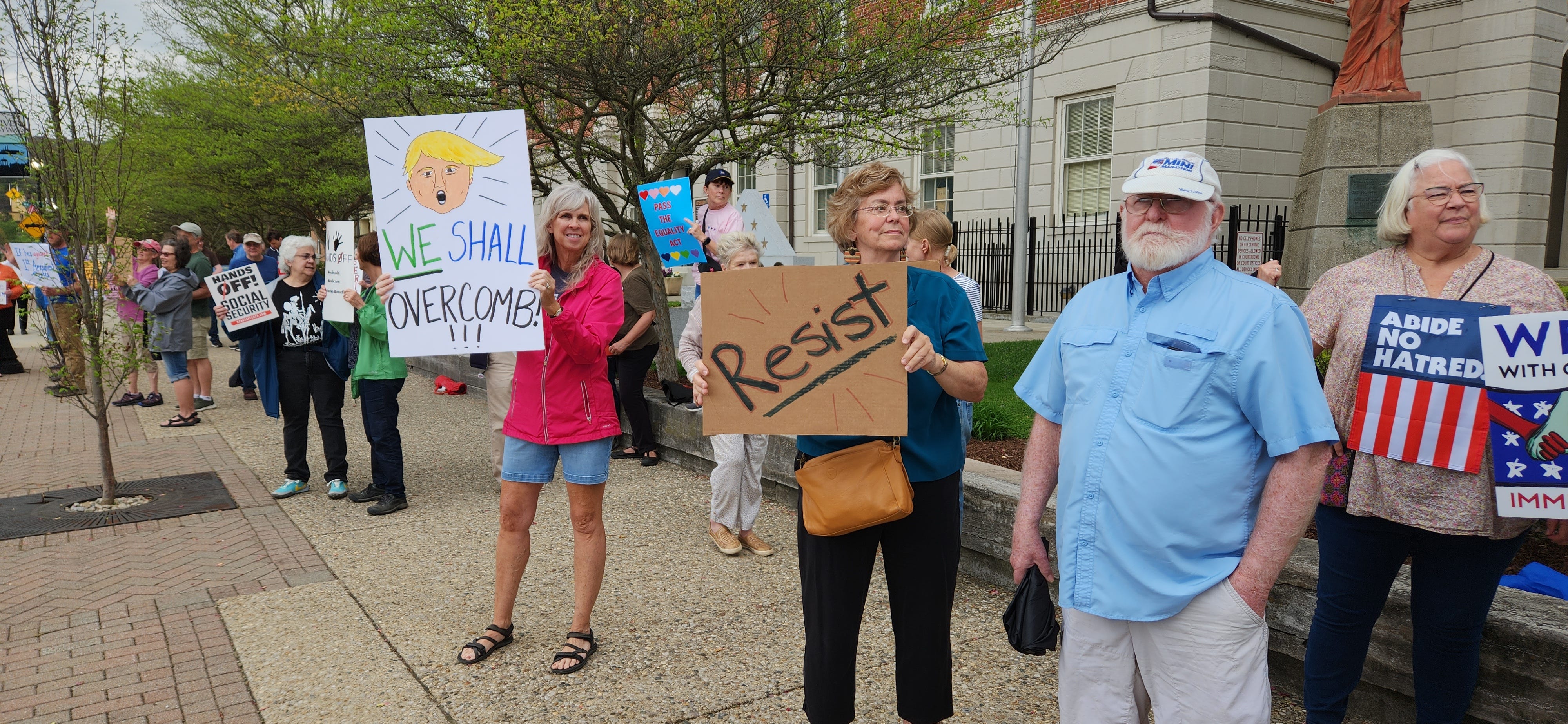
But also, I participated in a No Kings rally at the courthouse in Madison organized by the wife of my forester. And at an open house for the Big Oaks National Wildlife Refuge, our farmer shook his head over the idiocy of his fellow farmers voting for this president, who has been one of the worst for farmers on record.
And then there was the town hall organized by citizen groups angry about the gaslighting from local officials about a data center to be built on the old Jefferson Proving Ground, an old military base used for testing ordinance. The man from the Citizen Action Coalition had a state-wide and national perspective on what was going on with data centers—buyers’ remorse in Oregon and a moratorium on tax exemptions for data centers by Republican Governor DeWine in Ohio while a bipartisan legislative committee studies the economic, environmental, and energy impacts of these massive facilities. Two faculty from Hanover College provided perspective on Economic Impact Statements and proposed (but not written down) operations for this “third largest data center in the world.”
Multiple companies will rent the computing capacity of this data center. The cost of resource usage—mostly water and electricity—would be born by two neighboring counties as well, and they had NO say in the permits. Panelists discussed the possibility of eminent domain being used to build out the power capacity, how not-completely-closed the “closed-loop” water system was, how data centers are different than factories in providing jobs, and the kinds of costs the community often pays. They also commented on the lack of public information while the Madsion City Council moves forward with the project on a rushed, urgent basis without transparency or obvious consideration of the costs versus benefits.
I was impressed with the organization of the group. Daniel Ford, the owner of the land being sold, had declined to attend based on fears for his safety. He had offered to provide a statement that would be read aloud and answer written questions submitted to him, neither of which happened. The county board was invited. No one attended.
But here’s the part that shifted my sense of the politics and people standing up in this region. Multiple times panelists called for kindness, empathy, and compassion—for neighbors who might pay a higher price, like losing their homes to eminent domain. The council was comprised of people, regardless of what the audience might think of their actions. Neighbors were being polite and encouraging to others. Questions were not outraged but seeking understanding and paths for action. Hopeless powerlessness was not what this was about. If the data center couldn’t be stopped, there were still protections that could be put in place in writing. It was important to remind council members that they were elected at the will of the people and elections were coming up in the fall.
The panelist from the Citizen Action Coalition mentioned how the coasts tend to think of small-town rural America as fly-over zones, but what I saw was people angry at feeling like their interests, safety, and concerns were not being listened to and protected. They weren’t being destructive or loud. They were being persistent, polite, oriented toward finding positive action and solutions, and respecting all sides. One of the panelists stated opposition to any kind of harassment or threats because that wasn’t right and these were neighbors.
The Big Oaks National Wildlife Refuge would border the land that would be sold for the data center. It’s under double threat as the U.S. Fish and Wildlife Service threatens to pull out of the expiring 25-year Memorandum of Understanding for the management of the refuge under budget cuts. The volunteer citizens foundation that protects the refuge is concerned and working to try to keep the refuge going.
The pressures are vast—small-scale farming versus corporate megaliths moving into the AI age. The town is small. But this is still part of the breadbasket of America. People feel a responsibility to protect the land, particularly the cropland.
It’s a different kind of resistance than I see in the capital. It’s more polite and neighborly. No bridge-burning is planned. But the scale of decision-making is small—just the town council members of a small town. You can be known by your actions here.
Here’s the thing I take away from all of this. People here keep emphasizing this is not specific to party. The issues have to do with hearth and home and cut across party lines. People are standing up, informing themselves. Not trusting their representatives to do the right thing unless their actions reflect that. Being more aware of corruption around large sums of money. The form this is taking in red Indiana feels like decency and kindness rising.
Will people win? I have no idea. But it’s a shift. People working together instead of letting themselves be divided by politicians. At least it feels that way here in the fly-over farm communities.
No posts
Comments
Nothing yet. Say the first thing.
Sign in to join the conversation.