

A University of Minnesota Medical School project, developed over six years at the school’s Institute for Sexual and Gender Health, has produced paper dolls with gender-neutral names such as Sam, Rory, Avery, and Parker, featuring removable internal and external genitalia and more than 100 interchangeable clothing and accessory pieces. The dolls are real, marketed to educators, and the research behind them received state and federal funding. Defending Education filed a complaint alleging the state education department violated the Protection of Pupil Rights Amendment (PPRA), among other claims. The Education Department opened an investigation through its Student Privacy Policy Office, which enforces PPRA. A spokesperson for the Minnesota Department of Education denies that the dolls will be used in the state’s K-12 public schools, and U.S. Secretary of Education Linda McMahon criticized Minnesota Gov. Tim Walz by name over the project in a public statement.
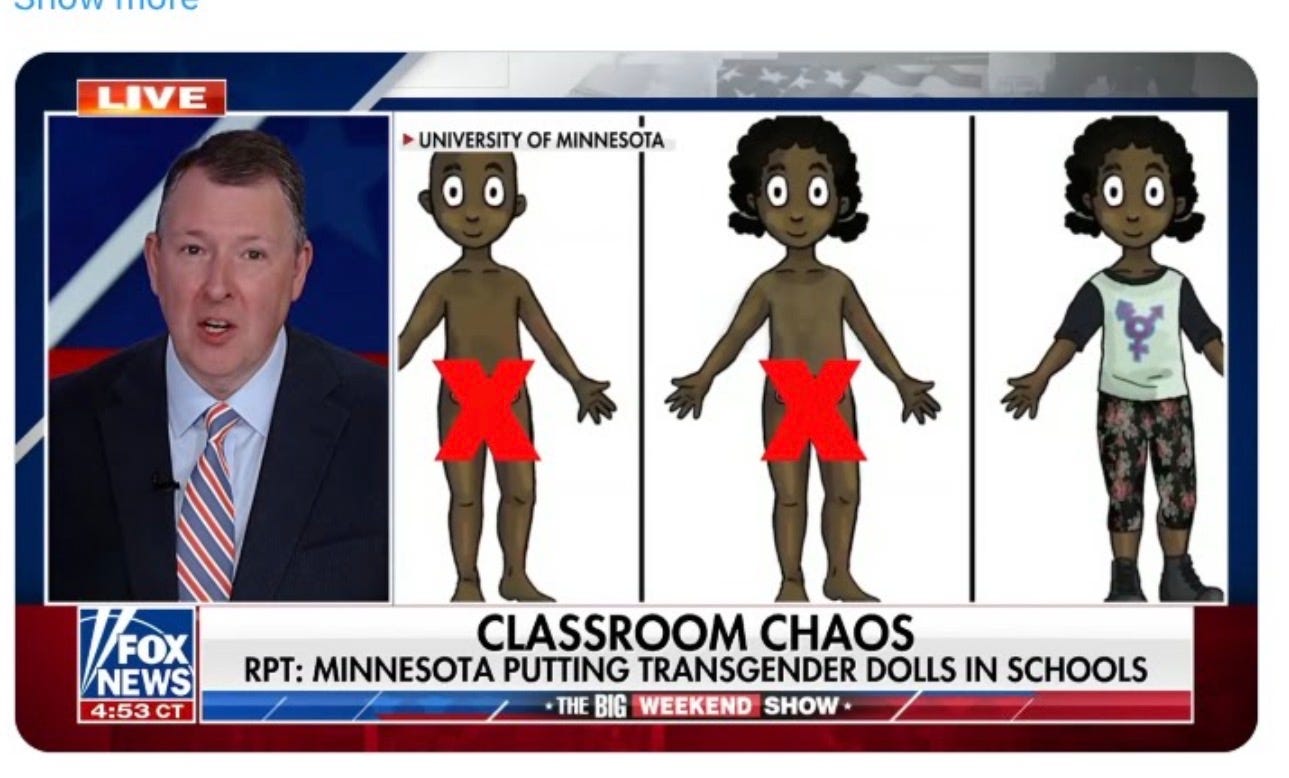
Set aside for a moment whether these dolls are actually scheduled for a specific classroom this fall, a claim Snopes examined and found no evidence for. A doll with genitalia that snaps on and off like a costume accessory tells a story that medical reality does not bear out. A vaginoplasty is not reversible, nor can a double mastectomy on a fifteen-year-old be fixed with a piece of Velcro. Puberty blockers followed by cross-sex hormones alter bone density, fertility, and brain development in ways medical researchers still do not fully understand, and their endocrine effects can last a lifetime. Reporting on the project describes photographs presented at a 2024 conference that showed prototype dolls depicting stages of transition, the anatomy removed and replaced piece by piece. Their makers designed them for use by counselors and clinicians with children as young as four. A paper doll delivers the premise that body parts may be picked to match an inner sense of self, presenting as healthy, playful, and consequence-free a medical pathway that is none of those things. By the time a clinician raises the option of hormones or surgery, the idea that the body is adjustable has been normalized. Whether or not a single Minnesota classroom ever stocks them, a state- and federally-funded research project that produced a toy normalizing gender medicine for four-year-olds is the problem.
Comments
Nothing yet. Say the first thing.
Sign in to join the conversation.