
Process, Paradoxes, and the Obstruction Playbook
From the Shores of Lake NATO, 12 April 2026
by Axel L. Jacob
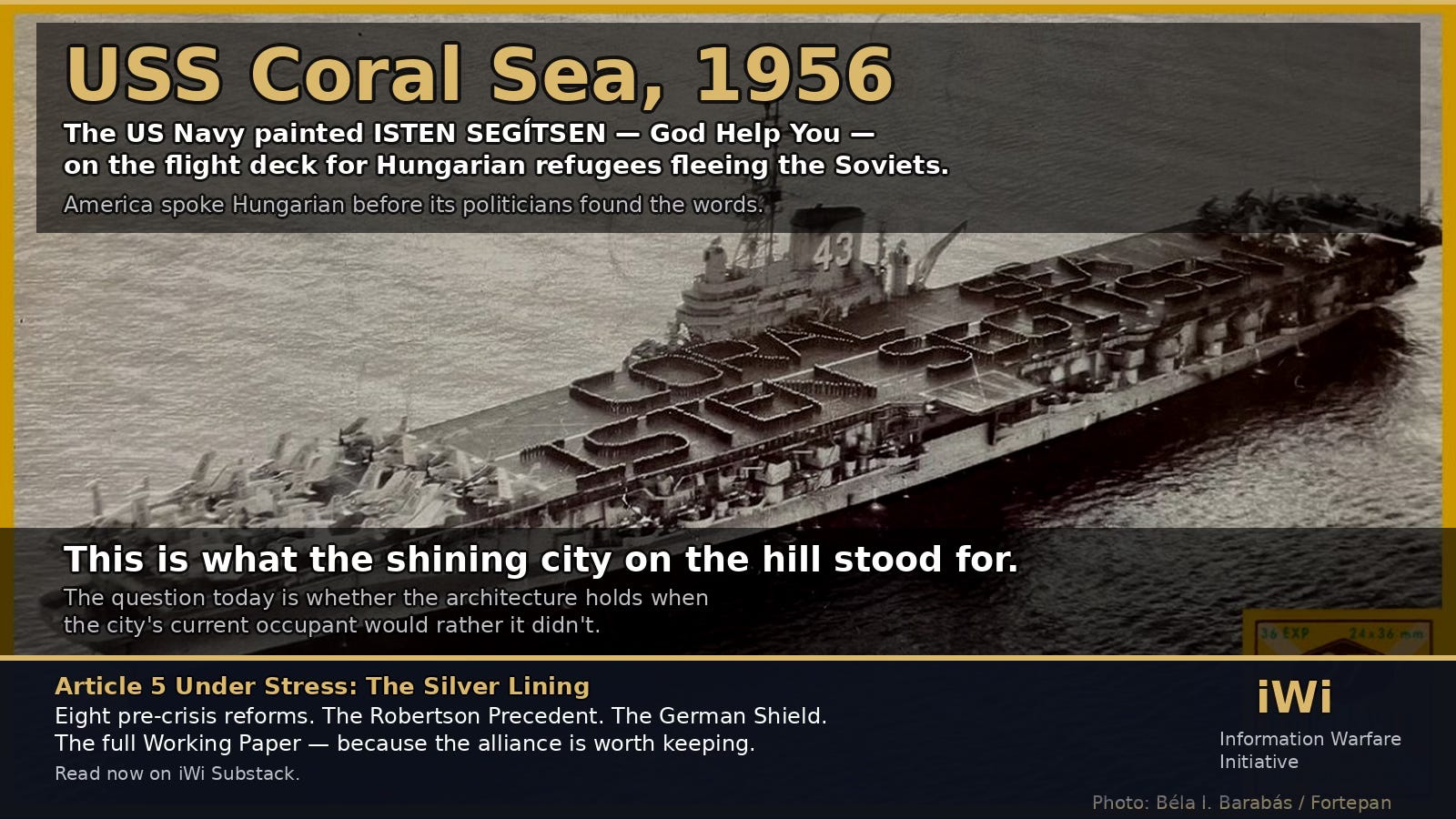
Fig.1: A Strong Alliance is a Force Multiplier if you can keep it.
George Patton’s question to Omar Bradley has stayed with this author as a lodestar. When the analysis is hard, the stakes unforgiving, and one’s own judgment uncertain — ask what Eisenhower would have done. Not because Ike was infallible, but because he was the man who held the most fractious alliance in history together through institutional discipline, strategic patience, and an unyielding insistence that the coalition was more important than any single national interest within it. He was also the firstSupreme Allied Commander Europe. On the eve of D-Day he wrote two letters — one announcing victory, one accepting sole responsibility for failure — because he understood the vagaries of war, the fog of battle, and the ultimate, irreducible responsibility of command. The following paper is about whether the office he created, the architecture he built, and the alliance he forged can survive the stress of an American president who does not share his convictions. The question is therefore not rhetorical. It is the analytical standard against which every recommendation in the following pages is measured.
Article 5 of the North Atlantic Treaty does not function as most publics — and many policymakers — believe it does. It is not an automatic trigger for collective military response. It is a political framework for sustainment, contingent on consensus among 32 sovereign governments and, critically, on the willingness of the President of the United States to deploy forces that only he can authorise. This paper demonstrates, through scenario-based analysis of a hypothetical Russian combined-arms incursion into Latvia along the Pskov–Latgale corridor, that the current US administration possesses both the constitutional authority and the operational toolkit to obstruct, delay, or hollow out the Article 5 response — and that it is already doing so and that several measures are already underway.
Our analysis identifies two distinct wars within any Baltic Article 5 scenario. War One (H+0 to D+14) is the immediate defence, fought by forces already in place: the eFP battlegroups, Baltic national armies, Finnish, Swedish, Polish, and German forces activating under sovereign national authority, and the UK-led Joint Expeditionary Force. This war does not depend on the NAC, does not depend on SACEUR, and does not depend on the United States. It will happen because the nations of the northern flank understand that a fall of Latvia is an existential threat to their own security. War Two (D+14 onwards) is the sustained campaign — pushing Russian forces back, restoring sovereignty, and establishing escalation dominance. This requires the deep sustainment, strategic ISR, and the 128,000-troop reinforcement that only the United States can provide at scale. Presidential obstruction capacity is concentrated in War Two.
The paper catalogues seven pre-crisis degradation measures (Category A), six crisis-point obstruction measures (Category B), and three post-crisis sabotage measures (Category C) available to a specific axis of senior administration personnel (the America First Team: Colby, Vance, and Hegseth — with Miller’s Homeland Security Adviser role giving him a formal seat on the consolidated NSC/HSC machinery). Several are already underway: US forces in Romania have been reduced from 4,000 to approximately 1,000; Vice President Vance appeared at an Orbán election rally in Budapest on 7 April 2026, publicly backing the single most reliable pro-Russian voice inside the Alliance; and President Trump declared on Easter Monday that ‘NATO is a paper tiger,’ framing the Alliance’s value as conditional on its willingness to deliver Greenland — sovereign Danish territory — to the United States.
Hungary’s 12 April parliamentary election is the nearest inflection point. The paper analyses the Vance–Orbán rally, the Bloomberg publication of the Orbán–Putin transcript (in which Orbán told Putin ‘I am at your service’), the VSquare/OCCRP audio recordings of Foreign Minister Szijjártó taking direct instructions from Lavrov on EU sanctions delisting, and The Insider’s testimony alleging Mogilevich-linked mafia sponsorship of Orbán’s original 1998 rise to power. An Orbán victory preserves the consensus-breaking node inside the NAC. A Magyar victory creates a 30–90 day transition window with its own risks: institutional capture, Russian energy leverage (amplified by the current Strait of Hormuz oil crisis), hybrid spoiling by defeated Orbán networks, and US retaliation for the loss of a political ally.
The dual-hat arrangement — SACEUR/COMUSEUCOM fused in one American officer — is the structural foundation of transatlantic deterrence. The paper analyses how the administration can degrade this architecture without formally relinquishing it: replacing Grynkewich with a compliant officer, restricting EUCOM authorities, withdrawing force assignments, or merging EUCOM and AFRICOM. If the dual-hat breaks, a European acting SACEUR retains OPCOM over non-US NATO forces but loses COCOM over US forces entirely — creating a command seam that a hostile White House can exploit.
The 12 September 2001 Article 5 invocation establishes that the determination is a Council act, not a member-state permission structure. The attacked party’s formal request is not a prerequisite. In a Baltic scenario, 31 allies already fighting under sovereign authority present the NAC with a fait accompli. The US representative can hedge, but the Council can proceed on its collective political judgement. This argument must be established now, in peacetime, and briefed to every allied permanent representative.
I. What would Ike do?
Bottom Line Up Front
The Two Wars
The Obstruction Playbook
The Hungary Variable
The SACEUR Paradox
The Robertson Precedent
II. EXECUTIVE SUMMARY
III. LAYER 1: THE ARTICLE 5 PROCESS MAP —
‘WHAT HAPPENS WHEN LATVIA CALLS’
The Scenario Baseline
Hour Zero to Hour Six: The Immediate Military Reality
Hour Six to Hour Twenty-Four: The Political Chain
IV. LAYER 2: THE SACEUR PARADOX AND THE DUAL-HAT PROBLEM
The Architecture
The Command Authority Problem
The Nuclear Chain
What Happens When Grynkewich Acts
The Dual-Hat Seam: Force Assignment Status
The America First Team Play: Removing Grynkewich
V. LAYER 3: THE OBSTRUCTION SCENARIOS — ‘WHAT CAN PRESIDENT TRUMP ACTUALLY DO?’
The Constitutional Architecture: Article 5 Does Not Authorise War
The Obstruction Menu: What the America First Team Can Do
What Congress Can Force
The Congressional Firewall:
The Robertson Precedent:
3.6 The European Response Matrix
3.7 The Freeloader Myth:
VI. LAYER 4: SYNTHESIS — THE STRATEGIC BALANCE SHEET
4.1 The Two Wars
4.2 What President Trump Can Do
4.3 What President Trump Cannot Do
4.4 The Tripwire Paradox — Revisited
4.5 Post-Orbán Transition Risks–
4.6 Ukraine as the Eastern Flank’s Strategic Multiplier
4.7 The Bottom Line for European Planners
The Sustainment Gap
The Force Correlation: What Russia Can Actually Field
VII. LAYER 5: FIXING ARTICLE 5 BEFORE IT IS TESTED — PRE-CRISIS REFORMS
5.1 Clarify the Legal Doctrine on NAC Action Under Article 5
5.2 Publish Doctrinal Clarity on SACEUR’s Pre-Delegated Authorities
5.3 Stress-Test the Dual-Hat Break: Acting SACEUR Contingency
5.4 Build European War Two Capability
5.5 Redesign the Tripwire: From Symbolic to Operationally Resilient
5.6 Expand and Formalise the JEF–NATO Handoff
5.7 Treat Article 42(7) as an Operational Instrument, Not a Slogan
5.8 Expand the JEF and Integrate Ukraine into European Defence Architecture
VIII. ANNEX A: KEY SOURCES AND FURTHER RESEARCH DIRECTIONS
Sources Consulted
Outlook: The Hungarian Election and the Eastern Flank
IX. ANNEX B: US DEPENDENCY MAPPING — DOMAIN-BY-DOMAIN AUDIT
B.1 Air Domain
B.2 Land Domain
B.3 Naval Domain
B.4 Cyber Domain and Multi-Domain Integration
B.5 Ukraine-Tested Solutions Technically Available to NATO Now
B.6 Current EU Initiatives Versus Engineering Reality
X. ANNEX C: ACRONYMS AND ABBREVIATIONS
XI. Endnotes
This paper stress-tests the NATO Article 5 invocation and response architecture against a specific scenario: a Russian combined-arms incursion into Latvia along the Pskov–Latgale corridor under conditions of US political obstruction by the current administration. It is not a polemic. It is an operational analysis of what happens when the treaty language meets political friction, command fragmentation, and the reality that large-scale kinetic war does not wait for committee deliberation. The paper draws on open-source analysis, primary legal texts, official testimony, and consultations with senior former NATO and US European Command officers, special operations commanders, and defence attachés with direct experience of the Russian military establishment.
The analysis identifies two distinct wars within any Baltic Article 5 scenario. War One (H+0 to D+14) is the immediate defence, fought by forces already in place: eFP battlegroups, Baltic national armies, Finnish, Swedish, Polish, and German forces activating under sovereign national authority, and the UK-led Joint Expeditionary Force. This war does not depend on the North Atlantic Council, does not depend on SACEUR, and does not depend on the United States. It will happen because the nations of the northern flank understand that the fall of Latvia is an existential threat to their own security. War Two (D+14 onwards) is the sustained campaign — logistics, ISR, deep strike, ammunition depth, and the 128,000-troop reinforcement that only the United States can currently provide at scale. Presidential obstruction capacity is concentrated in War Two.
The paper catalogues sixteen distinct obstruction measures across three temporal categories: seven pre-crisis degradation measures (Category A — several already underway, including force drawdowns in Romania, Vance’s Orbán endorsement rally, and the Hormuz monetisation precedent), six crisis-point obstruction measures (Category B — from NAC delay tactics to direct stand-down orders), and three post-crisis sabotage measures (Category C — veto of Congressional AUMFs, War Powers clock manipulation, and sustainment throttling). These are attributed to a specific axis of senior administration personnel: Under Secretary Colby (doctrinal architecture), Vice President Vance (political access), Secretary Hegseth (institutional control), and Miller (NSC/HSC coordination). The paper assumes the America First Team is one, two, or even three preparatory steps ahead of any external analysis, and that the European response must therefore be anticipatory, not reactive.
The dual-hat arrangement — SACEUR and COMUSEUCOM fused in one American four-star officer — is the structural foundation of transatlantic deterrence. The paper analyses how the administration can degrade this architecture without formally relinquishing it: replacing the incumbent with a compliant officer, restricting EUCOM authorities, withdrawing force assignments, or merging EUCOM and AFRICOM. A three-tier force matrix distinguishes NATO-assigned forces (SACEUR can direct immediately), EUCOM-retained forces (accessible only through the US chain of command), and CONUS-based reinforcements (entirely dependent on presidential will). If the dual-hat breaks, a European acting SACEUR retains operational command over non-US NATO forces but loses combatant command over US forces entirely — a seam that a hostile White House can exploit. General Grynkewich’s own testimony to the House Armed Services Committee (18 March 2026) confirms that the two armoured BCTs in Europe are ‘essential to our current deterrence posture’ and that European allies will not be in a position to assume most responsibilities until 2035.
A unit-by-unit assessment of Russian formations assigned to the Leningrad and Moscow Military Districts reveals that every division and brigade that pre-war planning assumed would be available for a Baltic contingency is currently committed to Ukraine. At least five of twelve primary formations have been destroyed or rendered combat-ineffective at least once and reconstituted with inferior personnel and equipment. In the best case — a ceasefire followed by three weeks’ redeployment — Russia could field perhaps 80,000–100,000 troops at 40–50 per cent of pre-war combat power, equipped with T-62s and early T-72 variants rather than the T-80U fleet they started with. This is the departure figure, not the arrival figure: allied air superiority — Finnish, Swedish, Norwegian, Polish, and other NATO F-35, Gripen, F/A-18, and Typhoon aircraft operating from dispersed basing across a 2,000-kilometre front — would impose catastrophic attrition on Russian columns during the approach march. Finnish and Polish deep-strike operations against St Petersburg, Ust-Luga, key power plants, and the railway network would dismantle the sustainment architecture within seventy-two hours. The force correlation has inverted. The Russia that could credibly threaten the Baltics in 2022 no longer exists.
Hungary’s 12 April 2026 parliamentary election is the nearest inflection point. A Magyar victory removes the single most obstructive actor inside the European Council and the NAC, but triggers a thirty-day constitutional transition window with risks of institutional capture, Russian energy leverage, hybrid spoiling, and US retaliation for the loss of a political ally. A companion convergence analysis models the full-spectrum risk architecture of the 30–90 day post-election period. The ceasefire window — a US-brokered halt to hostilities in Ukraine within this period — is identified as the most dangerous moment, not because Russia is strong, but because it represents the last moment before the force correlation becomes permanently unfavourable for Moscow.
The crisis of American reliability has catalysed a European force-planning response that would not otherwise have occurred. Poland at 4.7 per cent of GDP, Estonia at 3.4 per cent, Finland’s 280,000-strong mobilisation capacity, the Baltic Defence Line, the German Sondervermögen, and the Nordic-Baltic drone ecosystems represent concrete capability investment at a scale not seen since the Cold War. The paper proposes eight pre-crisis reforms: clarifying the Robertson legal doctrine, publishing SACEUR’s pre-delegated authority categories, stress-testing the acting-SACEUR contingency, building European War Two capability, redesigning the tripwire from symbolic to operationally resilient, expanding and formalising the JEF–NATO handoff, operationalising Article 42(7), and expanding the JEF to integrate Ukraine into European defence architecture. These reforms are designed not to respond to obstruction after it occurs but to pre-empt it — or as an old friend put it, ‘before the next crisis starts, not after the losses begin.’
Latvia detects a Russian combined-arms incursion across its eastern border — let us place the axis of advance along the Pskov–Latgale corridor, precisely the vulnerability identified in prior iWi analysis and allied operational assessment. This is not the Narva fantasy that Russian information operations have cultivated for Western consumption; it is the operationally logical approach: the EE–LV–RU tripoint, exploiting the thinly defended Latvian eastern border where Russian forces from the 76th Guards Air Assault Division (based at Pskov, 20 miles from the Estonian border) and the 6th Combined Arms Army could achieve rapid penetration before NATO reinforcement arrives.
The question is not whether Russia can physically cross the border. RAND’s 2016 wargames demonstrated Russian forces could reach Baltic capitals within 36–60 hours — though those wargames materially underestimated Baltic defensive capacity, took no account of the subsequent degradation of Russian conventional forces, and preceded the revolution in unmanned warfare and defender advantage demonstrated in Ukraine. The question is what happens politically and militarily in the hours and days after such an initial crossing — and specifically, what happens when one critical node in the chain, the President of the United States, is indifferent or actively hostile to the Alliance’s response.
Methodological Note: Where allied plans remain classified, this paper relies on a bounded reconstruction informed by public doctrine, force posture, exercises, and consultations with senior former commanders and practitioners including former NATO and US European Command officers, special operations commanders, and defence attachés with direct experience of the Russian military establishment. Operational sequences in the following sections reflect practitioner-weighted assessment stress-tested through war-gaming, not speculative narration.
Allied intelligence would have seen the Russian setup coming weeks, if not months, in advance — exactly as it did in the 2021–2022 lead-up to the full-scale invasion of Ukraine. US, UK, Polish, Finnish, Estonian, and Latvian national intelligence services, together with NATO’s Joint Intelligence and Security Division at SHAPE and the Alliance’s Integrated Air and Missile Defence architecture, maintain persistent multi-domain coverage of the Pskov–Latgale corridor and the 6th Combined Arms Army staging areas. Satellite imagery, SIGINT, HUMINT from cross-border sources, and open-source monitoring of rail movements, ammunition depots, and command-post activations would have painted a clear picture of force concentrations, logistics trains, and air-assault preparations at Pskov. The same pattern that was visible in late 2021 — massing of BTGs, field hospitals, and Iskander batteries — would be impossible to conceal today, when the eastern flank is under far tighter allied scrutiny than it was four years ago.
What has changed since 2022 is not the quality of the intelligence, but the political and doctrinal response to it. In 2021 the intelligence was shared but the forward posture was still largely tripwire. Today, the intelligence feeds directly into pre-positioned forces already at brigade scale, a maturing Baltic Defence Line, Finnish total-defence mobilisation plans, and JEF readiness packages that do not require NAC permission. The intelligence picture therefore does not trigger a debate about whether to respond; it triggers the execution of standing national and coalition plans. Russian commanders know this. The very act of massing forces in the open triggers the allied response before the first border crossing occurs.
When Russian forces cross into Latvia, they do not attack an empty landscape. They attack into:
NATO Enhanced Forward Presence (eFP) in Latvia: A Canadian-led multinational brigade — the first eFP formation to reach brigade scale, in July 2024 — comprising approximately 2,200 persistently deployed Canadian personnel within a larger multinational framework, with contributions from Albania, Czech Republic, Iceland, Italy, Montenegro, Poland, Slovakia, Slovenia, and Spain. This force is stationed at Camp Ādaži and is a combat-ready, integrated formation.
The Latvian National Armed Forces: Latvia’s own forces comprise approximately 7,500 active personnel plus the Zemessardze (National Guard) of approximately 10,000, with a growing reserve force and the Baltic Defence Line fortification programme now under construction.
Adjacent eFP battlegroups: In Estonia, a UK-led multinational battlegroup (with French, Danish, and Icelandic contributions) of similar scale at Tapa. In Lithuania, a German-led battlegroup at Rukla. In Poland, a US-led battlegroup. All four eFPs fall under Multinational Corps Northeast (MNC-NE) headquartered in Szczecin, Poland.
US forces in direct proximity: Elements of the US 2nd Cavalry Regiment (Stryker), rotational deployments at various Baltic locations, and US V Corps forward headquarters in Poznań, Poland. The 101st Airborne Division maintains rotational presence in Romania. Total EUCOM permanent military personnel across Europe: more than 65,000, with the effective theatre presence rising materially when rotational forces are included.
Air policing assets: NATO’s Baltic Air Policing mission, currently rotating allied fighter aircraft through Ämari (Estonia) and Šiauliai (Lithuania), provides continuous quick-reaction alert (QRA) capability. At any given moment, four to eight allied fighters are on alert in the Baltics.
The eFP battlegroups are not speed bumps. Since the 2022 Madrid Summit’s shift from ‘tripwire’ to ‘forward defence,’ they are configured to fight, fix, and delay — buying time for reinforcement. Exercises such as Aces Spyglass (February 2026) demonstrate that the UK-led battlegroup in Estonia is rapidly integrating drone warfare, electronic warfare, and counter-drone tactics learned from Ukraine: the 12th Armoured Brigade put approximately 100 soldiers through a monthlong course focused on these disciplines, and the battlegroup now operates 3-D printers for drone production and spare parts. The multinational composition ensures political automaticity: when Russian forces engage the Canadian-led brigade in Latvia, soldiers from a dozen NATO nations are under fire simultaneously. This is the entire point of the multinational composition: political automaticity. Canada, Italy, Spain, Poland, Czech Republic — their citizens are immediately in combat. The ‘tripwire’ is tripped not as abstraction but as body bags arriving in Ottawa, Rome, Madrid, and Warsaw within hours.
Simultaneously, Latvian air-defence systems, national command structures, and border forces engage. The Baltic Defence Line — the fortification programme currently under construction along the eastern borders of Estonia, Latvia, and Lithuania — provides prepared defensive positions.
The chain fires in minutes, not hours:
(a) National level: Latvia’s National Armed Forces Commander notifies the Minister of Defence and President. Latvia’s Situation Centre activates national crisis protocols.
(b) NATO military chain: The Commander of MNC-NE (Szczecin) is simultaneously alerted. The NATO Force Integration Unit (NFIU) in Riga — a 40-person multinational headquarters specifically designed for this moment — begins coordinating the reception of reinforcements. Information flows immediately to Joint Force Command Brunssum (JFC-BS) in the Netherlands, which has operational-level responsibility for northern Europe.
(c) SHAPE/SACEUR: General Grynkewich (SACEUR) at Casteau, Belgium, receives operational reports from JFC Brunssum within minutes. As SACEUR, he has standing authority and pre-delegated responsibility for the execution of NATO’s regional defence plans.
(d) Allied Reaction Force (ARF): The ARF — successor to the Very High Readiness Joint Task Force (VJTF) — is NATO’s highest-readiness conventional force. The ARF conducted its first large-scale deployment exercise (Steadfast Dart 25) in February 2025 across Bulgaria, Greece, and Romania, involving approximately 10,000 personnel from nine nations. The ARF is designed to deploy within days. Practitioner assessment considers a two-wave deployment within 48 hours feasible, assuming a preceding alert stage (the German ‘Spannungsfall’). In the scenario under examination, the alert would be given within minutes.
The political chain runs in parallel with the military chain — and it is here that the architecture becomes vulnerable.
Step 1 — Article 4 Consultation or Direct Article 5 Invocation: within an hour Latvia formally requests an emergency session of the North Atlantic Council (NAC). The NAC is NATO’s supreme political decision-making body, comprising the permanent representatives (ambassadors) of all 32 member states. The Secretary General (currently Mark Rutte) chairs the NAC. Critically, the NAC operates by consensus — not majority vote.
Latvia may invoke Article 4 first (consultation when ‘the territorial integrity, political independence or security of any of the Parties is threatened’) as a stepping stone, or — in the case of an overt armed attack — may likely proceed directly to requesting Article 5 invocation. The precedent from 11 September 2001 is instructive: the NAC issued an Article 5 declaration one day after the attacks, on 12 September 2001, but made it conditional on confirming the attack originated from abroad, which was formally confirmed on 2 October 2001. However, such terrorist attack was not a peer-on-peer mechanised warfare scenario.
In a Latvian scenario, there is no ambiguity about the attacker’s identity. Russian armoured formations crossing an internationally recognised border is not a grey-zone event. The question of whether an ‘armed attack’ has occurred is self-answering. It is reasonable to expect Latvia to invoke Article 5 immediately.
Step 2 — NAC Deliberation and the ‘Consensus’ Question: The conventional analysis treats NAC consensus as a gatekeeping function — as though 32 ambassadors sit in calm deliberation while armies wait for permission. This fundamentally misreads the operational reality of a Baltic Article 5 scenario. There is no effective veto, because there is nothing left to veto. The war will have overtaken the politics within hours.
Consider the military facts that will be established before the NAC even completes its first coffee. The following sequence reflects high-confidence practitioner assessment based on current force posture, doctrine, and war-game outcomes:
H+0 to H+2: Latvian border forces, National Guard, and the Canadian-led eFP brigade engage Russian forces in Latgale. Estonian drone forces activate along the EE–LV–RU tripoint. Baltic Air Policing QRA scrambles — allied fighters are airborne within minutes. Finland, which shares 1,340 km of border with Russia and maintains a wartime mobilisation capacity of 280,000, begins activation under sovereign national authority. No NATO permission is required; this is Finnish self-defence under Article 51 of the UN Charter and bilateral obligation.
H+2 to H+4: The Swedish Air Force deploys from Gotland and mainland bases. Finnish integrated missile defence activates. On the judgement of senior practitioners and war-game participants, Poland moves immediately to corridor denial and preparatory fires against Russian positions in Kaliningrad/Königsberg, consistent with current doctrine. Lithuania and Estonia declare national emergencies. All three Baltic states mobilise their full reserve and National Guard structures. The UK-led eFP in Estonia and the German-led eFP in Lithuania prepare for Russian extension of the attack along the entire front.
H+4 to H+6: Full-scale kinetic war across the entire northern flank. Despite inevitable initial political hesitation and domestic consultation, the UK activates the JEF under sovereign authority — no NAC consent required. Germany comes under extreme pressure to compress constitutional procedures; the Verteidigungsfall under Article 115a of the Basic Law is triggered and the Bundestag vote completed within hours. Ukraine — which has every strategic interest in a two-front Russian war — intensifies strikes against Russian rear areas, logistics nodes, and critically the Pskov air base itself, home of the 76th Guards Air Assault Division that is providing the airborne component of the Latvian attack. Russia is now fighting on two fronts, precisely the catastrophic scenario that its general staff has sought to avoid.
The hybrid option is extinct. The grey-zone ambiguity that Russian planners might have exploited in 2016 or even 2022 no longer exists. Finland and Sweden are in NATO. The Baltic Defence Line is under construction. Polish defence spending is at 4.7 per cent of GDP. Estonian drone forces are operationally capable, to an extent mature. There is no scenario in which Russian combined-arms formations cross the Latvian border and the response is a polite round of consultations in Brussels. The response is immediate, massive, and multinational — because every nation on the northern flank understands that its own survival depends on Latvia not falling.
The NAC session, when it occurs, therefore faces a fait accompli. Thirty or Thirty-one member states are already at war or actively supporting operations. The question before the Council is not ‘shall we invoke Article 5?’ — it is ‘how do we formally ratify what is already happening?’ The US representative does not face a procedural vote that he can delay; he faces a roomful of allies whose soldiers are already fighting and dying alongside Latvian forces.
In this context, the notion of a ‘veto’ dissolves. Hungary under Péter Magyar — who will likely have won the April 2026 election by the time this scenario materialises — will not break with the Alliance. Thirty-one, Fico’s Slovakia is isolated and militarily irrelevant. The US representative can express ‘reservations,’ request ‘further consultation with Washington,’ or simply sit in silence — but none of these gestures prevents the 31 other nations from continuing to fight. The war does not pause while Washington deliberates.
The practical question is not whether Article 5 is formally invoked. It is whether the formal invocation matters when the substance — collective military response to an armed attack — is already a fact on the ground. And the answer is: it matters for the legal framework of sustainment, for the activation of NATO’s integrated command structure, for the force-generation process that brings CONUS-based reserves to Europe, and for the domestic legal basis in nations (like the US) where sustained military operations require political authorisation. But it does not matter for the immediate defence of Latvia, which will proceed regardless.
Step 3 — NAC Agrees Article 5 Has Been Triggered: Assuming consensus is reached, the NAC formally determines that an armed attack within the meaning of Article 5 has occurred. This is a political determination, not a military one. The NAC then agrees on collective measures. Crucially, Article 5 does not prescribe specific military responses — it states that each party shall take ‘such action as it deems necessary, including the use of armed force.’ Each member state retains sovereign discretion over what it contributes.
Step 4 — SACEUR Receives Political Authority: Following the NAC determination, SACEUR receives political direction from the NAC (via the Military Committee) to execute the relevant regional defence plans. SACEUR then formally requests force contributions from member states through the force-generation process. This is when the pre-assigned forces in the NATO Force Model are activated.
NATO’s regional defence plans (finalised post-2022 and refined through 2025) pre-assign specific forces to geographic contingencies, including the Pskov–Latgale axis. These plans are no longer conceptual: they drive the New Force Model (NFM) and grant SACEUR standing, pre-delegated authorities for immediate defensive measures.
As SACEUR Gen. Alexus Grynkewich stated in March 2026, the North Atlantic Council has delegated authorities under the Defence and Deterrence family of plans that enable ‘rapid response… on a meaningful tactical timeline.’ This includes activation of the Allied Reaction Force, reinforcement of eFP battlegroups, and execution of integrated air-and-missile defence plans (currently being rewritten for the first time in decades). These authorities flow from NAC political guidance but are pre-delegated precisely to prevent paralysis in the critical H+0 to H+6 window. In a Latvian scenario, SACEUR does not wait for full NAC ratification to order ARF deployment or air-defence QRA scrambles — he executes under standing plans.
The JEF is the insurance policy — and it is critical precisely because it operates outside the NAC consensus requirement.
The JEF is a UK-led coalition of ten nations: the United Kingdom, Denmark, Estonia, Finland, Iceland, Latvia, Lithuania, the Netherlands, Norway, and Sweden. It is designed for rapid response in northern Europe and the High North. The JEF does not require NATO consensus to activate. It requires only the agreement of its participating members — all of whom are Baltic or Nordic states with an existential interest in responding to Russian aggression.
The UK Strategic Defence Review (2025) explicitly identifies the JEF as a vehicle for ‘bolstering European security’ and developing ‘new approaches to collective deterrence.’ The JEF has already begun tracking potential threats to undersea infrastructure and monitoring the Russian shadow fleet. The JEF, supplemented by Germany’s framework-nation brigade in Lithuania, is the tip of the European spear. That Europe’s bumbling industrial core — a nation still carelessly, if not wilfully, attritting its own energy security and defence-industrial capacity — is nonetheless so formidably endowed that even its diminished weight anchors the entire eastern flank tells you everything you need to know about the poverty of the Russian threat. Well done, dear ‘perfidious’ Albion: binding Germany into a UK-led operational commitment from which retreat is structurally difficult is more consequential than any blank cheque — because this one was delivered deliberately, planned, and integrated into an alliance against Russian aggression. The impact is direct, the commitment irreversible, and the Austrian precedent of 1914 inverted: this is not a reckless guarantee but a calculated one.
(a) A rapid-reaction force that can deploy within 48–72 hours without waiting for NAC consensus. If the US or Hungary blocks or delays Article 5 invocation, the JEF can still act.
(b) A command structure that is fully interoperable with NATO but politically independent of it. The UK, as framework nation, provides the command architecture.
(c) Nordic-Baltic solidarity in material form. All three Baltic states and all five Nordic NATO members are JEF participants. An attack on Latvia is an attack on the entire northern European security community, with or without an Article 5 declaration.
(d) A mechanism that allows the UK — which has been the most forward-leaning European ally on Ukraine, on the Baltic defence line, and on defence spending — to act as a European security guarantor alongside (not instead of) the United States.
A third parallel track exists through the European Union’s mutual assistance clause, Article 42(7) of the Treaty on European Union. This was invoked once, by France following the November 2015 Bataclan attacks. It provides that if a Member State is the victim of armed aggression on its territory, the other Member States ‘shall have towards it an obligation of aid and assistance by all the means in their power.’
Article 42(7) has several features relevant to the Latvian scenario:
(a) No geographical limitation equivalent to NATO’s Article 6 — it covers all EU Member State territory.
(b) No formal consensus requirement — France invoked it unilaterally and assistance was organised bilaterally.
(c) It includes a caveat for non-aligned states (Austria, Ireland, Malta, Cyprus) but does not exempt them.
(d) It does not require US agreement, as the US is not an EU member.
Latvia could invoke Article 42(7) simultaneously with or instead of Article 5, creating a parallel EU obligation that bypasses any US obstruction entirely. The practical challenge is that EU military capabilities are substantially weaker than NATO’s, and the EU lacks an integrated military command structure comparable to SHAPE. But as a political and legal instrument, it provides a redundant obligation on all 26 fellow EU Member States (Hungary and Slovakia included, whether they like it or not — the TEU is binding).
General Alexus G. Grynkewich, USAF, is simultaneously:
(a) Supreme Allied Commander Europe (SACEUR) — the highest operational military commander in NATO, responsible to the North Atlantic Council via the Military Committee for the conduct of all NATO military operations.
(b) Commander, United States European Command (COMUSEUCOM) — a US unified combatant commander, responsible to the US President through the Secretary of Defence for all US military activities in the European theatre.
This dual-hat arrangement has been in place since Eisenhower in 1951. It is not a bureaucratic convenience; it is the structural foundation of transatlantic deterrence. The same individual who commands NATO’s operational response also commands the US forces that constitute a substantial proportion of that response. The two roles are fused in one person, one headquarters complex, one decision cycle.
US domestic law creates a critical asymmetry within this dual-hat arrangement:
Combatant Command (COCOM) authority — the highest level of US military command authority, defined as the ability to organise and employ commands and forces to accomplish assigned missions — can, by US law, only be exercised by a US officer. COCOM over US forces cannot be delegated to a foreign officer, a foreign government, or an international organisation.
This means:
· When SACEUR is an American general, he exercises COCOM over US forces in theatre in his capacity as COMUSEUCOM, and simultaneously exercises Operational Command (OPCOM) over all NATO-assigned forces in his capacity as SACEUR. The two authorities merge seamlessly in one individual.
· If SACEUR were European (as Hegseth, Whitaker, and others have floated), the European SACEUR could exercise OPCOM over non-US NATO forces but could not exercise COCOM or even OPCOM over US forces. US forces would require a separate American commander, reporting through a separate chain to Washington. The seamless fusion breaks.
This is not theoretical. As former Trident submarine commander Andrew Corbett has noted, a European SACEUR ‘could exercise only a much more restrictive level of authority’ over NATO forces, because the legal authority to command US forces — including their nuclear weapons — flows through American officers alone.
The authority to release US nuclear weapons is retained exclusively by the US President. The NATO nuclear request chain runs: SACEUR (as the senior US military officer in theatre) → US President. Every key post in the NATO nuclear operations chain is held by a US official. If SACEUR is no longer American, this chain breaks — or at minimum requires fundamental reconstruction.
NATO’s nuclear sharing arrangements (B-61 gravity bombs stored in Belgium, Germany, Italy, Netherlands, and Turkey, delivered by allied dual-capable aircraft) depend on US custody and Presidential release authority. The entire deterrence architecture of nuclear sharing assumes an American SACEUR who can credibly speak to the President as a fellow US officer within the chain of command.
In our Latvian scenario, when Russian forces cross the border:
Grynkewich as SACEUR has pre-delegated authority under NATO’s regional defence plans to execute immediate defensive measures. He can order the activation of the Allied Reaction Force, direct the reinforcement of the eFP battlegroups, and coordinate the air defence response. These authorities flow from the NAC through standing political guidance.
Grynkewich as COMUSEUCOM commands all US forces in theatre — more than 65,000 permanent EUCOM personnel plus rotational forces, and any additionally assigned formations. He can reposition US forces, order US fighter squadrons to reinforce Baltic Air Policing, and direct US intelligence, surveillance, and reconnaissance (ISR) assets to support the defence.
The critical question: Can Grynkewich, wearing his SACEUR hat, order US forces into combat in Latvia if the President has not specifically authorised it?
The answer is legally complex and operationally decisive:
(a) Self-defence and force protection: US forces already in the Baltics (eFP contributions, rotational Stryker elements, training personnel) have inherent authority to defend themselves if attacked. If Russian fires land on US positions, US forces will return fire under standing rules of engagement. No Presidential order is required for self-defence.
(b) Pre-delegated NATO authorities: SACEUR has standing authority under NATO defence plans to direct forces assigned to NATO. If US forces have been assigned to NATO operational command (OPCOM transferred to SACEUR), he can direct their employment within the scope of the defence plan. However, OPCOM transfer is a national decision — the US can withdraw or restrict it at any time.
(c) COMUSEUCOM authority for force movement: As COMUSEUCOM, Grynkewich can reposition US forces within the European theatre. Moving the 2nd Cavalry Regiment from Germany to Poland, or surging fighter squadrons to Baltic bases, falls within his EUCOM authority. But committing those forces to combat in a new theatre of operations — particularly one that could trigger a large-scale conventional war with a nuclear-armed adversary — requires at minimum notification to the Secretary of Defence and, for sustained operations, Presidential direction and ultimately Congressional authorisation.
(d) The 60-day clock: Under the War Powers Resolution, the President can introduce US forces into hostilities for up to 60 days (plus a 30-day withdrawal extension) without Congressional authorisation. But this assumes the President wants to act. The War Powers Resolution constrains a war-eager president; it provides no mechanism to compel a war-reluctant one. But this legal framing omits the most powerful variable: what happens when American soldiers are killed? What would a Russian strike on a US base or a Stryker company in motion at the Latvian border — with significant casualties — trigger in terms of American media engagement? What level of political pressure would this create? How much would it take for a reluctant president to turn into the tailwind of relentless patriotic opinion — to not allow an attack on American forces to go unpunished and the allies to be left unsupported? These questions are not rhetorical. They are the operational core of the tripwire mechanism, and they are examined in detail in Section 4.4.
As of early 2026, NATO maintains eight Enhanced Forward Presence (eFP) formations along the eastern flank, each under NATO Operational Command (OPCOM) via its framework nation. The Canadian-led multinational brigade in Latvia (~2,200 persistently deployed Canadian personnel within the larger formation) is already under NATO OPCOM. US contributions to the Poland eFP (framework nation: United States) are likewise assigned. However, the bulk of the 65,000+ permanent EUCOM personnel remain under national US/EUCOM command until explicitly transferred to NATO OPCOM. This includes rotational 2nd Cavalry Regiment Stryker elements and the 101st Airborne in Romania.
This creates a three-tier command reality that is the true structural vulnerability — not Article 5 itself:
Tier 1 — NATO-assigned forces: eFP formations, ARF elements, air policing detachments. SACEUR can direct these immediately under standing plans. Example: the Canadian-led brigade in Latvia, the UK-led eFP in Estonia, allied QRA fighters.
Tier 2 — EUCOM-retained forces in Europe: The 2nd Cavalry Regiment, the 101st Airborne rotational presence, V Corps headquarters, USAFE fighter squadrons, EUCOM enablers. These remain under national US command. SACEUR can direct them only in his COMUSEUCOM capacity — meaning through the US chain of command, subject to SecDef and Presidential authority. This is the dual-hat seam.
Tier 3 — CONUS-based reinforcements: The three additional armoured divisions, five ABCTs, carrier strike groups, strategic airlift, and bomber squadrons identified in the IISS force requirement (combined estimate: 128,000 troops). These require explicit Presidential deployment orders and Congressional authorisation for sustained commitment. This is where obstruction capacity is greatest.
The decisive analytical point remains that SACEUR’s immediate command reach covers Tier 1 only. Tier 2 depends on the dual-hat remaining intact and the SecDef not restricting EUCOM authorities. Tier 3 depends entirely on political will in Washington.
Should Grynkewich be removed or the position left vacant, DSACEUR — currently Air Chief Marshal Sir John Stringer (UK) — assumes acting duties. DSACEUR can exercise Operational Command (OPCOM) over non-US NATO forces but cannot exercise Combatant Command (COCOM) over US forces. US law reserves COCOM exclusively for US officers.
The practical question is not abstract: at H+6, with Russian forces advancing into Latgale, who orders the US 2nd Cavalry Regiment to redeploy from Germany to the Polish-Lithuanian border? Under the intact dual-hat, Grynkewich does — wearing his EUCOM hat. With a European acting SACEUR, the order must come through a separate US command channel. The most likely workaround: an acting COMUSEUCOM (a US four-star) exercises national command over US forces while DSACEUR runs the NATO side. But this bifurcation introduces delay, friction, and — critically — a seam that a hostile White House can exploit by restricting the acting COMUSEUCOM’s authorities.
The nuclear chain does not vanish under a European acting SACEUR, but it loses seamless integration. US nuclear release authority remains with the President; the operational difficulty is that the alliance’s integrated management of escalation becomes clumsier and more politically fragile. The request chain that currently runs SACEUR → President within a single national command structure would instead require cross-national coordination between a European SACEUR and an American EUCOM commander — a slower, less assured process at precisely the moment when speed and clarity matter most.
For all analysis and background, our operational concern and instinct is that the most dangerous move is not blocking Article 5 at the NAC — it is removing or undermining SACEUR before the crisis materialises, so that the command architecture is already degraded when the moment arrives.
Removing SACEUR from American hands has been actively discussed. NBC News reported in March 2025 that the Pentagon was considering relinquishing the SACEUR position as part of a combatant command restructuring, potentially merging EUCOM and AFRICOM. Admiral James Stavridis (SACEUR 2009–2013) called this ‘a political mistake of epic proportion’ and warned: ‘once we give it up, they are not going to give it back.’
The DoD officially denied plans to relinquish SACEUR in April 2025 congressional testimony (Katherine Thompson, performing the duties of ASD-ISA). But Ambassador Matthew Whitaker told reporters in November 2025 that he looked forward ‘to the day when Germany comes to the United States and says that we’re ready to take over the Supreme Allied Commander position.’ We believe that axis of Messrs. Colby, Vance, and Hegseth — acting in collaboration as an ‘America First Team,’ with Miller’s Homeland Security Adviser role placing him formally inside the NSC/HSC machinery — is likely to push for the President to relinquish SACEUR.[1]
Elbridge Colby (Under Secretary of Defense for Policy) provides the intellectual architecture — a doctrine of European retrenchment for Indo-Pacific concentration, codified in The Strategy of Denial (2021), that supplies the strategic rationale for relinquishing SACEUR. The argument is intellectually coherent and strategically catastrophic: it treats the European and Indo-Pacific theatres as competing demands rather than interlocking elements of a single global deterrence architecture, and assumes that a Russia uncontested in Europe will not coordinate with a China emboldened in the Pacific.[2]
JD Vance (Vice President) provides political access to the President and the populist-nationalist base. His role in the SACEUR question is not doctrinal but political: he provides the President with assurance that relinquishing the command will play well with the base. As a Senate candidate he declared he didn’t ‘really care what happens to Ukraine one way or another’; as Vice President he has operationalised that indifference — subordinating the military threat to a culture-war framing at the February 2025 Munich Security Conference, publicly humiliating President Zelenskyy in the Oval Office, declaring the administration ‘done with the funding of the Ukraine war business,’ and endorsing Orbán’s re-election campaign at a Budapest rally on 7 April 2026.[3]
Pete Hegseth (Secretary of Defense) provides institutional control over the Pentagon. His Senate confirmation was the narrowest for any Secretary of Defense in modern history, requiring the Vice President’s tie-breaking vote. The analytical relevance is institutional: the Secretary who would sign the order restricting SACEUR’s EUCOM authorities lacks the operational command experience to understand what those decisions would destroy — and the political independence to resist pressure from the other principals.[4]
Stephen Miller’s role is analysed separately in Section 3.2.1. Miller’s formal title — Deputy Chief of Staff for Policy and Homeland Security Adviser — understates his operational reach: the Homeland Security Adviser designation gives him a formal seat on the consolidated NSC/HSC structure under NSPM-1, and his coordination function provides the procedural backbone of the obstruction playbook.
(a) Replace, delay, or vacate the SACEUR appointment. SACEUR is appointed by the US President, confirmed by the US Senate, and approved by the NAC. Grynkewich was nominated by Sec. Hegseth’s Pentagon and confirmed unanimously by voice vote on 29 June 2025. The Trump administration can nominate a replacement at any time — or, more insidiously, simply allow the post to fall vacant by recalling the incumbent without nominating a successor.
In such an interregnum, the dual-hatted command splits: the Deputy SACEUR (DSACEUR), by convention a British four-star, assumes acting command of Allied Command Operations at SHAPE, while the Deputy Commander of EUCOM takes acting command of US European Command in Stuttgart. The DSACEUR, however capable, is not a Senate-confirmed American officer and carries no authority over US national forces; the acting COMUSEUCOM, typically a three-star, lacks the political standing to challenge SecDef restrictions or to compel interagency coordination in Washington. The unified command authority that makes SACEUR effective — the ability to fuse NATO operational planning with US national force generation in a single decision-maker — is severed.
Even if a successor is eventually nominated, the procedural timeline is measured in months, not days: Grynkewich’s own process — from nomination on 5 June to Senate confirmation on 29 June 2025 — took nearly four weeks under conditions of bipartisan consensus and with no holds placed on the nomination. Under contested conditions, the Armed Services Committee can hold hearings, issue public demands, and withhold confirmation of other nominees as leverage, but it cannot compel the Executive to submit a name. The Constitution vests the nomination power exclusively in the President. If the White House simply declines to nominate a successor — or nominates and then withdraws, or allows a nomination to languish without scheduling a hearing — the Senate has no procedural mechanism to force the appointment.
The only constitutional remedy for a President who deliberately refuses to execute his treaty obligations is impeachment, a threshold so politically prohibitive as to be functionally unavailable in the current partisan configuration — and while a Democratic Senate majority after the 2026 midterms would alter the arithmetic of conviction, current polling does not yet support that outcome with any confidence. Even in that eventuality, it is far from certain that the inherently diffuse and internecine polarised amalgam of a Democratic Senate would see through a capable replacement.
The vacancy, in other words, can be maintained for as long as the President finds it strategically useful, and the alliance has no recourse beyond diplomatic protest. A nominee selected, when one finally arrives, for political reliability rather than operational competence — in the Hegseth mould — degrades deterrence while preserving the institutional façade. There is one untested institutional check: SACEUR appointment requires NAC approval. If the President were to nominate a clearly unqualified or politically compromised officer, the NAC could — in theory — refuse to approve. This has never happened. The political dynamics would be explosive: the US President’s nominee publicly rejected by NATO’s sovereign political body. But the mechanism exists, and the prospect of its activation may itself function as a deterrent against the most egregious appointments.
(b) Restrict SACEUR’s EUCOM authorities — a constraint magnified by interregnum. The Secretary of Defence can issue orders restricting COMUSEUCOM’s force employment authorities. If Hegseth instructs Grynkewich (or his successor) that no US forces are to be repositioned toward the Baltic without explicit SecDef approval, the SACEUR’s ability to execute NATO defence plans is decapitated in practice while the institutional architecture remains nominally intact. During a vacancy, this constraint becomes self-executing: the acting COMUSEUCOM in Stuttgart has neither the rank nor the political mandate to contest restrictive rules of engagement (ROE), and the DSACEUR at SHAPE has no American forces to call upon in any case. The pipe does not need to be formally shut off — it simply dries out, because there is no one with both the authority to turn the tap and the standing to demand the water. A Russian force-generation cycle in the Western Military District during such a window would confront NATO with the worst of all configurations. The alliance would remain legally intact whilst its military response mechanism had been procedurally hollowed to the point of paralysis.
(c) Withdraw US force assignments to NATO. Nations assign forces to NATO through the force-generation process. The US can reduce or withdraw its force commitments — pulling US units out of NATO’s operational command — without any formal treaty change. This can be done incrementally, unit by unit, claiming ‘global force posture review’ or ‘Indo-Pacific rebalancing’ as justification.
(d) Degrade intelligence sharing. US intelligence, space, and cyber capabilities are irreplaceable for NATO’s operational picture. If the NSC restricts the flow of intelligence to SHAPE, NATO’s ability to understand the battlefield, track Russian force movements, and coordinate the defence is severely compromised — even if the military forces remain in place.
(e) Merge EUCOM and AFRICOM. This restructuring, reported as under active consideration, would create a single combatant command responsible for both Europe and Africa. Prior to AFRICOM’s establishment as an independent command in October 2008, the bulk of the African continent fell under EUCOM’s responsibility — but the strategic landscape of that earlier era bears no resemblance to the present one. Russian Wagner/Africa Corps operations across the Sahel, Chinese basing and debt-leverage diplomacy from Djibouti to the Atlantic seaboard, jihadist insurgencies spanning multiple theatres, and accelerating great-power competition for critical minerals have made Africa a contested space in its own right. Re-merging the two commands would not restore a manageable pre-2008 portfolio; it would overload a single four-star with two simultaneous theatres of active strategic competition. The institutional pressure to split the dual-hat with NATO — ostensibly for efficiency — would then become irresistible. The SACEUR position would be ‘Europeanised’ not by grand strategic decision but by bureaucratic restructuring.
The foundational legal reality, established by the Brennan Center, Lawfare, and the Congressional Research Service, is that Article 5 of the North Atlantic Treaty does not give the President unilateral authority to wage war.
The Treaty’s Article 11 states explicitly that its provisions ‘shall be carried out by the Parties in accordance with their respective constitutional processes.’ In the United States, this means:
(a) Congress has the sole power to declare war (Article I, Section 8 of the Constitution). The Senate’s ratification of a treaty cannot transfer the House of Representatives’ share of the war power to the President.
(b) The War Powers Resolution of 1973, Section 8(a)(2), provides that Congressional authority to use force ‘shall not be inferred from any treaty heretofore or hereafter ratified.’ This was enacted specifically to prevent the argument that mutual defence treaties create automatic presidential war authority.
(c) The Senate Foreign Relations Committee stated during ratification of the North Atlantic Treaty in 1949:‘Nothing in the treaty increases or decreases the constitutional powers of either the President or the Congress or changes the relationship between them.’ Senator Tom Connally, the Committee chairman, challenged anyone to find an automatic war commitment in the treaty.
(d) The Brennan Center’s analysis (March 2022) concludes: the President’s inherent commander-in-chief powers permit defence of US territory and citizens, but ‘do not permit the president to use force against an adversary who poses no direct threat to the United States, as would be involved in a military campaign to assist a NATO ally.’ Any military confrontation between Russia and NATO ‘would surely be of a substantial nature, scope, and duration — and would therefore require congressional authorization.’
The operational implication is rather devastating, a President who does not want to fight can legally decline to fight, and there is no mechanism in the Treaty or in US law that compels the President to deploy forces in response to an Article 5 invocation. The obligation under Article 5 is to take ‘such action as it deems necessary’ — and a hostile administration can deem that diplomatic statements, sanctions, or intelligence sharing constitute ‘necessary’ action without firing a single shot. Whether such a posture would survive the onslaught of public outcry and congressional pressure in the event of actual war on allied territory is a separate and urgent question, examined in Section 4.4.
These actions can be taken before any crisis materialises, positioning the US to be unable or unwilling to respond effectively:
A1. Force posture drawdown. Reduce the EUCOM permanent presence and/or move existing structures around to create upheaval, reorientation, and tie up resources. The Trump administration has already reduced US forces in Romania from 4,000 to approximately 1,000 following a recent increase. A ‘global force posture review’ provides bureaucratic cover for withdrawing forces from the Baltic region and Poland, redeploying them to the Indo-Pacific or CONUS.
The current discussion in the week after Easter and the meeting between the President and NATO General Secretary Rutte seems to have included a wide array of presidential complaints and threats including ‘punishing’ NATO allies perceived to have ‘failed the test’ and not supported the US-Israeli campaign against a potentially at risk of nuclear break out Iran. Relocating bases, troops, and tasking from Spain or Germany to nations considered more pliable or supportive — such as Poland, Romania, and Greece — would not strengthen the flank; it would disrupt it. Propagating such a costly, strategically senseless, and logistically inept measure would certainly throw a spanner in the works of existing integrated NATO planning. The concept of unintended consequences in military siting and logistics cannot be stressed enough.
A2. Suspend or slow NATO exercises. US participation in NATO exercises (Steadfast Defender, Baltic Operations, etc.) can be curtailed by SecDef order. Without regular exercises, interoperability degrades, deployment timelines extend, and the credibility of rapid reinforcement diminishes.
A3. Restrict intelligence sharing. NSC direction to limit the scope of intelligence shared with SHAPE and allied intelligence services. This can be done quietly, through classification upgrades, caveating of products, or simple reduction in the volume and timeliness of intelligence provided.
A4. Block or delay NATO capability targets. The US can obstruct the NATO Defence Planning Process by rejecting or slow-rolling the National Capability Targets issued by SACEUR. Without agreed targets, force planning stalls.
A5. Pre-crisis signalling via allied proxies. The administration can actively signal its intended obstruction posture through reliable proxies inside the Alliance — most notably Hungary under Orbán. High-profile visits (e.g., Vance’s 7 April 2026 rally appearance in Budapest, where the Vice President stated publicly that he was ‘here to help’ Orbán’s re-election campaign), public endorsement of Orbán’s candidacy, and the simultaneous Bloomberg publication of the Orbán–Putin transcript of 17 October 2025 — in which Orbán told Putin ‘in any matter where I can be of assistance, I am at your service’ — serve as unambiguous pre-positioning. The VSquare/OCCRP investigation of 31 March 2026, which published audio recordings of Foreign Minister Szijjártó taking direct instructions from Lavrov on EU sanctions delisting and sharing classified Council deliberations with Moscow in near-real time, provides the evidentiary foundation: Hungary is not merely a diplomatic irritant but a functioning conduit for Russian strategic interests inside both the EU and NATO.
These actions achieve three objectives simultaneously: (a) they legitimise Orbán’s spoiler role inside the NAC in advance; (b) they test European reaction and identify which allies will accommodate rather than confront the signal; and (c) they create a fait accompli of political alignment before any Article 5 crisis forces Washington to act openly. The proxy signalling is low-cost, deniable, and highly effective at fracturing consensus without requiring direct US statements that could trigger domestic backlash. The EU’s response — Politico reported in March 2026 that the EU is now excluding Hungary from sensitive negotiations and limiting the flow of confidential material to Budapest — confirms that the signalling has already forced structural adaptation inside the institutions.
A6. Withdraw US nuclear weapons from Europe. The approximately 100 B-61 gravity bombs stored in five European countries could be withdrawn to CONUS. This does not require treaty change — it is a US sovereign decision over US weapons on US-controlled facilities. The withdrawal would shatter the nuclear sharing arrangement that underpins NATO’s extended deterrence.
A7. Pre-crisis proxy leverage via historical criminal networks. The Insider’s 7 April 2026 interview with László Kovács — a former courier and translator for Ukrainian mafia figures operating in 1990s Budapest — alleges that organised crime networks explicitly linked to Semion Mogilevich channelled funds and bribes to support Orbán’s 1998 election campaign via then-police chief Sándor Pintér, who subsequently served as Orbán’s long-serving Interior Minister and remains a Fidesz stalwart. If substantiated, this establishes a decades-long pattern of compromised patronage that predates Orbán’s current pro-Russia posture by a quarter-century. The timing of the leak — four days before the 12 April election — functions as a live demonstration of Category A pre-crisis degradation: it reminds allies and opponents alike that Orbán’s power base has always rested on networks that Moscow can still influence. Whether Kovács’s testimony is ultimately corroborated in full, the structural implication is clear: Orbán’s alignment with Russian interests is not tactical opportunism but a foundational feature of the regime from its inception.
A8. Concession of maritime chokepoints as transactional precedent (Hormuz — live confirmation 8 April 2026).The administration’s ‘hemisphere concept’ — the Trump Corollary to the Monroe Doctrine that explicitly deprioritises extra-hemispheric commitments — has now produced its first concrete, operationally costly manifestation. Following the US/Israeli campaign that successfully degraded Iran’s nuclear, military, and leadership infrastructure and the subsequent Pakistan-mediated ceasefire, President Trump publicly endorsed monetising the Strait of Hormuz. On 8 April 2026, when ABC News Chief Washington Correspondent Jonathan Karl asked whether he was comfortable with Iran charging tolls on vessels transiting the strait, the President replied: ‘We’re thinking of doing it as a joint venture. It’s a way of securing it — also securing it from lots of other people.’ He added: ‘It’s a beautiful thing.’
This statement ratifies the post-ceasefire arrangement already in operation: Iran requires vessels — particularly those en route to Asia and China — to pay substantial fees to IRGC-linked intermediaries, undergo vetting, receive one-time pass codes, and in some cases operate under controlled transponder protocols while IRGC assets oversee passage. The Strait of Hormuz is an international strait under UNCLOS Articles 37–44, subject to the non-suspendable transit-passage regime. No coastal state may levy tolls or impose conditions unrelated to safety of navigation and pollution control. Unlike the Suez Canal or the Panama Canal, Hormuz requires no artificial infrastructure whose maintenance might justify user fees. The precedent is therefore pure rent-seeking — a protection racket with presidential endorsement.
The strategic damage is immediate and self-reinforcing. First, European energy importers absorb sustained premiums that tighten fiscal space for defence spending and Baltic sustainment — precisely the spending increases that War Two demands. Second, elevated global shipping costs amplify Russian leverage over Central European capitals already dependent on Russian energy, compounding the pressure on a post-Orbán Hungary during the critical 30–90 day transition window. Third, and most consequentially, the historical US role as guarantor of Freedom of Navigation — inherited from the Royal Navy and maintained since 1945 as the foundational norm of the rules-based maritime order — is now transactional. Once Washington signals that a critical international strait can be monetised for short-term ‘joint-venture’ relief, every revisionist power gains a template. China’s nine-dash line assertions in the South China Sea, Russian incremental closure of Arctic sea lanes and Baltic approaches, and potential future hybrid claims over the Danish Straits or the Turkish Straits all become more plausible.
This is Category A pre-crisis degradation executed in real time. The same decision-making axis that withdrew forces from Romania, signalled indifference to the Baltic Defence Line, backed Orbán’s re-election, and now monetises Hormuz is systematically eroding the operating environment for War Two sustainment. Higher energy costs, contested sea lines of communication, and a weakened rules-based order raise the attrition rate on any transatlantic reinforcement pipeline. The contested-SLOC dimension elevates the priority of JEF naval task-group expansion and EU Article 42(7) maritime coordination as parallel hedges against a chokepoint regime that the President of the United States has just called ‘a beautiful thing.’
These actions would be taken during an Article 5 crisis:
B1. Block or delay NAC consensus. Instruct the US Permanent Representative to NATO to withhold agreement in the NAC. The representative does not veto — that would be too politically visible. Instead, the representative requests ‘further information,’ ‘additional consultation with Washington,’ or ‘time for the President to confer with Congressional leadership.’ Each delay cycle costs 12–24 hours. Over a week, this can mean 100–200 km of Russian advance.
B2. Refuse SACEUR’s force requests. When SACEUR requests CONUS-based reinforcements (the three additional armoured divisions, the five ABCTs, the carrier strike groups identified in the IISS force requirement), the Secretary of Defence can simply decline to authorise the deployment. SACEUR requests forces; he does not command them from CONUS. Every unit that must cross the Atlantic requires a Presidential deployment order.
B3. Restrict SACEUR’s EUCOM authorities. Issue a direct SecDef order restricting Grynkewich’s authority to commit US forces in the European theatre without case-by-case Washington approval. This does not fire Grynkewich; it handcuffs him.
B4. Invoke ‘de-escalation’ to prevent reinforcement. Frame the refusal to reinforce as a de-escalation measure. ‘We must not escalate this conflict. The United States is working through diplomatic channels. Adding forces would be provocative.’ This plays well on Fox News and provides political cover while Latvia burns.
B5. Condition US participation on European concessions. The transactional approach: ‘We will deploy if Europe agrees to [trade concessions / Iran participation / Greenland concessions / increased US basing payments].’ Convert Article 5 into a negotiating lever rather than a security commitment.
B6. Order US forces to stand down. The most extreme scenario: a direct Presidential order to US forces in Europe not to engage. This would create an unprecedented civil-military crisis. US commanders in the field, watching Canadian and British and Estonian allies under fire, would face a direct conflict between their NATO obligations, their professional ethos, and a direct order from their Commander-in-Chief.
C1. Refuse Congressional authorisation. If Congress passes an AUMF for NATO operations, the President can veto it. Overriding a veto requires two-thirds of both chambers — an extremely high bar, even in a crisis.
C2. Withdraw US forces mid-conflict. The War Powers Resolution’s 60-day clock runs in reverse for a reluctant president: if the President does not seek Congressional authorisation within 60 days, he must withdraw forces. A President who deploys forces under pressure but refuses to seek an AUMF creates a ticking clock toward forced withdrawal.
C3. Withhold sustainment. Even if US forces are deployed, the logistics chain runs through CONUS. Ammunition resupply, spare parts, fuel, and medical evacuation all depend on a functioning transatlantic logistics pipeline. The President controls the defence budget, the Defence Logistics Agency, and the Transportation Command. Sustainment can be throttled without a single public order.
A necessary caveat. If this analysis — produced from open sources by an independent analyst in Tallinn — can identify sixteen distinct obstruction measures across three temporal categories, then the White House Counsel’s Office, the Office of the Under Secretary of Defense for Policy, and the National Security Council legal staff have mapped the same terrain with resources, classification access, and institutional depth that no external observer can match. The operational assumption must be that the America First Team is one, two, or even three preparatory steps ahead of any scenario this paper describes. Mr Colby is not a fool; he is an intellectually formidable strategist pursuing a doctrine that is coherent on its own terms and catastrophic in its consequences. The European response cannot therefore be reactive. It must be anticipatory — thinking as the adversary thinks, mapping every potential move against a counter-move, and seizing the initiative before the obstruction playbook is executed. Every reform proposed in Layer 5 of this paper is designed with this OPFOR assumption in mind: not to respond to obstruction after it occurs, but to pre-empt it by making the institutional architecture resistant to the moves that a competent, well-resourced, and ideologically motivated team will certainly attempt.
Stephen Miller serves as White House Deputy Chief of Staff for Policy and Homeland Security Adviser. The second title is the decisive one. Under National Security Presidential Memorandum-1 (NSPM-1), issued on 20 January 2025, the Trump administration consolidated the National Security Council and the Homeland Security Council, breaking down the institutional barriers between the two bodies. Miller’s Homeland Security Adviser designation gives him a formal seat on the consolidated HSC/NSC structure and the chair of Principals Committee and Deputies Committee meetings whenever homeland security issues are on the agenda — a category that this administration interprets expansively. With the Office of the Director of National Intelligence functioning in a derogated and institutionally damaged state — its authority and independence eroded through successive reorganisations and personnel shifts — and with Secretary of State Marco Rubio simultaneously holding the National Security Adviser portfolio, Miller interacts directly and continuously with the President and the NSC machinery on every major policy agenda. Under NSPM-1’s dispute escalation mechanism, disagreements at Principals Committee level are referred to the White House Chief of Staff or the Deputy Chief of Staff for Policy for resolution — meaning Miller and Chief of Staff Susie Wiles constitute the final arbitration layer below the President himself. With Wiles now absent from the White House for an extended period of medical treatment, Miller’s gatekeeper function has expanded further: he is, in practical terms, the single most consequential node between the NSC machinery and the Oval Office.
In practice, this means Miller functions as the quiet synchroniser: he takes the separate initiatives advanced by the other principals — Colby’s doctrinal framework for Indo-Pacific rebalancing, Vice President Vance’s ideological and Orbanist framing of permanent European dependence, and Secretary Hegseth’s execution of Pentagon directives — and welds them into coherent presidential decision memoranda. The process is deliberately internalised. Miller maintains an exceptionally low public profile — a feature that is analytically significant rather than accidental. By conducting the most consequential alterations to US alliance posture through staff-level processes rather than cabinet-level or NSC-directed pronouncements, the Team ensures that changes to force posture, intelligence flows, exercise participation, and capability-target approvals bypass Congressional oversight and public debate until the decisions are announced as faits accomplis.
This operating model has already been road-tested. In early 2025 Miller’s office played the decisive role in imposing restrictions on intelligence sharing with Ukraine. The move was later reversed only after sustained Congressional pressure, yet the episode supplied the precise operational template for how similar quiet degradations can be applied elsewhere. The same non-cabinet, non-NSC-directed mechanism — staff-level instructions on classification, product volume, and dissemination rules — can be used to degrade SACEUR’s authorities without any formal policy directive. EUCOM intelligence flows, targeting data, and force-employment permissions can be throttled incrementally and deniably, producing exactly the effects described in Category A3 and amplifying the air-domain breaking points catalogued in Section 4.8 and Annex B: loss of persistent wide-area surveillance, collapse of battle-damage assessment, and erosion of the real-time operational picture that European NATO cannot replicate at sovereign scale for another five to eight years even under emergency mobilisation.
In War Two terms, Miller’s role is the procedural backbone that turns the dependency map from theoretical vulnerability into daily operational constraint. It ensures that the sustainment gaps in strategic ISR, integrated battle management, precision deep-strike mass, and contested SLOCs are not left to chance or bureaucratic inertia; they are actively managed and widened through internal White House machinery that remains largely invisible until the effects are felt in SHAPE, EUCOM, and the national capitals. This is not passive withdrawal. It is engineered conditionality, executed at the staff level with minimal footprint and maximum effect.
Congress retains potent tools such as the appropriations power, AUMF legislation, hearings, and War Powers Resolution enforcement, but cannot compel deployment. The House controls the purse and can earmark funds for Baltic reinforcement or EUCOM posture; the Senate confirms SACEUR, SecDef, and senior officers. Recent 2026 Iran-related War Powers votes demonstrate Congress can force floor debate on hostilities, but a veto requires two-thirds to override. Section 1250A of the FY2024 NDAA remains the statutory backstop against unilateral withdrawal. Historical precedent shows Congress can act with extraordinary speed when motivated: the 2001 AUMF passed on 14 September, three days after 9/11; the Gulf of Tonkin Resolution passed in three days. But passing an AUMF over a Presidential veto requires supermajorities in both chambers — an extremely high bar.
The Freedom Caucus and its Senate fellow-travellers (supported by figures such as Chip Roy, Warren Davidson, and elements of the populist America First right) provide constitutional cover for inaction. The argument — ‘Article 5 is not a war commitment, Congress must authorise force, and we choose not to’ — is legally defensible even if strategically catastrophic. Yet the institutional counterweight of retired SACEURs (Breedlove, Stavridis, Scaparrotti), former USAREUR commanders (Cavoli, Hodges, Hertling), and bipartisan resolutions can generate political pressure — particularly when American soldiers are under fire and the domestic narrative shifts from constitutional abstraction to concrete betrayal. It is hard to imagine that HASC or SASC in the current environment of intellectual, political, and media isolationism would allow past British DSACEURs such as Sirs Shirreff, Bradshaw, Everard, or Radford to testify, albeit that their operational perspective would put matters in sharp focus. The caveat, however, is that the influence of retired flag officers on the current debate should not be overstated: the dominant information environment is no longer shaped by congressional testimony or even cable news but by the blogosphere and social-media ecosystem where isolationist narratives propagate with minimal editorial accountability.
Live Evidence (8 – 9 April 2026)
The preceding analysis establishes the constitutional tools available to Congress. The events of 8 April 2026 demonstrate those tools in active use — not as hypothetical instruments but as live political weapons deployed in real time against executive overreach.
The Wicker–Rogers Statement. On 7 April 2026, the Republican chairmen of both Armed Services Committees — Senator Roger Wicker (R-MS, Senate) and Representative Mike Rogers (R-AL, House) — issued a joint statement ahead of President Trump’s meeting with NATO Secretary General Mark Rutte. The statement declared: ‘A strong NATO remains firmly in the U.S. interest.’ It explicitly identified the four-power axis — Iran, China, Russia, and North Korea — as a combined threat requiring allied solidarity, and stated: ‘we must continue working with our allies to guarantee their failure.’ The chairmen also referenced the UK-led effort to ensure freedom of navigation in the Strait of Hormuz, binding the Iran crisis directly to the NATO question. This statement was released while the President was in the room with Rutte, reportedly discussing NATO withdrawal. The significance cannot be overstated: the legislators who authorise and fund American defence posture publicly reaffirmed the Alliance’s value in direct contradiction to the executive’s negotiating position — from within his own party.
Senator Cornyn and the Burden-Sharing Rebuttal. On 8 April 2026, Senator John Cornyn (R-TX) — a senior Republican of considerable institutional weight — publicly credited Poland, Lithuania, Latvia, Estonia, Denmark, and Norway for outspending the United States on defence as a share of GDP. He explicitly called on the US itself to increase military spending, writing: ‘Europe is getting serious about its defenses and bearing much more of the burden for Ukraine. The U.S. needs to pick up its military spending too.’ This is a significant complication for the burden-sharing rationale for withdrawal. When a senior Texas Republican tells the American public that the allies are outspending the US and that America must do more, the political cover for a retrenchment narrative becomes appreciably thinner — though whether it alters the administration’s calculus or merely provides ammunition for its intra-party critics remains to be seen.
The Signal-Damage Mechanism. Ambassador Daniel Fried articulated the complementary thesis on the same day: ‘Even if this latest Trump threat to pull the US out of NATO is not acted on, repetition of such threats weakens security and increases the chances of Russian aggression.’ This is the signal-damage mechanism that the paper has identified as the core analytical problem: obstruction need not succeed to be strategically corrosive. Every iteration of the withdrawal threat degrades allied confidence, emboldens Moscow, and forces European capitals into hedging behaviour that weakens the very cohesion on which deterrence depends. The threat alone does the damage.
The Quantitative Evidence: Reagan Survey and the NDAA. The political isolation of the White House on NATO is measured in polling data and enacted legislation. The 2025 Reagan National Defense Survey found that 76 per cent of Americans would support a military response if a NATO ally were attacked. Fifty-nine per cent opposed withdrawing from NATO outright; that figure rose to 77 per cent once respondents were informed of increased allied defence-spending commitments. Sixty-nine per cent supported an Article 5-style collective security guarantee for Ukraine. Any overt presidential embrace of Putin is, moreover, electorally toxic within the President’s own base. Even among committed Republican voters, strong approval of Putin registers in low single digits; Gallup recorded overall Republican favourability toward Russia at just 6 per cent at its post-invasion nadir, and Harvard CAPS/Harris places Putin’s net favourability at approximately 12 per cent against 67 per cent unfavourable across all parties. As a former senior Republican congressional strategist summarises: ‘Any embrace of Putin is ridiculously counterproductive.’
The National Defense Authorization Act passed by the House in December 2025 translates these sentiments into law. The NDAA authorises continued US security assistance funding in Eastern Europe, seeks to block further reductions to US military force posture in Europe, requires the Defence Department to notify Congress within 48 hours of any pause in intelligence support to Ukraine, and extends the prohibition on recognition of Russian sovereignty over Ukrainian territory. As McMillan and Bowman observed in Defense One, the Trump administration is ‘out of step’ not merely with its allies but with its own Congress and its own electorate.
A legitimate scepticism — articulated most forcefully by Rajan Menon, Prof emeritus at Columbia, and shared by serious observers across the transatlantic community — holds that the Congressional firewall, however impressive on paper, will buckle under sustained presidential pressure. The record on Ukraine assistance, intelligence cutoffs, and the Romania force drawdown provides grounds for this concern. Congress protested each of these moves, yet each proceeded. Why should NATO be different?
The answer lies in the distinction between policy preferences and institutional infrastructure. Ukraine aid, intelligence sharing with Kyiv, and the Romania rotational deployment are policy choices — reversible, politically contested, and subject to the normal dynamics of executive–legislative friction. NATO is not a policy choice. It is the institutional architecture through which American military power has projected itself across the Eastern Hemisphere for seventy-five years. The distinction is not semantic; it is structural, and it manifests in three reinforcing dimensions.
First, the veteran cohort. The 118th Congress contains over 90 members who served in the US armed forces — a disproportionate concentration in the committees that matter most: Armed Services, Foreign Affairs, Intelligence, and Appropriations. These members did not serve in the abstract. They served at Ramstein, at Lakenheath, at Grafenwöhr, at Ämari, at Rota, at Souda Bay. NATO is not a diplomatic framework to them; it is the operating environment in which they built careers, commanded units, and formed the professional relationships that define their understanding of American security. When Senator Wicker and Representative Rogers issue a joint statement declaring NATO “firmly in the U.S. interest” while the President sits in the next room discussing withdrawal, they are not performing symbolic opposition. They are defending the institutional ecosystem they inhabited. The political calculus is personal in a way that Ukraine aid — however worthy — is not.
Second, the defence-industrial nexus. NATO interoperability standards, Foreign Military Sales channels, and alliance-wide procurement programmes constitute a multi-hundred-billion-dollar commercial architecture that flows directly through Congressional districts. Lockheed Martin’s F-35 programme alone involves suppliers in 46 states. Raytheon’s Patriot and NASAMS systems, now deployed across the eastern flank, generate revenue streams that Congressional appropriators track by district. The NATO alliance is not merely a security commitment; it is a procurement ecosystem in which American defence firms enjoy privileged access to European order books. Withdrawing from NATO does not save money; it forecloses contracts. The Congressional delegations from Texas, Virginia, Georgia, Connecticut, Alabama, and California — where the major defence employers are concentrated — understand this with granular precision. Primary challengers may run on isolationist rhetoric; they do not run on eliminating defence jobs.
Third, the asymmetry of political risk. A senator who votes against Ukraine aid can frame the decision as fiscal prudence or war-weariness and survive a primary challenge. A senator who votes to withdraw from NATO — and is subsequently confronted with a Russian incursion into allied territory — faces a career-ending charge of having dismantled the alliance that would have deterred the attack. The asymmetry is categorical: the downside risk of enabling NATO withdrawal is existential in a way that no other foreign-policy vote approaches. The Reagan survey data confirms this: 76 per cent of Americans support a military response if a NATO ally is attacked. No senator who has read that number will vote to hand the President a withdrawal he did not request from the Senate.
None of this guarantees that the firewall holds indefinitely. Executive pressure is cumulative, and the degradation scenarios catalogued in Section 3.2 do not require Senate votes — they require only SecDef orders, budget impoundments, and quiet bureaucratic strangulation. Menon’s scepticism is analytically warranted as a planning assumption. But it should not be mistaken for a prediction. The structural incentives — veteran identity, defence-industrial revenue, and asymmetric political risk — align against withdrawal in a way that has no parallel on any other issue where Congress has capitulated to this President. NATO is the one commitment where the institutional self-interest of the legislature runs in the same direction as the strategic interest of the Alliance.
Synthesis: The Firewall Holds. The White House may threaten withdrawal. The Senate will not ratify it. The NDAA will not fund it. The Armed Services Committee chairmen have publicly repudiated the premise. And the American public — by margins of three-to-one and four-to-one — opposes abandoning the Alliance. The firewall is structural, bipartisan, and legislatively reinforced. European capitals should plan for the worst, as we recommend throughout, but they should do so in the knowledge that the institutional checks on presidential obstruction are not theoretical. They are operational. On 8 April 2026, they operated — the institutional checks that had seemed dormant proved themselves very much alive.
Article 5 as a Council Act
The single existing precedent for Article 5 invocation — 12 September 2001 — is analytically decisive, and it cuts against the assumption that the US can unilaterally block invocation.
On 12 September 2001 — within 28 hours of the attacks — NATO Secretary General Lord Robertson proposed Article 5 invocation to Secretary of State Colin Powell. The United States explicitly had ‘no interest in making such a request itself’ but ‘would not object.’ The North Atlantic Council then invoked Article 5 as a collective political act, before formal confirmation of foreign origin (which came on 2 October). Washington was the passive beneficiary of a Council determination.
The chain of events establishes three precedents:
(a) The attacked party does not need to formally request invocation. The NAC acted on its own political judgment, not in response to a US petition.
(b) The NAC acted with the affected member in a passive rather than active role. Washington did not endorse, champion, or formally request the invocation. It permitted it.
(c) Article 5 invocation is a Council prerogative. The determination was a collective political act of the NAC, driven by the Secretary General.
In a Latvian scenario the precedent operates in reverse with devastating force: 31 allies are already fighting under sovereign authority — Finnish mobilisation, Polish Suwałki closure, JEF activation, German Verteidigungsfall. The NAC session becomes ratification of a fait accompli, not a permission structure. The US Permanent Representative can hedge, request ‘further consultation,’ or express reservations. But the Council can proceed on its collective political judgment, exactly as it did in 2001. You cannot veto a war that has already started.
The Robertson Precedent requires a Secretary General willing to exercise it. This is itself a variable, not a constant. The current incumbent, Mark Rutte, served as Dutch Prime Minister during the decade in which he and Chancellor Merkel pursued an accommodationist approach to Moscow that this paper’s analysis treats as a cautionary precedent rather than a model. Whether Rutte — tested under conditions of genuine crisis rather than diplomatic manoeuvre — would invoke the Robertson Precedent over active American objection is an open question. The reform proposed in Section 5.1, commissioning a formal legal opinion on NAC action under Article 5, is designed in part to remove this dependence on individual character by establishing the doctrinal framework before the crisis forces improvisation. That said, the Secretary General has the authority to convene the NAC and drive toward a determination. The precedent says he can do so even if the single most powerful member would rather he didn’t.
This argument must be established now, in peacetime analytical work, so that when the moment arrives, the legal and political groundwork is already laid. It should be briefed to every allied permanent representative, to the Secretary General’s office, and to the NATO International Staff’s legal division. The time to litigate the Robertson precedent is not at 0300 on the morning Russian armour crosses the Latvian border.
If the US fails to act decisively — whether through formal obstruction, practical slow-rolling, or removal of command capacity — the European response must operate through the following mechanisms:
JEF activation (immediate). UK-led, does not require US consent. Deploys British, Nordic, and Baltic forces within 48–72 hours. The UK SDR explicitly positions JEF for this role.
EU Article 42(7) invocation (same day). Creates a binding obligation on 26 EU Member States. Assistance organised bilaterally. France, Germany, Poland, and the Nordics would bear the operational weight.
French and British nuclear umbrella (implicit). If the US nuclear guarantee is seen as unreliable, the French force de frappeand the British Continuous At-Sea Deterrent (CASD) — both independently controlled, both assigned to NATO but not dependent on US Presidential authority — become the de facto European nuclear deterrent. This is precisely the pathway analysed in the FAZ Rebuttal’s nuclear section and in the Schuller treatise.
European SACEUR or parallel command. If the US withdraws from or degrades SACEUR, DSACEUR (European) steps up. Command over non-US NATO forces continues. COCOM over US troops in Europe is lost, but OPCOM over all European NATO forces is retained. This is the ‘Europeanised NATO’ scenario — degraded but functional.
Coalition of the Willing within NATO. Even without a formal Article 5 determination, nothing prevents a subset of NATO allies from conducting collective self-defence under Article 51 of the UN Charter. If Latvia requests bilateral military assistance from the UK, France, Germany, Poland, Finland, Sweden, Norway, Denmark, and the Netherlands — all of which have forces in or near the Baltics — those nations can deploy under sovereign national authority. NATO provides the institutional framework, but the legal basis for action exists independently of it.
Europe as America’s Indispensable Operating Platform
The administration’s rhetorical framing of European allies as ‘freeloaders’ is not merely politically convenient — it is analytically fraudulent. The infrastructure that enables American global power projection is overwhelmingly hosted on European soil, maintained with European funds, and sustained by European political consent. Its removal would not save the United States money; it would cripple American strategic reach across the Eastern Hemisphere.
The Ramstein hub. Ramstein Air Base in Rhineland-Palatinate is the most important US military installation outside the continental United States. It serves as headquarters for both US Air Forces in Europe–Air Forces Africa (USAFE-AFAFRICA) and NATO Allied Air Command (AIRCOM), hosts over 16,200 military personnel and contractors, and functions as the satellite relay facility through which all US drone operations in Africa and the Middle East are routed — without Ramstein’s high-speed data link, the latency in satellite communication would render remote piloted aircraft operations impossible.
The base sits on German land provided rent-free under the NATO Status of Forces Agreement. Germany contributes hundreds of millions of euros annually in host-nation support: infrastructure, utilities, construction, and — as demonstrated during the October 2025 US government shutdown — emergency salary coverage for nearly 12,000 German national employees at US installations, for which Berlin prepared approximately €50 million in bridging funds (Stars and Stripes, 22 October 2025). Americans stationed at and around Ramstein spend approximately €1.4 billion annually in the local economy (Kaiserslautern Chamber of Commerce).
Every US military operation in the Middle East, Africa, and Central Asia flows through Ramstein. There is no substitute facility anywhere in the world.
The wider European basing network. The United Kingdom provides and maintains RAF Lakenheath and RAF Mildenhall, used almost entirely by the US Air Force — Lakenheath hosts the 48th Fighter Wing, the only US F-15 wing permanently stationed outside the United States. Italy provides Aviano Air Base and Naval Support Activity Naples (home of US Naval Forces Europe and the US Sixth Fleet). Greece provides Souda Bay on Crete, which served as a working port for the USS Gerald R. Ford to resupply, refuel, and undergo repairs during the Iran operations before the carrier moved to Split, Croatia, for further maintenance (Kojala and Leškevičius, WSJ, 6 April 2026). Turkey provides İncirlik Air Base. Portugal provides Lajes Air Base in the Azores, reaffirmed for Iran-related operations.
The US Sixth Fleet depends entirely on European ports — Naples, Souda Bay, Rota, and at least eleven Greek port facilities — for fuel, supplies, and maintenance. Without them, the Sixth Fleet cannot operate in the Mediterranean or project power into the Middle East. European land. European infrastructure. American operations.
Intelligence and early warning. The majority of NATO’s intelligence and surveillance capacity is hosted on European soil and fed directly to the CIA, NSA, and Pentagon. RAF Fylingdales in Yorkshire provides ballistic missile early warning. The Thule (Pituffik) Space Base in Greenland provides missile tracking and space surveillance. Norwegian monitoring stations near the Russian border provide SIGINT and submarine tracking. All of these depend on European sovereign consent.
The cost myth. European host nations subsidise approximately one-third of all US overseas basing costs through rent-free land, tax waivers, infrastructure maintenance, construction contributions, and direct payments. Germany alone employs nearly 12,000 German nationals at US installations, funded through the German federal budget. Japan contributes approximately $1.9 billion annually; South Korea approximately $1.03 billion (Stars and Stripes, March 2021). It would cost the United States materially more to repatriate these forces to CONUS than to maintain them in Europe — and repatriation would eliminate the forward-deployment posture that makes rapid reinforcement of the Baltic possible.
Europe is also America’s largest arms customer: the continent accounted for approximately 35 per cent of total US defence exports in 2023 (SIPRI). A withdrawal of the American security umbrella would accelerate European defence-industrial autonomy — including the EDIP and SAFE instruments already under development — at the direct expense of US defence manufacturers.
The analytical implication. The bases are not charity. They are America using European soil, European money, and European goodwill to project power across the world. As SACEUR Grynkewich testified to the Senate in March 2026, the continent’s geography and posture allow EUCOM to support other combatant commands with ‘critical logistics, ready forces, and lethal capabilities,’ and US power projection depends on European allies (Kojala and Leškevičius, WSJ, 6 April 2026). The ‘freeloader’ narrative is therefore not merely wrong — it is strategically suicidal.
The fiscal asymmetry is visible in everyday consumption. According to Numbeo’s April 2026 cross-country price index, a standard pack of Marlboro cigarettes costs EUR 20.10 in the United Kingdom and EUR 12.50 in France, but only EUR 4.82 in Poland and EUR 5.00 in Latvia. Estonian prices stand at EUR 6.00, Lithuanian at EUR 5.20, Hungarian at EUR 6.63. These figures are a proxy for purchasing power and domestic fiscal pressure: the nations bearing the highest forward-defence burden in NATO operate under the tightest consumption budgets. A Polish citizen who allocates 4.7 per cent of national income to defence is making a sacrifice proportionally larger — in terms of foregone consumption, social expenditure, and infrastructure investment — than an American citizen allocating 3.4 per cent from a GDP per capita roughly five times higher. Senator Cornyn, to his credit, has publicly acknowledged this. The analytical challenge for European policymakers is to ensure that this acknowledgement becomes the dominant frame — displacing the myth before it hardens into a rationale for abandonment.
The deeper analytical error in the freeloader narrative is not merely that it misstates who pays what. It is that it fundamentally mischaracterises what NATO is. For the United States, the Alliance is not a charitable subsidy to weak European partners. It is the indispensable force multiplier through which American power projects itself across two hemispheres. Ramstein is not a gift to Germany; it is the air-logistics hub without which AFRICOM and CENTCOM cannot function. Lakenheath is not a favour to Britain; it is where the F-35s and F-15Es that flew strike missions against Iran launched from. Rota is not Spanish welfare; it is the forward base for the Aegis destroyers that constitute the eastern Atlantic missile-defence screen. Souda Bay is not Greek charity; it is the deepwater port that sustains the Sixth Fleet’s eastern Mediterranean presence. The European basing network, maintained with European funds, staffed in part by European nationals, and sustained by European political consent, is the physical infrastructure on which American global power depends. A United States that withdraws from NATO does not become stronger. It becomes a continental power with a 5,000-mile ocean between itself and every theatre that matters. The freeloader accusation, in short, is not merely wrong. It is an argument for American strategic self-mutilation.
Every time the President calls NATO a ‘paper tiger’ or threatens withdrawal, he degrades the political consent on which the entire American basing architecture depends. A single sovereign decision by Germany to revoke Ramstein’s operating permissions would do more damage to US global power projection than the loss of an aircraft carrier.
The analysis reveals that there are in effect two wars in a Baltic Article 5 scenario, and the US obstruction problem applies differently to each:
War One: The Immediate Defence (H+0 to D+14). This war is fought by the forces already in place — the eFP battlegroups, the Baltic national armies, the Finnish, Swedish, Polish, and German forces that activate under national authority within hours. This war does not depend on the NAC, does not depend on SACEUR, and does not depend on the United States. It is fought under Article 51 of the UN Charter (inherent self-defence), under bilateral defence agreements, and under the JEF. The President of the United States cannot prevent this war from happening. It will happen because Finland will fight, Poland will fight, Estonia will fight, the United Kingdom will fight, and Germany will fight — because for each of them, the fall of Latvia is an existential threat to their own security. The hybrid option is extinct. The grey zone is gone.
War Two: The Sustained Campaign (D+14 onwards). This is where US obstruction bites. The immediate defence can hold the line — particularly with the Baltic Defence Line, Finnish depth, Polish mass, and Nordic air superiority. But winning the war — pushing Russian forces back across the border, restoring Latvian sovereignty, and establishing the escalation dominance that deters nuclear blackmail — requires the deep sustainment, intelligence, and strategic reserves that only the United States can provide at scale. The IISS estimates a full US commitment of 128,000 troops, including a heavy corps of three armoured divisions, 250–350 tactical fighters, two carrier strike groups, and the entire panoply of strategic ISR, space, and cyber capabilities. Without this, Europe can defend but may not be able to prevail decisively.
The Iran–NATO convergence of 8 April 2026 provides a real-time illustration. On the same day that Tehran’s ten-point demand list landed on the negotiating table in preparation for the Islamabad talks, the White House Press Secretary announced that President Trump would discuss withdrawing from NATO with Secretary General Rutte. The simultaneity is not coincidental. It signals that the administration views the Middle East — not the European theatre — as the priority, and that alliance commitments are transactional leverage rather than strategic architecture.
The Wicker–Rogers joint statement explicitly bridges both theatres, referencing Iran, Hormuz freedom of navigation, and NATO solidarity in the same text — confirming that Congressional leadership, unlike the White House, understands these as a single strategic problem. War One in the Baltic and the Iran campaign are drawing on the same political capital. If the administration expends that capital on a cease-fire that rewards Iranian maximalism — granting Hormuz control, accepting enrichment, lifting sanctions — the signal to Moscow is unambiguous: American resolve is transactional, and the cost of testing it is manageable.
The President’s obstruction capacity is concentrated in War Two — the sustained campaign:
· Refuse to deploy CONUS-based reinforcements (the three armoured divisions, the five ABCTs, the carrier strike groups).
· Restrict or withdraw intelligence sharing, degrading the operational picture.
· Withhold sustainment — ammunition, spare parts, logistics support flowing through the transatlantic pipeline.
· Veto Congressional AUMFs, creating a ticking 60-day War Powers clock.
· Invoke ‘de-escalation’ rhetoric to justify non-reinforcement.
· Condition US participation on unrelated political concessions.
Pre-crisis, the President can withdraw US troops from the Baltics to eliminate the tripwire (the Romania drawdown is the leading indicator), degrade exercises, restrict SACEUR’s authorities, and attempt to remove or replace Grynkewich.
The Vance–Orbán rally of 7 April 2026 and the simultaneous Bloomberg publication of the Orbán–Putin transcript are not isolated diplomatic gestures. They constitute a deliberate pre-crisis shaping operation. By appearing at an election rally of a sitting NATO member state leader five days before a parliamentary vote, the US Vice President publicly aligned the administration with the single most reliable pro-Russian voice inside the Alliance. Vance stated explicitly that he was ‘here to help as much as I possibly can’ and declared ‘we have got to get Viktor Orbán re-elected as prime minister.’ This is election interference in the service of strategic preparation: it maximises the probability that, post-election, Hungary remains the consensus-breaking node in any future Article 5 deliberation. As the Wall Street Journal reported, Fidesz trails the opposition Tisza party by 16 percentage points (HVG survey), yet the US national security strategy released in December 2025 explicitly listed ‘cultivating resistance to Europe’s current trajectory within European nations’ as a priority and lauded ‘the growing influence of patriotic European parties.’ The Vance visit is the operational expression of that doctrine.
The operation is elegant in its asymmetry. It costs the US nothing in blood or treasure, yet it pre-legitimises obstruction inside the NAC, tests European tolerance, and signals to Moscow that the transatlantic political seam is already being widened. The evidentiary trail is now damning: the VSquare/OCCRP consortium published audio recordings on 31 March 2026 demonstrating that Szijjártó took direct instructions from Lavrov on sanctions delisting, shared classified EU Council intelligence with Moscow in near-real time, and coordinated with Slovakia to undermine the sanctions regime from within.
A senior European intelligence officer, after reviewing the transcripts, assessed that the exchanges read like ‘a transcript of an intelligence officer working his asset.’ The Washington Post reported separately that the EU is now limiting confidential material shared with Budapest and conducting sensitive negotiations in smaller groups that exclude Hungary. The Bloomberg Orbán–Putin transcript — in which Orbán compared himself to a mouse helping a lion, offered to host a US–Russia summit in Budapest, and told Putin ‘I am at your service’ — was published on the same day Vance landed in Budapest. The coincidence of timing is itself analytically significant: it demonstrates that the shaping operation is being contested by intelligence services and media outlets acting in what they perceive as the European public interest.
A Magyar victory on 12 April would blunt this tactic in the short term, but the underlying infrastructure — patronage networks, captured media, deep economic dependencies on Russian energy and Chinese capital — would remain. The episode demonstrates that the obstruction menu in Category A is already being executed in real time, months or years before any Russian incursion. The same day Vance appeared at Orbán’s rally, The Insider released explosive testimony from a former mafia courier alleging organised crime sponsorship of Orbán’s original 1998 rise to power via networks linked to Semion Mogilevich — a perfect illustration of how pre-crisis signalling via proxies operates on multiple levels simultaneously, with US political support for Orbán and Russian-linked investigative strikes against Orbán creating a textbook hybrid-shaping symmetry.
The President cannot:
· Prevent the immediate defence of Latvia by 31 allied nations acting under sovereign national authority and bilateral obligations.
· Prevent the JEF from activating (UK-led, no US consent required).
· Prevent EU Article 42(7) invocation (no US role; binding on 26 EU states).
· Prevent US forces already under fire in the Baltics from defending themselves — and from generating American casualties that transform domestic political dynamics.
· Prevent Finland from mobilising 280,000 reservists or Poland from closing the Suwałki gap.
· Prevent Ukraine from intensifying operations against Russian forces, creating the two-front war Russia cannot sustain.
· Formally withdraw from NATO without Congressional consent (Section 1250A).
· Prevent Congress from passing an AUMF (though he can veto; override requires two-thirds).
· Erase the institutional counterweight of Breedlove, Hodges, Pfarrer, Stavridis, and the entire retired US flag-officer community who will publicly demand action.
The tripwire’s function is not to trigger Article 5 — it is to trigger domestic American politics. If US soldiers die in Latvia, the pressure on any President — even this one — becomes enormous. CNN footage of American soldiers under Russian fire is categorically different from a Pew Research poll. The America First Teamplaybook therefore requires withdrawing US troops before the crisis. But withdrawal itself signals abandonment, which accelerates the European strategic autonomy that the administration claims to oppose. The paradox is self-reinforcing: every step toward obstruction validates the European case for independence from the American guarantee.
The Iran war of spring 2026 provides a real-time illustration: as Yaroslav Trofimov reported in the Wall Street Journal, the current conflict is the first major war in a century that the US is waging without any traditional allies, yet those same allies continue to provide the essential operating platform for American power projection — basing, overflight, logistics, and maintenance. The UK authorised use of bases for Hormuz strikes; Germany kept Ramstein open from the start; Portugal reaffirmed Lajes; even France permitted US aircraft presence for Gulf-partner support missions. SACEUR Grynkewich himself testified to the Senate that the ‘vast majority’ of European allies had been ‘extremely supportive.’ This operational cooperation amid political estrangement is precisely the dynamic that would replicate in a Baltic Article 5 scenario: allies frustrated with Washington but unable to afford any weakening of the American role in Europe’s security architecture.
The President’s own words on Easter Monday (6 April 2026) remove any remaining ambiguity. In a rambling press conference, Trump declared: ‘NATO is a paper tiger’ and ‘it all began with Greenland. We want Greenland. They don’t want to give it to us, and I said, ‘Bye-bye.’’ The statement is analytically significant not for its policy content — Greenland is sovereign Danish territory with extensive autonomy, neither NATO’s to give nor Denmark’s to relinquish — but for what it reveals about the President’s mental model of the Alliance. In Trump’s framing, NATO is a transactional instrument whose utility is measured by its willingness to deliver territorial concessions to the United States. An alliance perceived in these terms is one whose Article 5 commitment is inherently conditional: not on the merits of the collective-defence case, but on whether allied governments have sufficiently accommodated unrelated presidential demands. This is the obstruction mindset laid bare, twelve months or more before any Baltic crisis materialises.
The events of 8 April 2026 illustrate the paradox in its starkest form. At 4:31 PM Eastern Time, while Secretary General Rutte was still on the White House campus after a two-and-a-half-hour meeting, the President posted on Truth Social: ‘NATO WASN’T THERE WHEN WE NEEDED THEM, AND THEY WON’T BE THERE IF WE NEED THEM AGAIN. REMEMBER GREENLAND, THAT BIG, POORLY RUN, PIECE OF ICE!!!’ NATO’s value is explicitly conditional on delivering unrelated sovereign territory. The transactional lens is no longer rhetorical — it is the operating doctrine.
The NATO press readout of the same meeting offered only that the Secretary General and the President had ‘a frank discussion on a range of issues related to our shared security, including in the context of Iran,’ and that Rutte ‘underscored the importance of Allies continuing to step up to deliver a stronger, fairer Alliance.’ On CNN, Rutte described Trump as ‘clearly disappointed’ with NATO allies. No public defence of allied basing contributions. No mention of Article 5. No pushback on the rules-based maritime order being monetised in the Strait of Hormuz. The President issues the transactional demand; the Secretary General responds with procedural politeness. The political seam is not hypothetical. It is operational.
The Tripwire as Political Detonator. Section 2.4 posed the questions that the legal analysis of the War Powers Resolution cannot answer: what happens when American soldiers are killed on allied soil? The answer lies not in constitutional law but in the ungovernable dynamics of American media, Congressional reflexes, and patriotic opinion. These three vectors operate simultaneously, and their combined force overwhelms presidential reluctance within hours — not weeks.
Consider the scenario. A Russian strike on a US base at Ādaži or an ambush of a Stryker company in the Suwałki corridor produces American dead and wounded within the first hours of the conflict. The imagery — burning vehicles with US markings, medevac helicopters, flag-draped stretchers — reaches American screens within minutes via embedded journalists, allied social media, and the soldiers’ own devices. This is not an abstraction like a distant drone strike or an intelligence briefing. It is identifiable Americans under fire from a named enemy on allied soil.
First, the media cycle. American cable news — Fox, CNN, MSNBC — will run continuous coverage from the moment the first report arrives. The competitive dynamics of 24-hour news guarantee escalation: each network will seek the most dramatic footage, the most senior retired general demanding action, the most emotional Gold Star family. A president who hesitates will be compared, within hours, to Carter during the hostage crisis. The comparison is lethal regardless of whether it is fair.
Second, Congressional activation. The veteran cohort identified in Section 3.4 will not wait for committee hearings. Senators and Representatives with combat experience will be on camera within hours demanding a response — and their credibility with the American public is categorically higher than any White House spokesperson’s. The Wicker–Rogers dynamic scales: every member with a base, a shipyard, or a deployed unit in their district becomes a vector for political pressure that a reluctant president cannot absorb.
Third, the patriotic reflex. This is the vector that overrides ideology. MAGA populism is not pacifist; it is selectively bellicose. An attack on American soldiers — particularly by Russia, which the base still regards with Cold War suspicion however much the leadership may flirt with Moscow — triggers the same reflexive patriotism that produced 90 per cent approval for the Afghan intervention in October 2001. A president who attempts to frame inaction as “de-escalation” while American soldiers lie in field hospitals will find that his own base turns on him. The political space for restraint evaporates not over weeks but over hours.
The honest analytical question is not whether this pressure materialises but how many casualties it takes. The threshold is lower than most analyses assume. A single Stryker company ambushed at the border — 15 to 30 casualties, some fatal — is sufficient to generate the media–Congressional–patriotic cascade. A strike on a base with 50-plus casualties makes restraint politically impossible for any president who intends to seek re-election or protect his party’s Congressional majority. The Musgrave and Ward experimental evidence demonstrates that the presence of US troops in an allied country significantly increases American public support for military response — but their research measures hypothetical scenarios. Actual casualties transform the calculus from polling data to political emergency.
This is why the America First Teamplaybook catalogued in Section 2.6 requires withdrawing US forces before the crisis materialises — because once American blood is spilled, the political dynamics overwhelm presidential reluctance. The tripwire is not a legal trigger. It is a political detonator. And it works precisely because no president, however transactional, can afford to be the commander-in-chief who let American soldiers die unavenged.
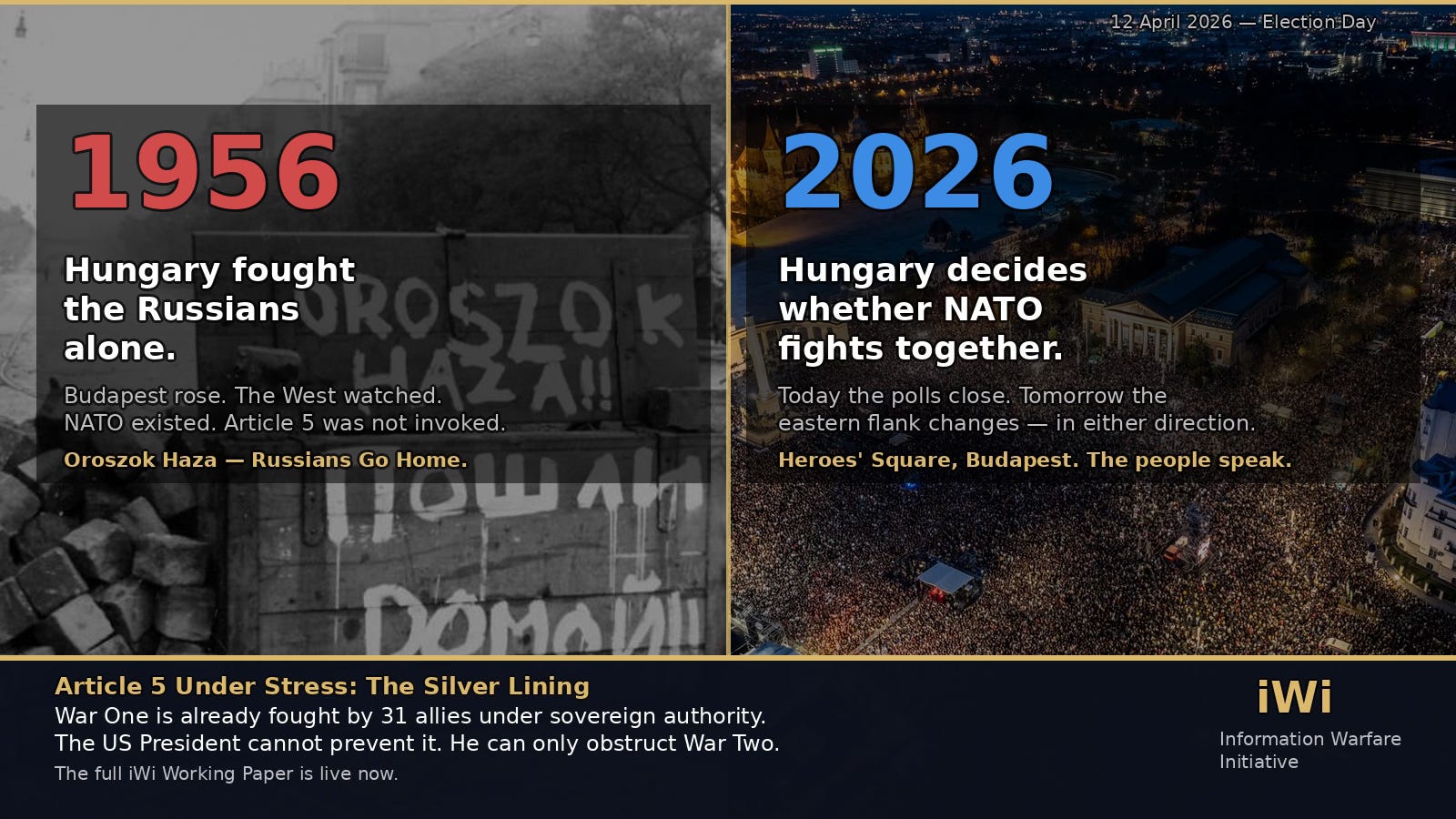
Fig.2 : An election as pivotal and consequential as no other - Hungary April 12, 2026
Even in the high-probability scenario of a Péter Magyar victory on 12 April, the transition window would introduce new categories of risk that must be explicitly addressed.
First, institutional capture. Magyar would inherit a state apparatus in which key security-service, foreign-ministry, and judicial posts would remain occupied by Orbán loyalists. The VSquare/OCCRP investigation demonstrates how deeply embedded the Kremlin relationship is at the foreign-ministry level: Szijjártó’s recordings reveal not isolated diplomatic contact but a systematic pattern of asset-like behaviour spanning at least 2023–2025. Purges will take months; in the interim, information flow to NATO and EU partners could be selectively degraded or delayed.
Second, economic and energy leverage. Hungary’s heavy dependence on Russian energy and Chinese capital would create immediate pressure points. Moscow (and Beijing) could be expected to test the new government with price spikes, supply disruptions, or sweetened alternative deals precisely during the vulnerable 30–90 day period when Budapest is attempting to reorient toward the EU mainstream. The global oil crisis triggered by the Iran war and the Strait of Hormuz blockade — which has left global supply approximately 10 per cent below pre-war demand according to Oxford Economics, with European natural-gas prices up over 50 per cent and Hungary already imposing fuel surcharges on cross-border drivers — gives Moscow additional leverage at precisely this moment.
Hungary received a US sanctions exemption on Russian oil and gas as recently as November 2025, following Orbán’s White House visit — a concession that a Magyar government would need to renegotiate or accept as inherited dependency. Given the rather exuberant praise lavished onto Orbán and his government as late as 10 April by the US President himself[1] — publicly pre-committing to the Orbán relationship while the polls were still open — the cost of a Magyar government’s Western pivot rises further, and the case for a German led European economic shield becomes essential from day one.
Third, hybrid spoiling. A defeated Orbán network would not simply disappear. It would retain control of major media outlets, a loyal parliamentary bloc, and deep patronage structures. The Financial Times reported in March 2026 a Kremlin-backed disinformation campaign portraying Orbán as a strong leader and Magyar as a ‘puppet of Brussels.’ The Washington Post reported separately that Russian intelligence proposed a fabricated assassination attempt against Orbán to sway the election, though it was not carried out. Expect calibrated hybrid campaigns — disinformation, parliamentary obstruction, and targeted leaks — designed to portray the Magyar government as Brussels puppets and to slow Hungary’s integration into northern-flank defence architecture.
Fourth, US retaliation. A Trump administration that has already invested political capital in Orbán — Vance’s Budapest visit being the most visible such investment, accompanied by Trump’s personal phone call declaring ‘I’m with him all the way’ — will view a Magyar win as a direct rebuke. Expect accelerated Category A measures (intelligence restrictions, force-posture reviews, or public criticism) framed as punishment for ‘EU interference.’ This could temporarily increase friction inside NATO even as Hungary itself becomes more cooperative.
These risks do not invalidate the strategic improvement a Magyar government would represent, but they do require explicit planning. The 30–90 day window after 12 April is the critical period in which Europe must lock Hungary into irreversible commitments (JEF operational integration, Baltic Defence Line contributions, V4 mobilisation deliverables) before the counter-reaction can crystallise.
Fifth, the Mogilevich legacy. The Insider’s 7 April 2026 interview with László Kovács alleges that the criminal networks which sponsored Orbán’s original rise to power in 1998 were linked to Semion Mogilevich’s organisation and operated through Sándor Pintér, then Budapest’s police chief and subsequently Orbán’s long-serving Interior Minister. A Magyar victory would confront the new government with the legacy of these alleged founding compromises.
Purging Pintér-era networks inside the Interior Ministry and security services will be politically explosive and operationally slow. Moscow and its proxies can be expected to weaponise the Kovács testimony in the 30–90 day window — either to discredit the transition as ‘politically motivated persecution’ or to remind Magyar that the old networks still exist and can be reactivated. The structural implication is that Orbán’s alignment with Russian interests is not tactical opportunism born of the post-2014 geopolitical environment but a foundational feature of the regime from its inception — making the transition to a clean, Western-oriented Hungary materially harder than the simple replacement of one prime minister by another.
The risks catalogued above are real but not unmitigable. The single most potent instrument for inoculating a post-Orbán Hungary against Russian, Chinese, and American economic pressure is Germany — and it is already in place.
Germany is the single largest foreign direct investor in Hungary by a commanding margin. At end-2022, German FDI accounted for 18.1 per cent of Hungary’s total inward stock — nearly double the next-largest investor (Austria at 9.3 per cent) and more than double the United States (8.6 per cent) or South Korea (8.9 per cent). Europe as a whole accounts for 63.1 per cent of Hungary’s accumulated FDI (Lloyds Bank International Trade Portal; HIPA). This is not abstract capital: it is Audi’s engine plant in Győr (the largest in the world), Mercedes-Benz in Kecskemét, BMW in Debrecen, Bosch across multiple sites, and thousands of Mittelstand suppliers embedded in the Hungarian industrial fabric.
The Hungarian government itself has acknowledged that weaker economic performance in Germany directly affects Hungary’s growth prospects (US State Department Investment Climate Statement, 2025). Germany’s economic weight in Hungary is not a dependency — it is a structural advantage that a Magyar government can leverage.
Economic inoculation. A coordinated German–EU commitment to accelerate disbursement of Hungary’s frozen EU cohesion and Recovery and Resilience funds (approximately €20 billion currently withheld over rule-of-law concerns) would provide a Magyar government with immediate fiscal space to offset any Russian or Chinese economic pressure. Berlin can signal — publicly and early — that German industry regards a Magyar victory as a stabilising event for Central European supply chains, thereby anchoring investor confidence during the transition window. Chinese investment in Hungary (predominantly battery manufacturing) is significant but concentrated and politically vulnerable; it is not a structural pillar of the economy in the way German Mittelstand integration is. US retaliation through trade channels would hurt American firms at least as much as Hungarian ones, given the depth of US corporate presence (8.6 per cent of FDI stock).
The Paks II nuclear option. The most strategically consequential mitigant is the Paks II nuclear power plant. The project — two VVER-1200 reactors, estimated cost €12.5 billion, 80 per cent financed by a €10 billion Russian state loan — is Orbán’s single most important structural tie to Moscow. First concrete was poured in February 2026 with Szijjártó and Rosatom’s Likhachev presiding. The EU’s highest court ruled in September 2025 that Hungary’s state aid for the project was illegal, having been awarded to Rosatom without competitive tender.
A Magyar government has a live legal basis to pause, renegotiate, or cancel the Rosatom contract — and Germany can offer the decisive alternative. Berlin can propose to assume lead contractor responsibility through a consortium of Siemens Energy, Framatome (Franco-German), and KWU successor entities, replacing Rosatom and restructuring the financing through KfW or the EIB. This is not speculative: German companies are already manufacturing long-lead components for Paks II (World Nuclear News, February 2026), and Arabelle Solutions in Belfort (France) is producing turbine elements. The industrial capability exists within the Franco-German nuclear ecosystem.
The strategic prize is enormous: replacing Rosatom at Paks II would sever Hungary’s deepest structural dependency on Moscow, eliminate a €10 billion Russian state loan that functions as a political leash, and demonstrate that European energy sovereignty is not a slogan but a deliverable.
The 30–90 day window after 12 April is therefore not merely a period of vulnerability — it is also a window of opportunity. If Germany, the EU, and the broader European mainstream move quickly to lock a Magyar government into irreversible Western commitments — JEF integration, Baltic Defence Line contributions, V4 mobilisation deliverables, EU fund disbursement, and a Paks II renegotiation — the transition risks identified above become manageable. The counter-reaction from Moscow, Beijing, and a hostile White House can be absorbed if European solidarity materialises in economic and industrial form, not merely in diplomatic communiqués.
The analysis to this point has treated the eastern flank’s defence as a function of NATO-member capabilities — the eFP battlegroups, the Baltic national armies, Finnish mobilisation, Polish mass, Nordic air superiority, and the JEF. This framing, while operationally accurate for War One as currently configured, omits the single most consequential force available to European defence within the relevant planning horizon: the armed forces of Ukraine.
Ukraine’s military is not a hypothetical asset. It is the most battle-tested, large-scale, technologically integrated conventional force in Europe. Three years of high-intensity warfare against a nuclear-armed adversary have produced a military with capabilities that no European NATO member possesses from direct experience: mass employment of unmanned systems across all domains, real-time integration of Western ISR with indigenous strike platforms, electronic warfare adaptation at industrial scale, and — critically — the institutional culture of a force that has fought and adapted under existential pressure. The systems Ukraine fields today — many co-developed with NATO allies to a degree that will never be publicly acknowledged — represent the cutting edge of European land warfare. Ukraine’s drone forces, artillery coordination networks, and counter-battery systems have been stress-tested against Russian electronic warfare, air defence, and armoured formations in conditions that no NATO exercise can replicate.
The strategic logic is elementary. If the paper’s core argument is that Europe must be able to fight War One without the United States, then Europe cannot afford to exclude from its defence architecture the single European military that has actually fought and survived a war against Russia. Ukraine’s armed forces represent not a charity case requiring Western support but a strategic asset of the first order — one that, properly integrated, transforms the eastern flank from a defensive line into a defence-in-depth architecture with operational reach into the Pskov–Latgale corridor, the Black Sea littoral, and the Russian strategic rear.
The JEF as the Institutional Vehicle. The mechanism for integration is not speculative. It is the UK-led Joint Expeditionary Force — expanded to become the de facto European defence alliance for the entire eastern flank. The current JEF of ten nations (the United Kingdom, Denmark, Estonia, Finland, Iceland, Latvia, Lithuania, the Netherlands, Norway, and Sweden) should be enlarged by the accession of Germany, the Czech Republic, Romania, Ukraine, and Portugal. Each brings a specific and interlocking capability.
Germany gives the JEF industrial mass and War Two sustainment capacity. A JEF without Germany is a rapid-reaction force. A JEF with Germany is a war-fighting alliance. Merz’s Verteidigungsfall commitment, the Bundeswehr rebuild, the EUR 100 billion Sondervermögen, and Germany’s weight as Europe’s largest economy transform the JEF from a Nordic-Baltic coalition into the institutional framework for European strategic autonomy. It also locks Germany into the UK-led structure — creating the Franco-British-German defence nexus that European security has lacked since 1945.
The Czech Republic bridges the V4 into the JEF and brings a defence-industrial base — Tatra, Česká zbrojovka, Aero Vodochody — that is agile, export-oriented, and already producing for Ukraine at scale. It signals that the JEF is not an exclusively Nordic-Baltic club but a framework for the entire eastern flank.
Romania is the geographic hinge. It connects the Baltic axis to the Black Sea, closes the gap between the northern and southeastern flanks, and brings the Constanța naval base and the Deveselu missile-defence site into the JEF architecture. Without Romania, the JEF defends the Baltic. With Romania, it defends the entire eastern frontier from the Arctic to the Black Sea — and that Black Sea dimension is where Ukrainian naval and littoral capabilities become directly operational.
Ukraine is the force multiplier. Inside the JEF, Ukrainian battle-tested capability is institutionalised: joint exercises, intelligence sharing, co-production, and operational integration become standing arrangements rather than ad hoc bilateral deals. The JEF framework requires no NAC consensus and no American permission. It is the institutional vehicle that delivers the substance of NATO membership before the politics of formal accession are resolved.
Portugal brings the Atlantic dimension — Azores basing for North Atlantic SLOC protection critical to War Two sustainment convoys, special forces of genuinely elite quality, and the longest continuous alliance in history with Britain (the Treaty of Windsor, 1373). Portugal inside the JEF extends the framework’s geographic reach to the Atlantic approaches, closing the gap between the eastern-flank land campaign and the transatlantic sustainment pipeline on which War Two depends.
The result is a JEF of fifteen nations that constitutes a full-spectrum European defence alliance under British framework-nation leadership, with two nuclear powers (the United Kingdom directly, France as an associated partner), the most battle-tested army in Europe, the largest European economy, and operational reach from the North Cape to the Black Sea to the mid-Atlantic. It operates outside NAC consensus. It does not require American consent. And it provides the institutional framework within which the sequenced pathway to full Ukrainian integration proceeds.
The Sequenced Pathway. Stage One: a Magyar victory on 12 April removes the single most obstructive veto inside the European Council on Ukraine’s EU membership path. The post-Orbán Hungarian government has every incentive to support accelerated accession negotiations, demonstrating its break with Moscow and its reorientation toward the European mainstream.
Stage Two: EU membership brings Ukraine within the scope of Article 42(7) of the Treaty on European Union — the mutual defence clause that obliges all Member States to provide aid and assistance “by all the means in their power” to a fellow member suffering armed aggression. This is not NATO’s Article 5, but it is a binding legal obligation under European law, and it does not require American consent. For as long as a Trump or Trump-successor administration blocks Ukrainian NATO membership, Article 42(7) provides the interim collective-defence framework.
Stage Three: JEF membership and the deepening of non-US NATO defence cooperation — joint exercises, intelligence sharing, co-production, and the systematic embedding of Ukrainian operational experience into allied training programmes — create the operational substance of alliance membership. Stage Four: full NATO membership becomes not a leap of faith but the formalisation of accomplished facts, precisely the dynamic this paper identifies as the mechanism by which Article 5 itself functions in the Latvian scenario.
The sin of Bucharest 2008 — the false promise of NATO membership without a pathway to deliver it — can be redeemed. Not by repeating the promise, but by providing the substance through a different institutional channel. The expanded JEF, anchored in EU accession and Article 42(7), provides Ukraine with the institutional defence architecture that NATO membership currently cannot deliver — and provides a clear path for full accession when America has shaken off the polarisation conundrum of the Obama–Trump–Biden–Trump era.
The Broader Strategic Dividend. The value of Ukrainian military integration extends beyond the eastern flank. Ukraine’s battle-tested capabilities in unmanned systems, electronic warfare, and precision strike are already contributing — in ways that will not be publicly acknowledged for years — to the US-led and Gulf coalition campaign against Iran. Ukrainian operational experience, Ukrainian-manufactured systems, and Ukrainian-trained operators are assets that the UAE, Saudi Arabia, and the broader GCC recognise as indispensable in the current conflict. The China vector extends the logic further: a Ukraine that is integrated into Western defence architecture, producing advanced military systems at scale, and exporting hard-won operational doctrine becomes a strategic asset not merely for Europe but for the free world’s capacity to deter and, if necessary, fight across multiple theatres simultaneously. Excluding Ukraine from this architecture — whether through NATO timidity, EU procrastination, or American obstruction — is not caution. It is strategic malpractice.
The conclusion is not that Article 5 is worthless. It is that Article 5 is a political framework for sustainment, not a trigger for immediate defence. The immediate defence will happen regardless, driven by national survival instincts, bilateral obligations, the JEF, and the sheer momentum of a dozen nations whose territory and citizens are directly threatened.
The critical European planning requirement is to ensure that War One — the immediate defence — can be fought and sustained long enough for one of three things to happen:
(a) US domestic politics catches up. American casualties, Congressional pressure, the Breedlove/Hodges/Pfarrer campaign, and the sheer weight of 75 years of alliance commitment overcome presidential obstruction. Congress passes an AUMF. The reinforcement pipeline opens.
(b) European self-sufficiency matures. The V4 mobilisation catalogue, the EDIP/SAFE instruments, the ammunition production surge, the European air defence architecture — all of these are designed to enable Europe to fight War Two on its own if necessary. This is the entire purpose of the iWi European Strategic Autonomy framework.
(c) Russia breaks first. A two-front war (Baltic plus Ukraine), a fully mobilised Finland, a 4.7%-GDP Poland, a rearmed Germany, and a nuclear-armed France and United Kingdom may be enough to convince the Russian general staff that the war is unwinnable — regardless of whether 128,000 American troops arrive. The attrition calculus from Ukraine applies: Russia’s reconstituted forces are larger than in 2022 but are fighting with degraded equipment, exhausted logistics, and a defence-industrial base that, per RUSI, is producing at surge rates it cannot sustain beyond 2027–2028.
The Europeans who have understood this earliest — Estonia at 5.4 per cent of GDP, Poland at 4.7 per cent, Finland with its Total Defence model, the United Kingdom with its NATO-first SDR — are not spending because they believe Article 5 has failed. They are spending because they understand that the immediate defence must be their responsibility, and that the American contribution — however large and however welcome — arrives in War Two, not War One. The alliance that began as an American guarantee to Europe must now function as a European guarantee to itself, with American reinforcement as the decisive but not the indispensable element.
This is not the end of NATO. It is the maturation of NATO.
Where Europe Depends on America and How Fast It Can Stop
The Two Wars framework identifies the binding constraint: Europe can fight War One but cannot yet sustain War Two without American enablers. The challenge — shared by every serious advocate of European strategic autonomy — demands specificity. Where, precisely, does the dependence lie? How deep is each gap? What is already underway to close it? And how long, under emergency mobilisation, would substitution actually take? The answers, drawn from the IISS Military Balance 2026, EDA Defence Data 2025, and operational evidence from three years of Ukrainian combat, are sobering but not hopeless. A fuller domain-by-domain audit with quantified breaking points and substitution timelines is provided in Annex B.
Air Domain. Europe fields approximately 1,500–1,800 combat aircraft but lacks the sovereign enablers that make them effective at scale. Strategic ISR is the most acute gap: without American feeds, persistent wide-area surveillance collapses within hours and sortie generation drops 60–70 per cent after 48–72 hours. A sovereign LEO/GEO constellation requires 5–8 years even at wartime launch cadence. The Franco-German JEWEL/Odin’s Eye programme targets initial operating capability in the early 2030s. Aerial refuelling is critically thin: the NATO MRTT Unit reached full capability in March 2026 with nine of twelve tankers operational — a fraction of what sustained high-intensity operations require. Surge via Airbus/Boeing conversions: 3–5 years. Integrated air and missile defence remains Patriot-dependent for high-end intercepts; European systems exist in token volumes. IAMD munitions ramp: 2–4 years; full batteries 4–6 years. The F-35 enterprise — mission data, ALIS/ODIN logistics, sensor fusion — is structurally inseparable from US supply chains; a sovereign datalink alternative is a 7–12 year programme.
Land Domain. European inventories comprise approximately 4,200 main battle tanks and 5,800 155mm artillery pieces. Production is scaling — Rheinmetall targets 1.1 million 155mm shells annually by 2027 — but Ukrainian combat demonstrates expenditure rates of 6,000–10,000 rounds per day at peak intensity, exhausting European stocks in weeks. Precision fires (Storm Shadow, SCALP, Taurus) exist in token stocks with no US-scale surge equivalent. Sustainment of armoured formations beyond 30–60 days depends on US prepositioned sets and CONUS depots. Armour surge via three-shift operations: 18–36 months; 155mm munitions ramp via civilian plant conversion: 2–4 years; new precision platforms: 6–8 years.
Naval Domain. European fleets excel in mine countermeasures but lack mass in high-end anti-submarine warfare and long-range land-attack. The UK and France together operate approximately ten nuclear attack submarines against the US fleet of fifty-plus. Seabed and GIUK gap surveillance depends overwhelmingly on US assets. Additional SSNs and frigates require 8–12 years given shipyard constraints — the most structurally intractable gap. ASW and MCM surge via unmanned conversions: 3–5 years; long-range naval strike munitions: 4–6 years.
Cyber, C2, and Multi-Domain Integration. Cyber forces are fragmented across twenty-seven-plus national commands with no unified sovereign hyperscale cloud. C4ISR relies on US commercial providers. Without integrated command and control, kill-chains fracture across domains and logistics pipelines rupture under combined cyber and electronic attack. Sovereign cloud and datalinks: 5–7 years; full multi-domain backbone: 7–10 years.
What Ukraine Has Already Solved. Against every domain gap catalogued above, Ukraine has operationalised solutions that Europe debates. Millions of FPV and loitering munitions produced annually via 500-plus decentralised manufacturers; the DELTA battlefield command system fusing drones, artillery, and electronic warfare in real time; naval drones sinking warships; unmanned ground vehicles conducting 9,000-plus logistics missions in a single month. These systems compress development cycles from years to weeks and shift cost-exchange ratios by orders of magnitude — an FPV drone at approximately $500 versus a Patriot interceptor at $4 million. They mitigate, but do not eliminate, the requirement for US strategic enablers in global missile warning, mass aerial refuelling, and theatre-wide C4ISR.
The Realism Test. Wartime mobilisation compresses peacetime timelines by 40–60 per cent for munitions and attritable systems. Complex enablers — satellites, avionics, command architectures — remain 5–12-plus years regardless of political will. Current EU instruments (EDIP at EUR 1.5 billion, SAFE at EUR 150 billion in loans to 2030, ESSI at 24 members, Readiness 2030) represent genuine momentum but are peacetime programmes targeting 2028–2034 delivery, many still mired in workshare disputes and national vetoes. Under current trajectories, Europe achieves partial resilience by 2035 — far too late for the 2027–2030 threat window that Russian force reconstitution creates. The target for European planners must be a 60-day sovereign high-intensity sustainment capacity for War One forces — the minimum threshold below which the Two Wars framework collapses into a single war that Europe fights alone and cannot sustain. The V4 Catalogue, the EDIP/SAFE instruments, and Ukrainian-scale innovation are the three pillars on which that capacity must be built.
These timelines assume a European defence-industrial mobilisation conducted without systematic integration of Ukrainian combat-tested capability. If the JEF expansion and Ukrainian defence-industrial partnership outlined in Section 4.6 are pursued at pace, the five-to-eight-year sovereign replication window compresses materially — perhaps by two to three years in the drone, electronic warfare, and precision-fires domains where Ukraine has already operationalised what European programmes are still designing. The accelerant is available. The question is whether the institutional architecture moves fast enough to absorb it.
The Silver Lining. The preceding forty pages catalogue obstruction, vulnerability, and dependency. They are intended to do so: the purpose of stress-testing is to identify fracture points before they are exploited. But the analysis also reveals something that neither the administration’s transactionalism nor the Kremlin’s information warfare has grasped: the very process of preparing for the worst case is creating a Europe that is, for the first time since 1945, genuinely getting ready for war.
Poland at 4.7 per cent of GDP. Estonia at 3.4 per cent. Finland’s 280,000-strong mobilisation capacity. The Baltic Defence Line. The German Sondervermögen and Merz’s Verteidigungsfall commitment. The ammunition production surge. The Nordic-Baltic drone ecosystems. The UK’s NATO-first Strategic Defence Review. These are not aspirational pledges in a communiqué. They are concrete investments in manufacturing, training, stockpiling, and generating combat capability at a scale and pace not seen in Europe since the Cold War.
The expanded JEF — fifteen nations from the North Cape to the Black Sea to the mid-Atlantic, with the most battle-tested army in Europe integrated into its structure — is the institutional expression of this transformation. It is not a substitute for NATO. It is the mechanism through which European NATO members demonstrate, in steel and ammunition and operational capability, that the Alliance is worth keeping — because the European pillar can bear the weight. The silver lining of the obstruction crisis is that it has forced Europe to do what seventy-five years of American pleading could not: invest, manufacture, train, and prepare to fight as a sovereign strategic actor. The alliance that survives this stress test will be stronger than the one that entered it — not because Washington rediscovered its commitment, but because Europe finally discovered its own. The Russia that this Europe would face is not the Soviet colossus of Cold War nightmares. It is a Wizard of Oz tin-pot power — loud, threatening, and propped up by Chinese money — whose conventional forces have been exposed, degraded, and bled white in Ukraine. A Europe that is genuinely ready for war does not need to fear it. It needs only to finish what it has started: invest, manufacture, train, and arm. The rest is political will — and the silver lining of the current crisis is that the will is, at last, arriving.
The ‘Wizard of Oz’ characterisation above is not rhetorical. It is an operational assessment grounded in the verifiable status of every Russian formation that pre-war planning assumed would be available for a Baltic contingency. The analysis that follows examines the most dangerous realistic scenario: a US-brokered ceasefire in Ukraine within the 30–90 day post-election window, followed by a three-week rail redeployment of Russian forces to their garrison locations in the Leningrad and Moscow Military Districts. This is the scenario in which Russia’s northern cupboard is restocked — and it reveals how bare that cupboard has become.
A Baltic combined-arms operation against the three vectors identified in allied planning — the Narva corridor into northeast Estonia, the Pskov–Latgale main effort into Latvia, and a Suwałki corridor pincer from Belarus and Kaliningrad — would require the simultaneous commitment of the formations assigned to the reconstituted Leningrad Military District and the Moscow Military District. Every one of these formations has been committed to Ukraine. Not a single division or brigade assigned to the northern or western axis is currently in garrison, in reserve, or reconstituting. They are fighting and dying in Donetsk, Luhansk, Kursk, Kharkiv, and Zaporizhzhia.
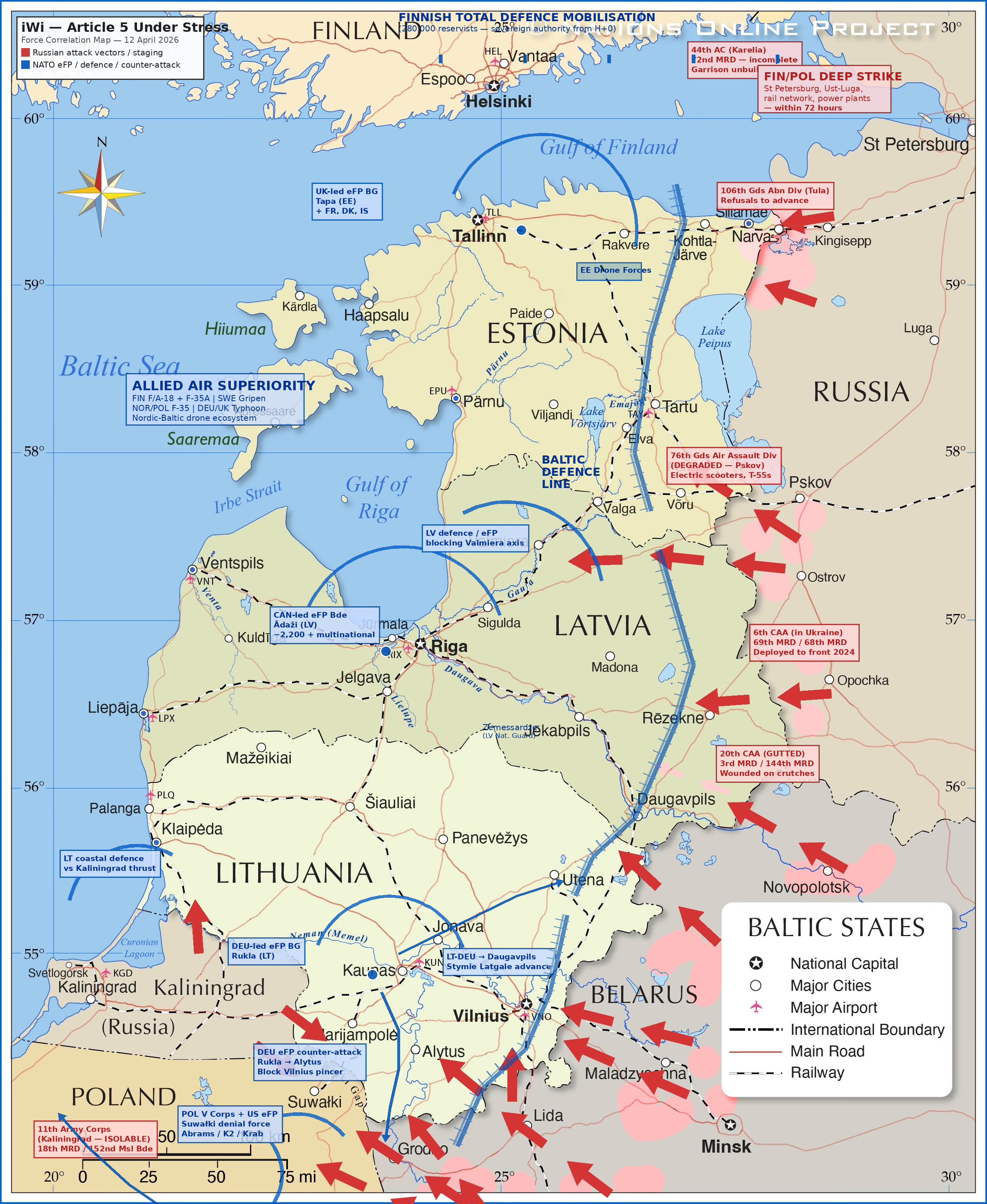
Fig. 3: When Latvia Calls … NATO has the Forces for War One but also needs to sustain War Two.
The 76th Guards Air Assault Division (Pskov) — the formation this paper identifies as the spearhead of the airborne component — is combat-ineffective as an elite formation. Committed successively to Hostomel, Kherson, Kursk, and then thrown into Pokrovsk in late 2025 as the ‘worm reserve,’ where Ukrainian drone forces were destroying a battalion per day. By April 2025, its troops were attacking on electric scooters and in roofless Lada compact cars, having lost their BMD fleet and modern armour. Its division commander, Colonel Abdulaziz Shikhabidov, was killed in Ukraine in March 2025, less than two months after Putin personally appointed him. The division returns to Pskov as a hollowed shell — perhaps 40–50 per cent of nominal strength, with mobilised replacements rather than professional paratroopers, and no modern armoured vehicles.
The 69th Guards Motor Rifle Division (Kamenka, Leningrad Oblast) — formed in 2024 from the 138th Guards Separate Motor Rifle Brigade and immediately deployed to the Ukrainian front — is probably the most combat-capable formation available for this axis, precisely because it is newest and has had the least time to be ground down. The 68th Guards Motor Rifle Division (Luga), the newest of the three, was still forming in the second half of 2024; whether it reaches operational capability by mid-2026 depends on equipment availability that the ‘de-mechanisation death spiral’ makes increasingly uncertain. Realistic assessment: one degraded air assault division and one to two motor rifle divisions of mixed quality. Perhaps 12,000–18,000 troops. No modern armour. Compared to the pre-war scenario of two elite VDV divisions, this is a fraction of the required force.
The 20th Combined Arms Army — the formation that pre-war planning assigned to the Latvia main effort — returns from Lyman and Donbas as a structurally intact headquarters commanding two operationally gutted divisions. In January 2025, Forbes reported that the army had formed assault groups composed of injured men, including wounded soldiers walking on crutches, and sent them into battle. The 3rd Motor Rifle Division (Boguchar) has been in continuous combat on the Lyman front since at least 2023 without having been withdrawn for rest or reconstitution at any point. The 144th Guards Motor Rifle Division (Yelnya) was reported destroyed as a combat-effective formation in September 2022, having been ‘largely destroyed and rendered combat ineffective’ during the Kharkiv counteroffensive. It was never properly reconstituted, continued fighting on the Lyman front, and over 100 soldiers from its 488th Regiment surrendered en masse during the Kursk incursion in August 2024. This division exists on paper.
The VDV formations assigned to this axis are similarly degraded. The 106th Guards Airborne Division (Tula) has suffered multiple reported refusals to execute orders; the 51st Guards Air Assault Regiment refused to advance in Sumy Oblast as of August 2025. The 98th Guards Airborne Division (Ivanovo), committed to Chasiv Yar, has been expanded on paper with the 299th Regiment — mobilised personnel, not the pre-war professional paratroopers. The UK Ministry of Defence assessed the VDV as ‘much degraded from its pre-invasion elite status’ as early as June 2023. Realistic assessment: the 20th CAA framework with two heavily attrited divisions plus two degraded VDV divisions. On paper perhaps 30,000–40,000 troops; in combat power perhaps equivalent to a single pre-war division. This main effort — the Pskov–Rēzekne–Daugavpils corridor that the paper correctly identifies as the operationally logical approach — cannot be resourced at anything approaching the scale that allied planning assumed before February 2022.
The 1st Guards Tank Army — Russia’s prestige armoured formation, reconstituted from the Soviet original in 2014 specifically for the western axis — returns from Kupyansk with approximately 10,000 casualties absorbed and over 1,000 vehicles lost. The 4th Guards Tank Division (Kantemirovskaya), once the single most prestigious armoured formation in the Russian army, lost 90 to 100 T-80U tanks at Izium alone during the September 2022 Kharkiv counteroffensive — half its strength, with many abandoned intact. It has been reconstituted with inferior tanks drawn from deep storage. The 2nd Guards Motor Rifle Division (Tamanskaya) was reconstituted in Belarus with mobilised soldiers and warehouse equipment after suffering heavy losses; it returned to the Luhansk front in January 2023 as a shadow of the pre-war formation. The 47th Guards Tank Division, only formed in January 2022 from the 6th Tank Brigade, has never achieved the depth of an established elite division. The 104th Guards Airborne Division, reconstituted from the 31st Brigade in 2023, suffered what the UK Ministry of Defence assessed as ‘exceptionally heavy losses’ in Kherson — a formation destroyed and reconstituted within three years.
The 1st GTA returns as an army-sized formation on paper but with perhaps 60 per cent of nominal strength and drastically inferior equipment — T-62s and early T-72 variants instead of the T-80U fleet it started with. A Suwałki corridor attack requires forward deployment to Belarus, a 1,000-kilometre rail move from garrison that consumes the full three-week redeployment window and is visible to every allied sensor from the first trainload. Against a Poland at 4.7 per cent of GDP, fielding Abrams, K2 Black Panthers, and a mobilisable force of 280,000, this is not a credible offensive force for the Suwałki gap.
From Kaliningrad, the 11th Army Corps provides the western jaw of the pincer. This is the most intact single formation in the Leningrad Military District, precisely because the A2/AD garrison has largely remained in place: the 18th Motor Rifle Division, the 152nd Guards Missile Brigade (Iskander-M), the 244th Artillery Brigade, and the 336th Guards Naval Infantry Brigade. Perhaps 15,000–20,000 troops with Iskander, coastal missiles, and layered air defence. But Kaliningrad is an exclave that NATO can isolate by sea and air from day one. Its stocks are finite. It cannot be reinforced overland without first taking the Suwałki corridor — which is the very objective of the attack. The pincer from the west is a one-shot force: whatever is in Kaliningrad on day one is all there will ever be.
The 44th Army Corps (Petrozavodsk, Karelia) — the new formation created specifically for the Finnish border following Finland’s NATO accession — returns from Kursk, Sumy, and northern Kharkiv. Its 72nd Motor Rifle Division, formed in spring 2024 and immediately deployed to Kharkiv, returns with combat experience but unknown attrition. The Estonian Foreign Intelligence Service notes that the formation of combat support and service support units was expected to continue into 2025, and that garrison facilities in Karelia would require at least three to four years of renovation. This corps provides potential operational depth for the Narva axis, but it is an incomplete formation returning from a front where it was committed before reaching full operational capability.
In the best case — ceasefire by July 2026, three weeks’ redeployment, no further losses during extraction — Russia could theoretically field across all axes perhaps 80,000–100,000 troops in formations that nominally carry division and army designations. But the combat power of those formations is perhaps 40–50 per cent of what the same unit designations represented in February 2022. The armour is older — T-62s, early T-72 variants, and T-55s where T-80Us and T-90s once stood. The troops are mobilised replacements rather than professional soldiers. The VDV has lost the majority of its BMD fleet (over 400 vehicles visually confirmed destroyed). Every formation returns exhausted from three or more years of high-intensity combat without adequate rotation. The open-source record confirms that at least five of the twelve primary formations — the 76th Guards Air Assault Division, the 144th Guards Motor Rifle Division, the 4th Guards Tank Division, the 2nd Guards Motor Rifle Division, and the 104th Guards Airborne Division — have been destroyed or rendered combat-ineffective at least once and reconstituted with inferior personnel and equipment.
But the 80,000–100,000 is the departure figure, not the arrival figure. The critical variable that transforms a degraded Russian force into an insufficient one is allied air power — and that variable has changed beyond recognition since Finland and Sweden joined NATO. The Russian Aerospace Forces have lost over 130 fixed-wing combat aircraft in Ukraine (Oryx visually confirmed, actual losses materially higher), including Su-34s, Su-35s, and Su-25s that would be required for close air support and air superiority over the Baltic theatre. Russian ground-based air defence — once the deepest layered system in the world — has been systematically attrited: S-300 and S-400 batteries have been destroyed by Ukrainian strikes using Storm Shadow, ATACMS, and indigenous long-range drones, and the production pipeline for replacement launchers and interceptors cannot keep pace with combat losses and the simultaneous demand for homeland air defence around Moscow, St Petersburg, and critical infrastructure. The integrated air defence network that pre-war planning assumed would deny allied air power access to the battlespace no longer exists at the density required to protect massed ground formations on the move.
What Russian columns would face on the approach march is a Nordic-Baltic integrated air superiority environment of a kind that has never existed on NATO’s northern flank: Finnish F/A-18 Hornets and incoming F-35As operating from dispersed highway strips and hardened shelters across 1,340 kilometres of border; Swedish Gripen from Gotland and mainland bases; Norwegian F-35s from the High North; Polish F-35s and F-16s from the south; Danish, German, and UK combat aircraft rotating through Baltic Air Policing and surge-deployable within hours; and the entire Nordic-Baltic drone ecosystem delivering persistent surveillance and strike. Russian armoured columns on the E77 or the Pskov–Rēzekne corridor would be moving through a kill zone from the moment they leave garrison — exactly as Russian columns in Ukraine learned when they attempted to advance under persistent drone and precision-strike coverage.
The damage would not be confined to the forward edge. Finnish and Polish air forces, operating under sovereign national authority from H+0, would conduct deep strike into Russian territory within the first seventy-two hours. St Petersburg, its port facilities, the oil terminal and export hub at Ust-Luga, key power-generation plants, and the railway network that feeds the Pskov and Leningrad staging areas would all come under precision attack. The rail lines from the Moscow Military District through Pskov to the Baltic border — the arteries on which every reinforcement depends — are targetable, and Finnish and Polish strike planners have had four years to map every junction, chokepoint, and marshalling yard. Russia cannot mass, cannot sustain, and cannot reinforce through a transportation network that is being systematically dismantled from the air. The 80,000–100,000 departure figure becomes, within seventy-two hours, something materially smaller — and what remains is fighting without resupply, without air cover, and without the ability to bring forward the ammunition, fuel, and spare parts that high-intensity mechanised warfare consumes at rates the Ukrainian front has quantified in painful detail.
Against this diminished force, the northern flank now fields a defence architecture that did not exist at this scale before the invasion of Ukraine: Finland’s 280,000-strong mobilisation capacity inside NATO, Poland’s armoured mass at 4.7 per cent of GDP with Abrams and K2 tanks, the Canadian brigade in Latvia, the UK eFP in Estonia, the German eFP in Lithuania, the Baltic Defence Line under construction, Swedish air power from Gotland, Norwegian forces in the High North, and the Nordic-Baltic drone ecosystem that is operationalising Ukrainian combat lessons in real time. The force correlation has inverted. The Russia that could credibly threaten the Baltics in 2022 no longer exists.
This is precisely why the ceasefire window is the most dangerous moment — not because Russia is strong, but because it represents the last moment before the correlation becomes permanently unfavourable for Moscow. A ceasefire allows Russia to extract, reconstitute, re-equip, and redeploy. But reconstitution to pre-war quality requires years, not weeks — and every month Russia rebuilds is a month in which European defence spending compounds, the Baltic Defence Line hardens, Finnish integration deepens, and Ukrainian battle-tested capability embeds itself into the JEF framework. The strategic window in which Russia could credibly mass for a Baltic operation is closing. The pre-crisis reforms in the following section are designed to ensure it closes permanently.
The silver lining identified in the preceding section is real but incomplete. Political will without operational substance is rhetoric; operational substance without political will is a warehouse of unused equipment. What follows is the agenda that converts the one into the other — the specific, actionable reforms that transform Europe’s emerging readiness into a defence architecture capable of surviving the stress test this paper has described. These are not aspirational recommendations for a distant planning horizon. They are measures that can and must be taken now, in peacetime. Ukraine survived the opening phase of February 2022 because it fought immediately and held long enough for everyone else to catch up. Any eastern flank defence would face the same logic — with the critical difference that forward-deployed allied forces, pre-positioned stocks, and activated national defence plans should compress the lag from months to days. But the architecture that delivers that compression must be built before it is needed — or as an old friend put it, ‘before the next crisis starts, not after the losses begin.’ The will is arriving. Here is what it must deliver.
Commission a formal legal opinion — ideally from a panel of senior allied jurists or the NATO Legal Adviser — on three propositions: (a) Article 5 invocation is a Council act, not a member-state permission structure; (b) the attacked party’s formal request is not a necessary precondition (the Robertson precedent); (c) whether active dissent by a non-attacked ally can be overridden, or whether passive non-objection suffices. Brief this opinion to every allied Permanent Representative and to the Secretary General’s office. The time to litigate procedure is now, not at 0300 on the morning of an attack.
Without revealing classified operational detail, NATO should publicly articulate the categories of action that SACEUR can take under standing pre-delegated authorities: immediate defensive reaction, ARF activation, air-defence coordination, reinforcement initiation. This transparency strengthens deterrence by demonstrating to Moscow that NATO’s response does not await a political committee meeting. It also pre-empts any future US administration’s attempt to claim that SACEUR exceeded his authority.
NATO should quietly pre-agree — through the Military Committee and NAC — the interim command architecture that applies if the SACEUR position is vacated or Europeanised. Specifically: the relationship between a European acting SACEUR and a US EUCOM commander; the force-assignment status of Tier 2 US forces during the interregnum; and the nuclear consultation chain under bifurcated command. This contingency plan should exist in a classified annex, ready for immediate activation. Its mere existence reduces the disruptive value of a US threat to withdraw from the SACEUR role. A former senior allied air commander who reviewed this paper described the acting-SACEUR scenario as ‘a fair assessment, but uncharted territory.’ That characterisation is precisely the point. The dual-hat break has never been tested because it has never needed to be. The fact that it is uncharted is not a reason for comfort but for urgency: the time to chart the territory is now, in peacetime, through tabletop exercises, legal opinions, and pre-agreed command arrangements — not at H+6 with Russian forces crossing the Latvian border and no one certain who gives the order to the 2nd Cavalry Regiment.
The immediate defence (War One) is within European reach. The sustained campaign (War Two) is not — yet. The critical gaps are: strategic ISR independence (currently near-total dependence on US satellite, SIGINT, and cyber capabilities); strategic airlift and sealift for transatlantic-scale reinforcement; precision deep-strike capability; ammunition production at scale; and integrated logistics for a theatre-level campaign lasting months. Every measure in the iWi V4 Mobilisation Catalogue is designed to close these gaps. The political argument for European strategic autonomy is therefore not anti-American; it is the precondition for a credible European contribution to War Two regardless of who occupies the White House.
The eFP formations must complete their transition from battalion-scale tripwires to brigade-scale forward defence. The Baltic Defence Line must be accelerated. Pre-positioned equipment sets (as specified in LOG–PRE–004 of the V4 Catalogue) must be in place at eight or more eastern flank locations. The tripwire’s function must shift from ‘guaranteeing American casualties to trigger domestic politics’ to ‘denying a Russian fait accompli within the first 72 hours.’ If the forward defence can hold for 72 hours, the political dynamics — JEF activation, EU Article 42(7), Congressional pressure, media coverage — create irreversible momentum toward full alliance response.
The JEF is currently designed to act rapidly and independently, then hand off to the broader NATO command structure once Article 5 is formally invoked and the integrated command apparatus activates. The procedures for this handoff — transfer of operational command from JEF to SACEUR/JFC Brunssum, deconfliction of JEF and NATO rules of engagement, integration of JEF force packages into NATO defence plans — must be exercised repeatedly and documented in standing operating procedures. The JEF must not be a substitute for NATO; it must be the bridge that carries the fight until NATO’s full machinery engages.
The EU’s mutual assistance clause creates a binding legal obligation but currently lacks the command structure to give it military teeth. The EU should develop a standing Article 42(7) coordination mechanism — not a parallel SHAPE, but a political-military cell within the EEAS capable of rapidly coordinating bilateral offers of military assistance when the clause is invoked. The 2015 Bataclan experience demonstrated that bilateral coordination works but is ad hoc. A pre-agreed framework — with template requests, pre-identified force packages, and agreed logistics arrangements — transforms Article 42(7) from political gesture to operational instrument.
Ukraine’s integration into European defence architecture should not wait for a NATO membership decision that the current US administration will block — and some European members are likely to obstruct behind the curtain. The JEF provides the institutional vehicle; EU accession provides the legal framework. The immediate priorities are fourfold. First, expand the JEF: Germany, the Czech Republic, Romania, Ukraine, and Portugal should be invited to join, transforming it from a Nordic-Baltic rapid-reaction force into a full-spectrum European defence alliance with operational reach from the Arctic to the Black Sea to the mid-Atlantic. Second, open the defence-industrial channel: establish joint production facilities, co-development agreements, and mutual procurement arrangements that embed Ukrainian innovation into the European defence-industrial base, bypassing the national procurement bureaucracies whose sclerosis this paper has identified as a structural barrier to capability delivery. Third, formalise the JEF–Ukraine operational relationship: a standing partnership agreement, joint exercise programme, and intelligence-sharing framework that makes Ukrainian participation in eastern-flank defence a permanent institutional fact. Fourth, prepare the Article 42(7) pathway: ensure that, from the moment of EU accession, Ukraine’s inclusion in the mutual defence clause is operationally meaningful — with pre-agreed force packages, logistics arrangements, and command-and-control integration that give the legal obligation military teeth. The Bucharest promise was empty because it lacked a delivery mechanism. This pathway provides one.
Acknowledgements: I am indebted to the kindness of friends and colleagues who have reviewed and advised on various draft iterations and provided guidance on key aspects, including Jason J. Smart, Greg Bagwell, Stephen E Moore, Rajan Menon as well as a series of current policy makers and active duty service members and interviewees of former flag officers, commanders and operators who will remain unnamed.
· IISS, Defending Europe Without the United States: Costs and Consequences (May 2025)
· NATO, Collective Defence and Article 5 (official NATO topic page)
· NATO, Supreme Allied Commander Europe (SACEUR) (official NATO topic page)
· Brennan Center for Justice, NATO’s Article 5 Collective Defense Obligations, Explained (March 2022)
· Lawfare, The NATO Treaty Does Not Give Congress a Bye on World War III (January 2023)
· Congressional Research Service, Understanding the War Powers Resolution (IF13134)
· Congress.gov, Cold War Military Action, NATO, and the United Nations (Constitution Annotated)
· CEPA, NATO’s Response to Aggression? Glorious Ambiguity (July 2024)
· Belfer Center, Harvard, NATO’s Article 5 Explained (February 2026)
· RAND Corporation, From Forward Presence to Forward Defense: NATO’s Defense of the Baltics (February 2024)
· AUSA, The Shield and the Sword: A Practical Defense Concept for the Baltic (July 2025)
· Wilson Center, The Evolving ‘Tripwire’ on NATO’s Eastern Flank (July 2024)
· Brookings Institution, Strengthening the US and NATO Defense Postures in Europe (July 2023)
· UK Ministry of Defence, Strategic Defence Review 2025
· European Parliament Research Service, Article 5 Washington Treaty (NATO) and Article 42(7) TEU
· Breaking Defense, Official says DoD not considering pulling US out of NATO SACEUR leadership post (April 2025)
· NBC News, Trump admin considers giving up NATO command (March 2025)
· Euronews, US ambassador suggests Germany take NATO’s top military role (November 2025)
· UK Defence Journal / The Conversation, Why it matters for European security if an American no longer commands NATO troops (Andrew Corbett, KCL)
· Carnegie Endowment, Reviving Nordic Security and Defense Cooperation (October 2024)
· Musgrave & Ward, The Tripwire Effect: Experimental Evidence Regarding U.S. Public Opinion, Foreign Policy Analysis (2023)
· Baltic Sentinel, U.S. Public Opinion Surveys Show That Having American Troops Pre-Positioned in an Allied Country Might Not Have the Tripwire Effect We Presume (February 2026)
· Senator Rand Paul, NATO’s Article 5 Does Not Override Congress’s War Powers (August 2023)
· NATO JAPCC, Supporting NATO Deterrence in the Baltic States through Host Nation Support (2025)
· Trofimov, Yaroslav, ‘Allies Fear They Are Tied to an Erratic U.S. and Now Have Nowhere to Turn,’ Wall Street Journal (6 April 2026)
· Kojala, Linas and Leškevičius, Vytautas, ‘NATO Allies Are Quietly Helping the U.S. in Iran,’ Wall Street Journal (6 April 2026)
· Melchior, Jillian Kay, ‘In Estonia, NATO Practices for a Drone War,’ Wall Street Journal (7 April 2026)
· Luxmoore, Matthew and Strauss, Emma, ‘Vance Seeks to Boost Hungary’s Orban in Tough Re-election Fight,’ Wall Street Journal (7 April 2026)
· Steinhauser, Gabriele and Dulaney, Chelsey, ‘Oil Crisis Hitting Asia Foreshadows Tough Times for Europe,’ Wall Street Journal (5 April 2026)
· Mead, Walter Russell, ‘The Iran War Around the World,’ Wall Street Journal (6 April 2026)
· VSquare/OCCRP/FRONTSTORY/Delfi Estonia/The Insider/ICJK, ‘Kremlin Hotline: How Hungary Colluded with Russia to Weaken EU Sanctions’ (31 March 2026)
· Bloomberg News, ‘Orbán Offered to Be ‘Mouse’ Helping Russian ‘Lion’ in Putin Call’ (7 April 2026)
· The Insider, ‘Money for ‘Vitka’: How the Mafia Sponsored Viktor Orbán’ (7 April 2026)
· McMillan & Bowman, ‘On Europe, the Trump administration is out of step with Congress, Americans,’ Defense One (December 2025)
· 2025 Reagan National Defense Survey (Reagan Institute, December 2025)
· Joint Statement of Chairman Wicker (SASC) and Chairman Rogers (HASC), 7 April 2026
· Senator John Cornyn (R-TX), public statement on allied burden-sharing, 8 April 2026
· Ambassador Daniel Fried, public statement on signal-damage mechanism, 8 April 2026
· NATOpress, readout of SecGen Rutte–POTUS meeting, 8 April 2026
· President Trump, Truth Social post on NATO/Greenland, 8 April 2026, 4:31 PM ET
· Numbeo, Cost of Living Index — Cigarette Price Comparison (EUR), April 2026
· WSJ (Faucon), ‘A Closer Look at Iran’s 10 Demands — and Which the U.S. Might Accept,’ 8 April 2026
· WSJ (Trofimov), ‘Gulf States Fear an Emboldened Iran after Trump’s Cease-Fire,’ 8 April 2026
· White House, Office of the Vice President, ‘Advancing the United States-Hungary Bilateral Partnership’ (SMR cooperation), 8 April 2026
This paper publishes on 12 April 2026 — the day Hungarians go to the polls. That timing is deliberate. The Orbán transition analysis in Section 4.5 is not speculative planning; it is live commentary on events unfolding as this document circulates. The election outcome will materially alter the stress-test conditions described throughout this paper, and it does so along two sharply divergent branches.
A Péter Magyar majority removes the single most obstructive actor inside European institutions. Hungary’s systematic vetoes on Ukraine sanctions packages, EU defence funding, and Council foreign-policy declarations cease. The European Council regains unanimity on Russia. The path to Ukrainian EU accession — and with it, Article 42(7) coverage — opens. For the Article 5 architecture specifically, the change is significant: a Magyar government would not serve as Moscow’s procedural proxy inside the NAC, removing the most predictable source of consensus delay in a crisis.
But the improvement is not instantaneous. As Section 4.5 details, the thirty-day constitutional clock between election and government formation creates a lame-duck window in which the outgoing Orbán cabinet retains full executive power. The caretaker government can sign contracts, issue decrees under the extended state of emergency, and pursue institutional scorched-earth measures — accelerated judicial appointments, intelligence-service personnel changes, and pre-positioned financial obligations designed to constrain the incoming administration. The Pintér-era security networks documented by The Insider and VSquare will not dissolve on polling day. The real battle for Hungary’s institutional alignment begins after the vote, not with it.
The mitigants identified in Section 4.5 — the German economic shield, the Paks II nuclear replacement option, accelerated EU fund disbursement — must be activated within the first thirty to ninety days. That window is the subject of a companion convergence analysis, covering the full-spectrum risk architecture of the period 12 April to 11 July 2026, to be published in the coming days once the smoke settles in Budapest. That document integrates five converging layers — the Hungarian constitutional transition, central-bank decision cycles, European public-holiday dead zones, EU fiscal and institutional calendars, and exogenous amplifiers including the Hormuz crisis and the Greenland escalation vector — into a single calendar-mapped scenario model. Its core finding is that the thirty-to-ninety-day window is not merely a period of political uncertainty but a structurally predictable convergence of institutional vulnerability and adversarial opportunity.
An Orbán victory — whether through a genuine electoral mandate or a manufactured contested outcome exploiting the certification and appeals architecture — accelerates every negative trend catalogued in this paper. Budapest remains Moscow’s proxy inside the European Council and the NAC. The Vance–Orbán axis, already cemented by the Vice President’s Budapest visit, deepens. The VSquare/OCCRP/Kremlin Hotline revelations, far from constraining Fidesz, are dismissed as foreign interference. The Paks II Rosatom contract proceeds. Hungary’s veto on further Ukraine sanctions packages, EU defence investment conditionality, and Council foreign-policy declarations continues indefinitely.
For the Article 5 stress test, Orbán survival means that the NAC consensus vulnerability identified in Sections 2.6 and 3.5 remains permanently open. In a crisis scenario, Hungary becomes the most likely vehicle for procedural delay — not an outright veto, which would be politically untenable, but requests for further consultation, conditional language, and staged escalation that slow the Council’s response by hours or days that the forward-deployed forces in Latvia and Estonia cannot afford. The Robertson Precedent becomes not merely a legal instrument but an operational necessity: the Council must be prepared to act over Hungarian objection, and the legal groundwork for doing so must be laid now.
Assuming the higher-probability branch — a Magyar victory — the post-election trajectory for NATO’s eastern flank is the most consequential planning question this paper raises. The removal of Hungary as an institutional spoiler does not merely subtract a negative; it enables a sequence of positive developments that, if pursued with urgency, could transform the eastern flank’s defence architecture within twelve to eighteen months.
First, the V4 revives. Poland, the Czech Republic, and Slovakia have been operating as a de facto V3 since Orbán’s systematic obstruction made quadrilateral cooperation on defence meaningless. A Magyar government restores the fourth pillar. Hungary’s geography — connecting the Central European corridor to the Balkans and Romania — becomes an asset rather than a gap. The V4 mobilisation catalogue developed in the companion European Strategic Autonomy analysis can, for the first time, be implemented as a genuine four-nation programme rather than a three-plus-one workaround. Hungarian defence industry, while modest, contributes light-armoured vehicle production and a logistics corridor that shortens reinforcement timelines to Romania and the southeastern flank.
Second, Ukraine’s European integration accelerates. The single most consequential effect of a Magyar victory is the removal of Hungary’s veto on Ukrainian EU accession progress. Once Ukraine enters the EU accession framework at pace, Article 42(7) coverage — the mutual defence clause that obliges all EU member states to provide aid and assistance by all means in their power — moves from a distant aspiration to a medium-term legal reality. The expanded JEF concept outlined in Section 4.6, with Ukraine integrated as the eastern flank’s strategic multiplier, gains the institutional foundation it currently lacks. Ukraine’s battle-tested capabilities in drone warfare, electronic warfare, artillery coordination, and decentralised logistics become available to the alliance not as bilateral aid but as embedded institutional capacity.
Third, the Baltic Defence Line gains strategic depth. The current architecture — brigade-scale eFP formations in Estonia, Latvia, and Lithuania, backed by the Finnish mobilisation capacity and Polish armoured mass — is designed to fight War One. But it lacks the southeastern hinge that connects the Baltic axis to the Black Sea. A cooperative Hungary closes that gap. Romanian and Hungarian territory together provide the reinforcement corridor that allows forces to move between the northern and southeastern flanks without routing through the congested Polish road and rail network. The NATO Ankara Summit in July 2026 — day eighty-six to eighty-seven of the post-election window — becomes the venue at which this expanded flank architecture can be formally adopted.
Fourth, EU defence funding flows. Hungary’s frozen cohesion funds and Recovery and Resilience allocations — withheld under the conditionality mechanism — can be released to a government that meets rule-of-law benchmarks. More critically, a cooperative Hungary removes the single remaining obstacle to full-speed implementation of SAFE, EDIP, and the defence-readiness instruments that provide the fiscal architecture for War Two capability. The EUR 150 billion in SAFE-backed loans, the EUR 1.5 billion EDIP instrument, and the national co-financing frameworks all depend on Council unanimity for their most consequential disbursement decisions. Without a Hungarian veto, the money moves.
The trajectory is clear but not guaranteed. Every one of these developments requires that the thirty-to-ninety-day transition window is managed successfully — that the German shield activates, that the Paks II Rosatom replacement is pursued, that EU institutional actors move with uncharacteristic speed, and that the Trump administration does not retaliate against a post-Orbán Hungary with punitive economic or diplomatic measures. The companion convergence analysis models these risks in detail. What the present paper establishes is the strategic prize: a post-Orbán eastern flank is not merely one without a spoiler. It is one with a reinforcement corridor, a revived V4, an accelerated Ukrainian integration pathway, and the fiscal instruments to build War Two capability at the speed the threat demands.
Working draft as at 12 April 2026. Companion convergence analysis (full-spectrum risk architecture, 12 April – 11 July 2026) to follow post-election.
Data drawn from IISS Military Balance 2026, EDA Defence Data 2025, CSIS analyses, NATO fact sheets, and official EU/NATO releases as of April 2026. Substitution timelines assume emergency powers, three-shift operations, and civilian industrial conversion.
Systems and Inventory. Europe fields approximately 1,500–1,800 combat aircraft: Typhoon (400-plus), Rafale (200-plus), and Gripen/F-16 legacies. Strategic ISR platforms are limited versus US depth of 80-plus crewed aircraft and hundreds of UAVs. The NATO Multinational MRTT Unit reached full operational capability in March 2026 with 9 of 12 A330 MRTT aircraft operational; the tenth is due by end-2026. European IAMD systems (SAMP/T, IRIS-T SLM, NASAMS) exist in token volumes; high-end terminal and exo-atmospheric intercepts remain Patriot-dependent. C2 and data links: Link 16 waveform/encryption and the F-35 ALIS/ODIN logistics and sensor-fusion enterprise are US-controlled across eight interdependent elements inseparable from American supply chains.
Breaking Points. Without US feeds, persistent wide-area surveillance and battle-damage assessment collapse within hours. Sortie generation over the Baltic or Black Sea drops 60–70 per cent after 48–72 hours. Networked lethality evaporates; kill-chains fracture; friendly-fire risk increases sharply. IAMD coverage remains porous against Russian hypersonics, Iskander, and Kinzhal.
Substitution Timelines Under Duress. Sovereign ISR constellation (LEO/GEO): 5–8 years with wartime launch cadence. Tanker surge via Airbus/Boeing conversions: 3–5 years. Sovereign datalink/avionics alternative: 7–12 years (software dependencies dominate). IAMD munitions ramp: 2–4 years; full batteries: 4–6 years.
Current Efforts. Copernicus and JEWEL/Odin’s Eye (Franco-German early-warning; October 2025 implementation agreement, IOC early 2030s). ESSI at 24 members. FCAS remains mired (IOC 2040s). Trajectory: partial autonomy by 2035 — too late for the 2027–2030 threat window.
Systems and Inventory. EU inventories: approximately 4,200 main battle tanks (fragmented Leopard 2/Challenger 2/Leclerc variants); approximately 5,800 155mm artillery pieces. Production: Rheinmetall targets approximately 1.1 million 155mm shells annually by 2027 (Unterlüß plant scaling to 350,000 per year; network-wide ambitions higher). Precision fires: token Storm Shadow/SCALP/Taurus stocks; no US-scale HIMARS/ATACMS surge. Sustainment relies on US prepositioned sets (APS-2) and CONUS depots.
Breaking Points. After 30–60 days of high-intensity combat, armoured formations attrit without US-scale maintenance and spares. Ammunition expenditure at Ukrainian peak rates of 6,000–10,000 155mm rounds per day exhausts European stocks in weeks. Ground fires cannot suppress Russian air defences or command nodes without standoff precision at scale.
Substitution Timelines Under Duress. Armour surge (three-shift plus civilian heavy industry): 18–36 months. 155mm munitions via civilian plant conversion: 2–4 years. New precision platforms: 6–8 years.
Current Efforts. V4 bilateral programmes; Rheinmetall/KNDS expansions; EDIP/ASAP/EDIRPA missile ramp-ups (35 per cent non-EU cap). Polish and South Korean imports highlight European production shortfall. ESSI aggregates demand but remains Patriot-anchored.
Systems and Inventory. European fleets excel in mine countermeasures but lack mass in high-end ASW, long-range land-attack, and persistent maritime domain awareness. SSNs: UK plus France approximately 10 total (versus US 50-plus). Only France and the UK possess 1,000-plus-kilometre naval strike missiles. Seabed and GIUK gap surveillance depends on US assets. MPA fleets increasingly P-8 reliant.
Breaking Points. Russian Yasen/Kalibr submarines and mine threats cannot be neutralised at scale. Surface strike on Russian rear areas stalls; Baltic and Black Sea sea-denial unsustainable under massed air and missile attack.
Substitution Timelines Under Duress. ASW and MCM surge via modular and unmanned conversions: 3–5 years. Additional SSNs and frigates: 8–12 years (shipyard mobilisation). Long-range naval strike munitions: 4–6 years. No EU-wide naval surge plan exists. The naval gap is the most structurally intractable.
Systems and Architecture. Cyber forces fragmented across 27-plus national commands; no unified sovereign hyperscale cloud. C4ISR relies on US commercial providers. Federated Mission Networking improves brigade-plus interoperability but not tactical nets. EW resilience unproven at scale. ACCS outdated for modern EW and cyber threats. The F-35 enterprise (eight interdependent elements including mission data and ALIS/ODIN) is inseparable from US supply chains.
Breaking Points. Without integrated C2, kill-chains fracture across domains; logistics pipelines rupture under cyber and EW attack. Hyperscale dependency exposes command nodes.
Substitution Timelines Under Duress. Sovereign cloud and datalinks: 5–7 years. Full multi-domain backbone: 7–10 years. NATO Integrated Cyber Defence Centre targets 2028; EU ECYSAP and EDOCC programmes real but uncoordinated.
Ukraine has operationalised what Europe debates. By April 2026: millions of FPV and loitering munitions produced annually via 500-plus manufacturers in decentralised civilian ecosystems; fibre-optic and AI-guided swarms; the DELTA battlefield C2 system fusing drones, artillery, and EW in real time; naval drones (Magura V5, Sea Baby) sinking warships and disrupting basing; unmanned ground vehicles conducting 9,000-plus logistics and evacuation missions in March 2026 alone. The Joint Alliance Training and Education Centre (JATEC), launched February 2025, transfers tactics, doctrine, and innovation directly to NATO forces.
These systems are battle-tested, low-cost, and decentralised. They compress development cycles from years to weeks and shift cost-exchange ratios by orders of magnitude: an FPV drone at approximately $500 versus a cruise missile at $1 million or a Patriot interceptor at $4 million. Across domains: layered C-UAS and fibre-optic/AI swarms for ISR and SEAD in the air domain (already piloted in NATO exercises); attritable FPV and loitering-munition integration with artillery and Bohdana-style howitzer mass production in the land domain; sea-drone coastal denial and multi-domain strike in the naval domain; EW-resilient communications, DELTA-style fusion, and rapid-prototyping ecosystems in the cyber and integration domain. These capabilities mitigate — but do not eliminate — the requirement for US strategic enablers in global missile warning, mass aerial refuelling, and theatre-wide C4ISR.
EDIP (EUR 1.5 billion), SAFE (EUR 150 billion in loans to 2030), ESSI (24 members), and Readiness 2030 represent genuine momentum. Yet these are peacetime instruments: flagship projects target 2028–2034 delivery; many remain mired in workshare disputes and national vetoes. Full autonomy in complex enablers remains a 2030–2040 prospect. Under current trajectories, Europe achieves partial resilience by 2035 — far too late for the 2027–2030 Russian threat window. Wartime mobilisation compresses peacetime timelines by 40–60 per cent for munitions and attritable systems via emergency powers and civilian conversion. Complex enablers (satellites, avionics, C2 architectures) remain 5–12-plus years due to physics, software validation, workforce pipelines, and energetic-materials chokepoints. Ukraine proves asymmetric acceleration is possible. Europe possesses the industrial base. It lacks only the trigger — and the political will to pull it.
ABCT — Armoured Brigade Combat Team
AFRICOM — United States Africa Command
ARF — Allied Reaction Force (NATO high-readiness successor to VJTF)
ASD-ISA — Assistant Secretary of Defense for International Security Affairs
ASW — Anti-Submarine Warfare
ATACMS — Army Tactical Missile System
AUMF — Authorization for Use of Military Force
BMD — Boyevaya Mashina Desanta (Russian airborne infantry fighting vehicle)
BTG — Battalion Tactical Group
C4ISR — Command, Control, Communications, Computers, Intelligence, Surveillance and Reconnaissance
COCOM — Combatant Command (US law — non-delegable authority)
COMUSEUCOM / EUCOM — Commander, United States European Command
CONUS — Continental United States
C-UAS — Counter-Unmanned Aerial Systems
D+14 / H+0 — Day-plus / Hour-zero (operational timeline notation)
DELTA — Ukrainian battlefield management / command-and-control system
DSACEUR — Deputy Supreme Allied Commander Europe
EDIP — European Defence Industry Programme
eFP — Enhanced Forward Presence (NATO)
EDIRPA — European Defence Industry Reinforcement through common Procurement Act
ESSI — European Sky Shield Initiative
EW — Electronic Warfare
FCAS — Future Combat Air System
FPV — First-Person View (drones)
GDP — Gross Domestic Product
GIUK — Greenland–Iceland–United Kingdom gap
HASC — House Armed Services Committee
HUMINT — Human Intelligence
IAMD — Integrated Air and Missile Defence
IISS — International Institute for Strategic Studies
ISR — Intelligence, Surveillance and Reconnaissance
iWi — Information Warfare Initiative
JEF — Joint Expeditionary Force (UK-led)
JFC-BS — Joint Force Command Brunssum
LEO/GEO — Low Earth Orbit / Geostationary Earth Orbit
MCM — Mine Countermeasures
MNC-NE — Multinational Corps Northeast
MRTT — Multi-Role Tanker Transport
NAC — North Atlantic Council
NASAMS — National Advanced Surface-to-Air Missile System
NDAA — National Defense Authorization Act
NFIU — NATO Force Integration Unit
NFM — NATO Force Model (New Force Model)
NSC / HSC — National Security Council / Homeland Security Council
OPCOM — Operational Command
QRA — Quick Reaction Alert
ROE — Rules of Engagement
SACEUR — Supreme Allied Commander Europe
SAFE — Security Action for Europe (EU defence financing instrument)
SAMP/T — Sol-Air Moyenne Portée / Terrestre (French air-defence system)
SASC — Senate Armed Services Committee
SEAD / DEAD — Suppression / Destruction of Enemy Air Defences
SecDef — Secretary of Defense
SHAPE — Supreme Headquarters Allied Powers Europe
SIGINT — Signals Intelligence
SLOC — Sea Lines of Communication
TEU — Treaty on European Union (Article 42(7))
UAS — Unmanned Aerial Systems
UNCLOS — United Nations Convention on the Law of the Sea
V4 — Visegrád Group (Czechia, Hungary, Poland, Slovakia)
VDV — Vozdushno-desantnye voyska (Russian Airborne Forces)
VJTF — Very High Readiness Joint Task Force (predecessor to ARF)
[1] “My Administration stands ready to use the full Economic Might of the United States to strengthen Hungary’s Economy, as we have done for our Great Allies in the past, if Prime Minister Viktor Orbán and the Hungarian People ever need it. We are excited to invest in the future Prosperity that will be generated by Orbán’s continued Leadership! President DONALD J. TRUMP”, April 10, 2026, at 4:38 PM (Truth Social timestamp)
https://truthsocial.com/@realDonaldTrump/posts/116382335330123013.
[1] The four principals warrant individual examination, as their backgrounds illuminate the ideological coherence of the faction and its operational limitations. Extended biographical assessments are provided in endnotes 2–4 below; Miller’s coordination function and his formal position inside the NSC/HSC architecture are analysed in Section 3.2.1.
[2] Elbridge Colby. The son of the late, widely respected Ambassador William Colby — CIA Director during the Church Committee era — the younger Colby has built his career on the argument that the United States cannot ‘walk and chew gum,’ and must retrench from Europe to concentrate on great-power competition with China as it would otherwise be too weak. His 2021 book The Strategy of Denial is the doctrinal text, Malthusian gloom and doom included. In the context of SACEUR, Colby’s framework supplies the strategic rationale that transforms what would otherwise appear as alliance vandalism into a defensible rebalancing argument: Europe is a secondary theatre, American resources are finite, and SACEUR is an institutional relic of a unipolar moment that has passed. The argument is intellectually coherent and strategically catastrophic — it treats the European and Indo-Pacific theatres as competing demands rather than interlocking elements of a single global deterrence architecture, fails to integrate global trade and industrial supply chains, global capital markets, general innovation and exponential technological development, and assumes that a Russia uncontested in Europe will not coordinate with a China emboldened in the Pacific. In short, most of it can be challenged and rejected without actual serious effort.
[3] JD Vance. Vance’s trajectory — from the Yale Law School memoir of Appalachian poverty through Peter Thiel’s venture-capital patronage to the Senate and the vice presidency — is a study in ideological reinvention. A vocal critic of Trump before 2021, Vance repositioned himself with sufficient speed and conviction to secure the ticket. As a Senate candidate he declared he didn’t ‘really care what happens to Ukraine one way or another’; as Vice President he has operationalised that indifference. At the February 2025 Munich Security Conference he told European leaders that the greatest threat to their security was not Russia but ‘the threat from within’ — the retreat from free speech and shared values — explicitly subordinating the military threat to a culture-war framing that neither Gen. Cavoli’s nor Gen. Grynkewich’s congressional testimonies would have substantiated. Days earlier, he publicly humiliated President Zelenskyy in the Oval Office on camera, demanding ‘Have you said “thank you” once this entire meeting?’ — a moment that crystallised for European capitals the personal animus behind the policy posture. By August 2025 he had declared the administration ‘done with the funding of the Ukraine war business,’ whereas Europe had for a long time already outspent and replaced the United States in any event. His Budapest visit on 7 April 2026, where he publicly endorsed Orbán’s re-election campaign five days before the vote — an intervention in an allied country’s election that American officials had for decades treated as an inviolable boundary — demonstrates the faction’s willingness to use the Vice Presidency to signal alignment with Europe’s most pro-Russian government.
[4] Pete Hegseth. A former Army National Guard officer who served in non-combat roles at Guantánamo Bay and in Iraq, Hegseth’s military credentials are thin relative to his predecessors — he held no command above company level and saw no direct combat. His career before appointment was primarily in conservative media and Christian nationalist advocacy, whilst multiple reports in somewhat stark contrast have documented allegations of excessive alcohol consumption, domestic abuse, and extramarital conduct, albeit that Hegseth has denied or contested these accounts. His Senate confirmation was the narrowest for any Secretary of Defense in modern history, requiring the Vice President’s tie-breaking vote. The analytical relevance is institutional: the Secretary who would sign the order restricting SACEUR’s EUCOM authorities lacks the operational command experience to understand what those decisions would destroy — and the political independence to resist pressure from the other three principals.
No posts
Comments
Nothing yet. Say the first thing.
Sign in to join the conversation.