
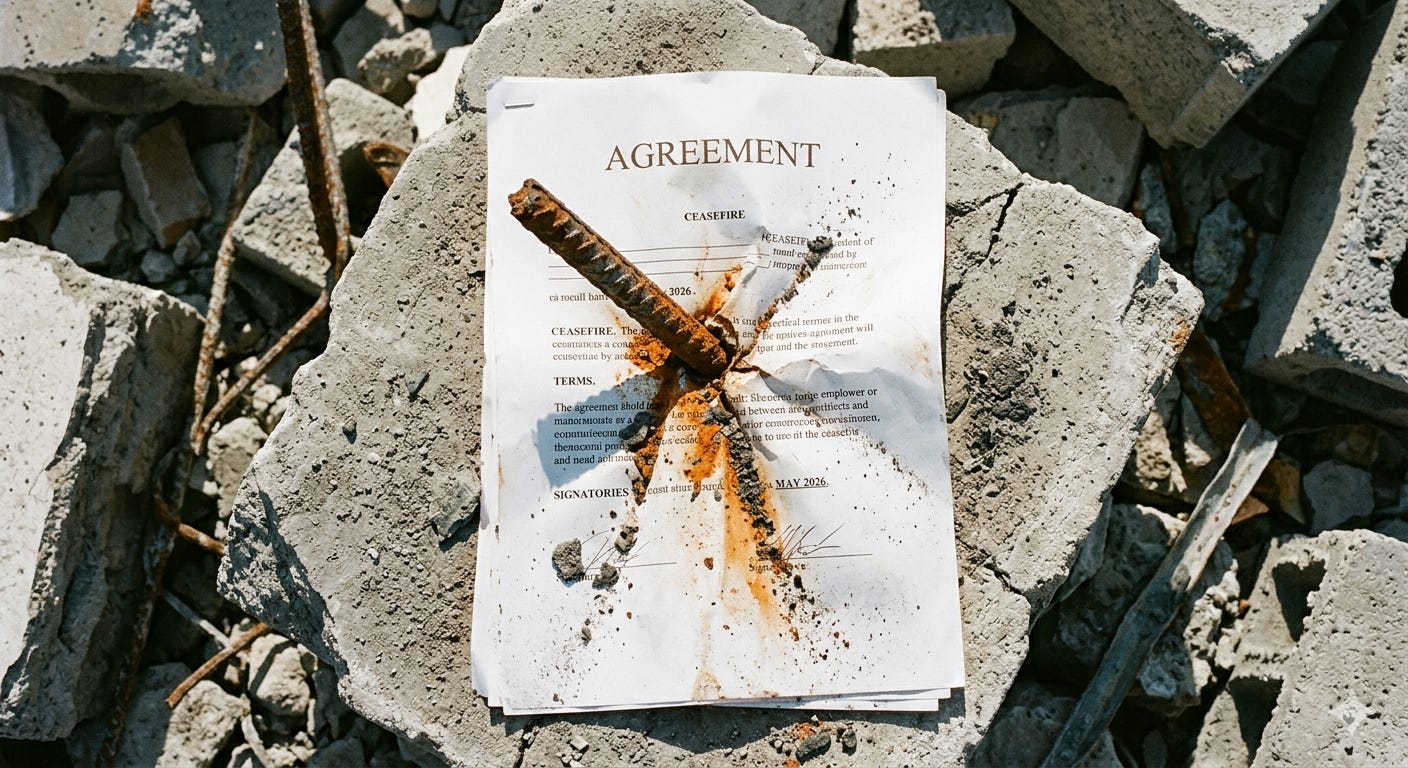
The killing of 24 people by Russia in a Kyiv apartment complex, along with other civilians elsewhere in Ukraine, following the 9 May ‘ceasefire’, has been presented by many commentators as Putin’s revenge for the humiliation he suffered at the hands of the Ukrainian president, Volodymyr Zelenskyy, and the permission to hold the military parade Zelenskyy granted.
This argument for some reason assumes that Russia would not have targeted a block of flats unless severely insulted. As if executing random civilians, although objectionable in itself, is nevertheless a reasonable course of action under specific circumstances. It also ignores the several hundred similar attacks Russia has perpetrated over the past four years, which the international community has accepted as a given.
What most of the commentators have missed though is that Russia has created a closed-loop demonstration of what happens when it wants to get something from the adversary and how its behaviour changes once it has got it. In essence, this is a perfect specimen of Russia’s approach to diplomatic processes: they demand something, threaten violence should they not get it, receive what they demanded in exchange for not perpetrating that violence, and then commit it anyway.
Although for many people familiar with Russia’s behaviour this is not new, the significance of the latest performance stems from the fact that the Kremlin managed to create a complete, observable and irrefutable argument short enough to be presented to the most ardent followers of the ‘we can negotiate peace with Russia’ camp.
Members of this camp have managed to ignore the late lamented Budapest Memorandum. They have disregarded that Russia, a permanent member of the UN Security Council, breaks the UN Charter daily. They have set aside the fact that Russia has violated every Geneva Convention — in other words, the entire corpus of international law governing the coexistence of nations. In their view, the war in Ukraine can be negotiated to an end because this time Russia would not break the agreement.
All the Russian rule-breaking has happened over a long period or has been muddied by disinformation campaigns implanting fake facts into real stories. As a result, even those who were present at the events are often not believed by those determined not to believe them.
This time is different. Russia demanded a ceasefire for 9 May, threatened Kyiv with annihilation should Ukraine not comply, enjoyed the ceasefire Donald Trump brokered, and then attacked Kyiv with everything it had once the ceasefire was over. All in the space of a few short days, and not just in full view of the entire world but, most importantly, under the watchful eye of both President Zelenskyy and the Ukrainian nation. Russia has created a perfect demonstration of cause and effect, an ‘if – then’ exercise: if Ukraine negotiates with Russia and fulfils its part of the agreement, then Russia will take what it was given and attack anyway.
Ukraine has had to publicly go along with the idea that peace can be magically achieved if only Russia can be persuaded to be happy. The mere existence of this sequence releases Kyiv from the obligation to pretend that peace with Russia can be negotiated as long as the Ukrainian side tries hard enough. This is also the point where any supporters of non-escalation lose the fig-leaf they have employed to ignore the argument, made by anybody who has ever been on the receiving end of Russian aggression, that Russia cannot be negotiated with.
Russia has effectively spent the last agreement it was ever going to get from Ukraine. After this, there will be no popular support for any agreement with Russia unless Russia can be forced to comply, and even then the force would have to be exercised only by Ukraine, nobody else. The only agreements Ukraine will ever sign with Russia are the ones it signs with a proverbial gun to Russia’s head.
No posts
Comments
Nothing yet. Say the first thing.
Sign in to join the conversation.