
Tansi/Hello — thank you for being here!
I have 9, 441 readers. 607 paying. That is amazing, but there’s still a big gap. And it’s the weight I carry every day, because I put my heart and soul into this work whethter I’m working from my home office, or in this case, putting in the hours to bring you this coverage while I’m on assignment in the Amazon :)
These stories exist because I refuse to let them disappear. I have spent 15 years on the ground; I have built the trust and repertoire that barely exists anywhere else. Which is why you won’t find this kind of coverage, the way I do it, anywhere else.
I need you in this with me now more than any other time.
That’s what truth and reconciliation looks like from where I’m standing.
Come step into the fire with me.
BECOME A PAID SUBSCRIBER TO INDIGENOUS INSIDER TODAY
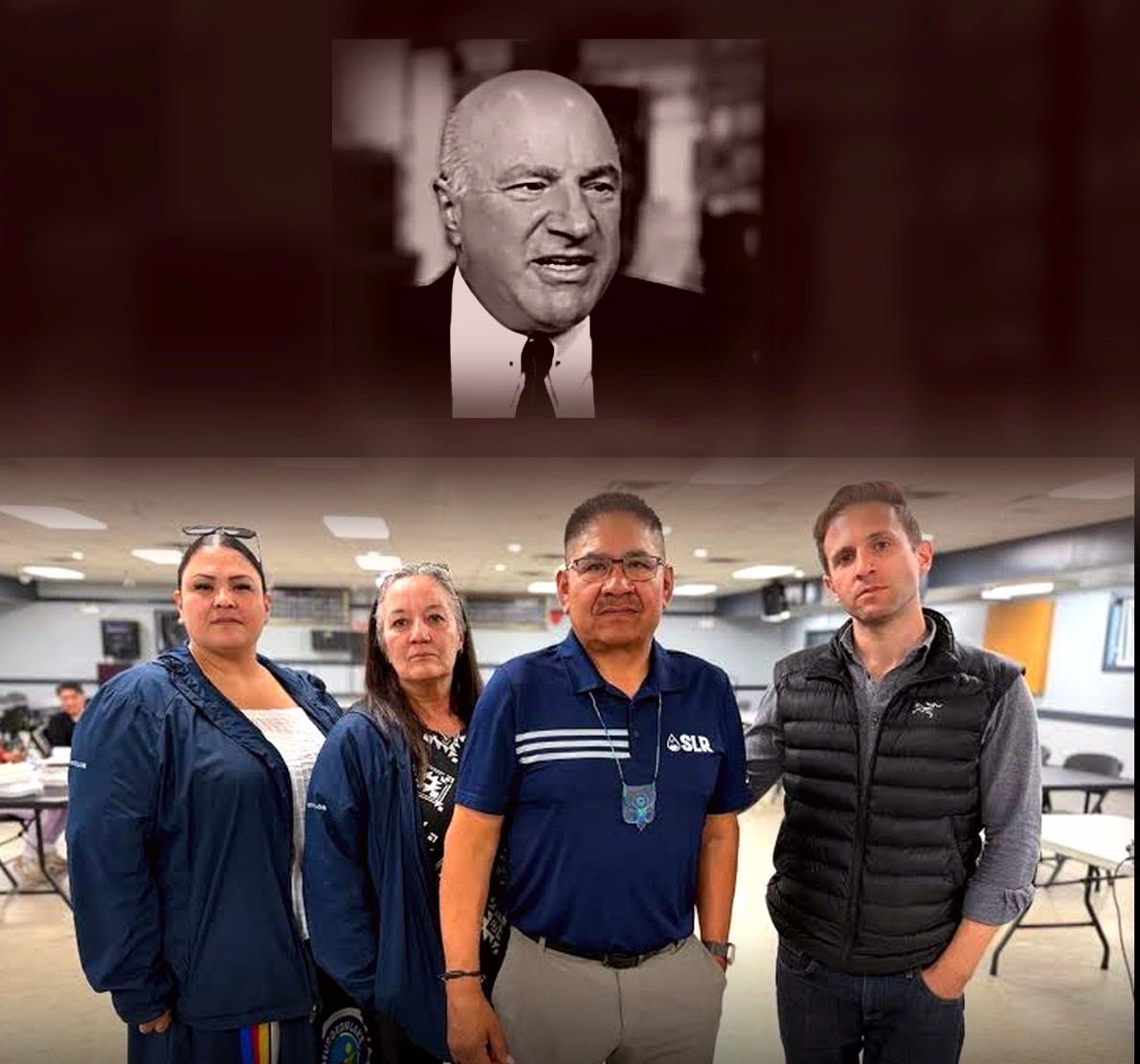
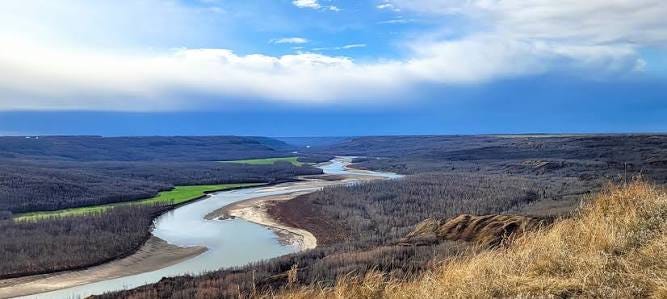
Remember Wonder Valley? The $70-billion AI data center Kevin O’Leary wants to plant in the boreal forest northwest of Grande Prairie, on the traditional and treaty territory of Sturgeon Lake Cree Nation? I told you back in May how Alberta’s government cleared every obstacle out of O’Leary’s way — no environmental review, no meaningful consultation, just a red carpet rolled out by Premier Danielle Smith for her friend from Mar-a-Lago.
Well, on August 13, something happened that doesn’t happen nearly often enough in this province. A court told O’Leary no.
The Alberta Court of King’s Bench dismissed an application by O’Leary Digital Limited (ODL) to strike down SLCN’s judicial review of the water license behind Wonder Valley. ODL tried to argue it should have been served notice of the Nation’s court challenge because it’s “directly affected” by the outcome. Justice P.K. Johal disagreed — on every single ground. ODL’s claimed interest in the water license, the judge found, is contingent and speculative, resting on a heavily redacted 59-page contract of which O’Leary’s company would only let five pages be read. The judge noted that when O’Leary’s Vice President Paul Palandjian was questioned under oath, he refused to hand over the rest.
That matters. It means the underlying fight — SLCN’s challenge to both the water license itself and Alberta’s decision that consultation wasn’t even required — is going ahead. It’s set to be heard in December.
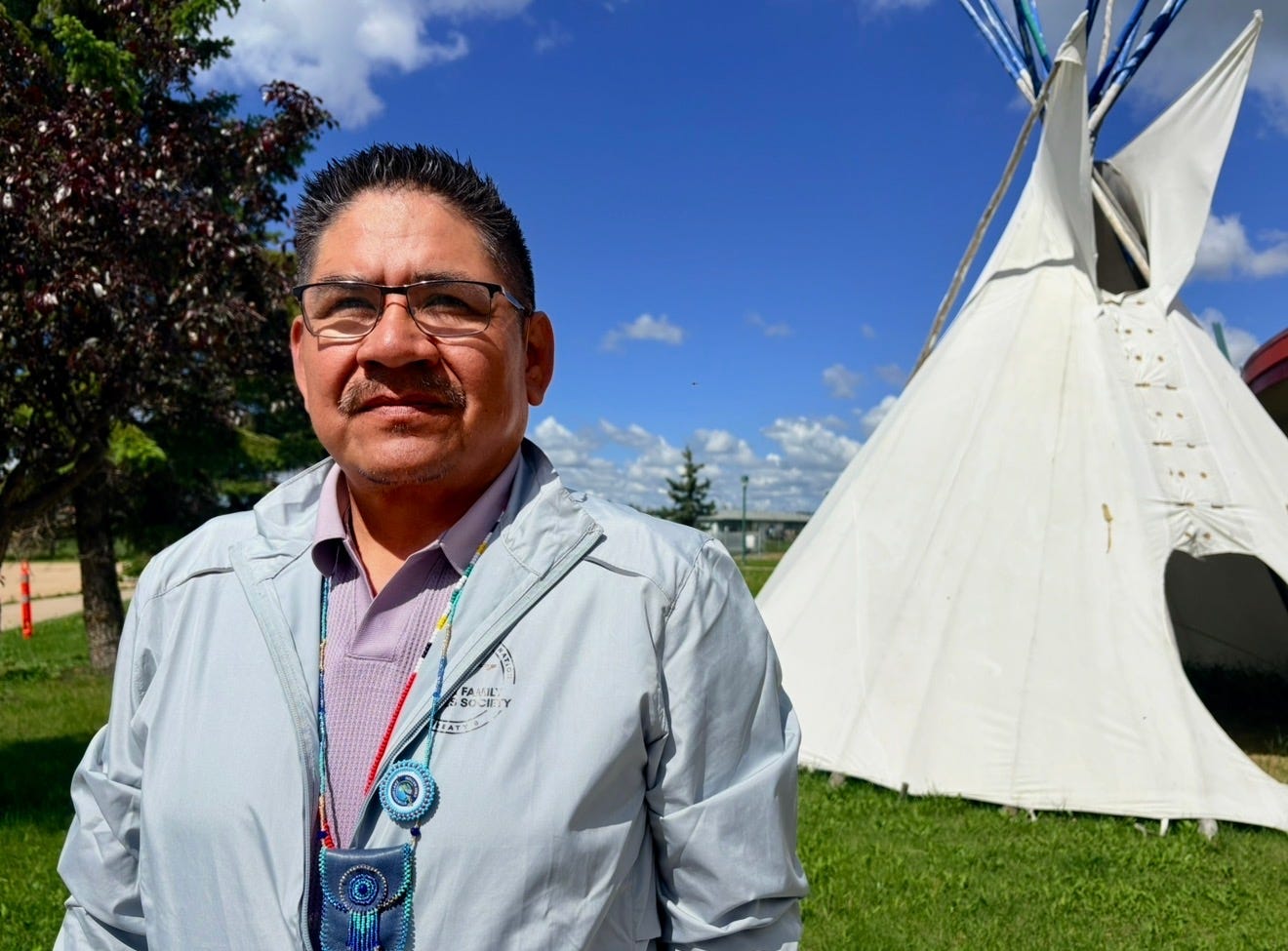
Chief Sheldon Sunshine, in a statement released the same day, said:
“O’Leary’s data centre here in Alberta is a mind-boggling, massive project, which the province has been shepherding through their regulatory system using the municipality to evade their duties to us.”
He’s right to call it that. Read the court file and you can watch it happen in real time: Greenview municipality applies for the water license instead of O’Leary’s company. Alberta’s Aboriginal Consultation Office quietly rules, not once but twice, that consultation with SLCN isn’t required. Meanwhile, O’Leary’s people are telling Chief Sunshine — in writing, on O’Leary Ventures letterhead — that “no approvals, licences, or permits have been applied for by or issued to O’Leary at this time.”
Here’s the part readers need to understand: the company behind Wonder Valley has spent nearly two years operating under a shell. It was incorporated in November 2024 as a numbered company, 2664755 Alberta Ltd. That’s the name that actually held the contract for the water license and land. It didn’t rebrand itself “O’Leary Digital Limited” until October 14, 2025 — one week after SLCN filed its judicial review application. Every letter Chief Sunshine received before that date came from “O’Leary Ventures,” a completely different, separate legal entity. So when SLCN went looking for who to serve with their court challenge, the company now suing them didn’t even exist under a name anyone could find. The judge herself noted this made it “unreasonable to expect SLCN to guess” who they were supposed to notify. That’s not an accident. That’s a numbered company hiding behind a name change, and SLCN spent the better part of a year asking straightforward questions and getting stonewalled and denials for it.
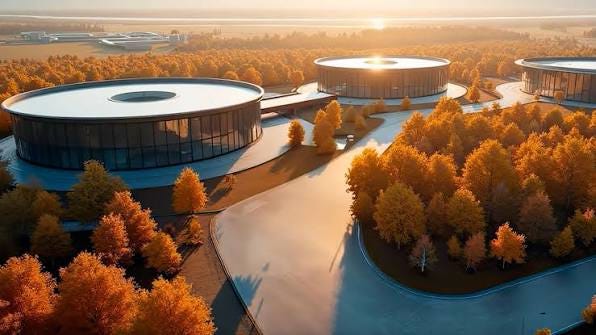
While that was unfolding, Alberta’s Environment Ministry quietly exempted Wonder Valley from a provincial environmental impact assessment altogether. The director’s letter, dated March 31, 2026, states that “further assessment of the activity is not required” and no environmental impact assessment report will be prepared — for a project that could eventually draw seven to nine gigawatts of power, enough to run several major Canadian cities at once.
Let that sit with you. A project of this scale, and the province decided it didn’t even need a formal look.
This isn’t a community that showed up to a public meeting once and called it a day. SLCN appealed the water license to the Environmental Appeal Board — and lost, because the board ruled they hadn’t proven they’d be “directly and adversely affected” by a data center pulling millions of cubic metres a year from the Smoky River watershed. That’s the same water Sturgeon Lake’s own members drink, and it’s the same water the moose, fish, and other wildlife their families depend on for food need to survive too. It’s not just a resource for people. It’s the water an entire ecosystem here relies on. They wrote to the premier. They sent a cease-and-desist. And just two days before this court ruling landed, on August 11, SLCN held its own community meeting to lay out for band members everything the Nation has pieced together about Wonder Valley.
Chief Sunshine came out of that meeting still worried. As he told CBC News:
“We have serious concerns and we’re left to our own devices, our own assumptions.”
His lawyer Francco De Luca laid out the specifics that night — heat, noise, wildlife impacts — on a project earmarked for roughly 64 square kilometres along Highway 40, land the Nation describes as the heart of its territory, where hunting and trapping still happen today.
And that land isn’t abstract to the SLCCN. Sunshine told CBC News that his family hosted a traditional camp just north of the proposed Wonder Valley site earlier this month, harvesting medicine plants the way they always have. His 12-year-old grandson took down his first moose out there. As Sunshine told CBC:
“That was my grandson’s first moose. For our family, that’s pretty significant.”
That’s what’s at stake here. Not a hypothetical. A 12-year-old’s first moose, on the exact land Kevin O’Leary wants to turn into a server farm.
Following the ruling, Chief Sunshine didn’t beat around the bush about what the province’s approach amounts to:
“The province’s answer is ‘just trust us.’”

SHARE THIS STORY WITH A FRIEND:
He’s asking for the same thing any of us would ask for: show us the designs. Show us the technical reports. Let us assess this the way every other project of this scale gets assessed.
Here’s what gets me. This is not O’Leary’s first data center rodeo, and it is not the first time his “trust me” routine has blown up in his face.
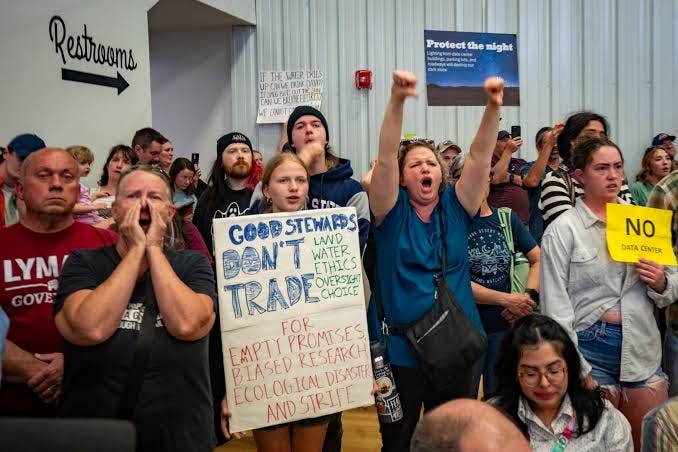
O’Leary is running an almost identical playbook in Box Elder County, Utah, where his company is trying to build a sister project — 40,000 acres, more than double the size of Manhattan, up to nine gigawatts of power. It set off a firestorm. Local commissioners were unseated over it. Physicists compared the heat the site would generate to roughly two dozen atomic bombs a day. And after months of backlash, O’Leary went on television and admitted his company botched the whole thing, telling MS NOW:
“We really screwed this up.”
He’s since promised Utah residents more transparency — data on heat, noise, water use, the works — so they can judge the project for themselves.
Funny thing. Sturgeon Lake Cree Nation has been asking for exactly that kind of information for close to two years now. A copy of the purchase agreement. Confirmation of what licenses O’Leary’s company actually holds. Basic technical details about a project on their own territory. And they’ve gotten redacted contracts, denials, and silence — right up until a judge forced the issue in court.
It’s worth asking why non-Native ranchers and suburban homeowners in Utah get a public mea culpa and a promise of more disclosure, while a Treaty Nation in Alberta gets a thirty-minute Zoom call and a numbered company playing hide-the-ball with its own lawyers. Make of that what you will.
None of this should be surprising, if we’re honest about who O’Leary is. He’s not a policymaker, an engineer, or a treaty partner. He’s a shark, literally — a reality TV investor who built a brand out of “Shark Tank” and “Dragons’ Den,” selling himself as the guy who tells you the hard truth about your business so he can take a cut of it. He’s been described as Canada’s answer to Donald Trump: a rich, bombastic businessman turned political operator, a Trump ally who brought Premier Smith down to Mar-a-Lago to talk energy policy with the incoming administration. The comparison isn’t perfect — nobody thinks he’s about to become prime minister — but the instincts are the same. Move fast, frame regulation as the enemy, treat the people standing on the land as a communications problem to be managed rather than rights holders to be dealt with honestly.
Right now, O’Leary has dollar signs in his eyes and the entire tech industry racing to lock down power, water, and land before someone else does. The numbers on AI’s environmental footprint are already staggering: globally, data centers pulled in roughly 415 terawatt-hours of electricity in 2024 alone, and the UN projects that figure will more than double by 2030, with a water footprint that could soon rival the basic domestic water needs of over a billion people. That’s the industry Wonder Valley wants to be part of. A single project promising to burn enough natural gas to release an estimated 17 million tonnes of CO2 a year, on a watershed Sturgeon Lake’s own court filings describe as already under stress from drought and shortage advisories, isn’t an abstraction. It’s a preview of what “AI infrastructure” is going to keep asking of rivers, land, and Indigenous rights holders across this continent unless someone makes it stop and actually answer for it.
To be clear about what August 13 did and didn’t do: it didn’t quash the water license. It didn’t kill Wonder Valley. What it did is keep the courtroom door open. SLCN’s judicial review — the one that could still overturn the license and force Alberta to actually consult — moves ahead to a December hearing. O’Leary Digital tried to slam that door shut before the case could even be heard on its merits, and a judge told them their interest in the outcome was too flimsy, too contingent, too wrapped up in their own redacted paperwork, to earn them a seat blocking the proceeding.
That’s not nothing. And it’s not happening in a vacuum. Premier Smith has spent this year pushing toward a fall referendum on Alberta separating from Canada — a move that legal experts and First Nations across this province agree would tear straight through Treaty rights, since those treaties were signed with the Crown in right of Canada, not a province that could someday walk out the door. Sturgeon Lake Cree Nation was the first to fight it in court, filing its own lawsuit against the province back in January 2026 and arguing that no separation of Alberta from Canada can happen without First Nations’ consent, since Treaty 8 predates the province itself. Chief Sunshine stood outside the Edmonton courthouse in April and told reporters that First Nations aren’t going anywhere.
The record on how that fight has gone so far is mixed, and it’s worth being straight about it. In May, Justice Shaina Leonard quashed Elections Alberta’s approval of the separatist petition — but that specific ruling came in a judicial review brought by Athabasca Chipewyan First Nation and the Blackfoot Confederacy, two of the three other First Nations who filed parallel legal challenges alongside Sturgeon Lake. In a separate decision released the same week, Leonard denied Sturgeon Lake’s own request for an injunction. Different case, same judge, same week, different outcome. But make no mistake: this was a coordinated First Nations legal front, with Sturgeon Lake out front from day one, and the bottom line is the same regardless of which case’s name is on the ruling — a court found the province failed its duty to consult First Nations and ignored an earlier finding that separation would violate treaty rights. Smith has vowed to appeal. So while her government tells First Nations “just trust us” on a data centre in their backyard, it’s simultaneously fighting them in court over whether their treaty rights survive a vote to break up the country. That’s the same premier. That’s the same pattern. Ask whose interests keep winning out.
Sturgeon Lake Cree Nation is not a giant. It’s a Nation of a few thousand people going up against a $70-billion project, a celebrity billionaire with a direct line to the premier’s office, and a provincial government that has bent over backwards to clear his path. And they’re still standing. They out-lawyered O’Leary’s team in court. They packed a community hall to make sure their own members had the facts industry wouldn’t hand them. They keep showing up — to Edmonton courtrooms, to appeal boards, to their own land, moose rifle in hand. This is what it looks like when a small nation refuses to be steamrolled by people who assumed money would be enough. It won’t be the last round, and Sturgeon Lake isn’t going anywhere.
Brandi Morin is a multi-award-winning Cree/Iroquois/French journalist from Treaty 6 territory in Alberta. She is the founder of Indigenous Insider on Substack and the author of the national bestselling memoir Our Voice of Fire.
Sources:
[Sturgeon Lake Cree Nation v Alberta (Minister of Indigenous Relations), 2026 ABKB 569](https://www.theenergymix.com/wp-content/uploads/2026/08/Sturgeon-Lake-Cree-Nation-v-Alberta.pdf)
[CBC News, “’We have serious concerns,’ northern Alberta chief says after hosting community meeting on Wonder Valley,” Aug. 12, 2026](https://www.cbc.ca/news/canada/edmonton/sturgeon-lake-cree-nation-wonder-valley-engagement-session-9.7305052)
Alberta Environment and Protected Areas, EIA exemption letter re: Wonder Valley Data Center Project, March 31, 2026
[Yahoo Finance/Moneywise, “Kevin O’Leary says he botched the messaging on his Utah data center,” Aug. 13, 2026](https://finance.yahoo.com/technology/articles/kevin-oleary-says-botched-messaging-161000532.html)
[TVO, “Canada Already Has Donald Trump’s American-Style Politics”](https://www.tvo.org/article/canada-already-has-donald-trumps-american-style-politics)
[UN University INWEH, “Rising Emissions, Depleting Water and Vanishing Land,” June 2026](https://unu.edu/inweh/news/environmental-cost-of-AIs-Enrgy-use-carbon-water-and-land-footprints)
[CBC News, “Q&A: Why treaty rights and First Nations consultation stand in the way of an Alberta separation referendum,” May 17, 2026](https://www.cbc.ca/news/canada/edmonton/independence-referendum-rulings-explained-9.7201959)
[CBC News, “Judge overturns Elections Alberta’s approval of separation referendum petition,” May 14, 2026](https://www.cbc.ca/news/canada/edmonton/judge-quashes-decision-to-approve-separation-petition-9.7198553)
[Alberta Native News, “Court of King’s Bench hears Sturgeon Lake’s arguments for separatist petition injunction,” April 8, 2026](https://www.albertanativenews.com/court-of-kings-bench-hears-sturgeon-lakes-arguments-for-separatist-petition-injunction/)
[CBC News, “First Nation suing Alberta over changes enabling separation petition,” Jan. 6, 2026](https://www.cbc.ca/news/canada/edmonton/sturgeon-lake-alberta-separation-lawsuit-9.7034577)
No posts
Comments
Nothing yet. Say the first thing.
Sign in to join the conversation.