
A federal appeals court recently ruled most of Trump’s sweeping global tariffs illegal, saying they exceed presidential authority. Yet, they remain active until October 14, 2025, as the administration pushes for a Supreme Court appeal.
Far from backing down, Trump has doubled down — framing tariffs not just as an economic tool, but as a national strategy.
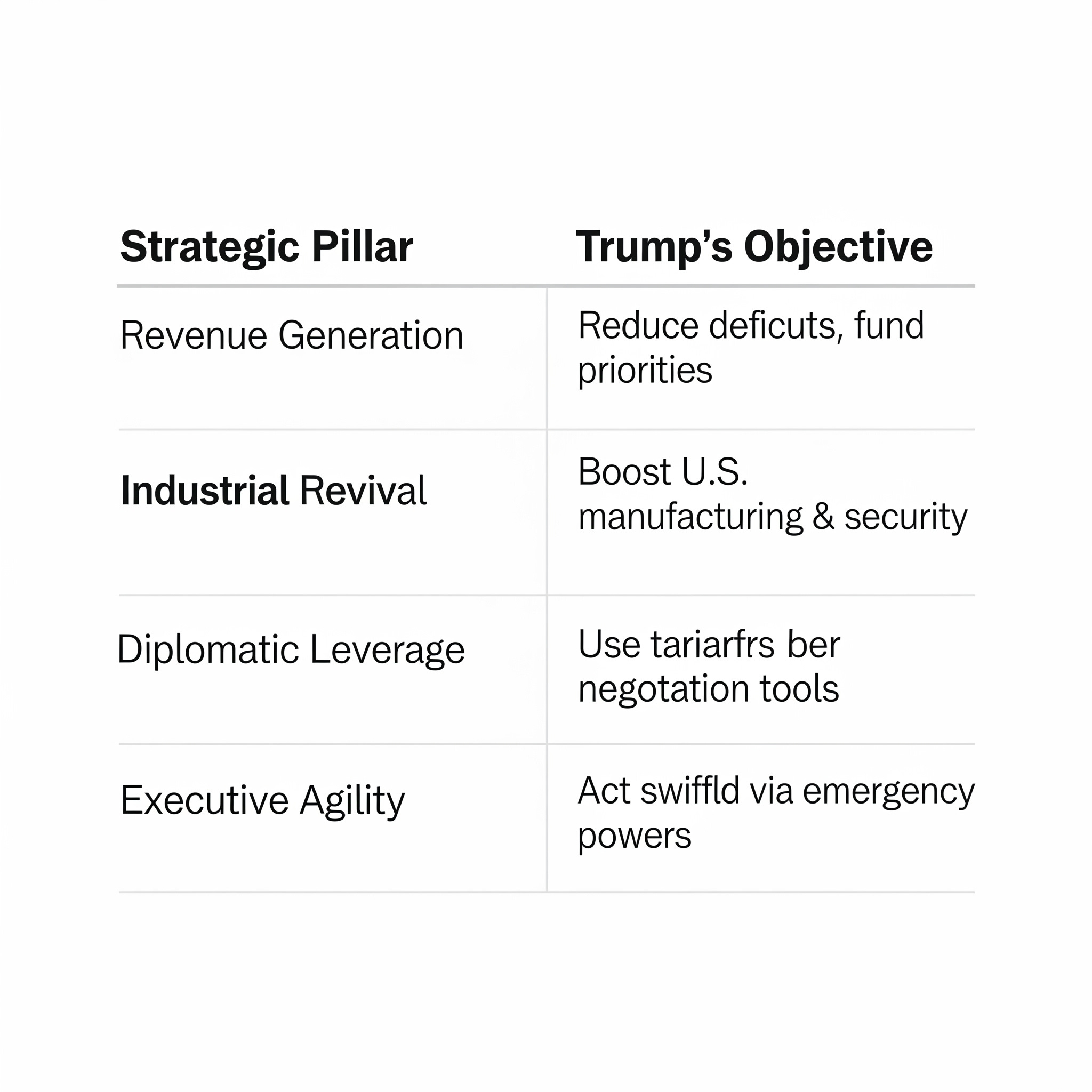
1. Revenue & Deficit Control
Tariffs generate direct government income.
Projected to reduce the U.S. deficit by trillions over the next decade.
Framed as part of America’s “economic independence.”
2. Reviving Domestic Industry & Security
Steep tariffs (10–50%) imposed on steel, aluminum, semiconductors, autos, and pharma.
Justified under national security grounds.
Aim: Reshore critical industries and reduce reliance on foreign supply chains.
3. Trade Leverage & Negotiation Power
Guided by the Mar-a-Lago Accord framework.
Tariffs tied to currency policy and defense agreements.
Used as bargaining chips in international diplomacy.
4. Executive Agility Through Emergencies
Trump invoked the International Emergency Economic Powers Act (IEEPA).
Allows swift action without Congress — though heavily contested in court.
Consumer Burden: Higher household costs (up to several thousand dollars annually).
Global Retaliation: Countries including China, the EU, and Canada counter with their own tariffs.
Legal Fragility: Courts question if emergency powers can justify tariffs.
At a Glance
If the Supreme Court overturns the tariffs, Trump’s strategy faces a serious reset.
If upheld, tariffs may become the centerpiece of U.S. trade policy for years, reshaping global commerce.
Comments
Nothing yet. Say the first thing.
Sign in to join the conversation.