
BlackRock was founded in 1988 by Larry Fink, Robert Katipo, Susan Wagner and a few others, initially focused on fixed income, risk management and institutional asset management.
Over time it expanded its services, moving into multi-asset investing, ETFs, wealth management, etc. Innovation in risk tools and expanding client base were key.
Key growth drivers
Strategic Acquisitions
BlackRock made several big acquisitions which changed its scale:In 2009, it acquired Barclays Global Investors (BGI) for about US$13.5 billion. That brought in iShares (their ETF platform), among others, which dramatically boosted BlackRock’s assets under management (AUM).
Other acquisitions: eFront (2019) — a software / technology platform for alternative assets; Aperio Group (2021) for custom index equity & separately managed accounts; Kreos Capital (2023) for growth & venture debt; Global Infrastructure Partners (2024) to expand its infrastructure investment platform; HPS Investment Partners (private credit) etc.
Technology & Risk Analytics (“Aladdin”)
BlackRock built a powerful technology platform called Aladdin (Asset, Liability, Debt, and Derivative Investment Network). It does risk / portfolio analytics, helps clients understand risks, exposures, etc. Aladdin became a competitive advantage.
Scale, Product Diversification & ETFs
The rise of passive investing and ETFs was leveraged strongly. iShares (from BGI) became one of the leading ETF platforms globally.
Also, expanding into alternatives (real assets, private credit, infrastructure) gave BlackRock exposure to higher-margin products.
Global Expansion & Institutional Clients
Working with pension funds, sovereign wealth funds, institutional clients, governments. Increasing presence in many countries. Regulatory approvals where needed.
Size & Influence Today
As of 2025, BlackRock is widely reported to manage around US$12.5 trillion in assets under management
It is considered the world’s largest asset manager.
Merrill Lynch Investment Managers (MLIM) – acquired in 2006.
Barclays Global Investors (BGI) – acquired in 2009 (this brought in iShares, one of the world’s largest ETF businesses).
FutureAdvisor – acquired in 2015 (a robo-advisory platform).
eFront – acquired in 2019 (~US$1.3B; a software platform for alternative investments).
Aperio Group – acquired in 2020 (customized index & tax-efficient equity portfolios).
Kreos Capital – acquired in 2023 (venture and growth debt provider).
Global Infrastructure Partners (GIP) – acquired in 2024 (major infrastructure investment firm).
HPS Investment Partners – acquisition deal announced (expands private credit business).
Through its ETFs and funds, BlackRock holds huge stakes in the world’s biggest corporations:
NVIDIA – ~$301B stake.
Microsoft – ~$289B stake.
Apple – ~$235B stake.
Amazon – ~$156B stake.
Meta Platforms (Facebook/Instagram/WhatsApp) – ~$122B stake.
Broadcom – ~$104B stake.
Alphabet (Google) – ~$140B combined (Class A & C).
Tesla – ~$65-70B stake.
JPMorgan Chase – ~$60-65B stake.
UnitedHealth Group – large health sector holding.
Eli Lilly & Co. – large pharma exposure.
Visa – big stake in fintech/payment sector.
Mastercard – similar large holding in payments.
Johnson & Johnson – major healthcare holding.
Merck & Co. – pharma exposure.
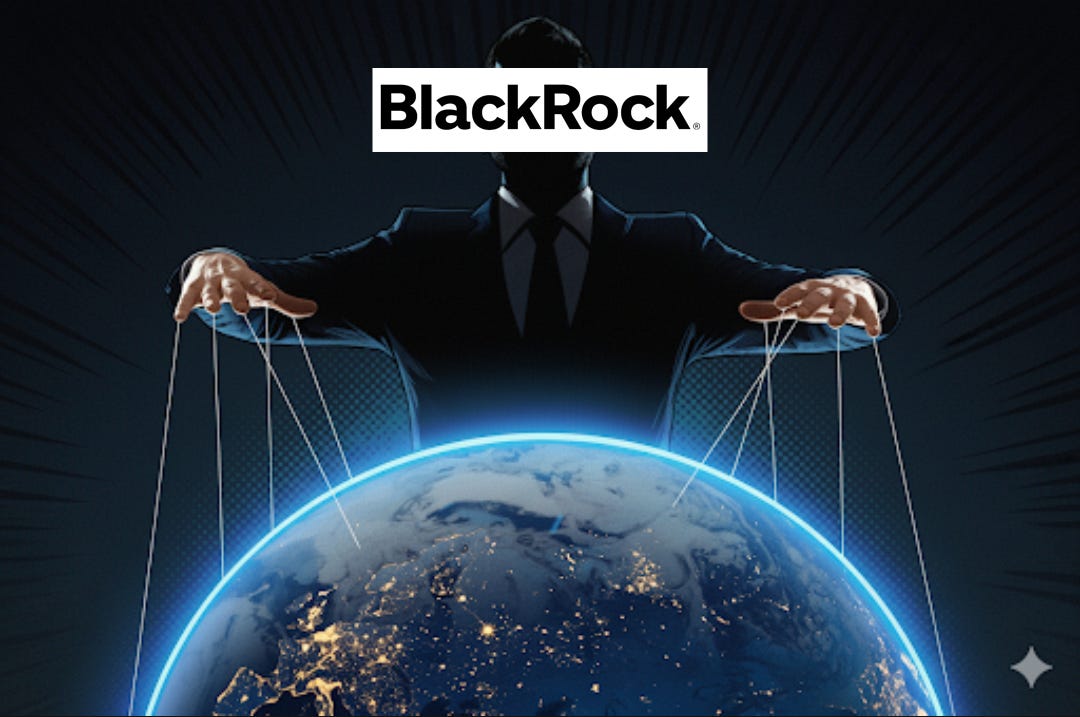
Because of the size and the share of many major companies BlackRock holds, it has influence in corporate governance matters (proxy voting, ESG policies etc.).
There are regulatory and political concerns about concentration of power: that few very large asset managers could influence markets, policy, or systemic risk.
Balancing growth in passive vs active investing; managing risks (market, regulatory, geopolitical) especially as the world is pushing for sustainability / ESG.
Comments
Nothing yet. Say the first thing.
Sign in to join the conversation.