
If you’ve been working for over a decade, you’ve already seen the world change in ways no one predicted.
When I joined the workforce, flip phones were still in fashion, social media was considered a distraction, and the most powerful companies on the planet were oil and gas giants. In the space of 10 years, entire industries have been upended and new jobs titles created.
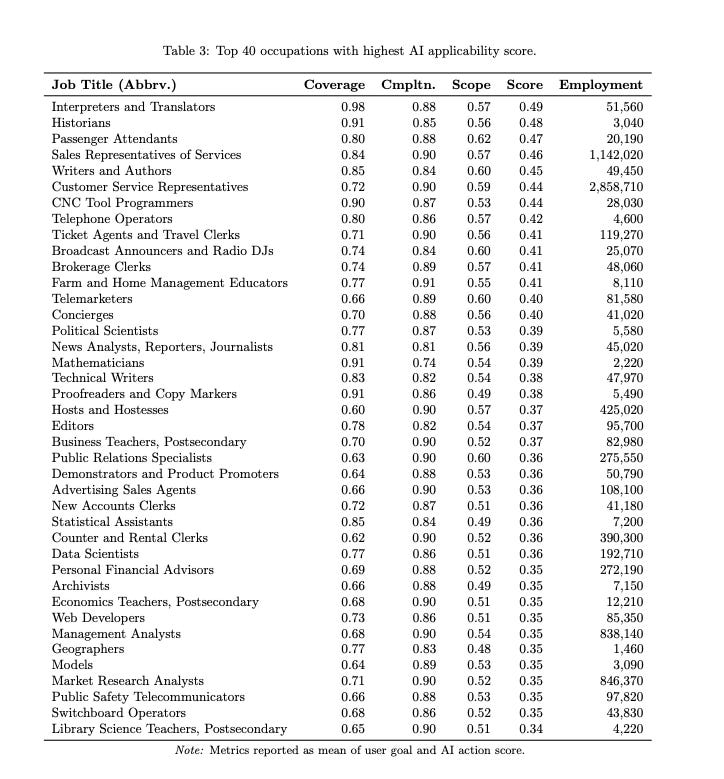
It’s tempting to try and predict where we’ll be in the next 5-10 years. But with AI transforming nearly every sector in real-time, that feels like a fool’s errand.
So instead, let’s look backward at how “research” as a career path came to be. History may not offer clear forecasts but it gives us patterns and from patterns emerge clues, warnings, and possibilities.
It is the year 900CE. A Benedictine monk dips his quill into ink and begins to copy a manuscript he did not write, in a language he only half understands.
Centuries later, on the dry plains of northern Nigeria, a healer observes which herbs attract flies and which dont, committing the results not to paper but to memory.
Across oceans, an aristocrat in an embroidered coat peers into a brass telescope, sketching the strange moons of Jupiter.
And now, in a co-working lab in Nairobi, a young woman, Dr Lara, trains an algorithm to predict rainfall patterns based on satellite data and centuries-old farming calendars.
They are all, in their own way, researchers though the term would be foreign to all but Dr Lara.
What unites them is the desire to know and understand the world.
Research as a career, something you can apply for, get paid to do and eventually retire from, is a recent invention. Historically, researchers have been philosophers, priests, physicians, or simply eccentrics with enough money to indulge their curiosities. The idea that society should pay someone to ask questions, with no immediate promise of useful answers, represents one of the most remarkable shifts in civilization of the past few centuries.
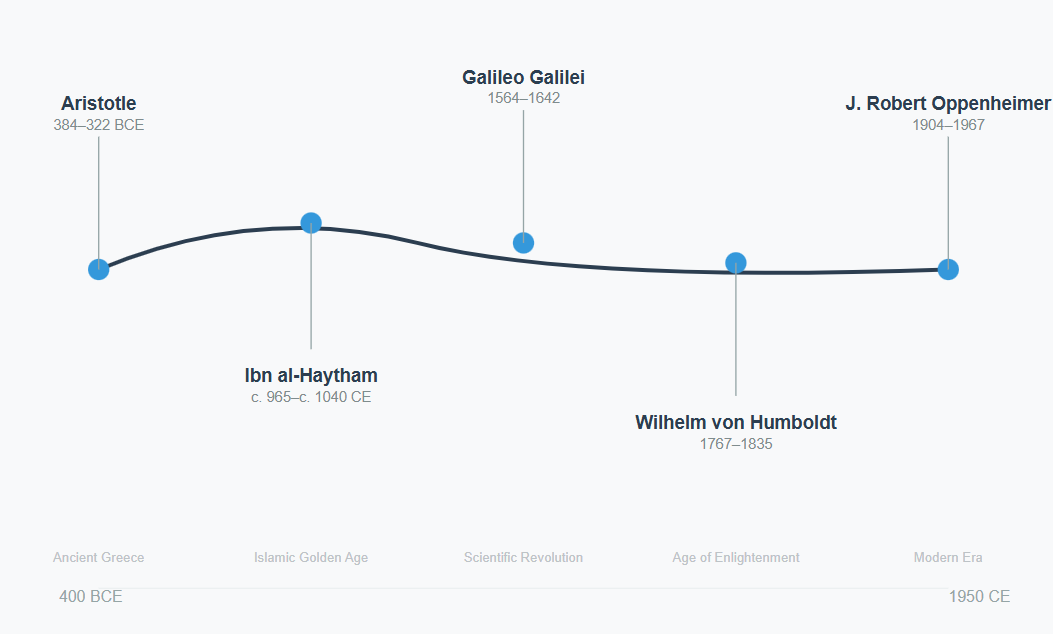
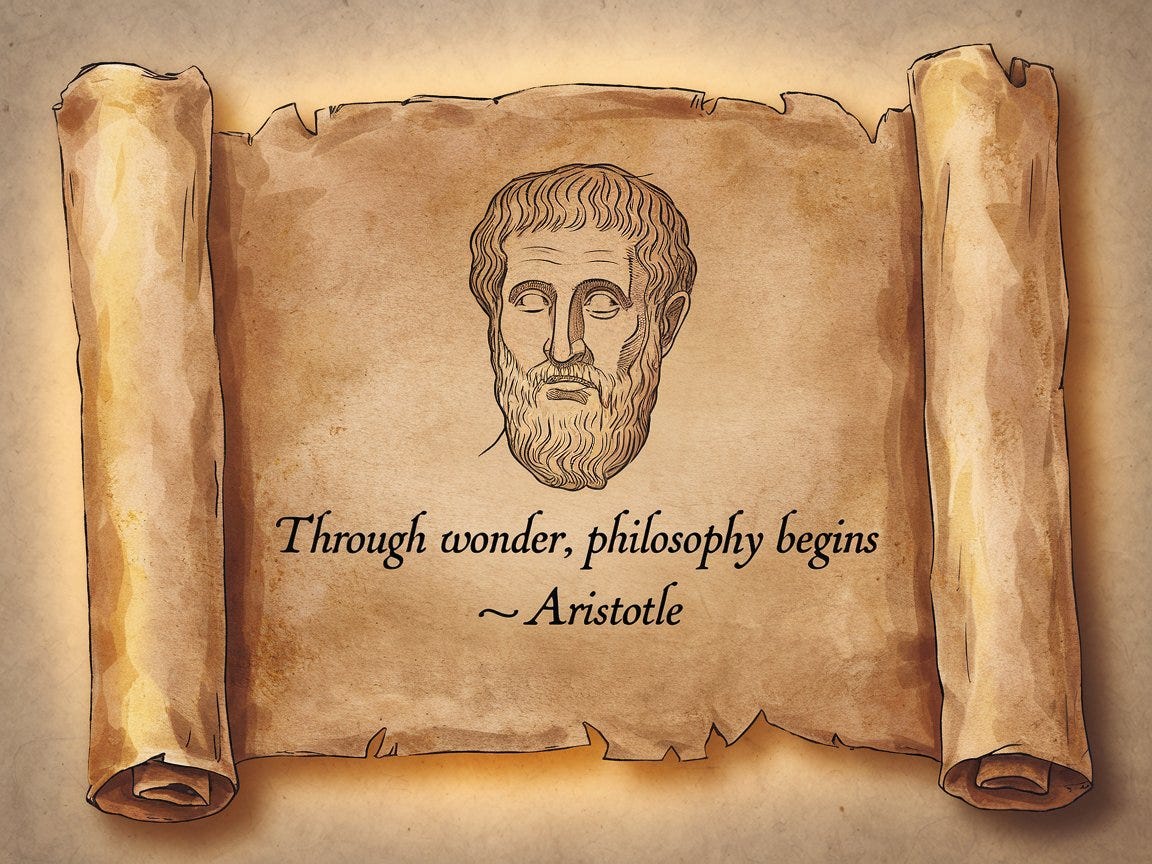
Consider Aristotle, that relentless cataloger of the natural world in fourth-century Athens. By day, he might tutor the young Alexander (who would later become "the Great"), but his real passion was observing everything, from the mating habits of bees to the embryonic development of chickens. Aristotle was perhaps history's first recognizable research obsessive, the kind of person who would dissect a squid just because he needed to know how it worked.
Yet Aristotle was not a "researcher" in any sense we would recognize. He was a philosopher, supported by wealthy patrons and the occasional royal stipend, pursuing knowledge as a gentleman's calling.
Founded around 300 BCE, the Library of Alexandria was less a library than a think tank; a place where the rulers of Egypt gathered the world's knowledge and paid scholars to expand it. Here, Eratosthenes remarkably calculated the circumference of the Earth using shadows and geometry, while Euclid organized mathematical principles that would be taught in classrooms for the next two thousand years.
But even these scholarly superstars were essentially court appointments, intellectuals in residence whose job security depended on royal favor. They were pursuing knowledge in service of imperial prestige rather than as an end in itself.
The fall of Rome scattered the ancient world's intellectual apparatus, but the impulse to understand did not disappear. It simply moved into the monasteries and madrasas where monks and Islamic scholars preserved, translated, and occasionally expanded upon the classical texts. Here, research became intertwined with religious devotion.
In the Islamic world, figures like Ibn al-Haytham were conducting experiments that would not have been out of place in a modern laboratory. Working in eleventh-century Cairo, Ibn al-Haytham developed rigorous methods for testing hypotheses about light and vision, using dark chambers etc. His insistence that theories must be verified through experimentation rather than accepted on authority, established him as perhaps the world's first true empirical scientist, five centuries before the European Renaissance.
Yet Ibn al-Haytham was a court astronomer and mathematician, supported by the Fatimid caliphs because his work had practical applications for navigation and timekeeping. His research was a byproduct of his official duties.
The founding of universities in Bologna, Paris, and Oxford during the eleventh and twelfth centuries marked the beginning of something new: institutional spaces dedicated primarily to learning and teaching rather than prayer or governance. But these early universities were essentially trade schools for the medieval professions of training lawyers, doctors, and priests. The idea of university faculty conducting original research was still centuries in the future. Professors were paid to transmit existing knowledge, not to create new knowledge.
The transformation of research from hobby to profession required a fundamental shift in how society viewed the pursuit of knowledge. And that shift came from one unlikely rebel.
Galileo Galilei represented something genuinely new in human history: a person whose primary occupation was discovering things that no one had known before. When he published his observations in 1610, he was asserting that the systematic observation of nature could reveal truths that contradicted ancient authority and even religious doctrine.
This was a dangerous proposition, as Galileo learned when he was placed under house arrest. But the first domino had already fallen. By the time of Galileo's death in 1642, the idea that knowledge could advance through systematic observation and experimentation had taken root across Europe.
The Royal Society of London, founded in 1660, represented the institutionalization of this new approach to knowledge. When twelve men including Robert Boyle and Christopher Wren gathered to create a "college for the promoting of physico-mathematical experimental learning," they were essentially inventing the prototype of the modern research institution. Their motto, Nullius in verba ("take nobody's word for it"), declared war on the authority-based knowledge of the medieval world.
In 1662, the Society appointed Robert Hooke to devise and demonstrate experiments at the Society's weekly meetings, making him, in essence, the world's first staff scientist.
Lastly, the Society's Philosophical Transactions, launched in 1665, established the model of scientific publication that persists today: researchers would conduct experiments, write up their results, and submit them for evaluation by their peers. This created both the infrastructure and incentives necessary for research to become a self-sustaining intellectual ecosystem.
The transformation of research from aristocratic pastime to middle-class profession required an educational revolution. Wilhelm von Humboldt provided it in 1810 when he reimagined the University of Berlin around a radical premise: professors should create knowledge, not merely transmit it.
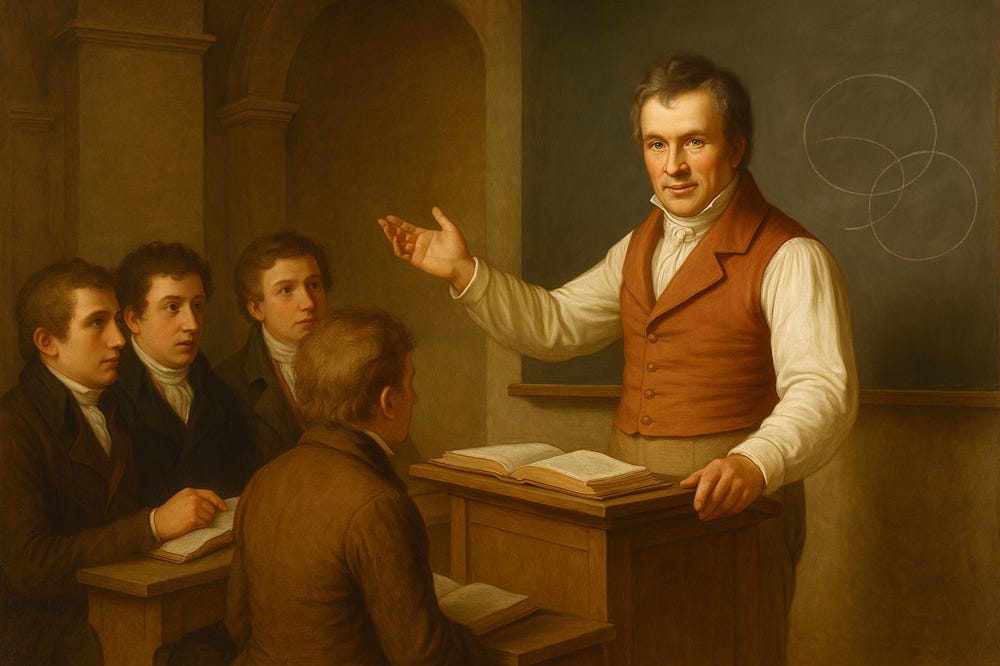
Humboldt's radical vision was that universities should unite teaching and research in a single institution. This "Humboldtian ideal" as it was called, spread across Europe and America like wildfire, fundamentally changing what it meant to be a scholar. Suddenly, students weren't passive receptacles for ancient wisdom but apprentices in active discovery.
The German system also led to the creation of the modern PhD degree, formalizing the training of researchers which required students to conduct original investigations under faculty supervision. This mentorship model still governs scientific training today.
By the late nineteenth century, the word "scientist" had been coined by William Whewell in 1833 to describe this new class of professional knowledge-creators.
The period also saw the creation of specialized scientific societies and journals for each emerging discipline, providing researchers with communities of peers and venues for publication.
There's no way to discuss science without war, particularly World War 2.
By the twentieth century, it became evident that scientific knowledge could determine the fate of nations. The Manhattan Project, a sprint to create the world's first atomic bomb, took 130,000 people, $2.2 billion (in 1940s dollars), and showed that with sufficient resources researchers could achieve the near impossible.
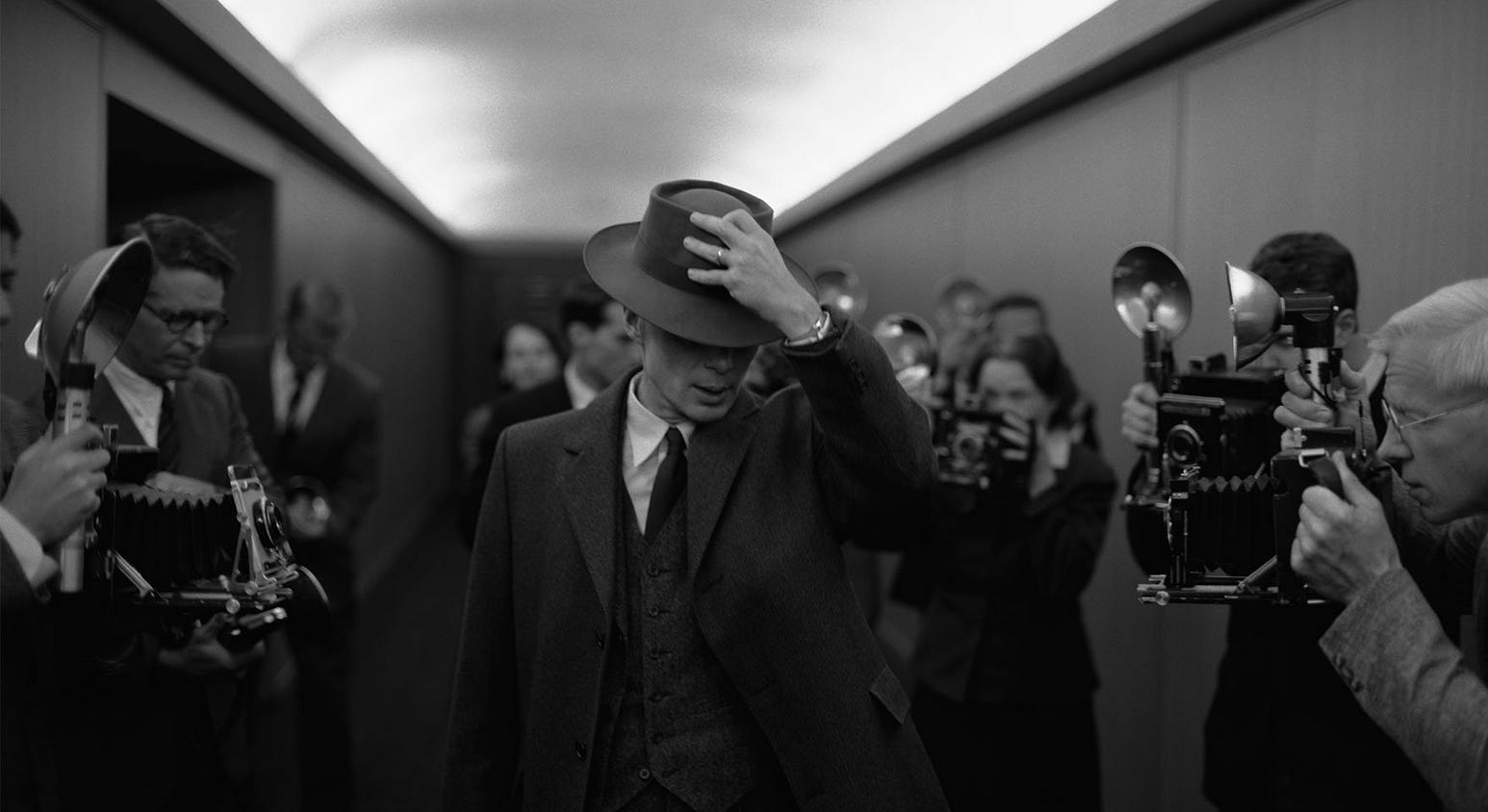
This was the birth of "Big Science".
The creation of the National Science Foundation in 1950 marked something revolutionary: for the first time, a major government systematically funded curiosity-driven research simply because it might eventually prove beneficial.
The Cold War supercharged this commitment to research. The Soviet Union's launch of Sputnik in 1957 triggered massive American investments in scientific education and research infrastructure. Universities expanded rapidly, creating thousands of new faculty positions. National laboratories were established to pursue everything from particle physics to space exploration. The number of people employed as professional researchers grew exponentially.
This period ~ 1945 to 1980 ~ became the golden age of research careers. Funding was relatively abundant, job security was strong, and scientists enjoyed enormous public prestige. The Apollo program, which put humans on the moon, represented the climax of this era. But the golden age also had complications. The massive expansion of research training created far more PhDs than the system could absorb in permanent positions.
The Internet, initially developed by researchers for researchers, transformed how knowledge is created and shared.
Projects like the Human Genome Project and the Large Hadron Collider at CERN demonstrated that the most ambitious research goals now required international collaboration on an unprecedented scale. The Human Genome Project, completed in 2003, involved researchers from six countries working together to map human DNA, sharing their data freely online. The result was accelerated discovery that would have been impossible under the old model of competitive, secretive research.
And then we have AI, perhaps the most transformative development of the digital age.
Machine learning algorithms can now analyze datasets far too large for human comprehension and identify patterns that would elude human researchers. DeepMind's AlphaFold, which solved the fifty-year-old problem of protein structure prediction, represents a new kind of research breakthrough: one achieved primarily by algorithms rather than human insight.
This raises profound questions about the future of research careers. If machines can conduct certain types of investigations more efficiently than humans, what role will human researchers play?
From this brief history lesson, three forces have consistently shaped research careers:
Relevance by Association: Over the past 200 years, “researcher” has survived by attaching itself to powerful institutions (universities, states, industries).
Who Pays Shapes the Questions: From kings to caliphs to corporations, research has always followed the incentives of its funders. The fantasy of pure, disinterested inquiry remains a fantasy.
New Tools Rewrite the Rules: The telescope, the printing press, the microscope, the internet, each expanded the frontier of what could be known, and who could know it. AI will transform research too.
Demand Outpaces the System: The postwar surge in Ph.D.s produced more researchers than academia could absorb, exposing the rising costs of higher education and the fragility of research careers. Precarity has been baked into the enterprise ever since.
We dont know how much research careers will change. But if I could take one bet, it’s that we will see more of the creator-researcher hybrid.
The Creator-Researcher Era
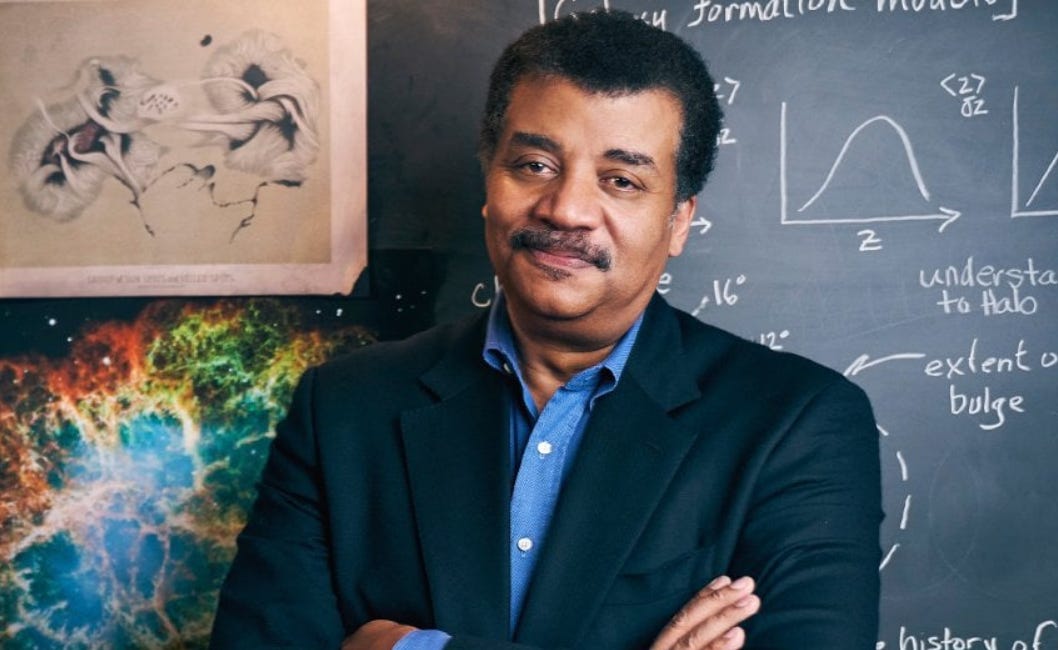
In this world, researchers build their own brands. They share live research diaries, answer questions from subscribers, and get cited by journalists and schoolteachers as often as by peers. Tenure matters less than trust. Authority is earned through clarity and public engagement.
Winners: Researchers who communicate well, think across disciplines, and build loyal audiences.
We return to Dr Lara in the lab, working on her laptop.
Lara is paid to be curious, funded by a society that has decided (however inconsistently) that asking questions is valuable even when the answers are not immediately apparent.
The medieval monk copying manuscripts by candlelight could hardly have imagined that his distant descendants would be funded by democratic governments to investigate the fundamental nature of reality.
As Lara finally switches off her laptop and heads home through the empty campus, she carries with her both the accumulated wisdom of centuries of human inquiry and the uncertainty of a profession in transition. But somewhere else in the world, another researcher is just beginning their day, peering into a microscope or training an algorithm, continuing the ancient human project of trying to understand what we do not yet know.
If you enjoyed reading this deep dive, please let me know so I can do more like it. Also, please like the post and share with your network. Inclusion Notes keeps growing every week and I want to make it as helpful and engaging for you as possible.
Comments
Nothing yet. Say the first thing.
Sign in to join the conversation.