
Adolescent bariatric surgery involves far more than physical changes. This blog explores how nurse coaching helps adolescents navigate identity, emotional well-being, family dynamics, and behavior change through nurse coaching interactions. Drawing from my personal pediatric nursing experience in a multidisciplinary ambulatory outpatient clinic specializing in bariatric adolescent surgery, the article by Elise H. Peterson, MS, MPH, BSN, RN, CPN, AMB-BC, AHN-BC, NC-BC, highlights how coaching-centered approaches foster many different aspects of the whole being.
Elise is a registered nurse with more than 25 years of pediatric experience spanning intensive care, post-anesthesia, sexual assault nursing, ambulatory outpatient clinics with a focus on adolescent obesity care. Grounded in nurse coaching and whole-person care, she combines clinical expertise with compassion as a global medical volunteer, nurse educator, and health technology professional focused on human-centered innovation.
Outside of nursing, Elise can usually be found planning her next adventure, flowing through yoga classes, getting lost in a great book, or hunting down great local food spots. She calls Denver, Colorado home, where curiosity, connection, and lifelong learning are her every day.

After more than twenty-five years as a pediatric nurse working in diverse roles and settings (sexual assault nurse examiner, educator, and nurse in intensive care, post-anesthesia, and outpatient settings, and academics), adolescents continue to teach me some of the profession’s most important lessons: adolescents do not need nurses who have all the answers. They need nurses who listen without judgment and seek to understand them as whole people.
When adolescents participate in creating their own health goals, they can become more engaged in their care and more confident in their ability to sustain change. Nourishing relationships with nurses, family, peers, and themselves significantly influence their health outcomes.
No adolescent should be reduced to a diagnosis, body mass index, or surgical pathway. Each young person carries a story, identity, and vision for their future.
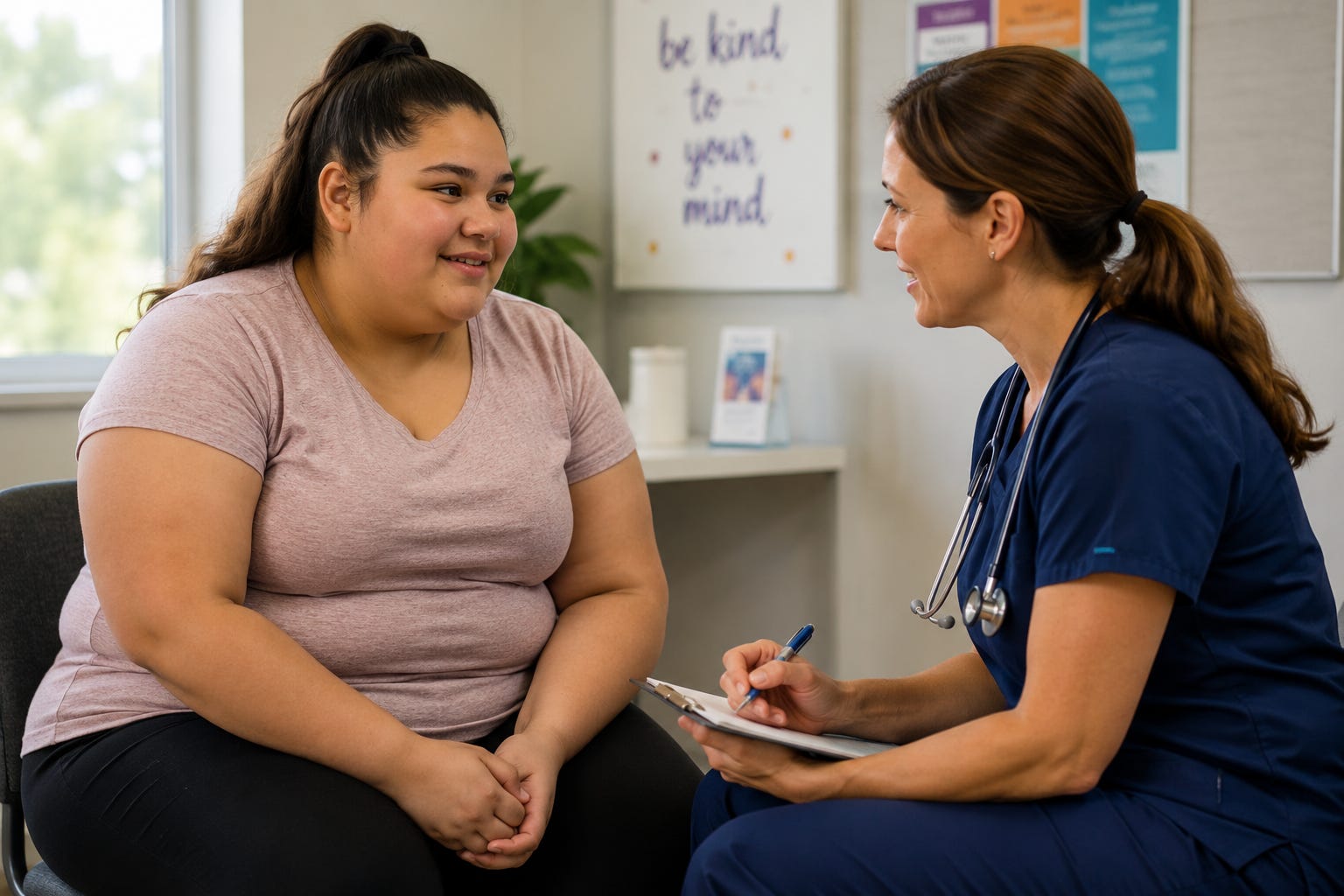
Seeing the Whole Person Behind the Diagnosis
Adolescents preparing for bariatric surgery are navigating far more than a medical procedure. They are carrying years of shame, stigma, isolation, family stress, and internalized beliefs about their bodies (Inge et al., 2017).
In adolescent bariatric care, clinical conversations center on established criteria: weight, body mass index, surgical clearance requirements, psychological readiness, protein intake, and postoperative milestones (Pratt et al., 2021). These elements are essential. Yet they do not represent the full patient experience.
Nurse Coaching invites us to pause and ask a key question (Dossey et al., 2021):
What matters most to this adolescent?
Often, the answer has little to do with weight. Instead, adolescents may describe wanting to participate in sports such as basketball, track, or dance, such as jazz and tap. Other priorities that matter to adolescents include reducing bullying, decreasing social isolation among peers, increasing the energy needed to meet school demands, and feeling comfortable shopping for stylish clothing without shame or embarrassment.
When adolescents are given space to articulate their own vision of health, the dynamic can shift from compliance to collaboration.
Nurse Coaching Creates Partnership Instead of Pressure
In my experience, many adolescents entering bariatric surgical programs have experienced years of feeling judged, corrected, or misunderstood within healthcare environments. Nurse Coaching offers a different relational stance, one grounded in curiosity, partnership, and emotional safety (Dossey et al., 2021).
Instead of telling adolescents what they “should” do, Nurse Coaching invites exploration of readiness, motivation, barriers, and strengths. I have found that reflective questions often open the deepest conversations. I ask every adolescent that I work with three main questions:
“What gives you hope right now?”
“What worries you most about surgery?”
“Who helps you feel supported?”
These questions uncover concerns that might otherwise remain unspoken, including fear of loose skin, shifting identity after weight change, anxiety about new family eating patterns, and perceived pressure from peers or social media. Nurse Coaching creates a sense of psychological safety, allowing adolescents to name and process these experiences without judgment.
Supporting Behavioral Change Through Self-Discovery
Adolescence is a developmental stage rooted in autonomy and identity formation (Beamish et al., 2023). Because of this, directive education alone is insufficient for sustainable behavior change. Nurse Coaching fosters change by helping adolescents connect health behaviors to personal values and experience.
For example, an adolescent I cared for who was preparing for bariatric surgery demonstrated strong knowledge of nutritional requirements. She clearly understood protein goals (essential intake for rapid weight loss), meal timing (small, frequent meals), and postoperative expectations (pain after surgery). Her challenge was not comprehension; it was social integration.
She expressed concern that eating differently at school, particularly consuming small, frequent protein-based meals, would draw attention and make her feel isolated. Through Nurse Coaching conversations, she began to develop strategies that felt realistic and empowering. She practiced planning meals ahead of time (viewing the cafeteria menu beforehand), engaging in mindful eating by slowing down (taking a full 30-45 minutes to eat), and noticing fullness cues without judgment. She identified trusted peers for support (her best friend, who came to monthly appointments with her), and reframed movement as something that could bring enjoyment rather than punishment (she grew to love swimming, yoga, and walking).
Mindful eating, in her experience, became less about restriction (of calories, fried food, junk food) and more about awareness. She did this by pausing for five to ten seconds before taking a bite of food to notice the smell and sight of the food she was going to eat. Movement shifted from compensatory behavior to something she could experience, like walking with friends across the high school campus.
Months later, she reflected:
“Surgery didn’t take away my social life. It helped me feel comfortable enough to like it again.”
That statement had little to do with weight loss and everything to do with healing.
Integrating Mind-Body Approaches Into Care
Anxiety, anticipatory fear, and emotional fatigue are rampant in our adolescent population Pratt et al., 2021). Integrating simple, evidence-informed mind-body approaches can support emotional regulation alongside medical care. Mind-body interventions such as guided breathing techniques (box breathing), creative expression (making a vision board), gentle movement (restorative yoga postures), and participation in peer support groups specific to bariatric surgery have been shown to improve psychosocial outcomes and support adjustment in adolescents undergoing bariatric care (Beamish et al., 2023).
Research supports the use of mindfulness-based and family-centered interventions (e.g., family therapy and spending time together while limiting social media) to improve emotional well-being, adherence, and coping in adolescents with chronic and complex health conditions (Pratt et al., 2021).
These approaches remain within the scope of nursing practice and complement evidence-based clinical pathways. The goal is not to replace medical treatment but to enhance emotional resilience and self-awareness during a transitional period.
Family Dynamics Matter More Than We Realize
In pediatric care, we are never only caring for adolescents. We care within complex family systems shaped by culture, socioeconomic realities, communication patterns, and generational health behaviors.
Nurse Coaching helps shift family engagement away from blame and toward shared accountability and curiosity. Instead of focusing solely on rules or compliance, Nurse Coaching conversations explore how families function within a dynamic, real-world context.
This may include examining family meal traditions (grazing while watching sporting events on television), caregiver stress (increased fast-food meals when a parent consistently works an off shift), and access to healthy foods (proximity to a well-rounded grocery store). These conversations help families recognize that sustainable health change requires compassion, flexibility, and a collaborative effort rather than perfection.
Redefining Success After Bariatric Surgery
Healthcare systems often define success by measurable outcomes: weight reduction, improved laboratory markers, reduced comorbidities, and surgical recovery milestones. These markers absolutely matter and remain essential to clinical evaluation. However, Nurse Coaches are uniquely positioned to also recognize layers of healing that may not appear in the electronic medical record.
Sometimes success sounds like the following statements:
“I feel good in my body for the first time I can remember.”
“I can eat dinner with my friends without feeling weird.”
“I feel better about myself when I am in public.”
“I’m learning not to hate myself.”
These statements reflect a transformation that extends beyond the realm of physiology. They reflect identity reconstruction, emotional healing, and renewed self-concept. This serves as a reminder that healing is profoundly multidimensional.
Final Thoughts
Nurse Coaching has the potential to transform adolescent bariatric surgery care from a procedural experience into a deeply personal, strength-forming, and empowering journey.
When we intentionally make space for self-inquiry, partnership, emotional safety, and self-discovery, adolescents begin to see themselves differently---as more capable and empowered.
As a Nurse Coach, I have the privilege of being by their side during one of the most vulnerable and formative transitions of their lives.
And sometimes, the most meaningful outcomes are not measured in pounds lost, but in self-blame released, confidence reclaimed, and hope restored.
References
Beamish, A. J., Ryan Harper, E., Järvholm, K., Janson, A., & Olbers, T. (2023). Long-term outcomes following adolescent metabolic and bariatric surgery. The Journal of Clinical Endocrinology & Metabolism, 108(9), 2184–2192. https://doi.org/10.1210/clinem/dgad155
Dossey, B. M., Luck, S., & Schaub, B. G. (2021). Nurse coaching: Integrative approaches for health and wellbeing. Springer Publishing Company.
Inge, T. H., Jenkins, T. M., Xanthakos, S. A., et al. (2017). Long-term outcomes of bariatric surgery in adolescents with severe obesity (FABS-5+): A prospective follow-up analysis. The Lancet Diabetes & Endocrinology, 5(3), 165–173. https://doi.org/10.1016/S2213-8587(16)30315-1
Pratt, J. S. A., Ogle, S. B., Dewberry, L. C., et al. (2021). Outcomes of bariatric surgery in older versus younger adolescents. Pediatrics, 147(3), e2020024182. https://doi.org/10.1542/peds.2020-024182
No posts
Comments
Nothing yet. Say the first thing.
Sign in to join the conversation.