
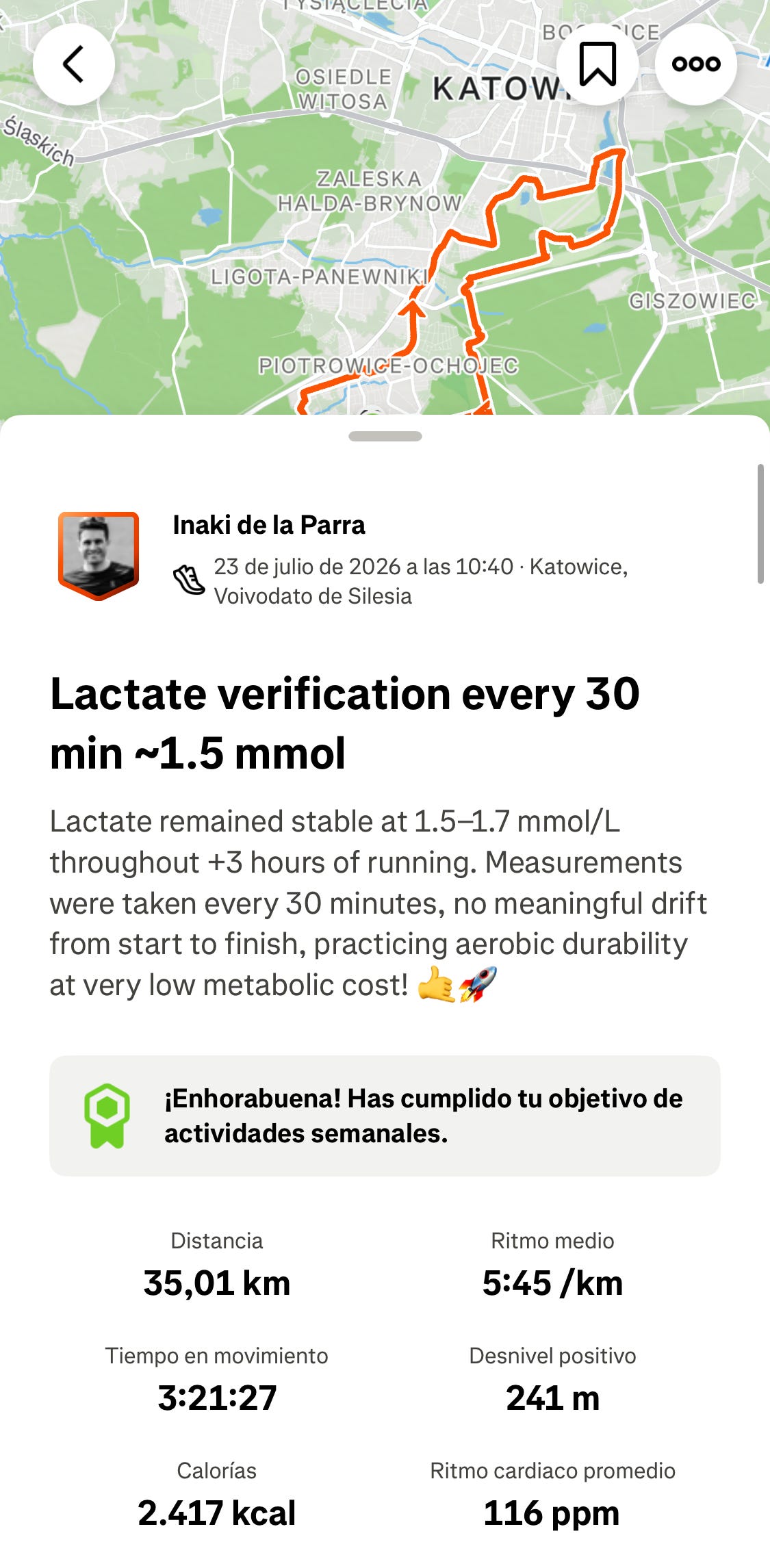
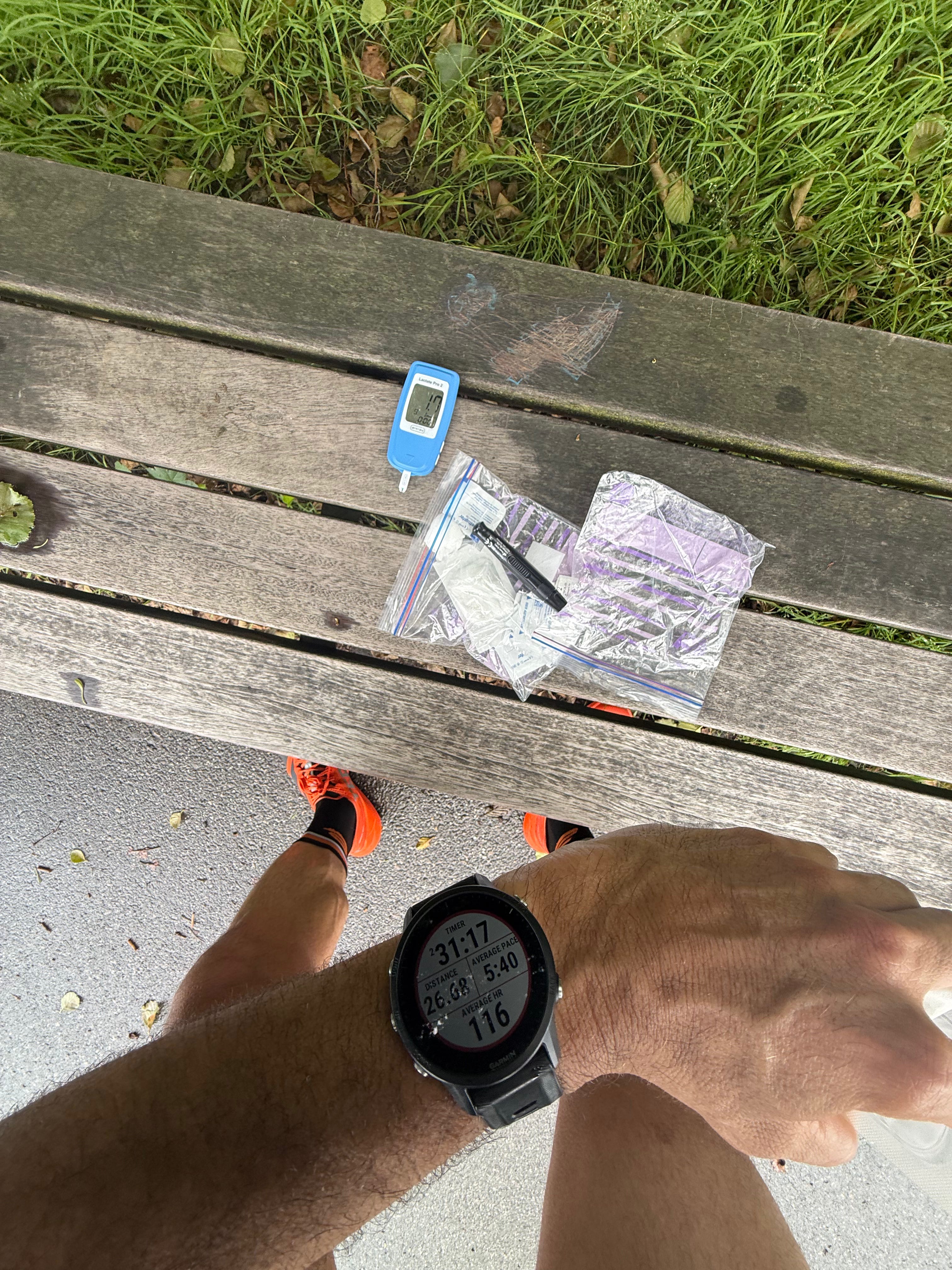
A few days ago I did a 3 hrs and measured lactate every 30 minutes, 1.5 to 1.7 mmol/L through the run.
The pace was controlled, breathing OK, HR stayed where I expected and the RPE felt spot on, the lactate confirmed what I was aiming for and how I felt.
Many athletes and coaches see a lactate numbers from an elite athlete and immediately want to copy them, but lactate is not a universal language if you don’t understand the person speaking it.
Numbers without context are misleading
Lactate is a live and evolving metabolic receipt. It tells you:
Something about the internal cost of the work in that specific moment
How your body is producing energy, moving lactate around, clearing it, oxidizing it and dealing with the total stress of the session
That lactate number is influenced by: pace, power, duration, intensity, terrain…
But also by: sleep, heat, hydration, glycogen, caffeine, stress, accumulated fatigue, training history, muscle fiber profile and whether you are actually recovered or not.
The moment you start worshipping lactate, HR, power, pace, or any method with a national flag attached to it, you are no longer coaching, you are just barking at numbers and pretending it is the way
A low lactate value does not automatically mean you are metabolically solid, you may simply be depleted, under-fueled, tired or unable to produce high glycolytic output that day.
A higher lactate value does not automatically mean the session is wrong, it may reflect your phenotype, your sport, your protocol, your phase of training, or the type of athlete you are.
The number starts the conversation, but do not finish it!
This is a fair and common question I get frequently.
If I test 2 mmol/L and an elite athlete also tests 2 mmol/L, are we doing the same thing?
Chemically, yes, but physiologically not.
The concentration in the blood sample is the same, but the meaning behind it may be completely different.
An elite Ironman athlete might ride at 2 mmol/L @ 300 watts, breathing calmly, heart rate stable, clearing lactate efficiently and looking like he could stay there for many hours.
Another athlete might show the same 2 mmol/L at 200 watts, with more breathing tension, more cardiac drift, poorer durability and a much bigger cost for tomorrow.
The lactate-meter gives both athletes the same number, but the body does not give both athletes the same price.
The lactate tells you what is in the blood, but it does not tell you, by itself, how expensive that number was for the system
A better question is not if “my 2 mmol is the same as his 2 mmol?
But:
What does 2 mmol mean for me, at this pace, on this day, with this heart rate, this breathing, this fatigue and this ability to repeat the work?
A recent example from my own training makes this clear.
After the 35 km run I mentioned earlier, where I checked lactate every 30 minutes and stayed around 1.5–1.7 mmol/L, I tested lactate again a few days later, but in a completely different context.
That same day, I had already done a 4:45 hour easy ride. Later, I went to the track and ran 5 × 2 km with 2 minutes recovery, checking lactate through the session.
Comments
Nothing yet. Say the first thing.
Sign in to join the conversation.