Step into conversations that travel across continents and challenge the way you think about progress. From democracy and inequality to climate resilience and healthcare, Dan Banik explores how societies navigate the complex terrain of democracy, poverty, inequality, and sustainability. Through dialogues with scholars, leaders, and innovators, In Pursuit of Development uncovers how ideas travel, why policies succeed or fail, and what it takes to build a more just and resilient world. Expect sharp…
What does it mean to defend hope in an age of crisis, anxiety, and political exhaustion? In this Season 6 finale of In Pursuit of Development , Dan Banik reflects on why hope is not the same as optimism, and why evidence-based hope may be one of the most important political resources of our time. Drawing on debates about global poverty, democracy, climate anxiety, development practice, and…
As traditional aid budgets shrink and donor priorities shift, civil society organizations across Malawi are being forced to rethink how they work, survive, and serve communities. In this conversation, Dan Banik speaks with Tikhala Itaye, a human rights lawyer and public health specialist, and the Founder and Executive Director of HeR Liberty, a young women-led organization in Malawi working to…
Rwanda is often described as one of Africa’s most remarkable development success stories: a country that rebuilt itself after the 1994 genocide, delivered impressive improvements in health and education, reduced its dependence on coffee, attracted global attention, and turned Kigali into a symbol of order, ambition, and state effectiveness. But is Rwanda’s rise as durable as it appears? Dan Banik…
In this solo episode, Dan Banik reflects on a series of recent conversations across Pretoria, Addis Ababa, Blantyre, and Mauritius, where African scholars, policymakers, civil society leaders, NGO directors, administrators, and practitioners debated the future of development in a rapidly changing world. Against a backdrop of dramatic aid cuts, geopolitical fragmentation, climate pressures, and…
Corruption is often imagined as a bribe paid to speed up a permit, avoid a fine, or gain access to a public service. But some of the most damaging forms of corruption operate at a much higher level, where powerful political and business actors reshape the rules of the game itself. This is the world of state capture : a process through which public institutions are bent away from the public…
In this episode of In Pursuit of Development , Dan Banik speaks with Alanna O’Malley, Professor and Chair of Global Governance & Wealth and Head of Department of History at Erasmus University, about the hidden history of the United Nations and the decisive role of the Global South in shaping global governance. Drawing on her forthcoming book, Decolonising Global Order, The Invisible History of the…
Why does tuberculosis remain one of the world’s deadliest infectious diseases even though it is preventable and curable? In this episode of In Pursuit of Development , Dan Banik speaks with Madhukar Pai of the Department of Global and Public Health at the McGill School of Population and Global Health about why TB continues to thrive in conditions of poverty, undernutrition, overcrowding, and weak…
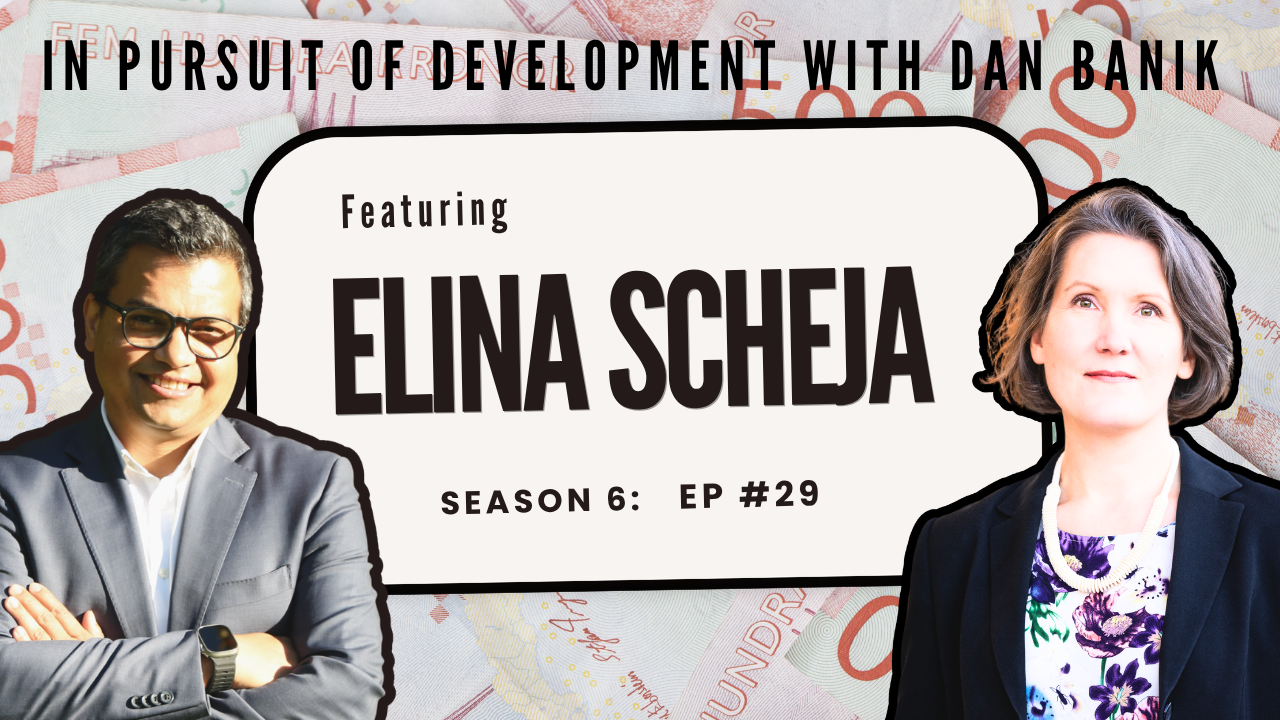
What happens to development cooperation when aid budgets are cut, geopolitical tensions rise, and poverty reduction competes with a growing range of strategic priorities? In this episode of In Pursuit of Development , Dan Banik speaks with Elina Scheja , Chief Economist at the Swedish International Development Cooperation Agency (Sida) , about the changing politics of foreign aid and the future of…
Asia is often described as the great success story of modern development, a region of rapid growth, falling poverty, rising middle classes, and extraordinary transformation. But how accurate is that narrative today? And what does Asia’s experience really tell us about the future of development in a world marked by inequality, insecurity, demographic change, and technological disruption? In this…
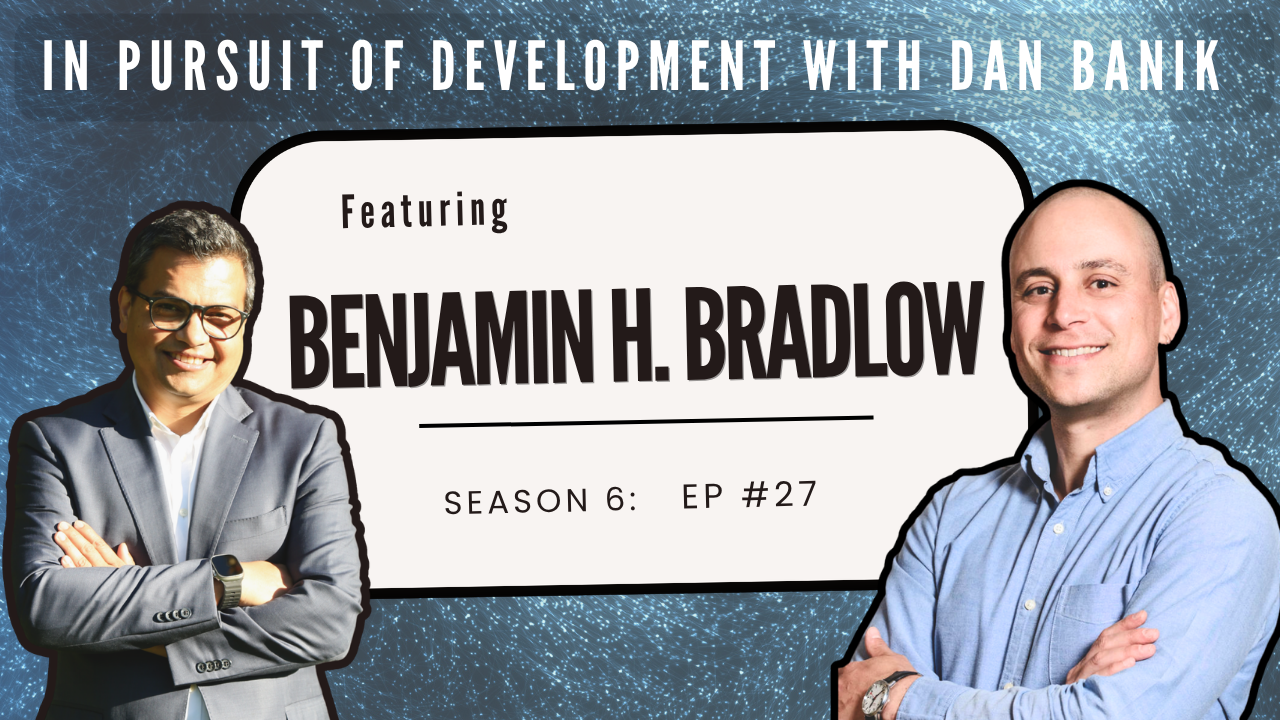
Dan Banik speaks with Benjamin H. Bradlow , Assistant Professor of Sociology and International Affairs at Princeton University, about how cities can grow without leaving millions behind. At a moment when more than a billion people live in informal settlements or slum-like conditions, the conversation explores why access to housing, sanitation, transport, and other basic urban services remains so…