
The denial notice arrives, and suddenly your American dream feels shattered. But before you despair, understand this: a denial is not the end of the road. With the right strategy, it can be a temporary setback.
Data shows that while only 10-15% of administrative appeals succeed, federal court challenges to visa denials succeed 70-90% of the time, with most cases resolving in just two to four months. Whether you're facing an H-1B rejection, L-1 denial, or green card roadblock, understanding your options and acting swiftly can completely reverse your situation.
Every year, thousands of qualified professionals receive visa denials based on incorrect legal interpretations or arbitrary decisions. In fiscal year 2024, despite a historically low H-1B denial rate of 2.5%, over 30,000 employment visa applications were still rejected. The difference between those who successfully overturn denials and those who don’t often comes down to three factors: immediate action, strategic decision-making, and choosing the right appeal pathway.
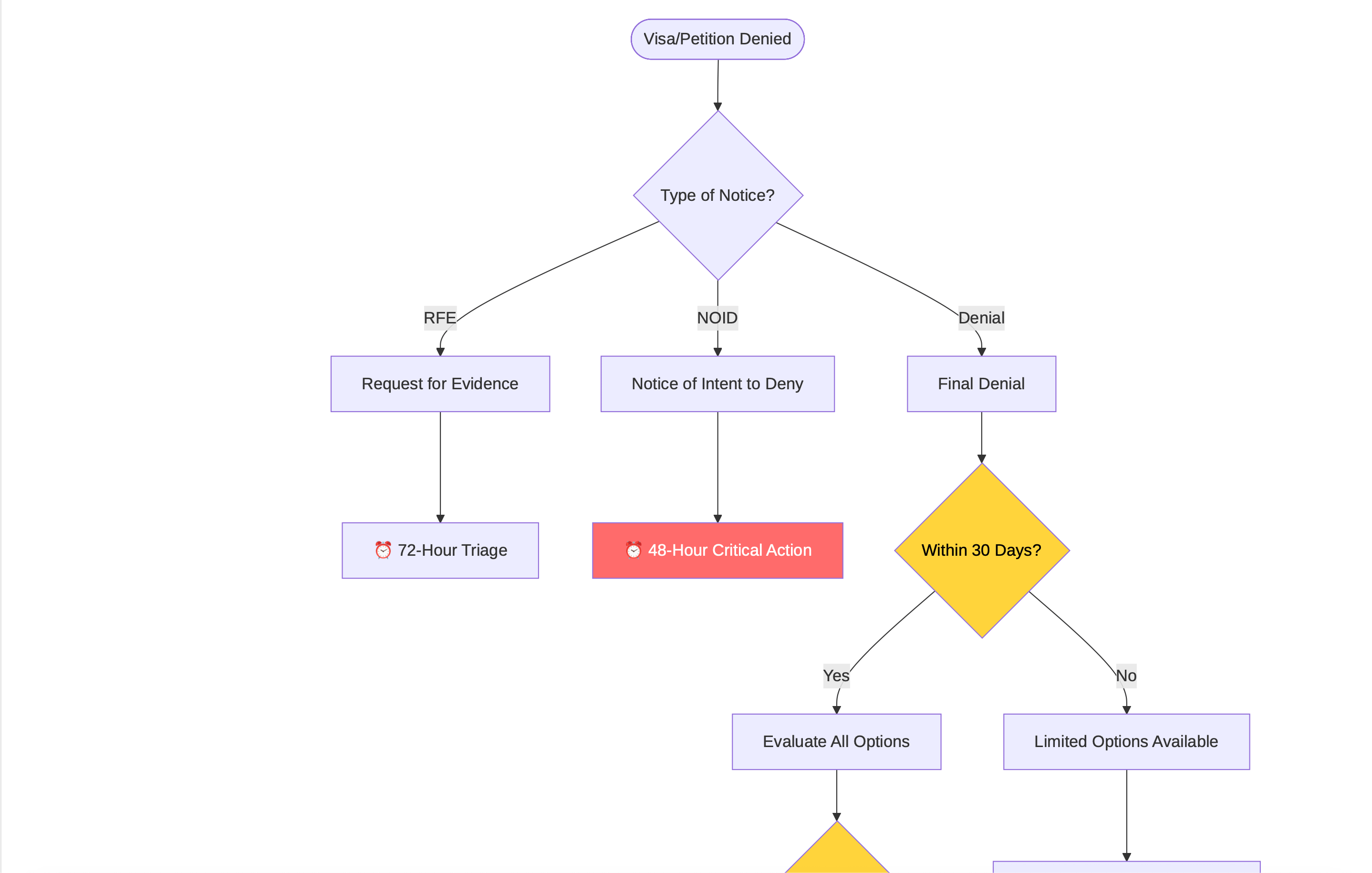
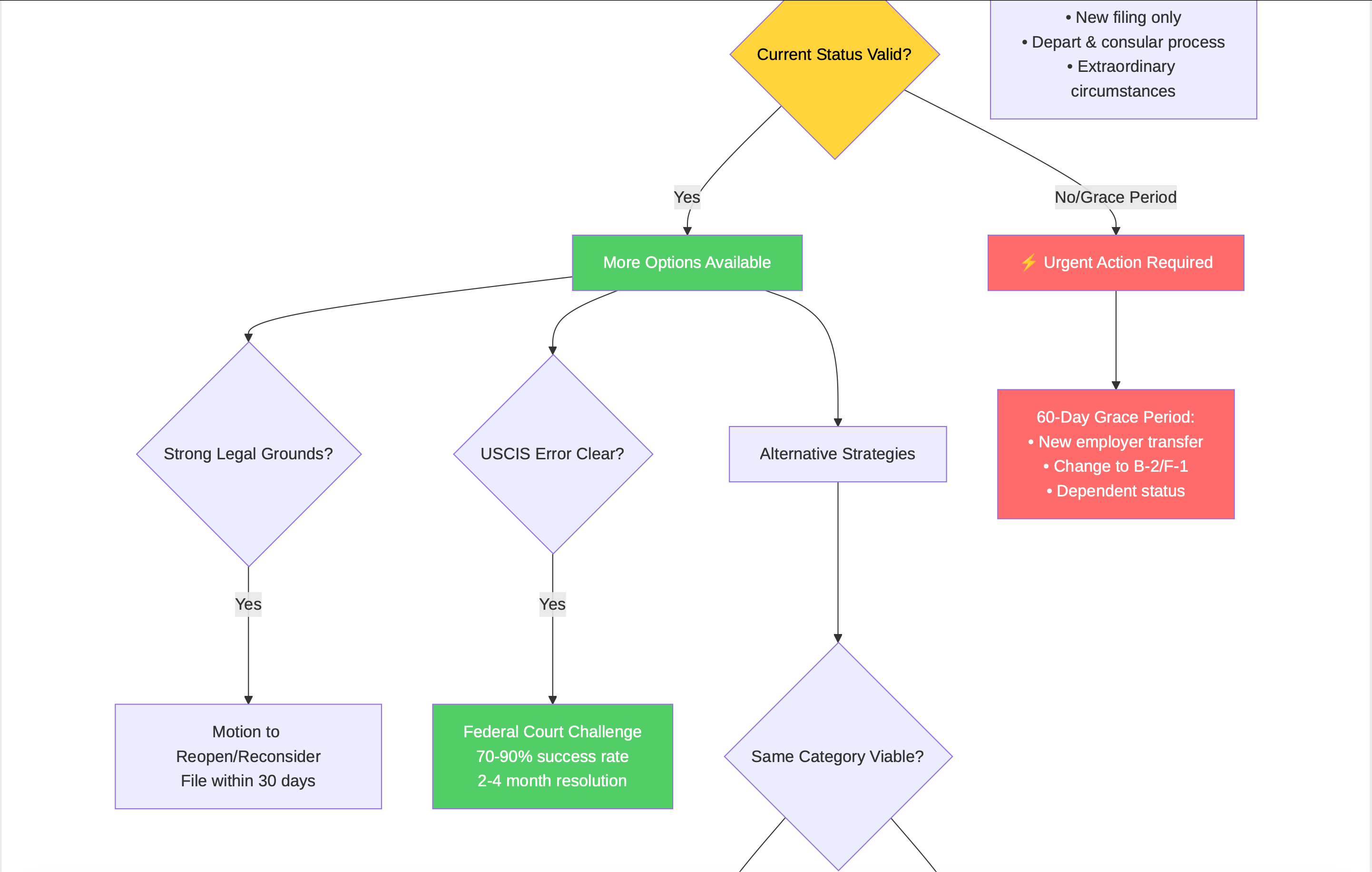
Employment visa denials fall into predictable patterns. The most common reasons include:
H-1B Specialty Occupation: U.S. Citizenship and Immigration Services (USCIS) incorrectly concludes that a position does not require a specialized bachelor's degree. This is common for entry-level roles with Level 1 wages, where officers wrongly assume lower pay means the job isn't a specialty occupation—a conclusion that runs contrary to regulatory guidance.
L-1 Specialized Knowledge: Nearly 26% of L-1 visa denials stem from officers applying inconsistent standards for what constitutes "specialized" or "proprietary" knowledge that is critical to a company's operations.
When you receive a denial, look for the specific legal citations. A notice under Section 221(g) isn't a final denial but a request for more information (administrative processing), while Section 214(b) indicates a presumed intent to immigrate, which primarily affects non-immigrant visas like tourist and student visas.
Your Form I-797 denial notice is your roadmap. Pay close attention to the legal analysis and conclusions. Red flag language referring to "fraud," "misrepresentation," or a "lack of credibility" requires immediate attorney consultation.
New Rule Alert: The H-1B modernization rule, effective January 17, 2025, clarifies that a position is a specialty occupation even if it allows multiple degree fields, as long as each field is directly related to the job duties. It also codifies a policy of deference, meaning adjudicators should defer to prior approvals unless there has been a material change—a critical point for challenging inconsistent denials.
What you do in the immediate aftermath of a denial can determine your entire appeal trajectory.
Preserve Everything: Within 48 hours, gather all case materials: the denial notice, your complete application copy, all supporting documents, and any notes from interviews. Document the interview while it's fresh—the questions asked, the officer's demeanor, and specific statements made. This evidence is invaluable if procedural violations occurred.
Calendar Your Deadline: The appeal deadline is typically 30 days (33 if the notice was mailed). Calendar this immediately with multiple reminders. These deadlines are absolute and cannot be extended.
Assess Your Immigration Status: Determine if you maintain a valid status despite the denial. Many H-1B workers can legally remain in the U.S. until their I-94 expiration date. However, your work authorization terminates immediately upon denial, even if you were working under the 240-day extension rule for pending petitions.
Notify Your Employer: Inform your employer within 72 hours. Your company needs time to evaluate appeal options, consider refiling, or explore alternative visas. Remember, employers cannot legally pass appeal costs on to you and must cover all USCIS filing and associated attorney fees.
The statistics are clear: the path you choose for your appeal matters immensely.
Administrative Appeals Office (AAO): This route has a low success rate, hovering around 10-15%. The process is also slow, typically taking 6-12 months. An AAO appeal is best for cases with clear, documented legal errors. You can file a Motion to Reopen to introduce new evidence or a Motion to Reconsider to challenge a legal or factual error based on the existing record.
Federal Court Litigation: This pathway boasts a 70-90% success rate. Most cases are resolved or settled in just two to four months, as government agencies often choose to reverse their decisions rather than defend them in court. A federal judge provides an independent review, and USCIS is held accountable for decisions that are arbitrary, capricious, or contrary to law. Some law firms report success rates exceeding 90% for reversing H-1B denials through federal litigation.
For unreasonable delays where your case is stuck beyond posted processing times, a Mandamus action in federal court has an 85-90% success rate, typically resolving the delay within two to six months.
An appeal isn't your only option. Consider these strategic alternatives:
Switch Visa Categories: An O-1 visa for individuals with extraordinary ability is a powerful alternative to the H-1B. It has no annual cap and allows for unlimited extensions. Building the required evidence (awards, publications, critical roles) can take 6-12 months, making it a great long-term strategy.
Find a Cap-Exempt Employer: Universities, affiliated non-profits, and government research organizations can file H-1B petitions year-round, bypassing the lottery. These employers have near-zero denial rates with proper documentation.
Consider Family-Based Options: Marriage to a U.S. citizen allows for an immediate green card application. Spouses on dependent visas (L-2, E-2, J-2) often have immediate work authorization. For Canadians and Mexicans, TN status is another viable option for qualifying professionals.
If you choose to reapply, address the original denial head-on. Strengthen your application with:
Expert Opinion Letters: Letters from industry authorities can validate a position’s "specialty occupation" or "specialized knowledge" requirements.
Detailed Job Descriptions: Use granular detail, technical specifications, and organizational charts to prove the complexity of the role.
Wage Level Justification: If your role is classified as Level 1, provide robust evidence of its complexity. If you've received a promotion or an increase in duties, document it to justify a higher wage level.
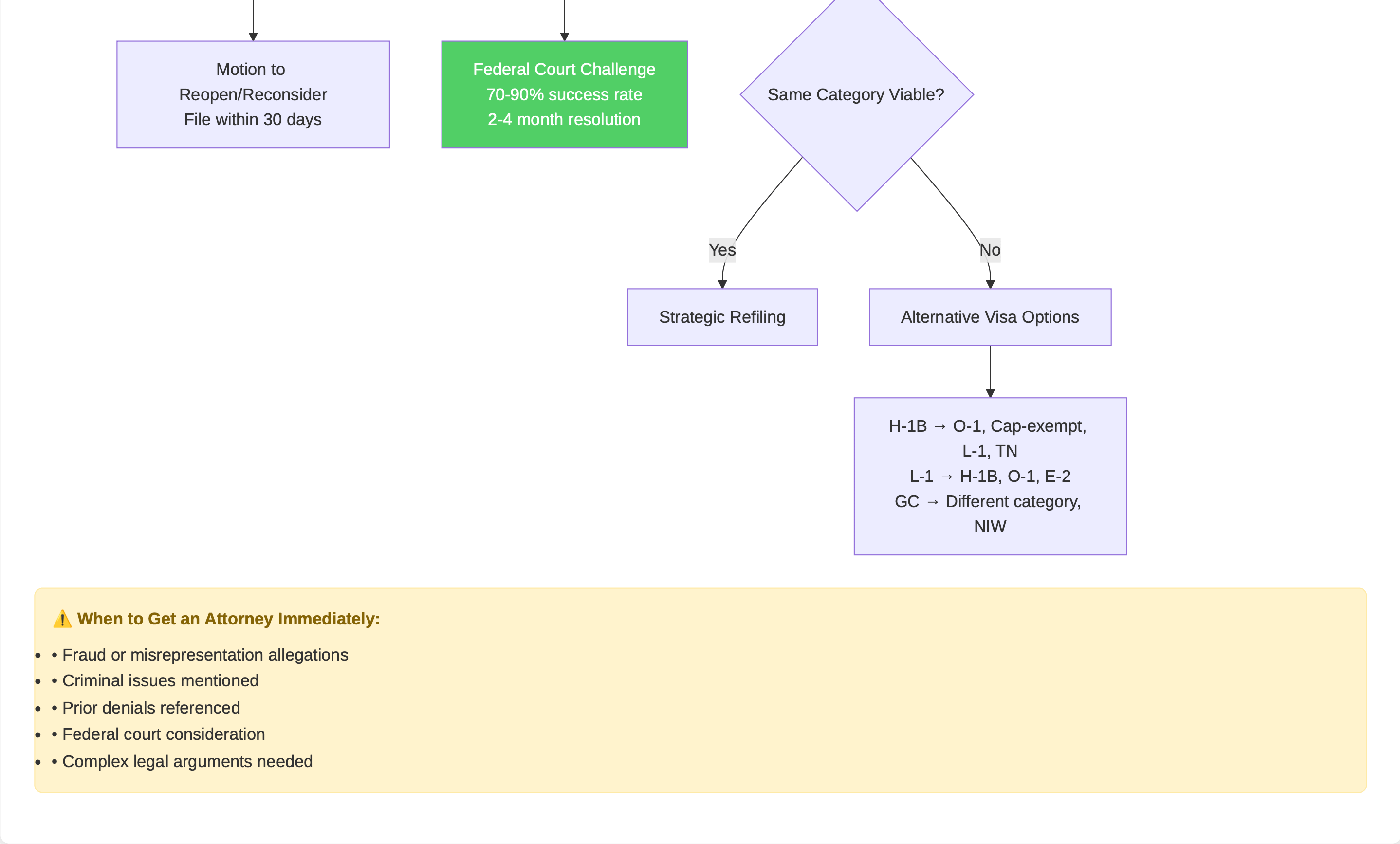
The data is undeniable: legal representation dramatically changes the outcome. Self-represented appellants succeed in only 19% of immigration appeals, compared to 53% for those with an attorney.
An experienced immigration attorney can communicate directly with USCIS, build a strategy based on legal precedent, and identify the best forum for your specific case. When vetting counsel, use the American Immigration Lawyers Association (AILA) directory and ask critical questions during your consultation:
What is your experience with cases like mine?
What is your realistic assessment of my chances of success?
What are the anticipated costs and timeline?
What alternative strategies should we consider?
Avoid these common and devastating errors:
Missing the Deadline: 40-60% of appeals are dismissed for being untimely. This 30-day deadline is strictly enforced.
Working Without Authorization: Filing an appeal does not restore your authorization to work. Continuing to work illegally can make you inadmissible for future visas.
Traveling Internationally: Leaving the country can be considered an abandonment of your appeal and may trigger reentry bars if you have accrued unlawful presence.
Oversharing on Social Media: USCIS reviews social media. Posts that contradict your visa status (e.g., discussing permanent residency plans while on a temporary visa) can be used against you. Keep your immigration matters private.
An employment visa denial is a serious challenge, but it is one that can be overcome. The path forward requires a calm, strategic response grounded in data. Federal court challenges have emerged as the gold standard for reversing wrongful denials, offering success rates and resolution times that far surpass administrative appeals.
The key differentiator is not the denial itself, but your response. By acting quickly, preserving evidence, engaging experienced counsel, and choosing the right legal pathway, you can transform a devastating setback into a temporary obstacle on your journey to achieving your American professional goals.
No posts
Comments
Nothing yet. Say the first thing.
Sign in to join the conversation.