
While your favorite sequences in Stranger Things might be about fighting Demogorgons and racing through alternate dimensions, for set decorator Jess Royal, it’s the smaller details that stand out.
The first or second episodes of any season are more her speed than an action-packed finale. Rather than moments of science-fiction, she’s more interested in seeing the inhabitants of the fictional Hawkins, Indiana have a normal day or have to go to school. The aspects of set dressings that mean the most to her — and the ones that she feels ground the show — are things like period-specific snacks, character bedrooms, or small objects that show relationships.
“Some of the subtle changes just over the seasons have been really fun, like Nancy’s bedroom and how it changed from season one to five, (like) what she kept from Jonathan; those little decisions that are kind of character but real-life heart decisions of what matters to people. That’s what I’ve learned the most (from the seasons), is never lose sight of those things, because I think that matters to fans as much,” Royal told Immersive during a recent interview. “Even if it’s not on the tip of their tongues about Demogorgons and whatever else, I do feel without some of those heart elements of the connections and the personalities and stuff, it wouldn’t be the show that it is. That’s important.”
For the final season of Stranger Things — a show that Royal has been with since the beginning — the set decorator planted fun details to hide in character bedrooms while also playing in that science-fiction world, dressing houses for action moments and finding breakaway objects for chase scenes. She, along with production designer Chris Trujillo and supervising art director Sean Brennan, has been nominated for the Emmy Award for Outstanding Production Design For A Narrative Period Or Fantasy Program (One Hour Or More), specifically for her work on the fifth season’s fourth episode, “Chapter Four: Sorcerer.” Ahead of the announcement of the winner of the award, Royal spoke with Immersive via Zoom about closing out the series and some of the moments in the final season that she helped bring to the screen.
[This conversation has been edited for clarity and length].
Having been with Stranger Things since season one, what would you say is the biggest change in your work from season one to season five?
That’s easy. Season one, I was able to control a lot more, because there were a few of us; we were all kind of kids, it felt like, the Duffers and me and Chris, the designer. It was important to me; it was (an) opportunity, and who knows if anyone’s ever going to watch a show. It’s like, ‘OK, well, this seems cool, it’s a cool script, but who knows how it’s going to go?’ I was fighting to keep everything as practical as possible. Special effects and stuff obviously is a little out of my control, but the lights on the wall spelling out ‘run’ and stuff, we had to come up with a whole way to do that practically and wire them separately. It’s complicated, but to me, doing it the hard way sometimes is worth it, and not just leaving everything to post-production and to VFX.
Season one and even season two to some extent, we really did things old school; printing the wallpaper on latex walls so when the Demogorgon is pushing through, it’s actually latex. By the time we got to season three, it was a fight for me to even use real neon in the mall. We had to do all these tests to make sure it wasn’t going to break in the middle of shooting, (like) a transformer wasn’t going to blow for all the flickering. I held on, and then by season four, it just seemed like it was so big, and we were on different continents, so a lot of the post-production got bigger and bigger. For me, that was the biggest change, especially with season five, because there’s so much Upside Down dark work. We did a lot of practical vines and things down there, but they’re going to enhance it so much in post that you never know how the final product’s going to turn out. I don’t ever know. That’s OK.


What is your process like? What’s your day-to-day like as a set decorator on this series?
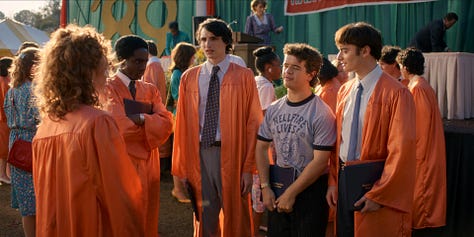
I went to law school; I have a law background. I decided I wanted to do something creative; something that had historic (elements). I was a history major in my undergraduate, history and philosophy, and so I just love being totally immersed in a certain year and knowing what week of what month of what year you’re in. From there, I can kind of build my own backstory, even if no one’s giving it to me directly. I can sort of invent it because I go through old newspapers and I figure out what’s going on in the world and the mood of the country. You would think a lot of those things don’t matter in some small town like Hawkins, but to me, it does. Season two, we had political signs in characters’ yards because it was right before the election. It’s nice to just bring some of that real-life stuff into the show.
As far as a day-to-day, I love research. I never have a researcher who’s going to do all the research and hand me a packet. I love the process. Even just things like doing the grocery store in the show in whatever season it was, seeing the look of every Ziploc box or cereal that was on the shelf and recreating all of that exactly for the right day and week that we’re shooting it, it’s just fun to be able to nail it. You’re like, ‘This is so good.’
Then, just prints and fabrics and stuff. This season, I strived for more colorful (things), for anything that was the real world, like Holly’s bedroom with the wallpaper and her bedding. We spend so much time in the dark Upside Down, and thematically it’s so dark, (my intention was) trying to bring a little color. Derek’s room is the same thing. (Putting) a little bit of color and life into some of the other sets where you can get away with it was important. So (my process is) just doing that research and diving deep. I do a lot of estate sales too, which is fun; if you can find an estate sale (and) the person who lived in the house is very similar to whatever character you’re doing, that’s kind of the winning thing. Then you can immerse yourself in a house. It’s like, ‘Oh my gosh, this person went to Notre Dame in Indiana and they collected these things. All these mugs are relevant to Indiana.’ It’s fun to sort of find someone and then explore those routes that they took, and it inspires new ideas for characters and things they would have in their room in the house.
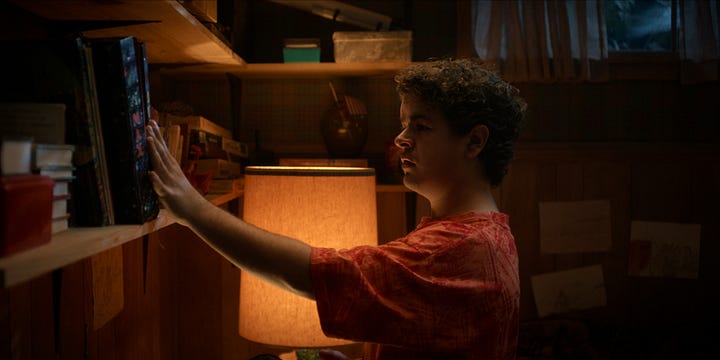

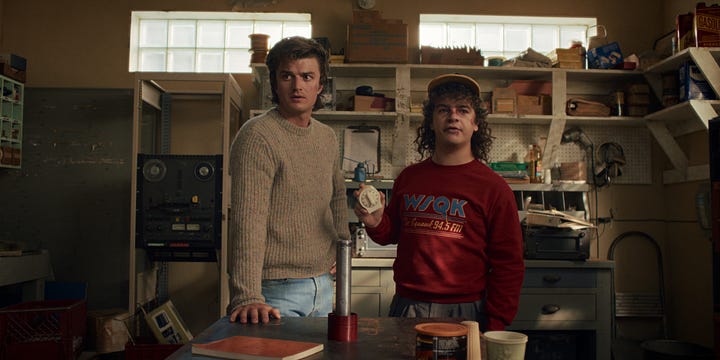
When I would work as a production designer or a set decorator on student films, something I didn’t realize until I’d done the work was how creative even the smallest decisions are. Just hanging a certain flag or banner, or positioning something a certain way, I didn’t even realize how much creativity and storytelling is in a decision that small. That’s super cool with a show like Stranger Things, where every prop tells you something about a character or an action or a location.
Yeah. But a blank wall is sometimes a really creative choice; to have nothing on the wall, or to have stacks of stuff in the corner. What people collect or don’t collect in their lives, and what they save or what’s on a shelf, it’s all definitely a choice. When I first started decorating, I was like, ‘I think anyone else presented with this script would come up with the exact same set I came up with,’ because it’s obvious. There was this little show that was on for a while called Hot Set, and it was a group of three teens (who) would get the same script page, and then they would all come up with their own little two-wall set and decorate it. For that to be mainstream TV and just to see how different (they were), it’s fun to see how people’s brains work. I always try to stay open to my crew, giving them a chance to dress some things first before I start micromanaging. It’s interesting how their brains sometimes inspire something where I’m like, ‘Oh, that’s amazing. Let’s go with that and then add this.’
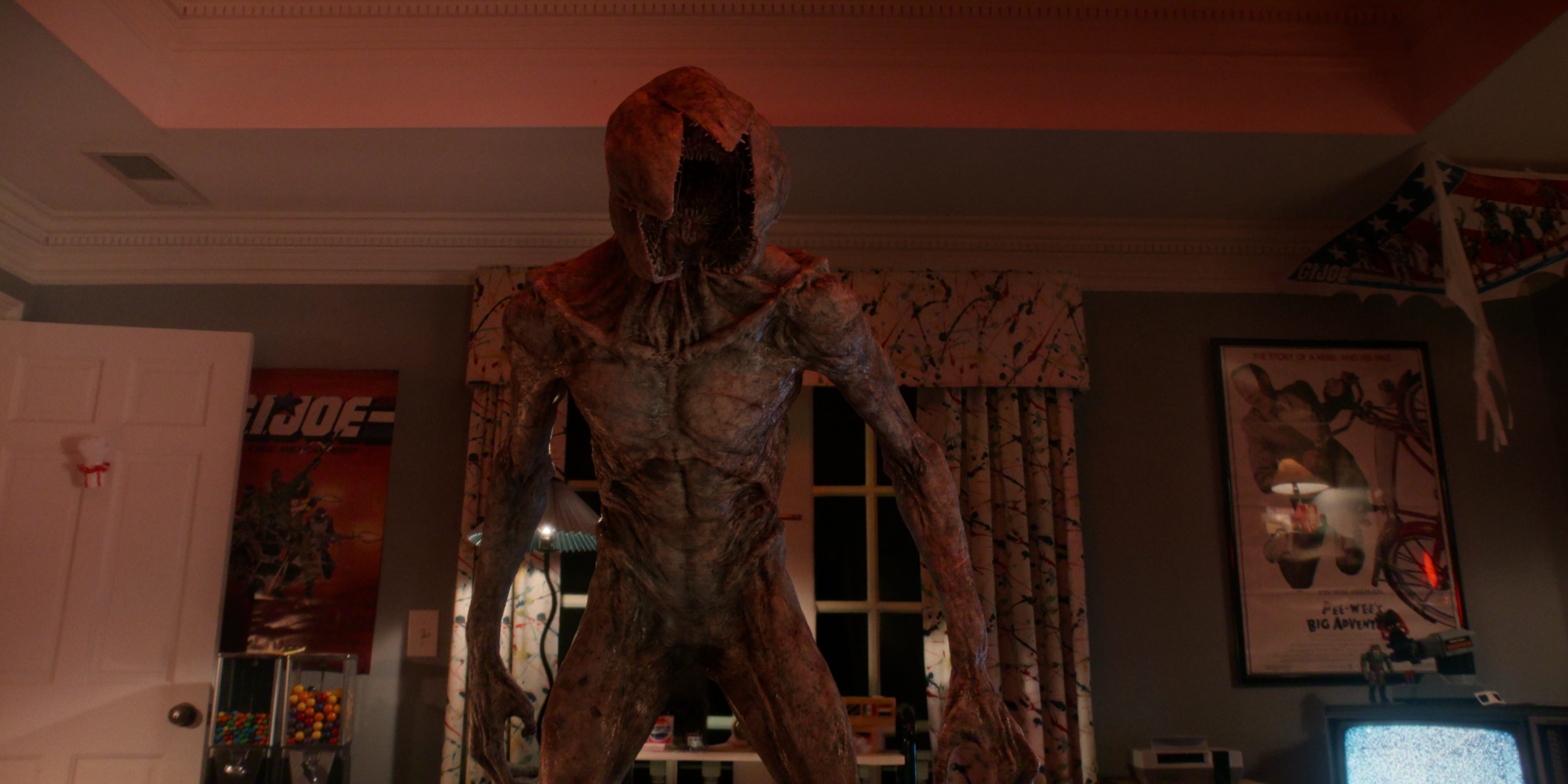
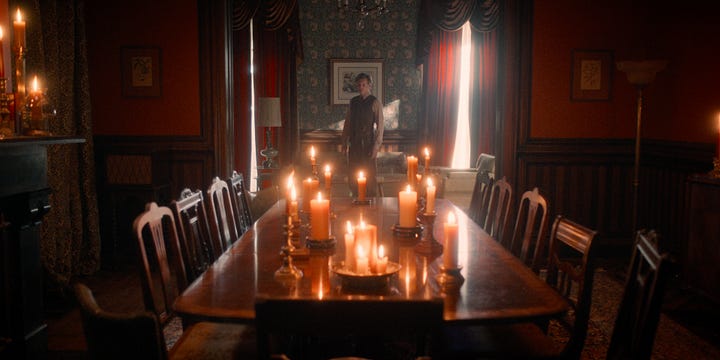
I wanted to ask you about the Turnbow’s house, because one of my favorite sequences in the whole season is the gang setting the traps for the Demogorgon and waiting for him to flip. I love how you see all the different rooms in that fight sequence and all these different props come into play. Could you talk about what the process was like of getting that sequence ready to go, and those locations camera-ready?
The house was not our first choice house. The art director and I and the production designer, we’d looked at different ones, but we were sort of pigeon-holed into having a street that needed to have all the street lights on it so you can see the Demogorgon coming. Then it needed to be big enough to work in. We were going to build part of it, but we couldn’t build the whole house for this sequence on stage; we were out of stage space and time. When we found this house, there were certain things that weren’t period about it, but we were just like, ‘OK, we’re going to make it work.’ I just started trying to find a style reference for them; that’s always the first thing. Then draperies and wallpapers and all that stuff, which is not as important to the actual trap-setting. We were all laughing at the time because it’s so Stranger Things: all the little (music) and everyone’s (getting ready). It’s like, ‘Alright, we’ll embrace this. It’s probably one of the last ones we’ll see.’
(I) was just trying to tweak. If it was scripted one way and the geography of the house didn’t quite accommodate, then it’s pitching new ideas: ‘Maybe instead of him coming out of the ceiling here, it could be here.’ We were going to build the wine cellar in the basement, so we built that, and then (we were) just trying to tie it all together. You need rugs — they can be stapled over the floor — that are big enough to cover the hole. It’s all these little things that are kind of a crossover with a lot of different departments. Barbed wire: are we using real barbed wire and cutting off the tips? Are we using rubber? (There’s) a lot of crossover with stunts and set dec. Then (we were) doing the test for the wine bottles, because I had to buy a lot of breakaway wine bottles and fill them with wine-looking liquid. (We were) just doing tests to see how that all fell and broke, and (making) sure we were good for the day it was going to happen. It was a fun one to do.
My inspiration for Derek’s bedroom and his character in general was Francis from Pee-wee’s Big Adventure. If you look at his bedroom door, there’s a little door knocker that’s the door knocker from Pee-wee, where it’s a clown knocking or whatever. It doesn’t exist in the world; you can’t buy it anywhere, so we had to make it out of clay and let it dry (and) then paint it and do all this stuff. … He’s such a little shit at first until you grow to like him. It was fun to kind of do his spoiled kid bedroom.
What I loved is you have parts of that sequence where there are just background props that fill the space, but then you have certain props that are part of the action. You see the Demogorgon have to interact with the blanket and the crash test dummy, and Nancy and Jonathan are hiding behind the bar and using the Molotovs and the rifle. It’s so cool.
You kind of have to have the script before I can really start dressing stuff, and it’s like, these are the things we have to have, and so how do we kind of camouflage it with the rest of the stuff so it doesn’t feel too obvious?
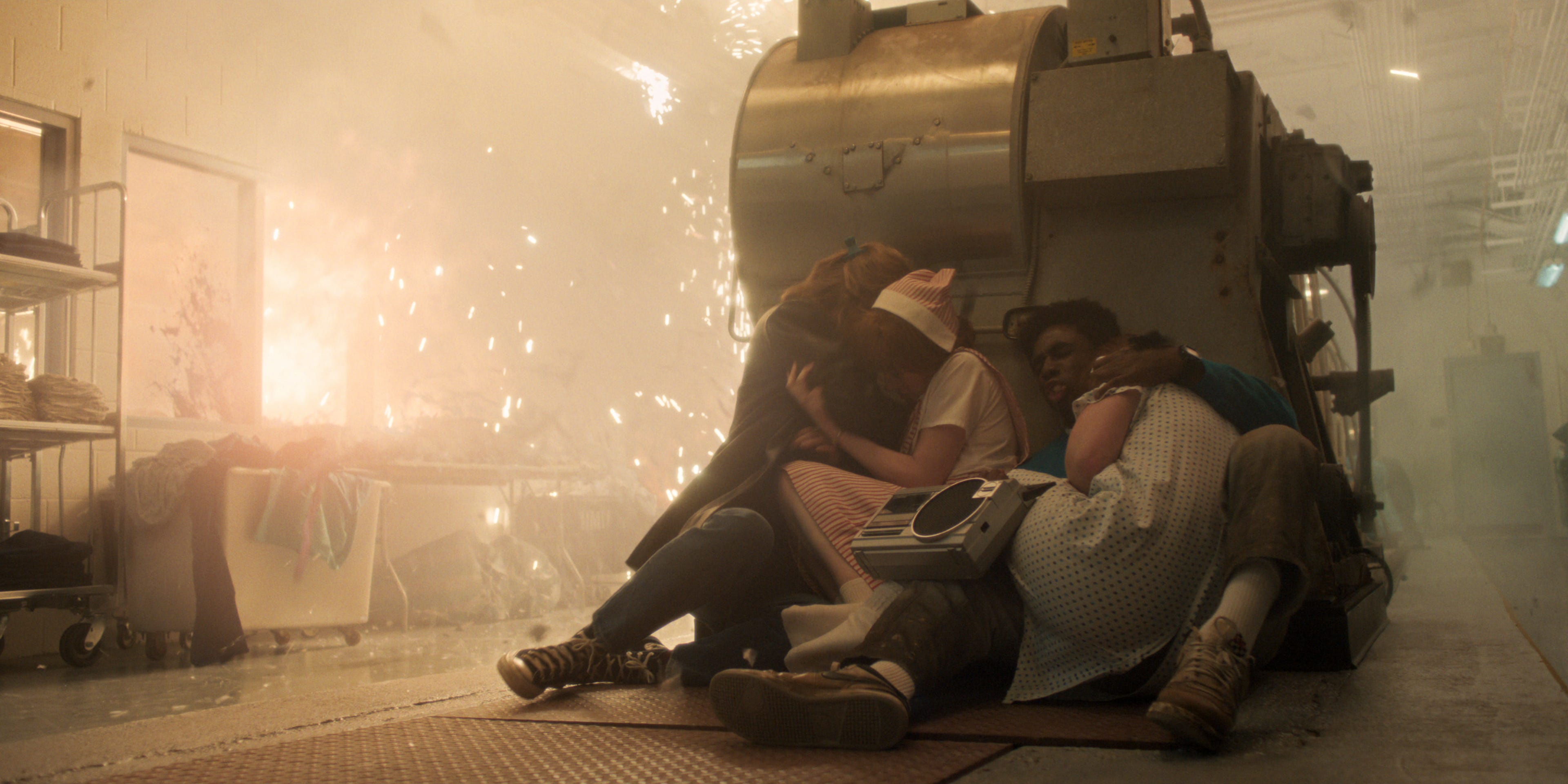
What departments do you collaborate with? I imagine for a sequence like that, and for the whole series, you’re having to account for stunts and visual effects work, and you and the art department are working together. What’s your cross-department (work) like?
There’s definitely a lot with special effects, especially this season in the laundry room. We did it practically; we did blow up a dryer. We had to find matching dryers that were vintage and big enough and all these things. I got them a dryer that matched the one we were going to use a couple months before so they could try different things and see what they needed to actually blow the door off and all that kind of stuff. There’s always a lot of crossover with special effects. Even just breakaway stuff; there was a scene where they’re driving through the backyards — I think it’s episode three — and they run over the gnomes. I’m trying to find gnomes and molds of gnomes that are breakaway that the car can hit without damaging the car. There’s definitely a lot with special effects.
(There’s also) visual effects to some extent. Especially (on) season five; it’s like, the world exists and we finish it and then it turns to blue, and we know that from a certain point on, it’s just all going to be visual effects. It’s more like Chris, the designer, making sure that they know what they’re responsible for after a certain point.
(I also work with) costumes and making sure if I have a pattern on a couch — that’s true with every movie and show — but just in advance (I’m like), ‘Hey, this is a really cool choice I’m making. I want to see what they’re wearing to make sure it’s not too many patterns going on where it’s going to be distracting.’ (I also work with) props and food, (like) eating the pie in (the) Turnbow house. (It involves) the mixture of the pie dish and the plates and everything that I give them to put the food in. It’s all collaborative, especially with a show like Stranger Things, because there’s so much happening in any one scene.
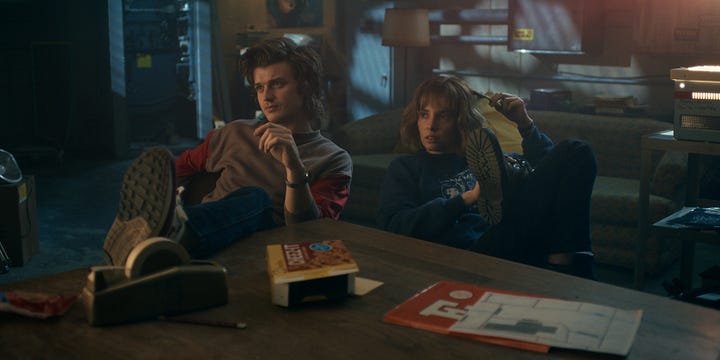
Can you think of what the most important thing you’ve learned from the previous four seasons that you took into season five (is)?
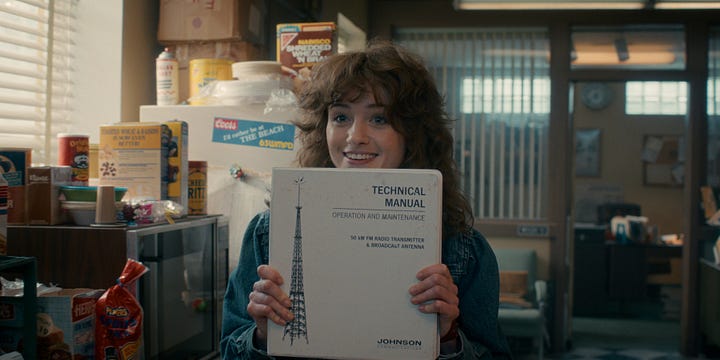
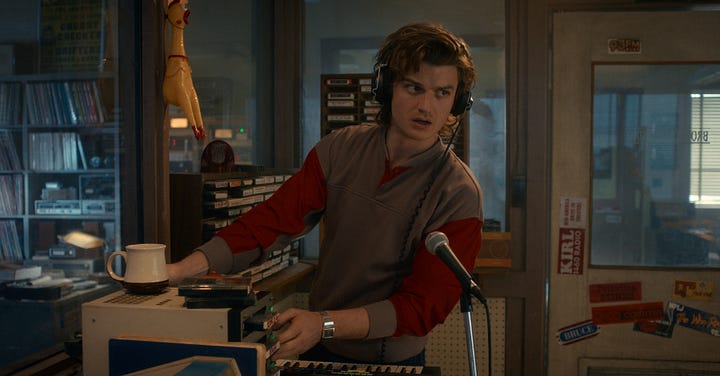
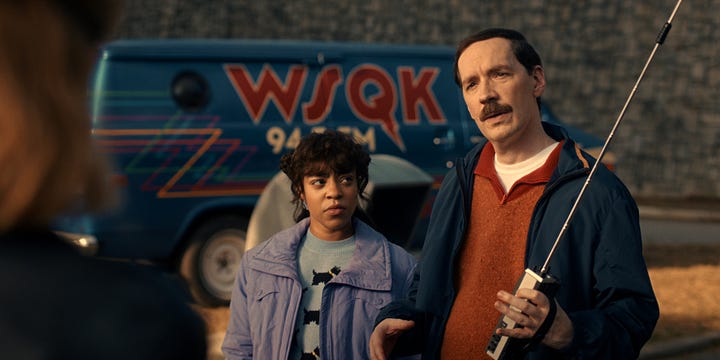
I’ve always liked episodes, like one and two of any season, where (it’s) life in Hawkins, back to normal, and everyone’s doing their thing and going to school. Those are always my favorite; even if it’s crazy and there’s bonkers stuff happening with the monsters and everything, (I try) to have some element of real life that grounds these characters, whether we’re going to see their car or their bedroom or the WSQK van or whatever it is. Or even snacks, just seeing period snacks on the dashboard, even those little things that kind of remind you of where you are and when you are in this storyline is important to me.
Some of the subtle changes just over the seasons have been really fun, like Nancy’s bedroom and how it changed from season one to five, (like) what she kept from Jonathan; those little decisions that are kind of character but real-life heart decisions of what matters to people. That’s what I’ve learned the most, is never lose sight of those things, because I think that matters to fans as much. Even if it’s not on the tip of their tongue about Demogorgons and whatever else, I do feel without some of those heart elements of the connections and the personalities and stuff, it wouldn’t be the show that it is. That’s important.
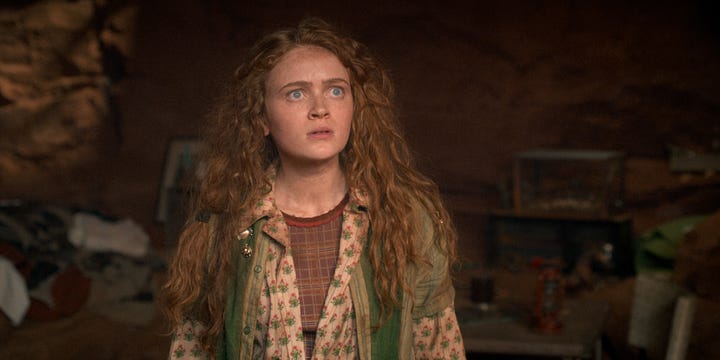

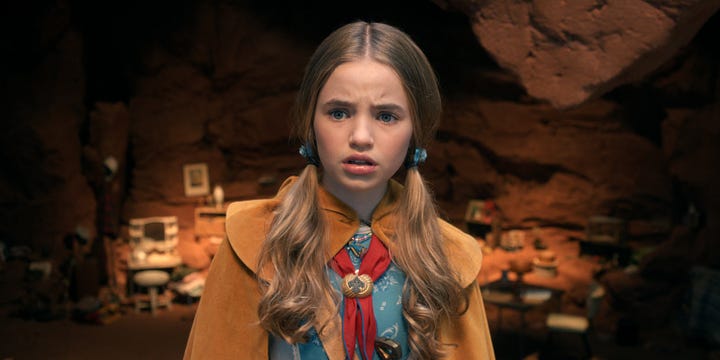
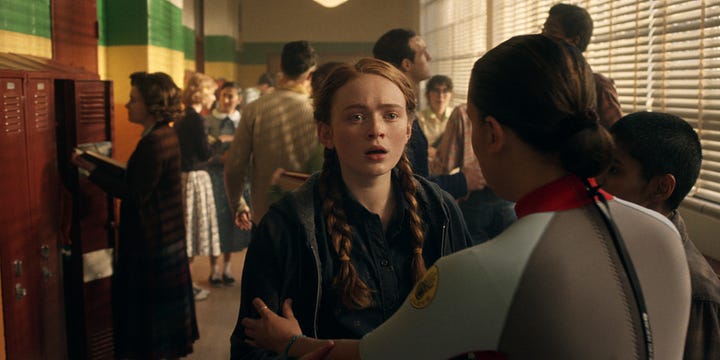
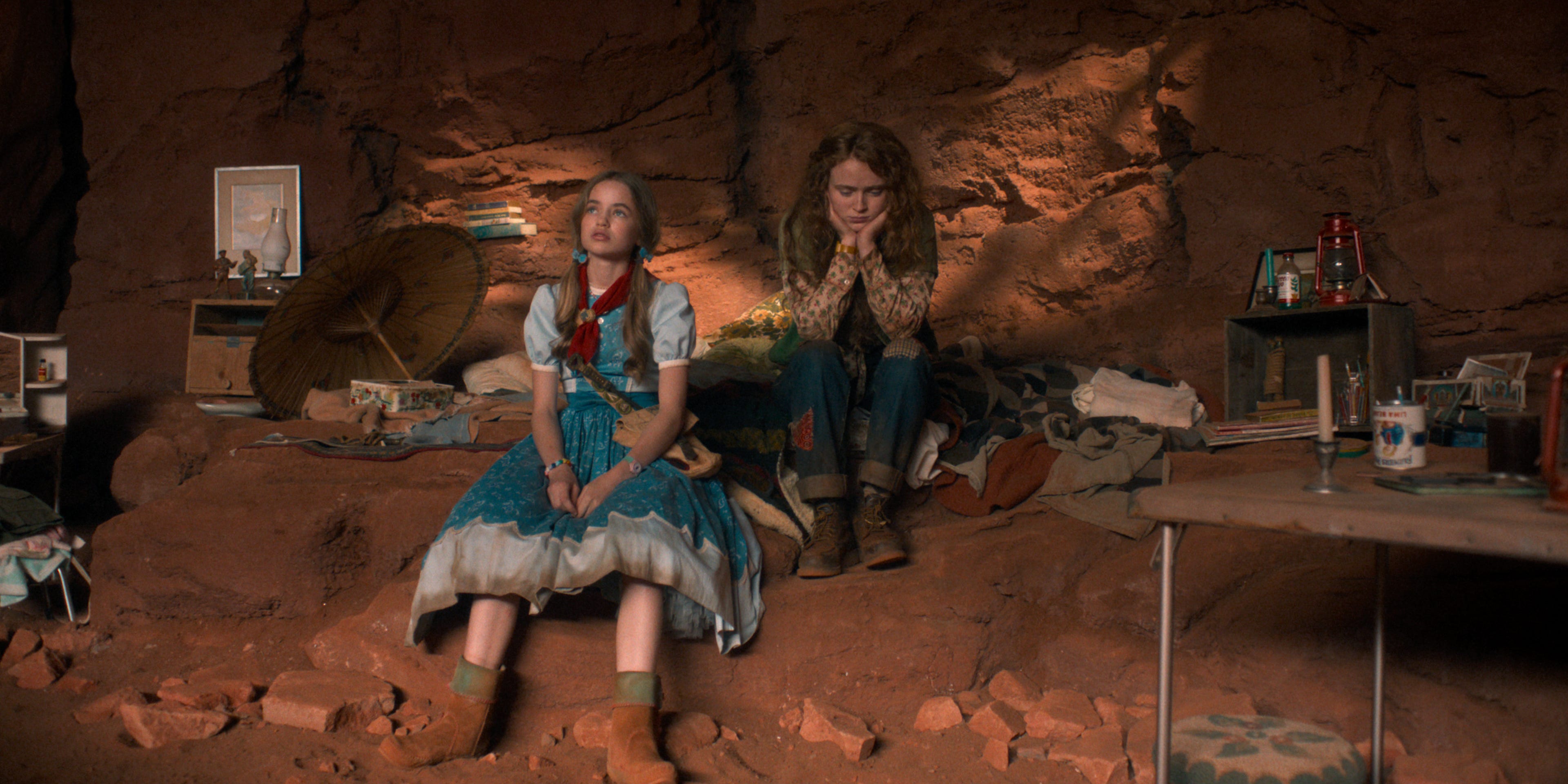
The other location I wanted to ask you about is Max’s cave in the mindscape. How did you and the rest of the art department decide on what exactly to put in there, or maybe what to show about Max and what she’s holding onto in that space?
The hardest sets are never the ones that are the most work; it’s always the ones that I don’t have my head fully wrapped around, or the Duffers have written something but they haven’t fully explained to me what their thought process is. It’s like, OK, she’s gathering stuff from Henry’s memories, but is there anything in particular? Does she need to eat? Or is she just existing in this nebulous space? I did a first pass on the cave with stuff that would’ve been from the high school, like books from the ’50s high school, because we know she goes through there and the house. They were like, ‘No, no, no, we need more, more, more.’ I was like, ‘OK.’ It’s just trying to just think through what memories would Henry have that she has access to, even if we never see them on screen; stuff that she could gather from those places that make some sense that might mean something to her when she sees it, like a mirror — even though she looks like she hasn’t looked in a mirror because she looks crazy with her hair. Just some stuff that your average chick in high school would be like, oh, that’s cool. I’m going to grab that. I’m going to grab that. The books are obvious to pass time, something to make her more comfortable. Just those things until we just kind of kept adding until it all felt like a well-curated 1950s relic, sort of little museum in the cave.
How do you feel to have this season, and this huge part of your career, now behind you?
I felt at peace with what we created in the arc that we did it in. Originally, it was going to be three seasons. When we first started with the Duffers, it felt so small. It was like, if people watched this show, then they were like, ‘OK, we’ll take it for two more seasons and then that’s it.’ I love showrunners who know what their story is. Some of my favorite shows, like The Leftovers, I liked that they always knew exactly what that was going to be.
We did extend it a little longer, so I had already come to terms with it ending, and so when it did, I was like, OK, I like the ending of Eleven off where you don’t really know where she is. For me, it’s good. I still talk to the Duffers and there will probably be a spinoff, like a prequel thing, so it will be fun to work on that and create new worlds.
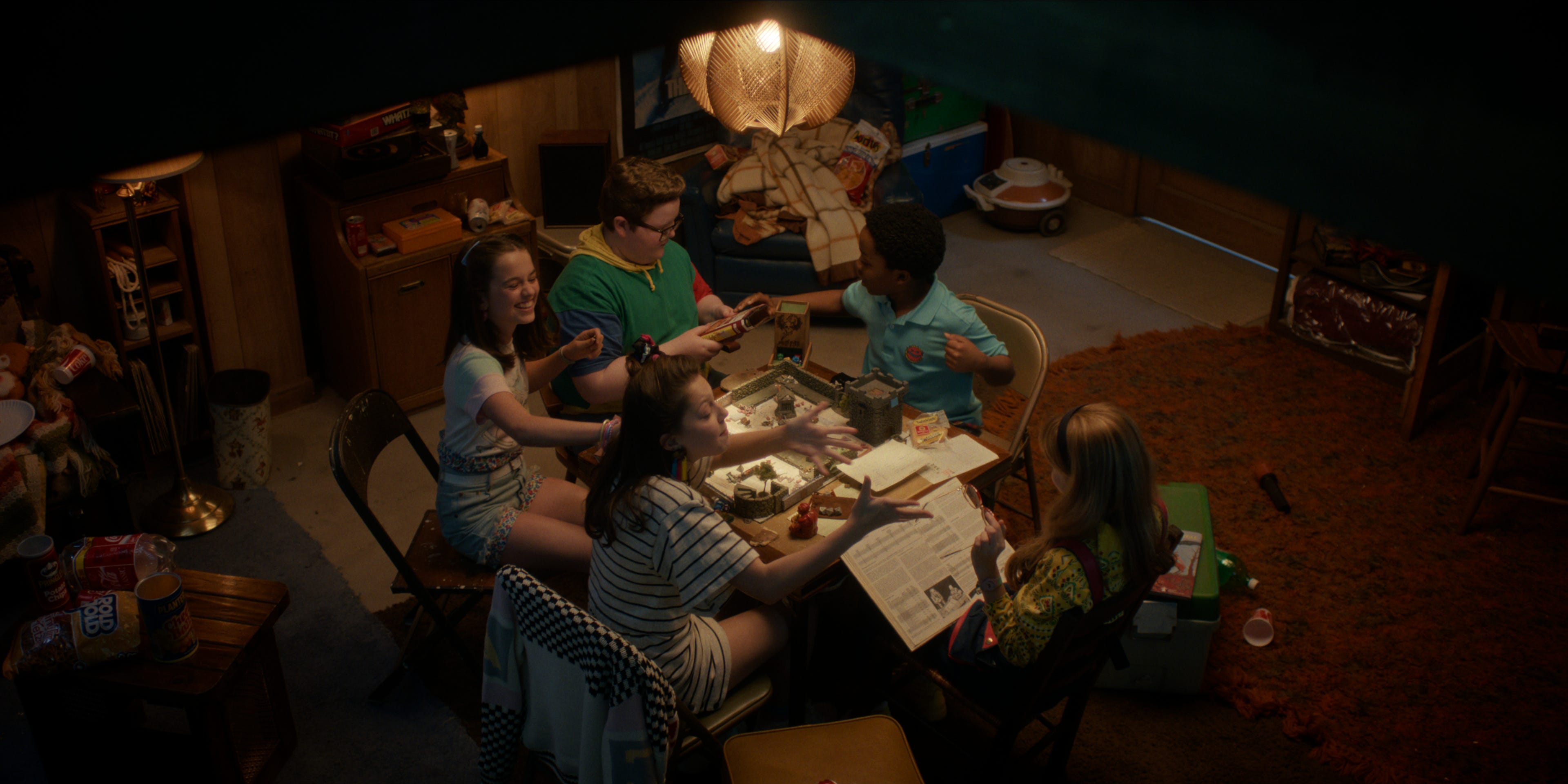
The day of the wrap party was the day we shot the basement scene with the kids, and there were only a few of us there. They were trying to keep it small. Watching them all kind of really feel the emotion — they were crying and we were all emotional — that was a good way to go out. Finishing that day and then going to have a party and kind of calling it, it was (nice). I feel good about it. More things to come.
Stranger Things season five is available to stream on Netflix. The winner of the Emmy Award for Outstanding Production Design For A Narrative Period Or Fantasy Program (One Hour Or More) will be announced on Sept. 6.
No posts
Comments
Nothing yet. Say the first thing.
Sign in to join the conversation.