
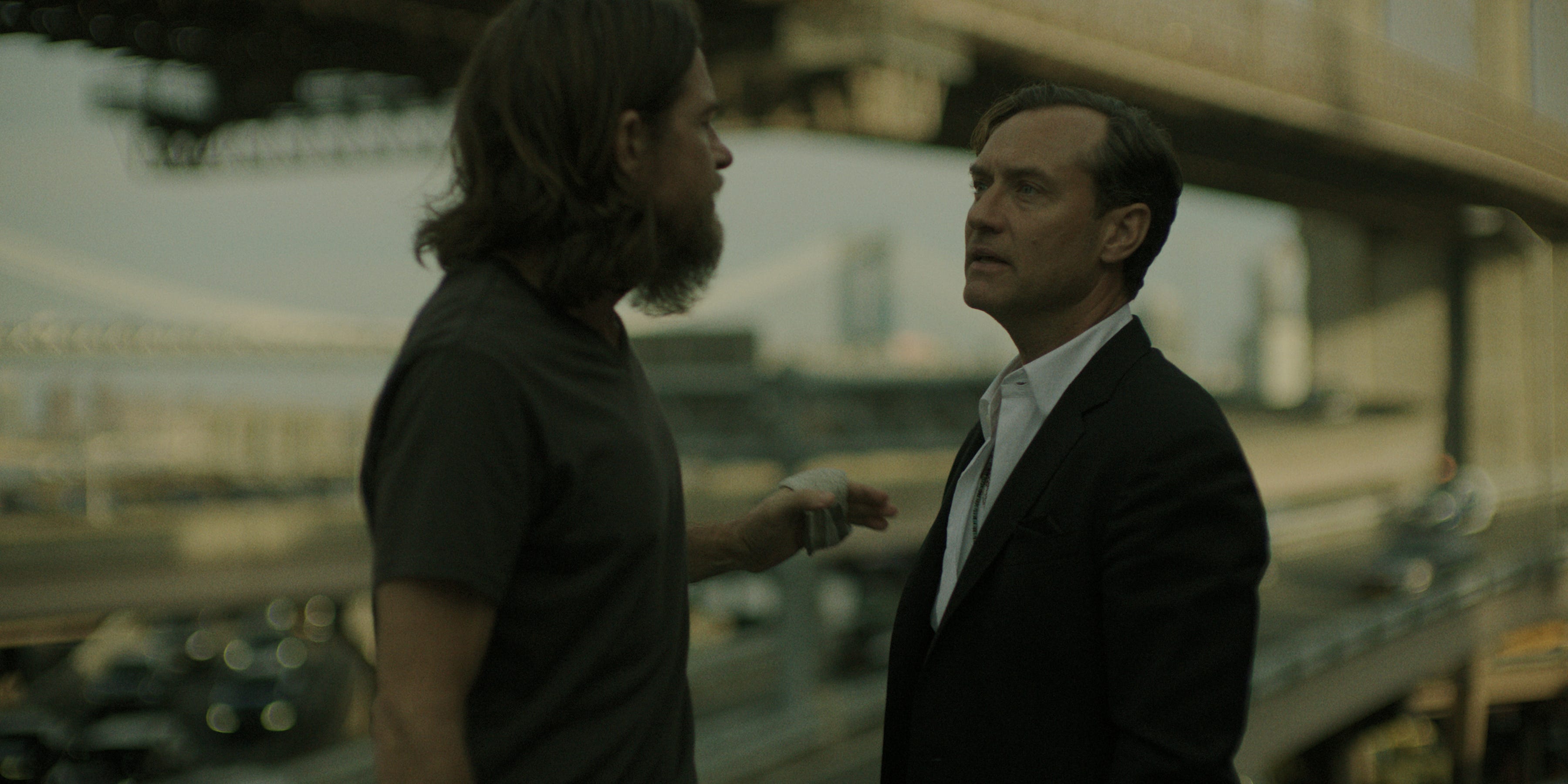
Black Rabbit debuted almost a year ago to positive notices and big streaming numbers. It was recently nominated for 7 Emmy Awards. This gritty NYC dark crime drama pairs Jude Law as Jake and Jason Bateman as Vince, brothers who reunite under the worst circumstances as their lives are put in jeopardy by Vince’s reckless behavior. Composers Danny Bensi & Saunder Jurriaans were brought on by Bateman, who also produced and directed two episodes. Bensi and Jurriaans had worked on the award-winning series Ozark with Bateman for its full run and have worked on over 100 other series and films together as a team. They recently spoke with Immersive about this memorable series.
[This conversation has been edited for clarity and length.]
Talk a little bit about getting involved with this and what that was like.
Saunder Jurriaans: We got on the project because we’ve worked with Jason before, so we were on from the start. He sent us the scripts first. Danny and I both lived in New York for 20 years. We lived through the early 2000s with the whole music scene that the fictional Black Rabbits were a part of. These guys are like maybe what we would’ve been if we hadn’t ended up film scoring. So it was very familiar to us. The vibe was immediately exciting to us, and we know the sounds and energy of the city.
Danny Bensi: We talked a lot about what the sound of New York is in a score. What does that even mean? There is no sound. Some people do a bit of jazz or something… For us, it’s just gnarliness, trash, people, taxis, and the garbage truck. So we had a lot of fun. It all just felt seamless to integrate percussive sound, distorted, and fucked up stuff.
Talk a little bit about your partnership. When did you guys start playing together?
Danny Bensi: We met in the late ‘90s. We formed a band and started playing in 2001. We’ve been playing music together ever since; here we are 25 years later. After all these years, we just get each other, and we get what we like about music and what our strengths are. It’s really fun just to work together. We all know what it’s like to write a piece of music and then second-guess it right away. When you have a partner, you have a second writing brain. It’s wonderful. We’re very fast at doing it now. There’s no egos involved.
So, how did you pick what sort of sounds and instruments to use?
Saunder Jurriaans: At first, we were channeling New York City vibes. We knew we wanted an organic electronic aspect. We have these weird drum machines that we don’t really know how to use. Probably don’t use them. Just pressing buttons and turning knobs and things come out, and it’s great. And then lots of distortion and compression. We wanted to have a little nod to the 2000s rock sound. Quite a bit of the drum kit going on. It’s always cut up and glitched out, but it’s there. There’s a little bit of guitar here and there. Never sounding obvious. Subversively slipping stuff in.
Then throughout the score, a real character that grew in the music was the brass section. There was, there was saxophone. We picked up all the instruments and played them ourselves and with varying levels of competence. We were coming up with some cool sounds; these really breathy, kind of broken, fragile melodies and stuff started to come out through the score. Close to the end, we had six saxophone players doubling the alto and tenor and then three bass saxophone players, a bunch of contrabass low bass clarinets, tuba… all these really low kind of dirty instruments.
We also recorded these interesting experimental textures on the spot. We had a really special sound out of them that sometimes they’re playing really beautiful melodic stuff towards the end of episode eight. There’s a lot of kind of really emotional release that happens. It’s almost like they sound like a violin section at times, like these high saxophones, because there’s so much breath and air and they’re playing, but then there’s something strange about them too.
Now, did you just play them differently, or were there some studio techniques, or did you filter them through?
Danny Bensi: It’s the imperfections of it all. So you hit record, and have everyone play a low D into a crescendo. That’s all you give them. Everyone’s getting started, and it’s perfect because it’s the sound of people getting together and then achieving the D. In those three seconds, there is so much humanity. That’s what we’re looking for. We got them to do all these breathy, long, sort of phases, and then we picked them apart and then put it together later. We want the imperfection, because that is New York. That’s like the subway meeting the trash truck meeting the other thing. It’s a cacophony, but you can make it a beautiful cacophony, and that’s what we tried to do.
I’m sure all the years of experience helped prepare you for this project…
Danny Bensi: It takes years of experience to know the sounds we need. 15 years ago, maybe we would’ve been questioning ourselves like, “Is this gonna work?” Now we’re very sure of ourselves. Part of the experimentation with a group is the beauty that we’re looking for, the imperfections. You can hear the bows on the streets. The intent of the musicians and their playing is what we tried to hone in on and make sure they understood why we’re asking them to play a quarter tone off or start with a quarter tone off, but then meet each other so it’s perfect, right?
At the heart of this show is this relationship between these two brothers, and that relationship is imperfect as most familial relationships are.
Saunder Jurriaans: Jason’s direction, you know, he barely gives us any notes. On episode one, we had a few notes, maybe a couple in episode two, and then nothing for all eight episodes until the end. He said, This is fantastic, guys. It was really to stay away from trying to underscore this relationship, the emotional part of it, because it’s already there. I mean, you can see it, but he really wanted just to constantly feel like things were falling apart and fracturing and distorting. So every time in the beginning when we’d had a few cues in the first pass, we were like, “We gotta give them some warmth, He was like, “No. Pull back, make it dark.”
Danny Bensi: First phone call in the show where he’s like, “Hey, it’s me. You haven’t heard from me in years.” And we were like, “Get out the piano, get emotional so that the audience understands how close they are. Jason’s like, “No. Take that piano out.” We’re so used to hearing that from other shows and stuff. We thought we needed to bring the audience in right away, but the way it’s shot and the acting is so good, so we took it all back and just used very minimal emotive pads and little trinkets. Until the end…
Any favorite moments? Favorite cues? Favorite anything?
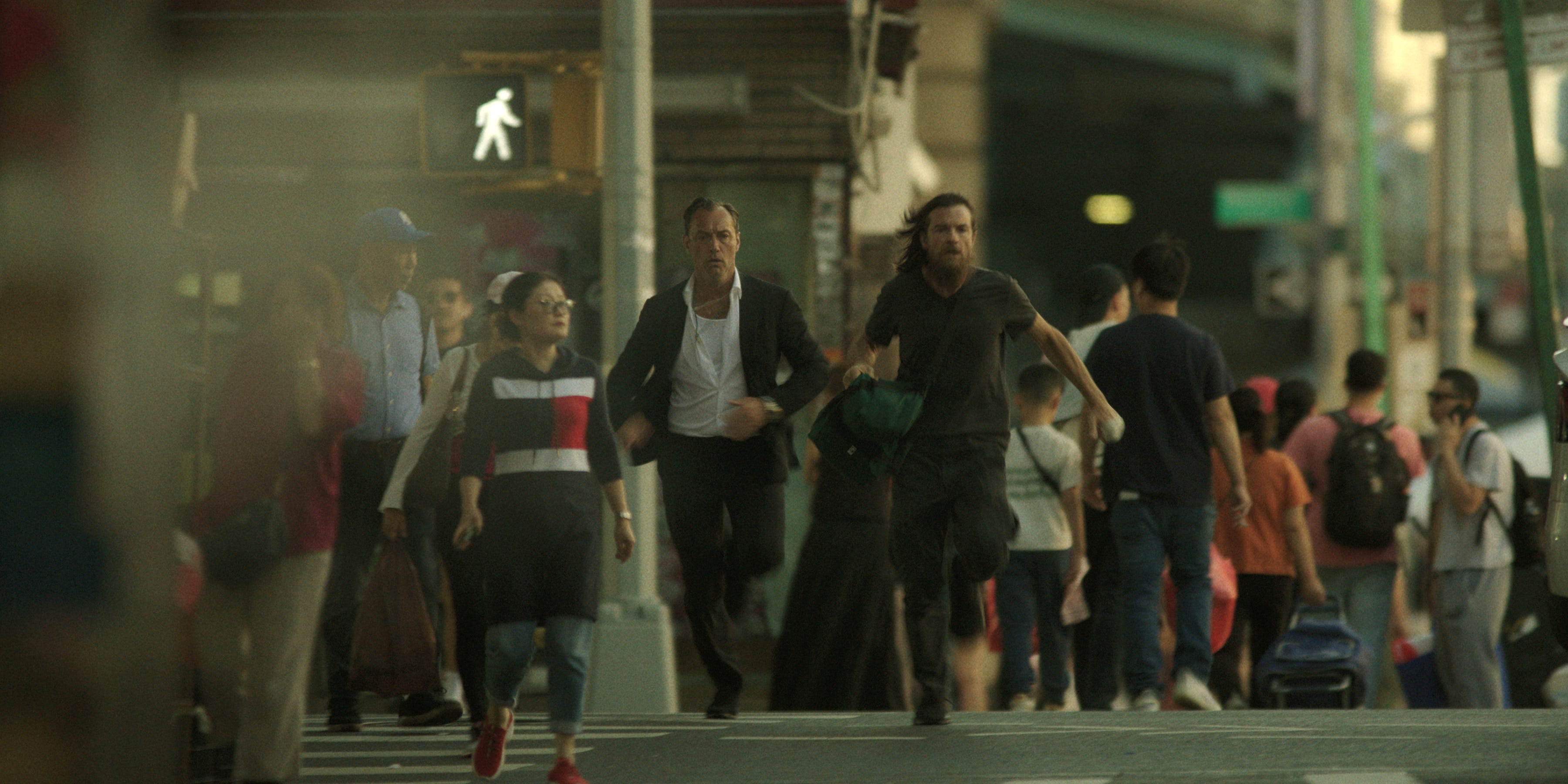
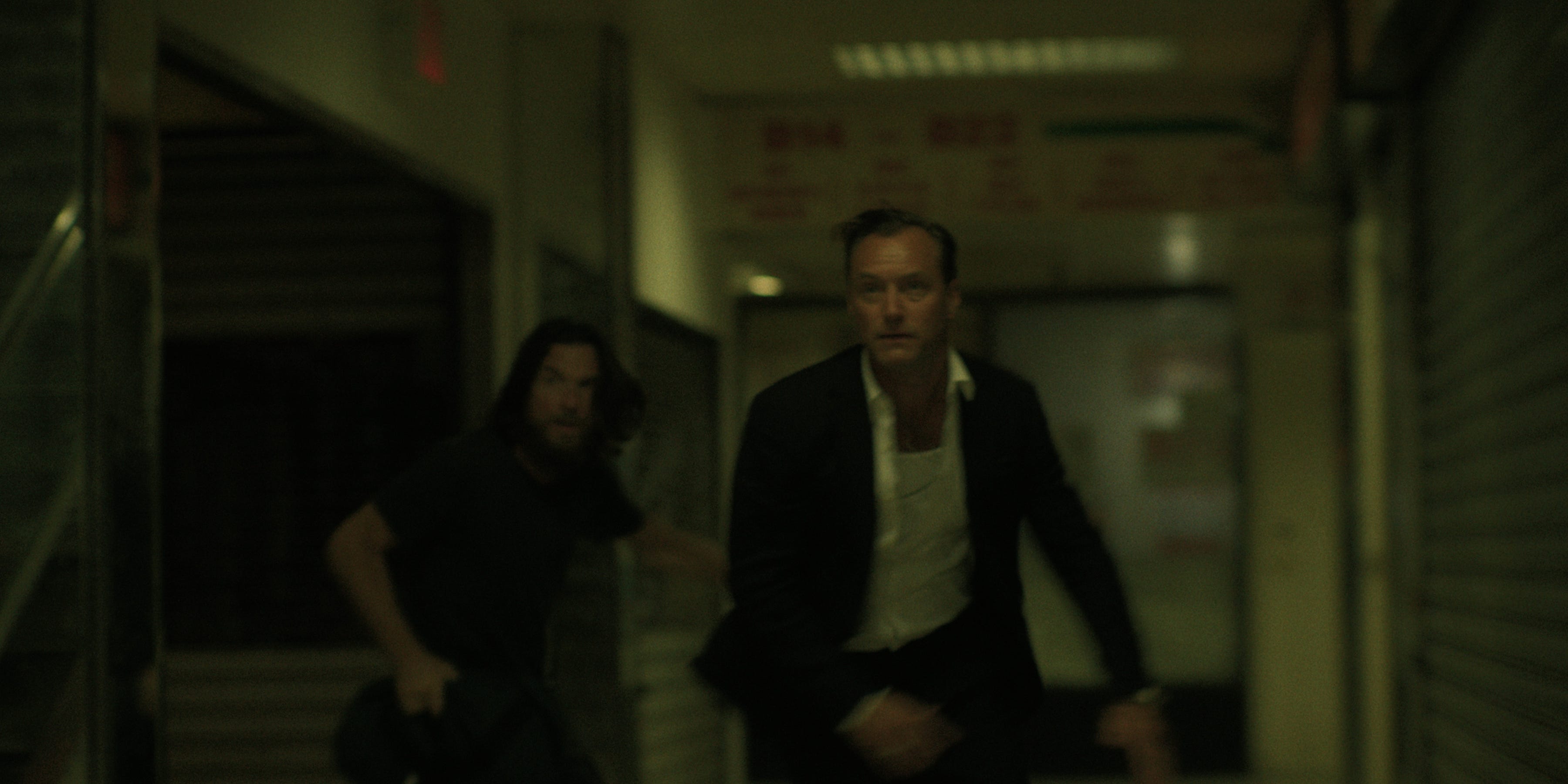
Saunder Jurriaans: I think we both love the last cue. It’s probably the most emotional cue in the whole series. It’s got a lot of that weird brass orchestra going on and a little piano. It’s actually the last three cues. It’s kind of a sequence. I do have to say that there’s an episode seven cue that I do love in the chase scene. It’s this jagged kind of fucked up, mistake-filled thing, but it works so well. We kind of did it by accident.
Danny Bensi: My favorite is the motif for the mafia guys. Whenever the two younger guys are chasing Jason, it’s just a four-note, five-note synth that Saunder came up with. It isn’t even melodic. It’s just sounds that fall and then land in a weird place. I just love it to death because you cannot describe it. It’s not in a key. It’s not in a rhythm. It’s just a thing which is so iconic that it lasts through all eight episodes. Amidst the cacophony of New York, when he’s in Tompkins Square Park, when he’s walking through it, and they’re starting to follow him. There’s no heartbeat thing. You just know that it’s danger and you know that the, that there’s drama unfolding and you’re starting to get tense. But it’s the simplest cue in the world.
It really does sound frenetic, like, where it just sort of drifts off and comes back, and there’s just so many interesting ideas that hit you subconsciously. This show was very well received. What’s it been like being part of this one?
Saunder Jurriaans: It’s funny because I felt like when it came out, I thought it would be a bigger deal than it was. My theory was that people are not really in the right headspace to deal with this darkness and despair. It’s a hard show to watch in a lot of ways, all the way up until the end. It’s pretty nerve-wracking. Ozark was similar in its darkness, but that was a different time. I think people were more open to kind of going for that ride. All the Emmy attention is kind of validating that maybe it was just an under-the-radar kind of hit, weirdly.
Black Rabbit is now streaming on Netflix.
No posts
Comments
Nothing yet. Say the first thing.
Sign in to join the conversation.