
This live blog is being updated from August 21 to August 31.
Thank you for reading our updates and highlights. Our International and Monetary Economics Network has been developing in an impressive way, and we would like to express our sincere thanks to our members as well as to all individuals and organizations who have supported us with donations. You can become a member using this form or by joining us on Substack as a paid subscriber. We are open to collaborations, and we support our network members in realizing high-quality projects. Through our channels, we now reach more than 70,000 subscribers and followers.
In our webinars and in-person events, members of the network or guests are invited to present. We welcome high-quality presentations by senior and junior economists from academic, finance, or policy-oriented backgrounds.
Webinar “Beyond the Short Run: Monetary Policy and Innovation Investment”, Olga Goldfayn-Frank (German Bundesbank), joint work with Michaela Elfsbacka-Schmöller and Tobias Schmidt, September 16, 16:00 – 17:00 CEST.
“This paper investigates the impact of monetary policy on firms' innovation investment using unique, representative firm-level data. We provide novel evidence on how systematic monetary tightening, exogenous policy rate changes and forward guidance affect innovation spending, challenging traditional assumptions about the transmission channels and persistence of monetary policy and its effects on longer-term aggregate supply.”
Webinar “Ideas and Firm Dynamics: When It Takes Two to Tango”, Jane Olmstead-Rumsey (London School of Economics), joint work with Seula Kim and Honghao Wang, September 22, 16:00 – 17:00 CEST.
Abstract: “Teams of inventors now produce over 80% of U.S. patents, up from just 45% in 1976. Over the same period, inventor employment has become increasingly concentrated in large firms, rising six times more than overall employment concentration…Because firms do not internalize knowledge spillovers, there is misallocation of inventors across firms. The rise of team production amplifies this misallocation by a factor of six by reallocating inventors away from small firms that generate disproportionately large knowledge spillovers.”
Highly relevant! " "Following decades of secular decline, many estimates of r*—the natural or steady-state short-term real interest rate—have risen roughly 1 percentage point since 2020 in the United States. The most prominent explanations attribute this reversal to heightened expectations of rising government debt and faster productivity growth from artificial intelligence (AI). However, a high-frequency event study finds that news about fiscal and AI developments does not explain this increase. Furthermore, contrary to earlier evidence that persistent shifts in longer-term yields occurred around monetary policy meetings, we find that monetary policy news does not account for the recent rise in r*."
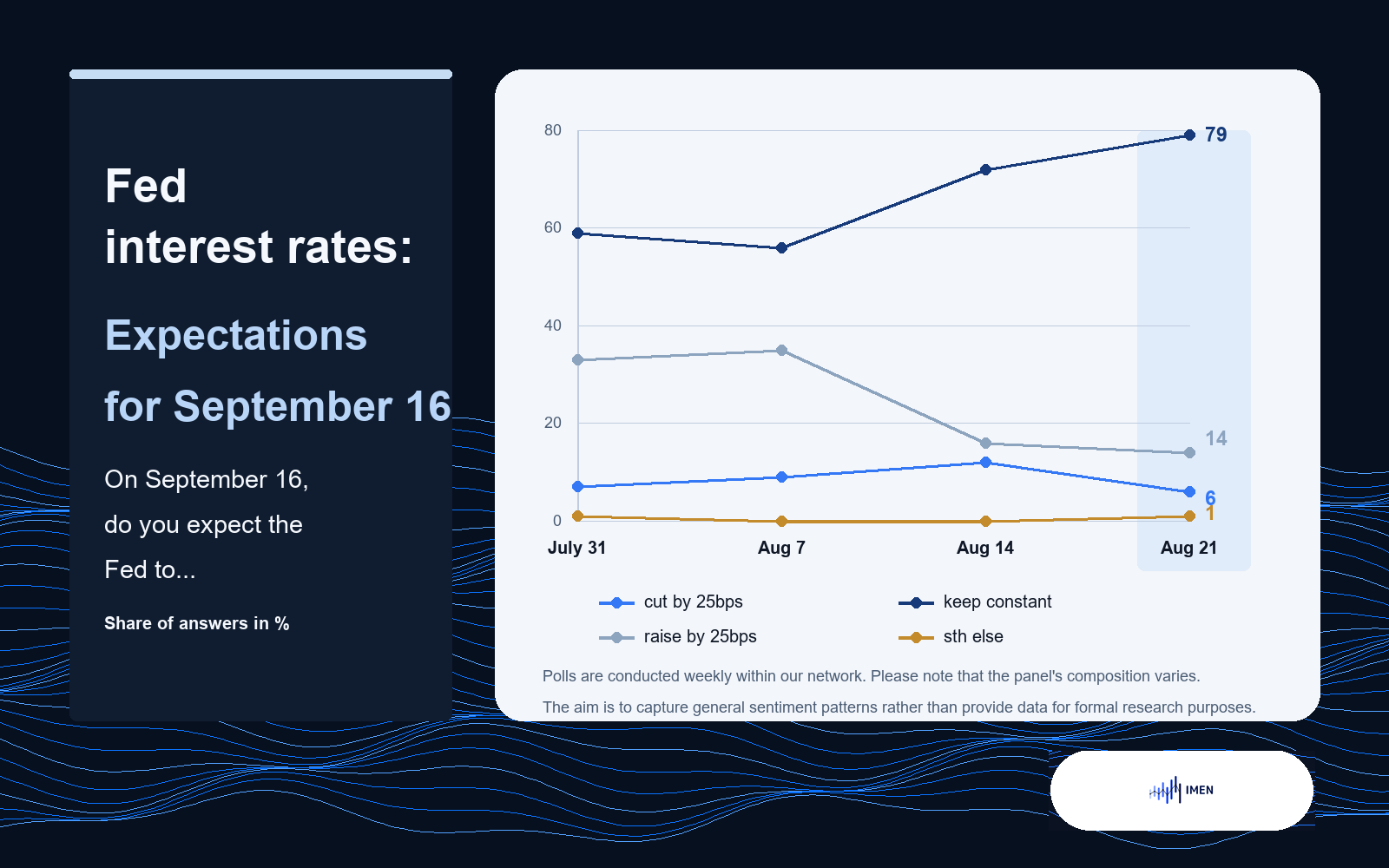
U.S. monetary policy: Most participants in our poll expect the Fed to keep interest rates constant on September 16. This share has recently increased.
Euro Area Economy Flash: August 2026 In the second quarter of 2026, GDP growth in the euro area was stronger than many observers had expected.
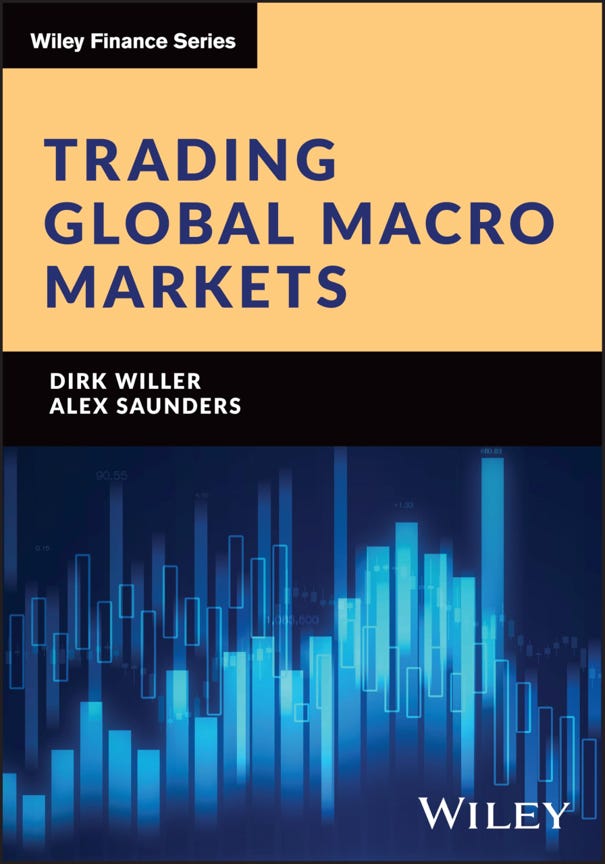
Very valuable! " "In Trading Global Macro Markets, accomplished global macro veterans Dirk Willer and Alex Saunders deliver a complete and incisive guide to navigating global macroeconomic trends as the low volatility world of quantitative easing gives way to the post-pandemic world of increased interest rates and macro volatility. The authors offer coverage of every major asset class, from government debt and credit to equity, commodity, and foreign exchange markets, along with back-tested frameworks going back over two decades and more that illustrate how to trade each class and how to make cross-asset trading decisions."
Really cool! "Macroeconomics" by Marina Azzimonti, Per Krusell, Alisdair McKay, and Toshihiko Mukoyama. "Macroeconomics offers a modern and comprehensive introduction to the tools and methods that define contemporary graduate training in the field. Written for first-year PhD students and advanced MA/MS students, the book provides a rigorous yet accessible foundation in dynamic optimization, recursive methods, competitive equilibrium, stochastic modelling, and welfare analysis. Building on these foundations, the text applies macroeconomic tools to consumption, savings, labor supply, unemployment, economic growth, business cycles, fiscal and monetary policy, inequality, and international macroeconomics. Combining rigor, intuition, and empirical relevance, this book serves as both a core graduate resource and a long-term reference for modern macroeconomic analysis."
Available for pre-order on Amazon
At IMEN, we independently select the events featured on our social media channels. However, we warmly encourage everyone to contact us with suggestions. Events may include, for instance, research- and policy‑oriented conferences, workshops, seminars, or panel discussions. You can use this form.
Below, you will find our other updates and highlights. By becoming an INEM member, you can help us further expand our activities – and enjoy special benefits. If you prefer not to join us on Substack as a paid member, membership is also available via this form.
Comments
Nothing yet. Say the first thing.
Sign in to join the conversation.