
This live blog is being updated from August 12 to August 23.
Thank you for reading our updates and highlights. Our International and Monetary Economics Network has been developing in an impressive way, and we would like to express our sincere thanks to our members as well as to all individuals and organizations who have supported us with donations. You can become a member using this form or by joining us on Substack as a paid subscriber. We are open to collaborations, and we support our network members in realizing high-quality projects. Through our channels, we now reach more than 70,000 subscribers and followers.
This looks like a must-read! " "As of 2026, humanity is likely below replacement fertility. That has never happened before, not in wars or pandemics. But the real surprise is that the fall has been concentrated in low- and middle-income countries and among poorer and less educated women. We fit a single-factor model to 236 countries since 1950: the common component peaked in 1978, and what drives fertility down today are country-specific trends, 219 of them negative and not one leveling off. None of the commonly cited mechanisms can account for this pattern, so we offer a conjecture: modernity itself, which makes a third child expensive and childlessness cheap. Children come in integers, so it takes very little to move a cohort’s fertility rate from 1.8 to 1.3. And nothing in an economy pushes fertility back to 2.1. We close with the main economic consequences, in particular slow growth."
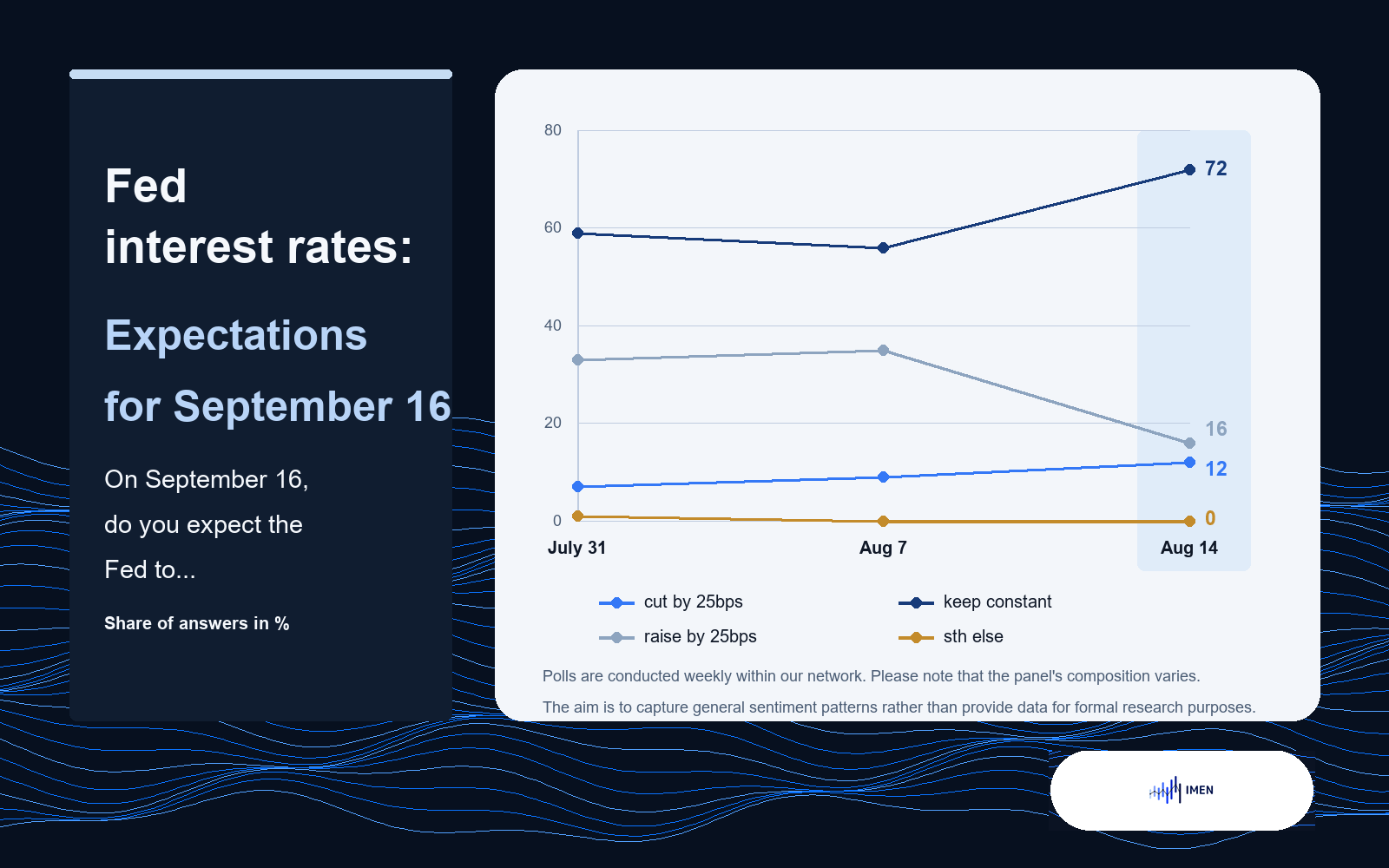
U.S. monetary policy: Most participants in our poll expect the Fed to keep interest rates constant on September 16. This share has recently increased.
Euro Area Economy Flash: August 2026 In the second quarter of 2026, GDP growth in the euro area was stronger than many observers had expected.
Great Books for Summer or Winter Reading: Thought-provoking, perhaps controversial, and definitely worth reading!
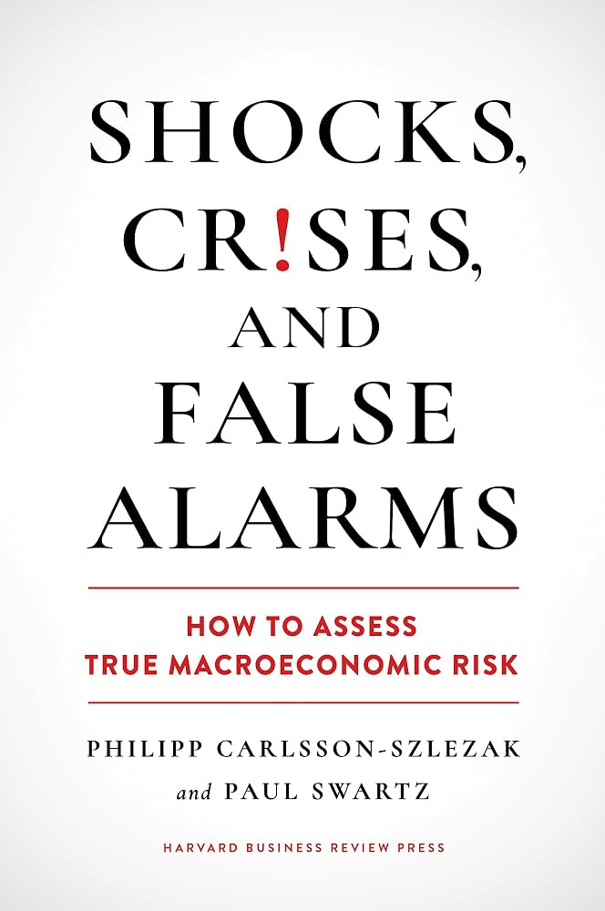
"Shocks, Crises, and False Alarms: How to Assess True Macroeconomic Risk" by Philipp Carlsson-Szlezak and Paul Swartz. "In this perspective-shifting book, BCG Chief Economist Philipp Carlsson-Szlezak and Senior Economist Paul Swartz provide a fresh and accessible way to assess macroeconomic risk. Casting doubt on conventional model-based thinking, they demonstrate a more powerful approach to building sound macroeconomic judgment. Using incisive analysis built upon frameworks, historical context, and structural narratives—what they call "economic eclecticism"—the book empowers readers with the durable skills to assess continuously evolving risks in the real economy, the financial system, and the geopolitical arena."
At IMEN, we independently select the events featured on our social media channels. However, we warmly encourage everyone to contact us with suggestions. Events may include, for instance, research- and policy‑oriented conferences, workshops, seminars, or panel discussions. You can use this form.
Below, you will find our other updates and highlights. By becoming an INEM member, you can help us further expand our activities – and enjoy special benefits. If you prefer not to join us on Substack as a paid member, membership is also available via this form.
Comments
Nothing yet. Say the first thing.
Sign in to join the conversation.