

It is important to begin with empathy. There are seniors in Ohio who are worried. Property tax bills have increased in many communities following reassessments and rising home values. For retirees living on fixed incomes, even a few thousand dollars in additional annual expense can feel destabilizing. For someone who paid off a mortgage years ago and structured retirement around predictable costs, a rising tax bill can create real anxiety. That fear should not be dismissed.
But acknowledging that concern is different from concluding that eliminating property taxes is the right solution. When we examine the data, the structure of Ohio’s housing market, and the economics of tax policy, the claim that property taxes are broadly forcing seniors from their homes does not hold up.
There is no publicly available data showing a widespread wave of senior homeowners in Ohio losing their homes specifically because of unpaid property taxes over the past decade. Counties report delinquency and foreclosure totals, but they do not publish senior-specific tax foreclosure figures, and there is no documented statewide crisis of senior displacement tied directly to property tax nonpayment.
Ohio also already provides relief mechanisms, including:
The Homestead Exemption
Tax payment plans
Foreclosure diversion programs
Legislative proposals aimed at shielding vulnerable seniors
If thousands of seniors were routinely losing homes due to property tax delinquency, the data would reflect it. It does not.
Recent Ohio senior household data indicates:
Approximately 81% of Ohio seniors own their homes
About 19% rent
Roughly 9–10% receive SNAP benefits
Around 6–7% receive SSI
The overwhelming majority receive Social Security
Even when estimating assistance by tenure, most senior homeowners are not on means-tested public assistance. Renters are significantly more likely to receive income-based aid than homeowners.
This does not mean seniors are universally wealthy. It does mean the political narrative implying that senior homeowners are broadly impoverished and being systematically taxed out of their homes is overstated.
Where financial pressure is real, and widely felt, is in the frozen housing market.
For decades, downsizing was one of the most practical financial tools available to retirees. A typical life cycle looked like this:
Buy a modest starter home
Move up while raising a family
Sell the larger home in retirement
Purchase something smaller and less expensive
That final move often:
Freed up home equity
Reduced monthly expenses
Lowered maintenance costs
Decreased utility bills
Sometimes reduced tax exposure
Seniors could unlock accumulated equity, purchase a smaller home outright, eliminate mortgage payments, and stabilize retirement cash flow.
Downsizing was not just lifestyle, it was retirement planning.
Today, that pathway is increasingly blocked.
Many Ohio homeowners refinanced into 2–3% mortgage rates in recent years. If they sell today and purchase another home, even a smaller one, they face significantly higher interest rates.
The result:
Higher borrowing costs
Comparable or higher monthly payments
Reduced financial incentive to move
A senior may sell a 2,400-square-foot home and find that a 1,400-square-foot townhome carries a similar monthly payment because of financing costs. That creates “rate lock-in,” discouraging mobility.
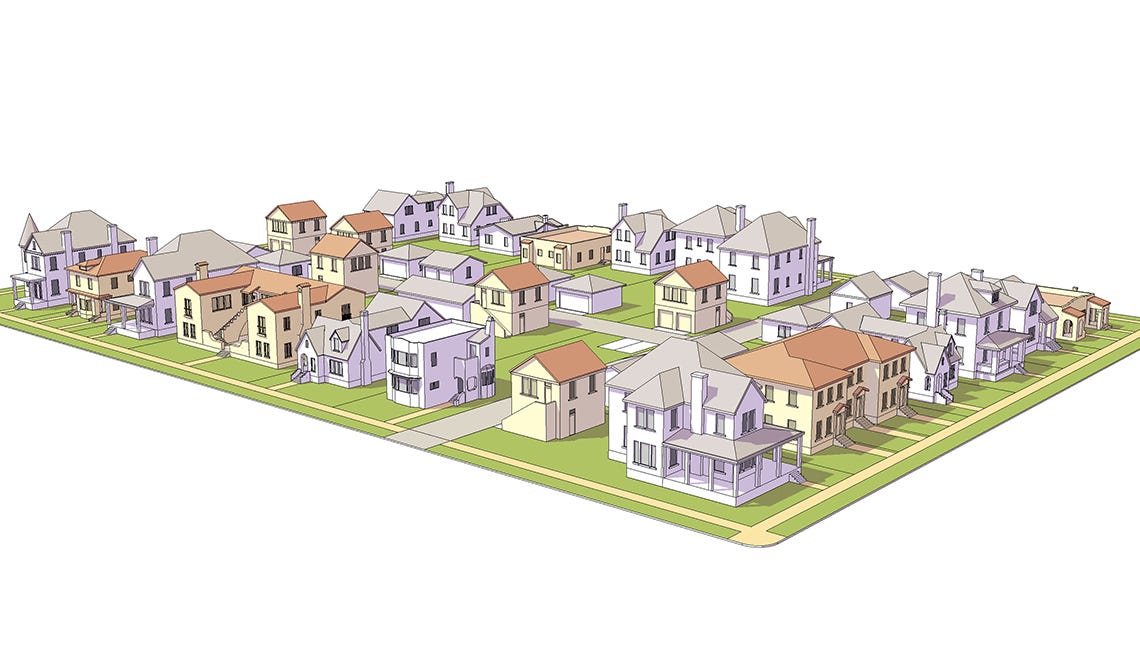
For much of the 20th century, communities built:
Small detached homes
Duplexes and triplexes
Townhomes
Ranch-style single-floor units
Cottage courts
These housing types were naturally more affordable because they were smaller and built more efficiently.
Over time, zoning policies limited many of these forms. New construction shifted toward:
Larger single-family homes
Luxury developments
High-end apartments
The result is a structural mismatch:
Seniors want smaller, accessible homes.
The market often builds larger or more expensive units.
Even when seniors sell at a gain, they frequently discover:
Smaller homes are scarce
New smaller homes are priced at a premium
HOA fees offset any savings
Property taxes on new builds are comparable
Instead of downsizing improving financial stability, it often feels like a lateral move.
Property taxes are visible and politically tangible. They arrive in a bill. They can increase after reassessment. They are easy to campaign against.
But eliminating property taxes does not:
Build smaller homes
Lower mortgage rates
Increase housing mobility
Expand affordable supply
What it does do is capitalize tax savings into higher property values. Buyers bid more. Investors pay more. Existing owners see asset appreciation.
The economic effects are predictable:
Home prices rise
Entry barriers for younger buyers increase
Renters see no benefit
Local governments shift revenue to sales taxes, income taxes, and fees
Those replacement taxes disproportionately affect lower-income residents, who spend a larger share of their income on daily necessities.
The result is a regressive transfer:
Wealth embedded in property increases.
The tax burden shifts toward wage earners and consumers.
The deeper issue facing many seniors in Ohio is not mass tax foreclosure. It is:
Housing supply constraints
Zoning restrictions
Interest rate lock-in
Limited downsizing options
Income growth that has not matched housing appreciation
When the housing market is frozen, financial pressure increases. Property taxes become the most visible part of that pressure, but they are not the root cause.
If the goal is truly to help vulnerable seniors, targeted solutions exist:
Expanded homestead exemptions
Income-based circuit breakers
Property tax deferral programs
Legalizing missing middle housing
Encouraging accessory dwelling units
Those approaches directly address hardship without distorting the broader housing market
.
Eliminating property taxes, by contrast, would primarily benefit existing property owners, especially wealthier ones, while shifting costs onto younger and lower-income residents.
Seniors deserve stability and dignity.
But solving a structural housing problem requires structural solutions, not a sweeping tax policy that risks deepening inequality while claiming to prevent a crisis that the evidence does not show is widespread.
No posts
Comments
Nothing yet. Say the first thing.
Sign in to join the conversation.