
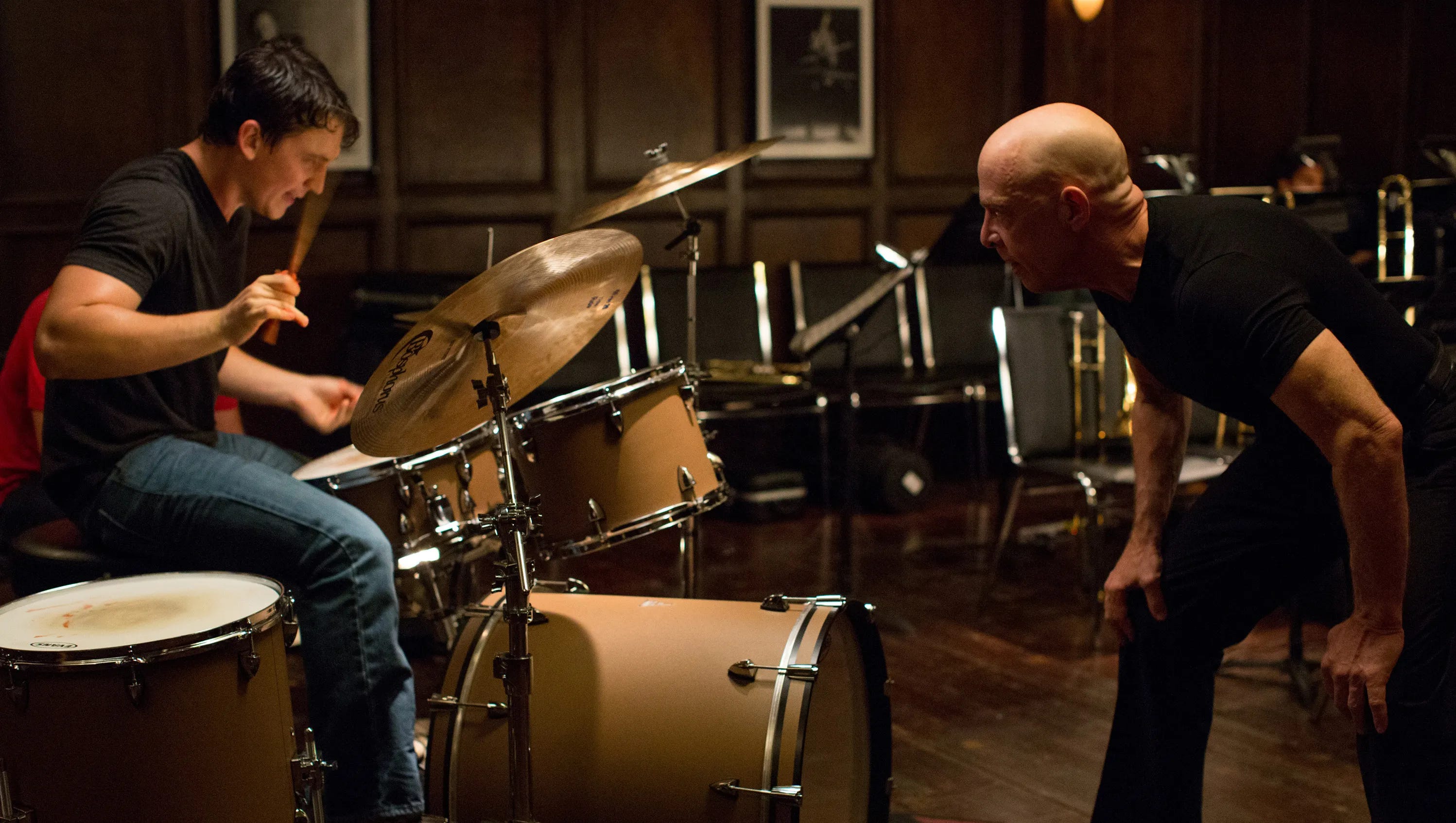
“I don’t think people understood what it was I was doing at Shaffer. I wasn’t there to conduct. Any fucking moron can wave his arms and keep people in tempo. I was there to push people beyond what’s expected of them. I believe that is… an absolute necessity. There are no two words in the English language more harmful than ‘good job’.”
— Whiplash
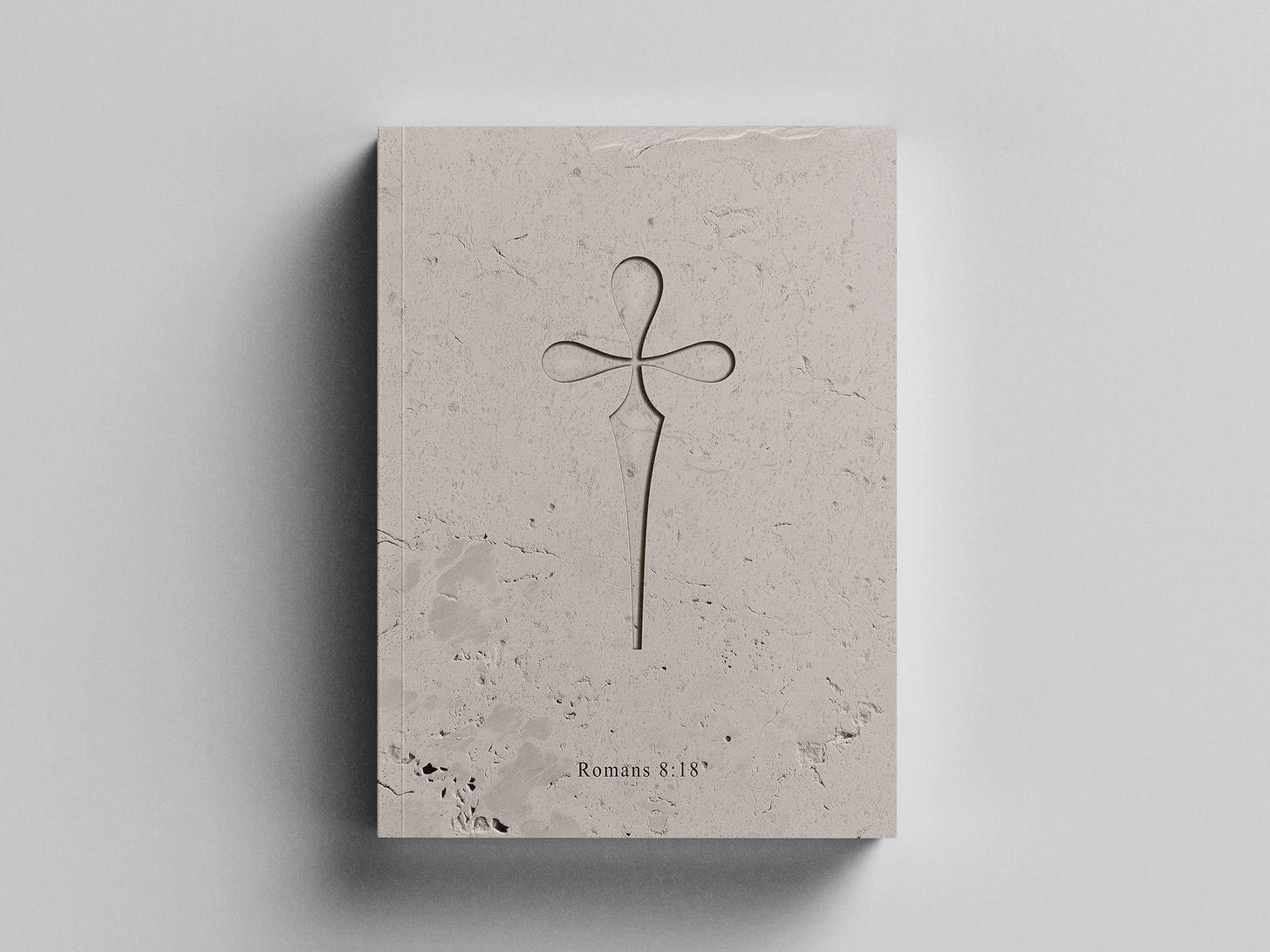
Friday, August 29th. 4.30 am. Yesterday, my freshly printed advanced copy of The Culture Stone arrived. I was surprised to realize that, unlike previous issues I also designed, I was overall satisfied with the final result.
I recall receiving my copy of IM1 back in the Spring of 2022, the first book I ever designed. My heart stopped beating for a good 10 seconds. I had a restricted budget at the time, so I decided not to pay a color correction specialist, despite a friend warning me it was necessary. I’d end up spending $2,500 out of my own pocket to fix two images that looked too dark, plus an additional $750 to have a color correction specialist review the entire book.
This time, with a couple of minor exceptions, all the images look as good as I hoped. So what’s keeping me up at night?
You can’t write, edit, and design a 216-page book yourself and expect it to have no grammatical errors, even with someone like Lafayette Lee in charge of proofreading. So it’s not the typo on page 117. Perhaps it’s knowing that if I’d taken the time to give it one extra read, not only would I have caught the typo, but I would have thought of at least one way to improve the book.
This is my experience with writing, particularly with design. I don’t know how to improve something until I decide to search for that one sentence or spread that provokes a feeling of unease in my gut. At first glance, nothing is ever missing. It’s only when I remember to listen to that feeling and trust it that the next piece of the puzzle is revealed, and the next one, and the one after that, and the one after that…
I call this process “chasing the rabbit.” I’m not exactly sure what the rabbit is, but I know the little fucker is a trickster. He’s always preventing me from achieving my full potential. He knows perfection as such is out of my reach, but that’s not enough. He always wants me to be as far away from it as possible. It’s that voice in my head suggesting it’s time to let go, that whatever I’m attempting to achieve, at any moment, it’s as good as it can be. It’s the whisper in the middle of the night telling me, “good job.”
“You’re waiting for a train. A train that will take you far away. You know where you hope the train will take you, but you can’t know for sure. Yet it doesn’t matter. Now, tell me why?”
— Inception
Sometimes I wonder if the Muse is just the product of my subconscious. If that’s the case, would that make her any less real?
I don’t know if the Muse is simply the voice of Father speaking through her, without her being aware of it. All I know is that I trust her. She’s a bit of a tyrant, constantly demanding more, but that’s exactly what she’s supposed to do. I’m not even sure she likes me; there’s a good chance she hates me. Personally, I love her. Whatever you ask, queen. Every time I hear her voice, I’m reminded of what a humbling experience it was to stand below the hill and gaze at the statue of the King. That’s where I first experienced genuine humility; in May 2025, right before I decided to write my confessions.
It was the kind of humility that can only come from understanding pain. Not physical pain. Rather, the psychological burden of bearing everyone else’s ‘typos’. Where does one find the will to pray for his own torturers as well as all the rest of humanity, while he’s being tortured to death, and mean it? I can barely resist the temptation to take it out on the clerk when I’m having a bad day.
I recently cancelled my attendance at NatCon, where I was scheduled to give a speech on Art on the Right. I have nothing against the organizers, but I didn’t want to be reminded of how ‘good’ I am compared to gender studies professors and corrupt bureaucrats. If there’s one thing I learned ever since that night in the alley (also known as rock bottom), it is that true ambition must come from guilt and shame.
It has been a privilege to collaborate with numerous political projects and individuals over the past five years, since launching this project. But my talk was going to be on Culture. Could I have kept my speech straight? Probably not. My buddy and colleague Benjamin Roberts—Talent with a capital T—sent his resume to every conservative magazine and think tank this summer. He barely heard back from any of them.
Here’s a charismatic young man who went through a significant trauma (lost his father when he was three years old); grows up to become a fine writer (off-the-charts compared to his age peers); leaves home to experience life; makes all the correct mistakes; has a mid-20s crisis where he finds God; becomes even a more profound thinker as a consequence; finally he’s ready to embark on a career. The problem? “He lacks experience in the corporate world, and he tweeted that meme. Not a good fit.”
Title for the speech? [REDACTED]
(Yes, you could tell all this from his writing.)
I have a fair bit of respect for many Conservatives and policymakers in DC, but I wasn’t in the mood for celebrating Conservatism’s Pride Week. If I were a policymaker landing a job at the Heritage Foundation, I wouldn’t celebrate it on LinkedIn. I would feel ashamed. Not because it’s a step in the wrong direction, but because it’s a thousand miles away from the destination. Could I upgrade the Declaration of Independence? That’s what the world needs right now: a return to obsession and the pursuit of perfection. I hold this truth to be self-evident.
Alexander Hamilton and James Madison were in their early 20s?!
Quentin Tarantino plans to quit filmmaking after his tenth movie. It’s not because he wants to retire, but because the thought of becoming a ‘good director’ haunts him. Leonardo da Vinci apologized for his work on his deathbed because the obsession for Perfection followed him to the afterlife. That’s the only place the Golden Age of Culture can emerge from: the artists’ desire to reach for the Eternal. Talking no longer makes a difference, online or off—no more TED talks; more sweat, more blood.
Would a 29-year-old Tarantino, a video store clerk with no discernible experience in the film industry, have managed to get $600,000 for Reservoir Dogs at a conservative fundraiser? Remember the torture scene? What would the conservative donor class have required of a Complete Unknown like Tarantino? To watch his language on X? To Tarantino? To Quentin Tarantino?!
“English, Motherfucker, do you speak it?”
We all know that the Conservative donor class is culturally incompetent. But they are not the only problem. The average ‘disaffected’ young writer online has tweeted over 50,000 times in the last five years. When you do the math, it amounts to the length of 4-6 novels (that doesn’t include the words typed in group chats). Wouldn’t their situation be better if they could walk up to donors with a few manuscripts instead of 4,000 “followers”? Is anyone willing to go into the desert for six months and come back with a script? TL:DR: stop asking your mutuals to share your Substack articles. Find an editor willing to say that You Suck, especially if you don’t.
I hear a lot of influential people on the Right complaining that the state of online discussion has severely deteriorated (privately). The solution is to stop comparing ourselves with the Left. We can ratio New York Times columnists into oblivion, no problem. Relatively speaking, that’s great. But can we write an article and make Hunter S. Thompson look like an amateur? Can we make Nietzsche sound dumb? Jung? Memes won’t come to the rescue with that kind of ambition. As I wrote in ‘War of Angels’:
How can inspiration arise from a platform that incentivizes displays of ugliness? This problem is further exacerbated when artists are forced to compare themselves with left-wing propaganda. Yes, “left-wing art” is terrible, but nowhere near as bad as the non-ideological middle-of-the-road stuff that never gets attention online, some of which is actually great. All platforms like X do for conservative and right-leaning artists is lower the bar.
Does anyone still genuinely believe the Golden Age of Culture can emerge from the virtual realm? What’s the argument?
Would you believe it if I told you I nearly died four times this summer? And what if I told you that, despite that, it was the best summer of my life?
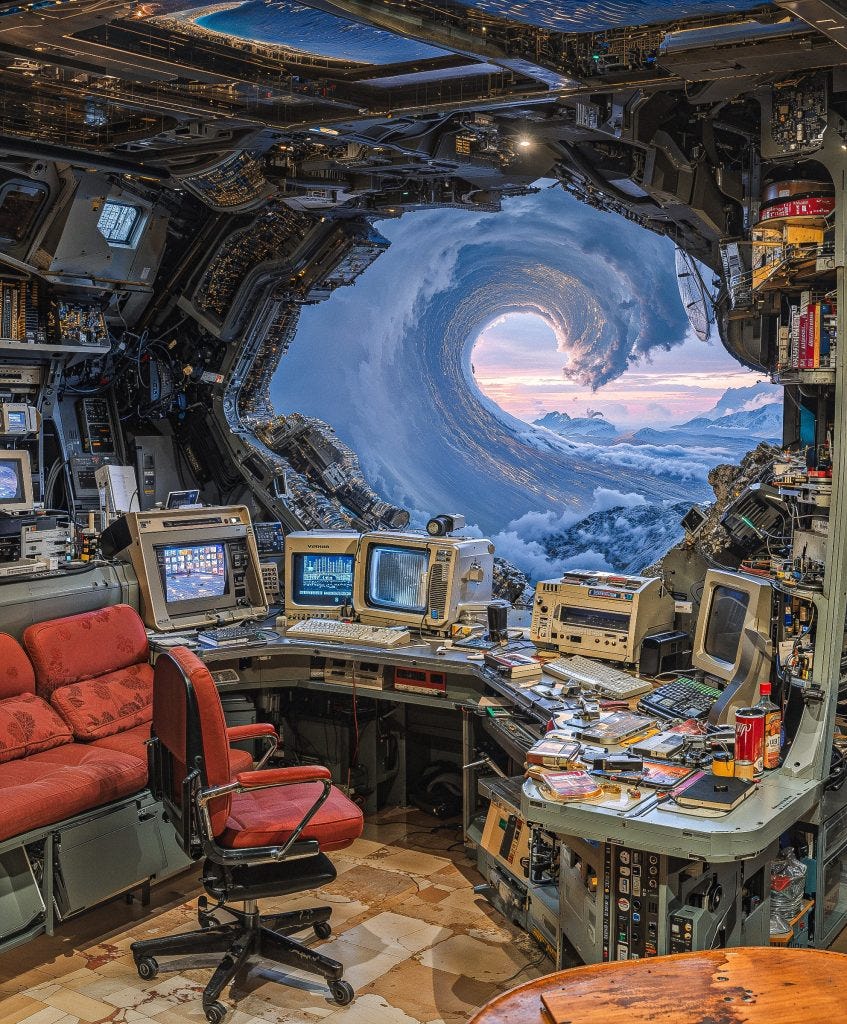
Artificial Intelligence cannot create Art, period. AI can only tap into the visions of those who came before us. It is, by definition and design, incapable of producing anything original, let alone reaching for the sacred and the transcendent and ultimately Greatness. AI does not, and will never understand Beauty with a capital B, because understanding it necessitates perceiving the eternal battle between Good & Evil. But why is it even necessary to make an argument when one can just point out that machines have no hearts or souls? Are both of those things now irrelevant to the Art question?
Some might argue that Midjourney artists are an exception. I wondered that myself, too, as I enjoy some of the aesthetics they’re producing. The question is: who’s creating them?
If we feed a prompt to the machine, it will generate an image that is significantly different from the one we initially envisioned. But we’re not involved in the creative process that leads to the gap from the initial prompt. The moment we comply and feed the following prompt, we are no longer in control. AI is the artist, and we’re a vessel.
Or are we? Don’t you get the feeling that people in the Global Village have minimal choice about what to post these days? Perhaps the algorithm is both the artist and the vessel?
Nothing lends credence to the idea that we don’t talk online, but rather that the machine is talking to itself, more so than the “this is where I post from” meme. I find the meme depressing. Here’s why: “I could find myself in the most breathtakingly stunning place on Earth, but still look down at my phone and tweet.” Am I the only one who sees this? Quite the upgrade from the Wanderer above the Sea of Fog. You don’t actually have to be online to see this meme. Just visit any European city.
Don’t feed your soul, anon. Look down on me, and feed me.
Inspiration, as a process, is also being reversed by AI. The machine is tapping into itself, but it is incapable of actually reading what it’s tapping into, as it can only process numbers. Could the best mathematician in the world, in charge of writing poetry, accomplish anything more than a copycat poem? To the extent that the artwork emerging from the machine has depth and meaning, it depends on how well the machine can plagiarize the database. “Wow, this is as good as Shakespeare!” That’s right, it can never be better.
I find the debate on art and AI silly because I’ve just finished writing, designing, and living a 216-page book with no aid from the machine. If anything, at several points throughout the past eight years, it felt like the latter prevented me from getting the answers I needed. Could AI have told me that the answer lay in front of my eyes this whole time? How, since the machine has no eyes? AI can explain to me that the cross has a history, but it cannot tell me to what extent the cross is a weapon, the same way it cannot tell me that a hammer is more than a tool to nail a hero to a cross.
Our capacity to see beyond what a mere ‘object’ is conceived to do, or commonly understood to achieve, is God-given, and no amount of brainpower at Google’s HQ can ever wield this creative power (Good luck with that one, Iron Man). This is what I found at the bottom of my nightmares over the summer: proof that the world is more than a set of objects—proof of a plan. More than that, I found evidence of what, deep down, I’ve known for years: that the answers we seek are to be found past the thing we least want to look at. I call this thing “the rabbit,” and it must be chased all the way to the bottom, to the place where light disappears and the stars become visible.
Would you believe it if I told you I nearly died four times this summer? And what if I told you that, despite that, it was the best summer of my life? Would you like to hear that story, or should I spend every week from this fall keeping up with the content economy?
Don’t get me wrong, I haven’t prayed for another stone. I’m still too tired and weak. But I aspire to be the man who can carry another, and I’ve been praying for the strength to ask for it. That is because now it’s too late: I know that’s the platform where the magic happens, and there’s no return policy. Call it Vanity if you like—I never said I killed it.
I’m not sure what the Muse is. All I know is that, if she turns out to be just a product of the subconscious, I can only hope the next one will be even meaner—an unapologetically abusing tyrant, again consuming every inch of will left in my body, forcing me to pick my head up from the keyboard every other night and walking across the river like a corpse during daylight, begging for it to be over.
“And here comes mister gay pride of the Upper West Side himself. Unfortunately, this is not a Bette Midler concert, we will not be serving Cosmopolitans and Baked Alaska, so just play faster than you give fucking hand jobs, will you please?”
“YES, SIR!”
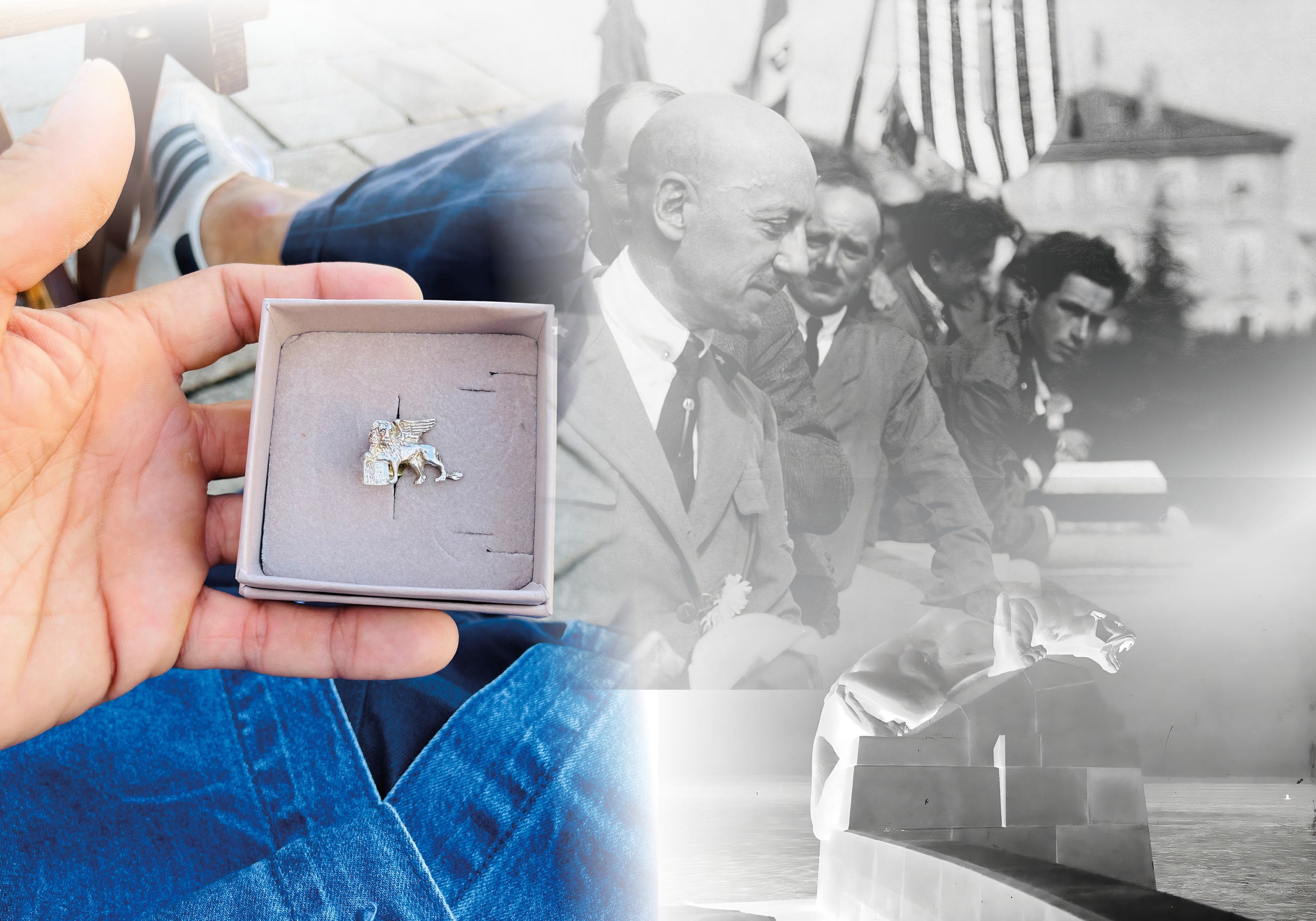
There’s an old photograph I’m obsessed with. It was taken in the Spring of 1919. Italian Nationalist poet Gabriele D’Annunzio was leading a coup, mere months after the legendary Flight over Vienna. Two thousand six hundred poets, half of whom were probably illiterate, stood behind him during what would become known as “The Endeavor of Fiume.” The morning after the successful coup, the sun emerged from behind the trees. Someone took a photograph of D’Annunzio along with some of the legionaries standing next to him.
I love that picture not for the political victory it represents, but for the sense of calm I get when I look at it. It was only a few months after the end of World War I, the most brutal conflict in human history. Yet there’s no suffering, hatred, or irony in these men’s faces—only peace. Do we understand the desire to venture once more into the night, after The Big Man has finally given us the break we’ve been praying for years, just for one more chance to live a day like a lion and then rest like a poet? Did the QAnon Shaman understand it, as he raised his middle finger towards Nancy Pelosi?
Sometimes I like to look at that photograph, close my eyes, and imagine what it’s like to be on that balcony on that warm Spring sunrise. To know what it’s like not to be concerned about what the day has in store for you and your brothers—that the prospect of dying to the sound of the enemy’s fire or being thrown in jail for life the following morning doesn’t matter, because even for just an hour, you’re gazing at eternity.
“We had nothing to lose, nothing to gain, nothing we desired anymore, except to make our lives into a work of art…”
I wish my brother Benito didn’t have to sell Pokémon cards in New York City. Unfortunately, I suck at selling cars. And that’s the thing, I own a fast one, and it’s not for sale. Additionally, I have just received an email from our Berlin distribution center. The shipping cost has now doubled, courtesy of the US’s new customs policies, and we are currently $10,000 short of shipping the second batch. (Never mind, Don, I’m Italian, so long as the Germans have to pay more, I’m a happy camper.)
Wait, does that mean…
I’m grateful for the opportunity to experience hardship. I always get something real out of it. You’ll have to buy a copy to judge for yourself just how Real that is. Just know this: I won’t debate you, and the only thing that currently haunts me is the thought that I didn’t give it my best shot.
A conference is scheduled to take place in the Capitol this week. I wish the attendees all the best, but I’m going to miss my flight. I’ll leave my business card at home and climb the same hills I climbed eight years ago—towards the balcony, past the threshold, above the garden of Justice. This is where I’ll pray from, waiting for the Second Storm in the middle of the night, with the sun on my face and the echoes of the last poets of absolute freedom.
Will you be there?
To the King, for living and resting like a Lion.
Mark Granza is the Editor-in-Chief of IM—1776 and the Chairman of the Art & Literature Foundation, the non-profit organization created from the magazine. He can be followed @markgranza.
No posts
Comments
Nothing yet. Say the first thing.
Sign in to join the conversation.