
Miné Okubo was born on June 27, 1912, in Riverside, California. Eight years earlier, her mother and father—a calligrapher and a scholar, respectively—represented Japan at The Saint Louis World Exposition.
Thanks to a scholarship from the University of California, Berkeley, Okubo traveled to Europe to study art—shortly before World War II. “If I didn’t see Europe now,” she said, “I’ll never see it. So I went ahead [while] most Americans were all returning back to America. But, I managed to stay two years almost in front of Hitler. I traveled alone, with youth hostels and student houses and even convents. I went the poorest way because this scholarship was very small, but I wanted to see how people really lived, and so it was fine.”
Upon settling in Berkeley, California, Okubo found work, through President Roosevelt’s Works Progress Administration, painting murals for (ironically enough) the United States Army and Navy. She even received a government permit that exempted her from an 8 P.M. to 6 A.M. curfew that was placed on Japanese, German, and Italian immigrants and citizens.
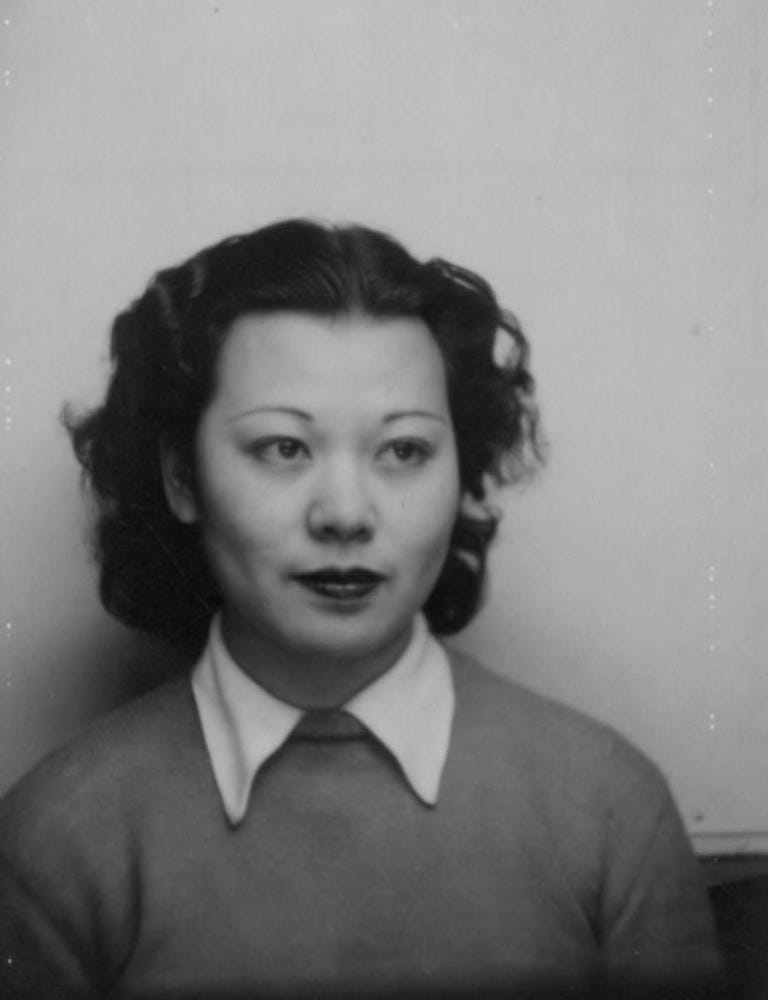
But, when Japan bombed Pearl Harbor on December 7, 1941, Okubo knew she was in trouble.
Comments
Nothing yet. Say the first thing.
Sign in to join the conversation.