
During the pandemic many people started baking their own bread, which is ironic because zoonotic diseases did not exist before humans started the large scale cultivation of grains. The first states were little cities with kings and great big walls designed not so much to keep the barbarians out, but to keep in the people on whose involuntary labour and reproductive capacities the whole thing relied. People living with their domesticated animals on top of their grain stores, attracting other animals. Bread tastes nice but it’s not free.
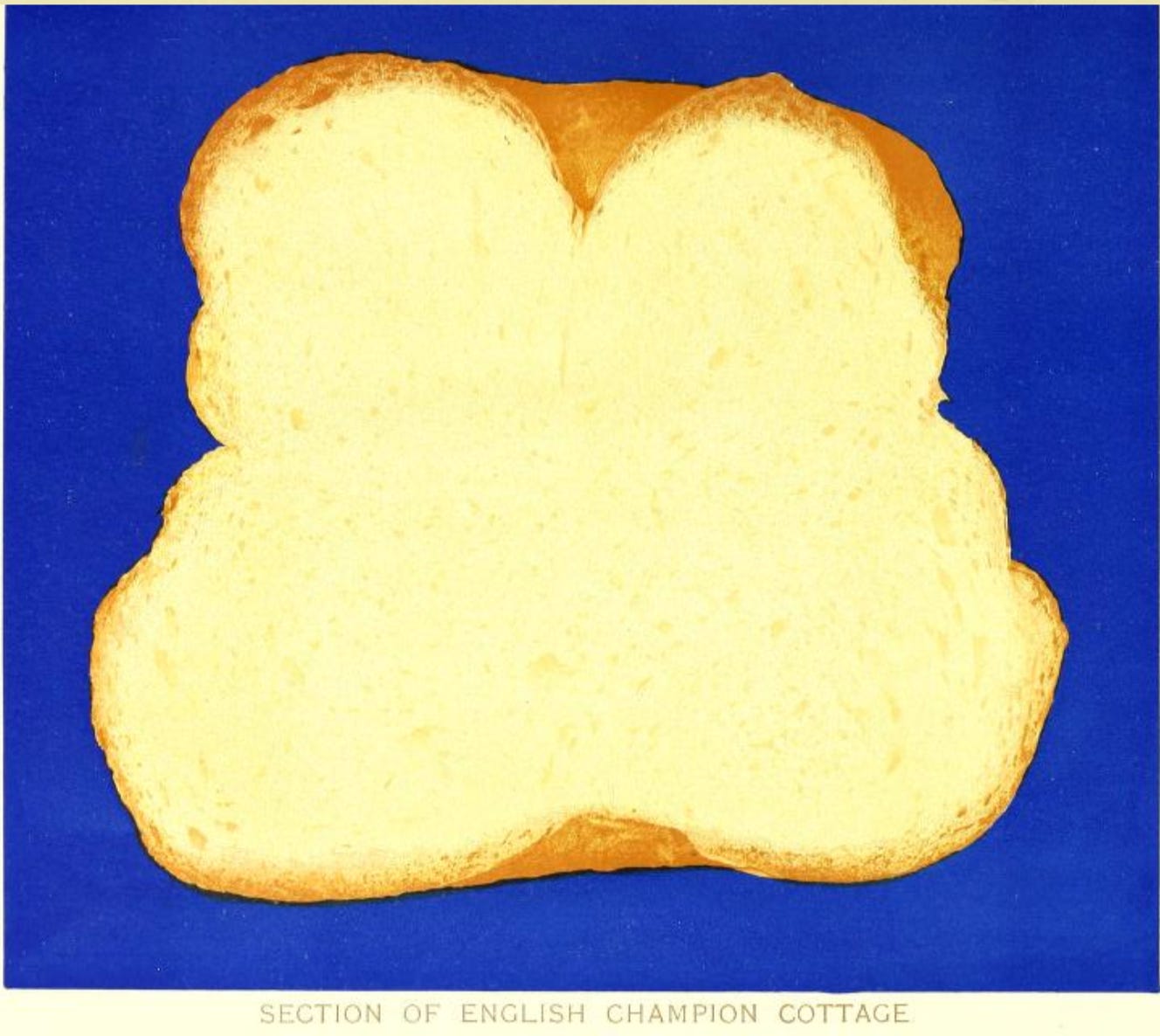
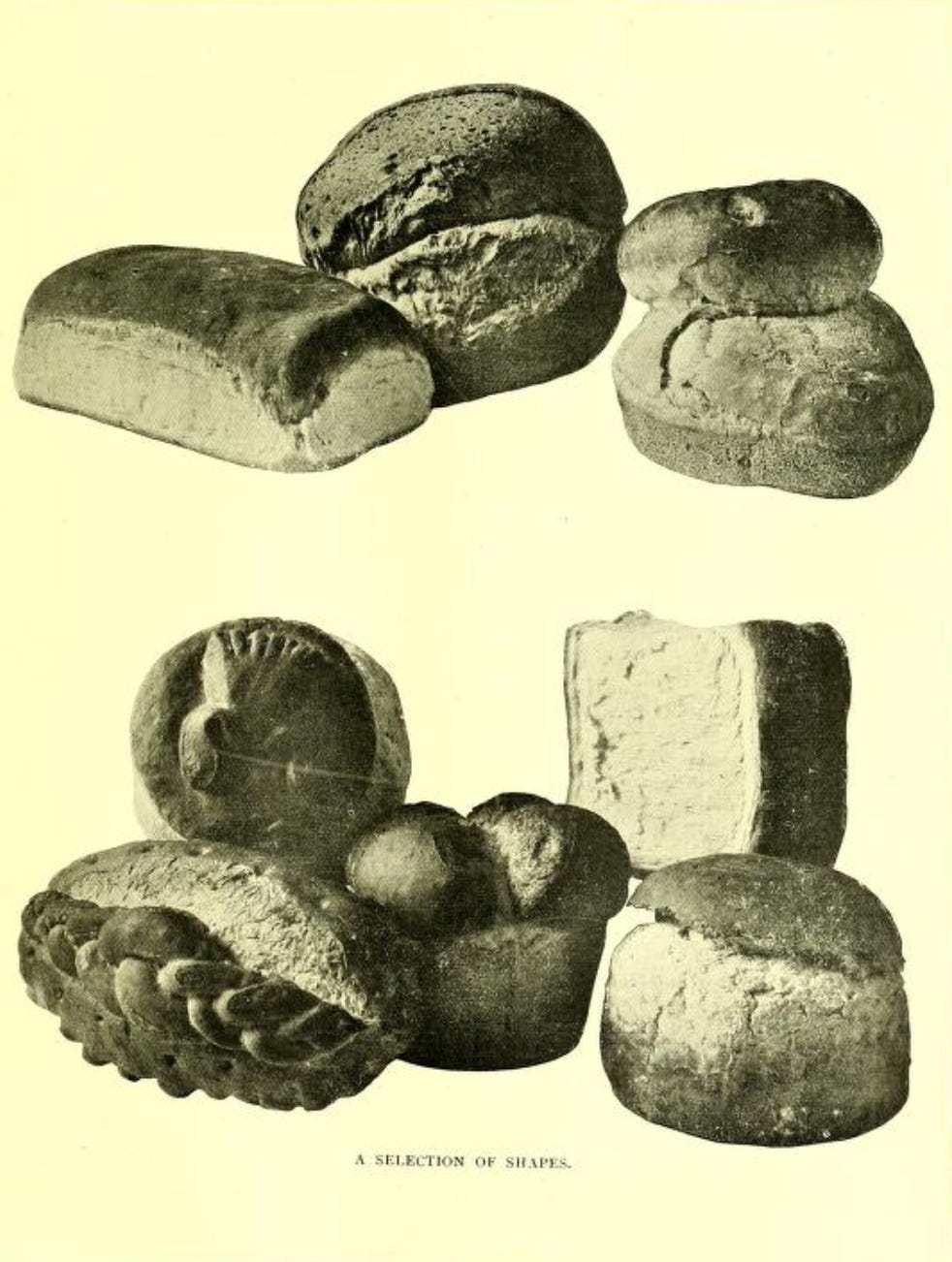
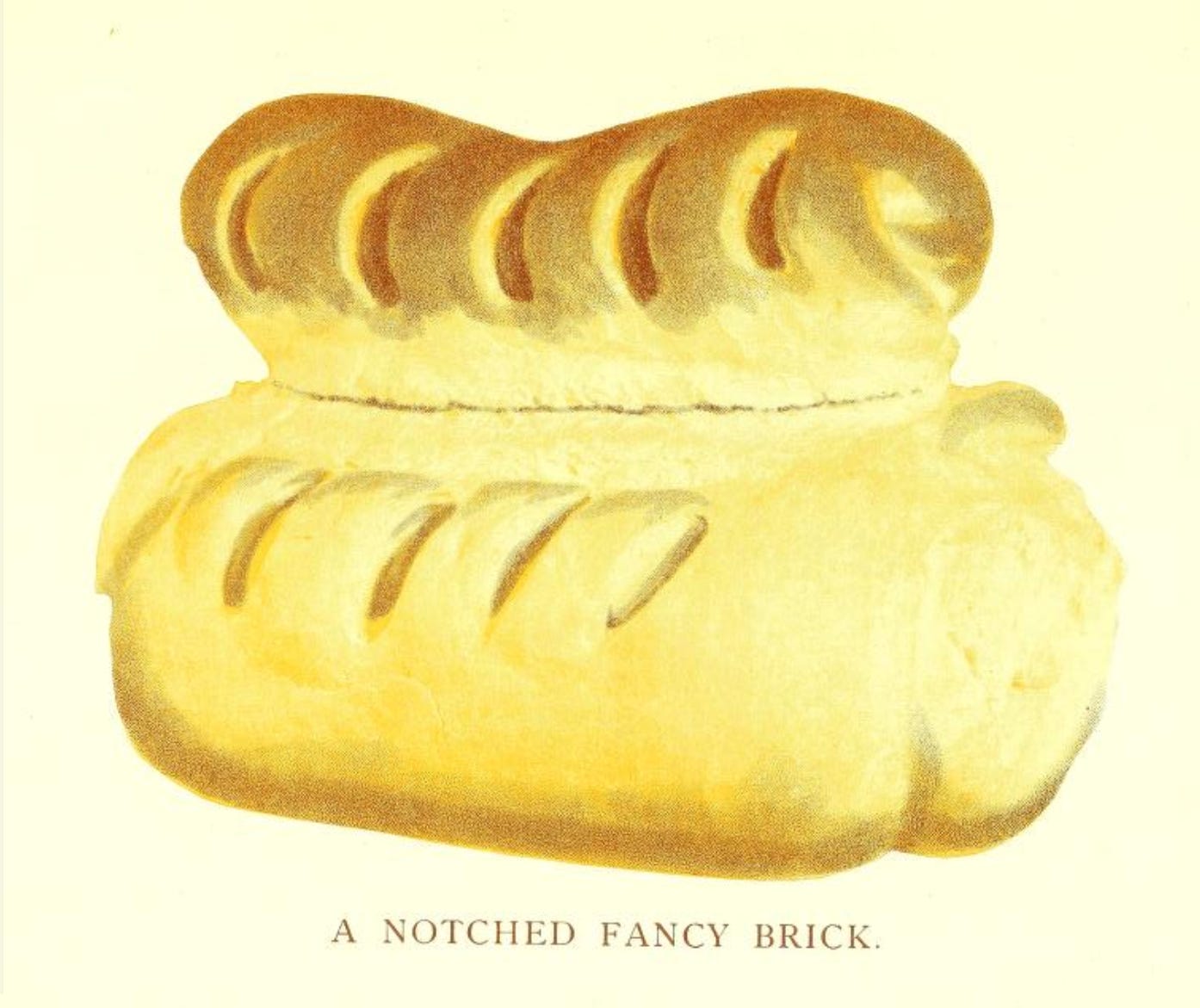
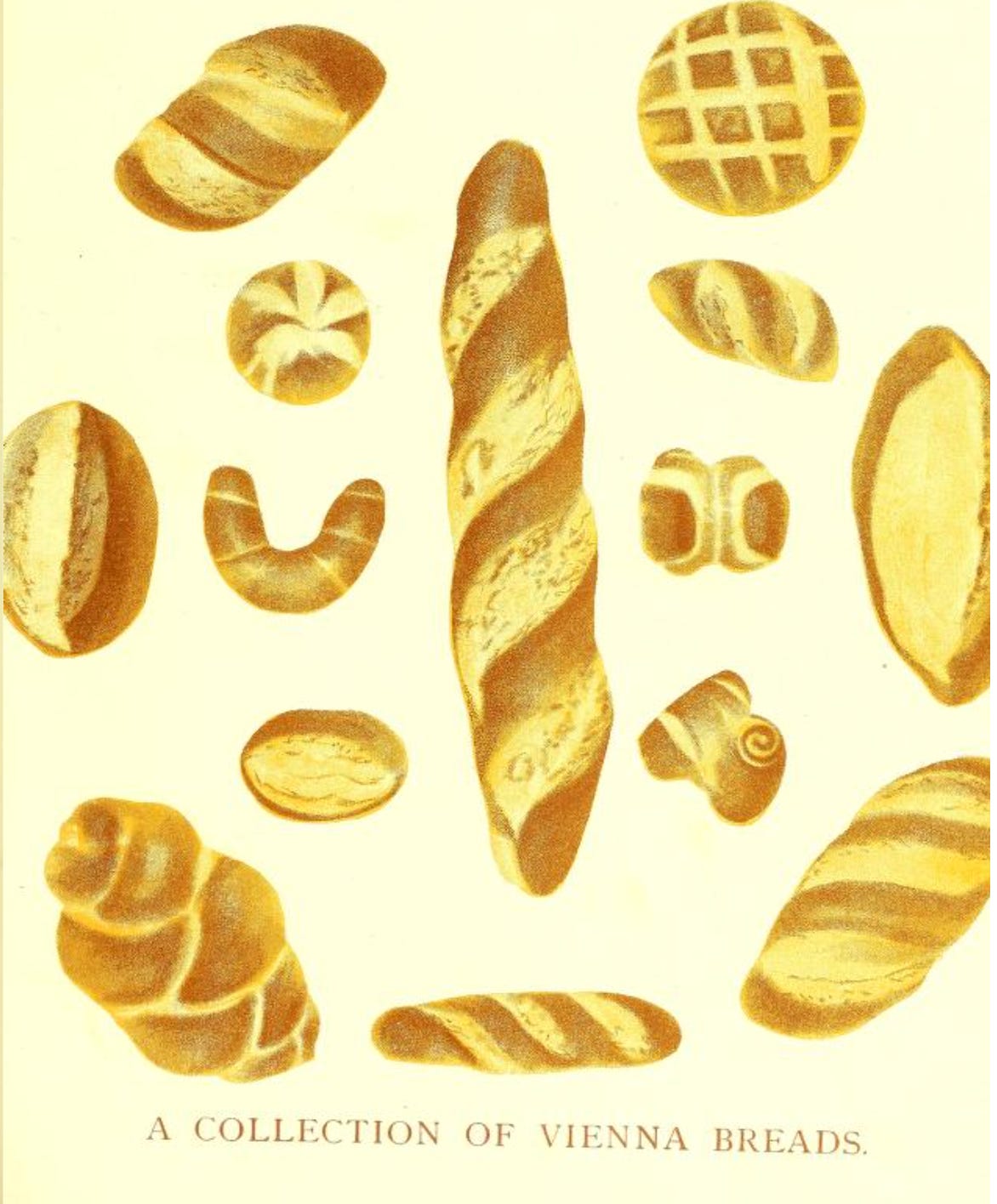
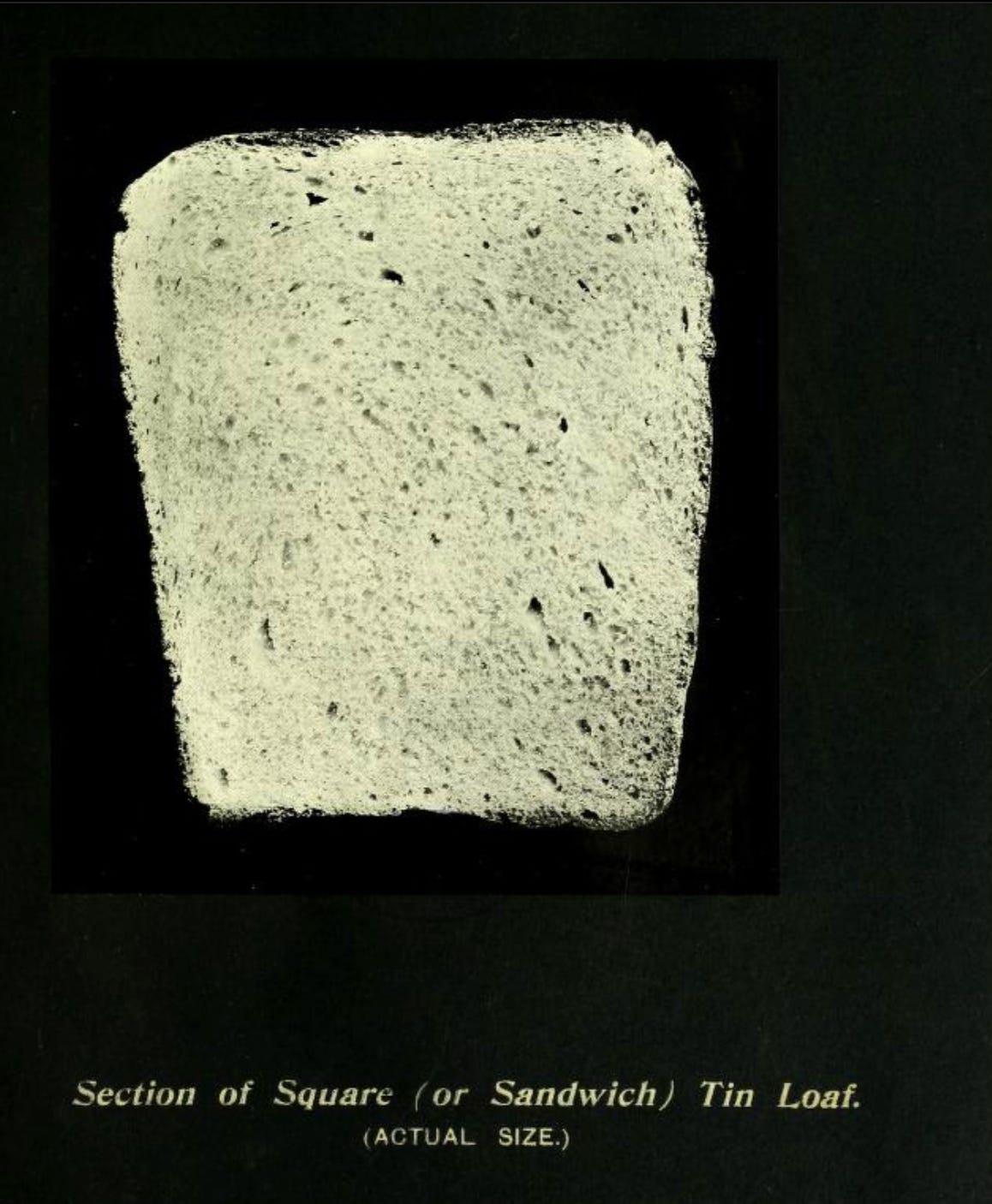
In The Book of Bread from 1903 baker and scientist Owen Simmons documented the contemporary modes of bread making, covering ‘the ingredients and their uses’, ‘the good and faulty points of a loaf’, ‘the changes of flour during storage, fermentation, baking and digestion’, ‘machinery, appliances, ovens, firing and ventilation’ and so on. It veers philosophical at times (‘Although colour is so much discussed in connection with bread, few who place so much importance upon it stop to inquire as to what colour really is.’; ‘Bread cannot be sour without acid, but bread containing acid is not necessarily sour.’ ‘Each defective loaf is a law unto itself,’). There is discussion about the acceptability of holes in loaves, to which ‘thinking men who commit their thoughts to paper are diametrically opposed.’ One of the best things about this book are the pictures of prizewinning and commercial specimens in the UK and Ireland at the time: ‘the loaves are now produced photographically correct, of exactly full size, and the colours are as nearly perfect as it is possible for them to be by any process at present known.’
I quit baking bread when it became clear to me that I didn’t actually like to eat it all that much. I much preferred my homemade loaves to supermarket bread, but eating them was still something of a chore compared to warm bowls of porridge or soup. More than what it yielded, I liked the rhythm of baking: the cycles of working the dough and letting it rest. Mixing, kneading, leavening, shaping, proofing, baking, cooling. Planned interruptions perfect for writing.
Contrary to what we’re so often told, the health of people in those first agrarian states was decidedly worse compared to that of their ancestors and non-state contemporaries. They faced disease, malnutrition, and famine when the crops failed, not to mention a significant increase in food-related labour. Where hunters and foragers tweak the natural environment to their advantage, agriculture requires a complete domination over land and crop. Do you know that old ballad, John Barleycorn? John is killed and buried, but then surprises everyone by rising from the dead, after which he’s cut down, bound to a cart, cudgelled, ground between stones and eventually drowned so we can drink his blood.
Text within this block will maintain its original spacing when published
John Barleycorn was a hero bold,
Of noble enterprise;
For if you do but taste his blood,
'Twill make your courage rise.
Nor was the violence wrought upon the ecosystem the only kind required for the formation of the early states. As James C. Scott (the daemon informing this piece, as some of you might have guessed) writes: until very recently there were no states without forced labour (if indeed there truly are now). States like grain because it’s easy to control: it grows above ground where everyone can see it, it can be dried and stored, and it all ripens at the same time so a tax collector knows when to come by.
I was thinking about how I could make food a part of my writing and performing when I fell asleep and had a dream: a life sized man made of bread, each limb baked in a different oven by a different person, joined together on a slab and then torn apart and eaten by a crowd of people. A nice dream, but a tired image: the bread is the flesh, as my subconscious knows full well, and whether that flesh belongs to Christ or John Barleycorn doesn’t really matter. Bread is a part of western people’s concept of what is essential, to the point of being sacred. The lord, etymologically grown from a loaf-ward, a keeper of bread, doles out our daily portions of it. When I published my first poems 14 years ago, the editor of the magazine, the wonderful poet Lieke Marsman took issue with a line that contained both ‘bed’ and ‘bread’. That’s too heavy, she said. It makes the poem lopsided. Bread is so big.
We can dislike bread and states but we can’t go back. The way we live today, we’d probably do well to protect and strengthen the ruins of the welfare state, the bread giving state. But reading Against the Grain is a good reminder that we are not necessarily made to live in fixed domiciles all on top of each other with a great big wall around us. For most of our history, we have been living quite differently. And we will feel this, from time to time. I tried to articulate this kind of undirected rage and grief about the course of human history in Thursday. I have felt that longing for a different way of being in the world my entire life, it is what makes me the way that I am emotionally, politically and artistically. I wrote a rather hysterical poem about that a while back.
At last I have discovered the secret!
The key to the paradise of rot!
To wander through the inns of tangled brambles!
To drink the sugar of the fungus!
My entire life I longed to room here!
The dark inns of the forest floor!
To meet the mice and see the jewel!
That the toads keep hid behind their tongues!
That, to me, is bread.
No posts
Comments
Nothing yet. Say the first thing.
Sign in to join the conversation.