
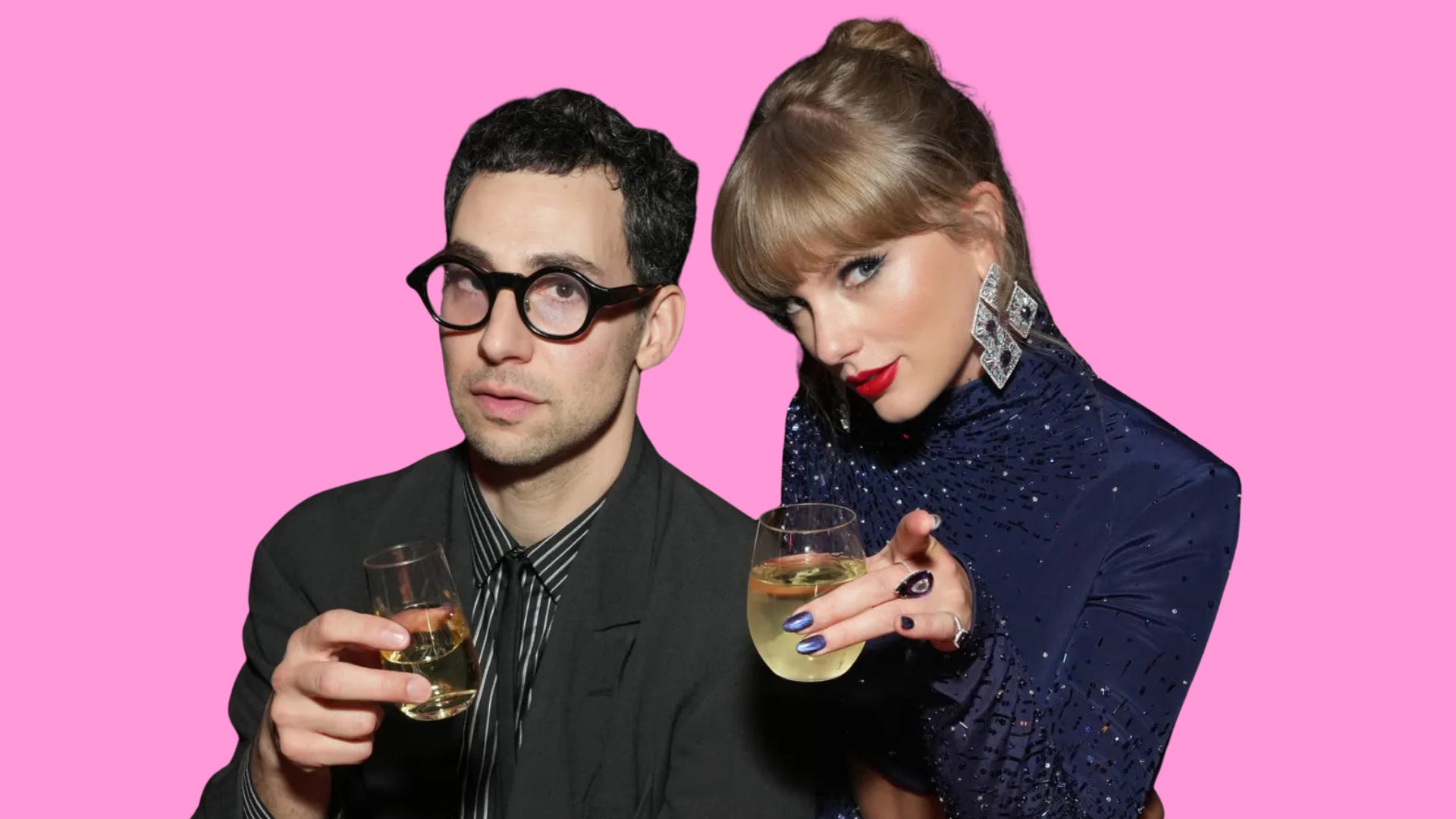
It’s officially time for us to address the defining trope of modern pop music: the young woman pop protégé and her slightly awkward, endearing father figure producer.
She’s the star, but he’s a crucial not-so-secret weapon, wielding his mighty masculine producer powers to coax out her sharpest lyrics and her most intimate vocal performances. In every interview, they finish each other’s sentences, exchange knowing glances, and describe themselves as a team, family, platonic soulmates.
Although it’s the female pop star who grants the male producer cultural capital, he often gets a disproportionate amount of credit for her success. He’s often taken more seriously as a musician.
You know who I’m talking about, but I’ll throw out the most obvious examples just because.
Taylor Swift and Jack Antonoff. Lorde and Jack Antonoff. Olivia Rodrigo and Dan Nigro. Chappell Roan and Dan Nigro. Ariana Grande and Max Martin. Gracie Abrams and Aaron Dessner. Tate McRae and Ryan Tedder. Billie Eilish and Finneas (brother figure in that case). The list goes on.
Which brings me to the question of the day, the year, the era: Where are the female Jack Antonoffs? (And Aaron Dessners and Dan Nigros and Ryan Tedders and Max Martins and Finneases?)
Earlier this year, Billboard published a depressing article titled, “Women’s Place in this Business is Shrinking.” A USC Annenberg study found that women artists held 36.1% of spots on the most popular Billboard charts in 2025, 14.5% of all songwriters were women, and only 4.4% of producers were women. Not to mention, more than 90% of songs across 11 years did not include even one woman producer.
Well, fuck. Pop has a dire patriarchy problem.
Why, in 2026, are the numbers still so whack? A Splice article about women in music production notes, “There has been a strong cultural bias that views men as the primary users and creators of technical tools and equipment in music.” Girls are taught from a very young age that they’re allowed to sing and play the piano or violin. Mess around on DAWs? Make beats? Nah, that’s for their male counterparts.
Dare I suggest that, beyond the social conditioning, A-list artists are also part of the problem? With great power comes great responsibility. Women producers will only become household names when prominent pop stars start seeking them out and introducing them to us.
Pop stars like… drumroll please… Addison Rae. Yes, this is the part where I start glazing Addison, which is a recurring theme of this Substack, sorry not sorry. The TikTok sensation-turned Britney Spears daughter made her debut album with Swedish duo Luka Kloser and Elvira Anderfjärd.
No men on the credits.
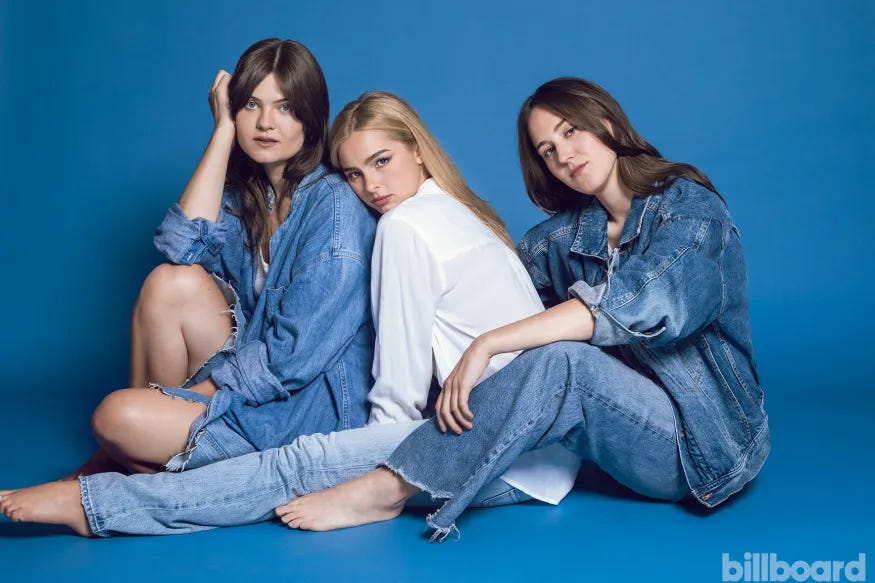
This did not get enough attention, considering how rare and exciting it is. Together, they carefully studied Addison’s vision and designed a dreamy, feminine, polished but delightfully weird soundscape. There are echoes of Lana Del Rey and Britney Spears, but the sonic universe clearly belongs to our beloved “Headphones On” singer. I’m praying the squad reunites for AR2.
Elvira’s also produced a few Taylor Swift songs, including “Willow (Dancing Witch Version),” “Love Story (Taylor’s Version),” “Message in a Bottle,” and “Girl at Home (Taylor’s Version).” While it was uncharacteristically cool of Ms. Swift to collaborate with an up-and-coming, 20-something woman producer on these tracks, I’m still patiently waiting for her to work on a whole album with a righthand woman. Jack and Aaron appear to be busy with Sabrina Carpenter and Gracie Abrams projects anyway.
Of course, Elvira and Luka aren’t the only women producer icons making waves right now. I’ve also got my eye on New York City-based producer Alissia, aka the coolest girl in existence. So far, her resumé includes collaborations with Anderson .Paak and Mary J. Blige as well as a nomination for Producer of the Year, Non-Classical at the 67th Grammy Awards. Grace - Music Writer 🎧✍️ kindly just introduced me to Idarose (Alexis Kesselman), who produced Bella Kay’s debut album, My Reckless Abandon. Already obsessed with this pairing and hope they keep working together!
And then there are the one-woman shows of pop—the workaholic baddies who sing, write, and produce their own projects. I’m talking about (one of my fave pop girlies) Tiffany Day, a hyperpop queen who recently released her heavenly sophomore album, HALO. I’m talking about PinkPantheress, the British visionary who changed the game with her infectious Y2K bedroom pop production. I’m talking about Imogene Heap, who is to the Vocoder as Picasso is to the paint brush. And I’d be remiss not to mention her student, Ariana Grande, who’s a vocal production wizard herself… or vocal production good witch if you prefer. #HappyPetalSeason
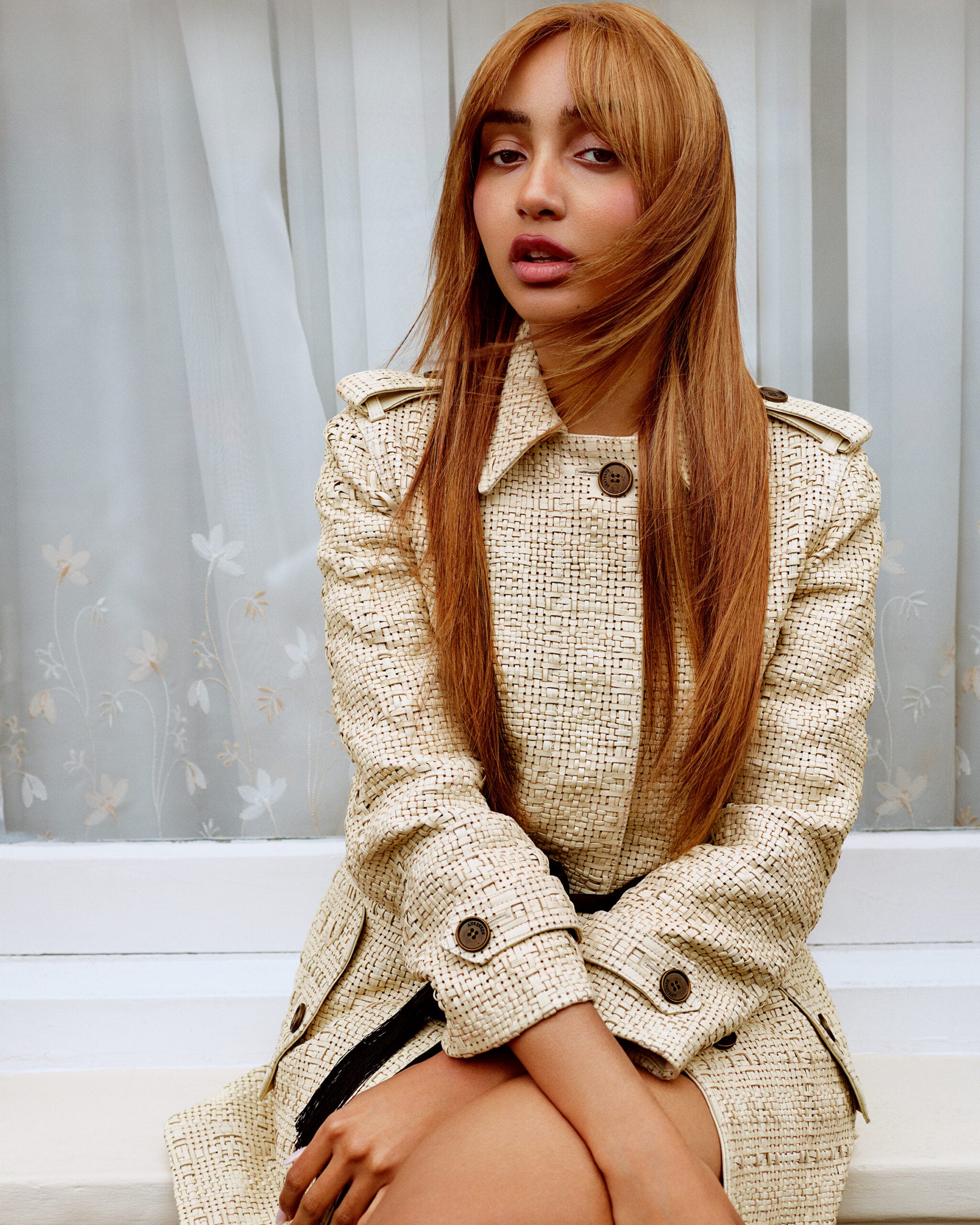
I want to emphasize that this new scene wouldn’t be possible without the women who paved the way. Ann Mincieli has had an epic 20+ year career as a producer and mix engineer, famously working alongside Alicia Keys and co-founding New York City’s Jungle City Studios. Missy Elliott is obviously another pioneering producer who redefined pop and hip hop and has produced for a number of fellow legends, including Whitney Houston and Beyoncé.
“A lot of people don’t know a lot of records that I’ve written or produced,” Missy told The Associated Press back in 2016. “I always said if a man would have done half the records that I’ve done we would know about it. But we don’t know all the records I’ve done for other artists.”
We need to change the status quo. We need to acknowledge and make more space for women who eat, sleep, and breathe Pro Tools. The pop girlie/father or brother figure trope is not the rule.
So, who will be the producer whose career explodes because one superstar decided to bet on her? After all, there is no Jack Antonoff (as we know him today) without Taylor Swift. That’s how producer dynasties are born. Someone gets an unexpected opportunity to make a culture-shifting record, and then they get invited to produce everyone else’s.
Since literally every Grammy-nominated artist is reading this—I’m manifesting virality, sue me—here’s my request for all of you: Do a little research. Get out of your comfort zone. Forget about the usual suspects for once, and find the woman who’s been waiting for her time to shine.
You might just completely change the state of pop music and inspire a new generation of production-savvy queens along the way.
No posts
Comments
Nothing yet. Say the first thing.
Sign in to join the conversation.