
This month, the European Commission launched a new Call for Evidence on its proposed “environmental omnibus” package—a sweeping legislative push to streamline EU rules on circular economy, industrial emissions, and waste. We took a closer look at the impact on Africa.
In green finance news: Mitigating and adapting to climate change is increasingly shaping bank offerings across the continent driven by evolving institutional frameworks and disclosure practices, and dynamic partnerships.
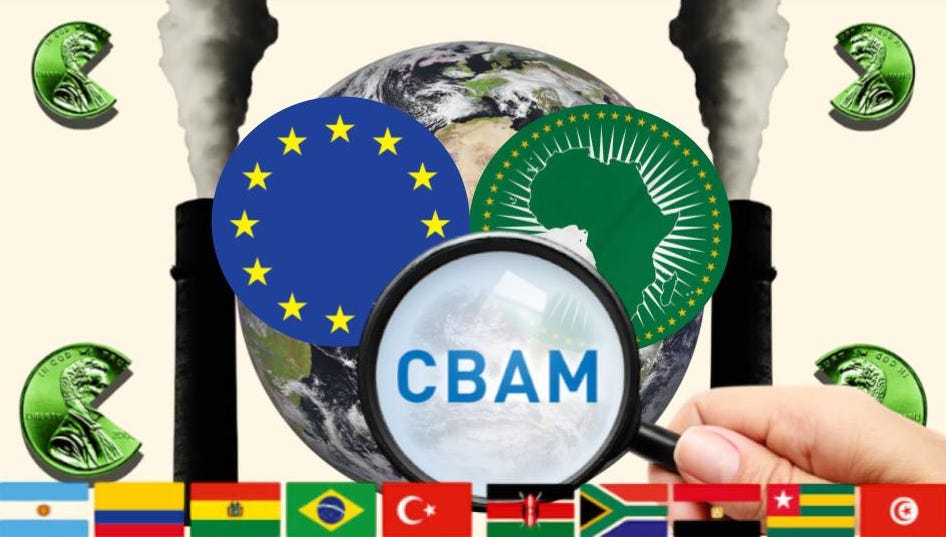
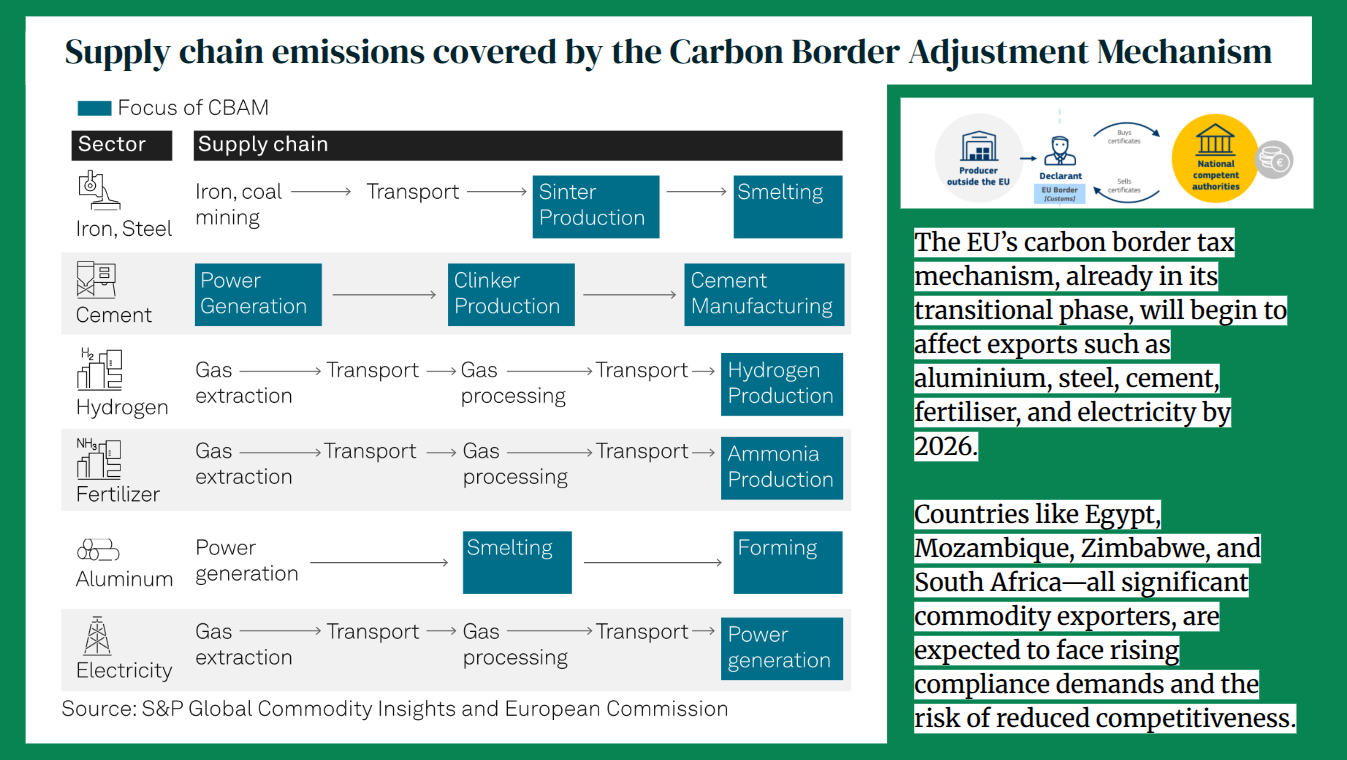
The Carbon Border Adjustment Mechanism (CBAM) was introduced in 2023 to curb “carbon leakage” by levelling the carbon cost between EU-produced goods and imports. From 1 January 2026, CBAM will apply to imports of iron and steel, cement, aluminium, fertiliser, hydrogen, and electricity requiring foreign exporters to purchase certificates linked to the EU’s Emissions Trading System (ETS).
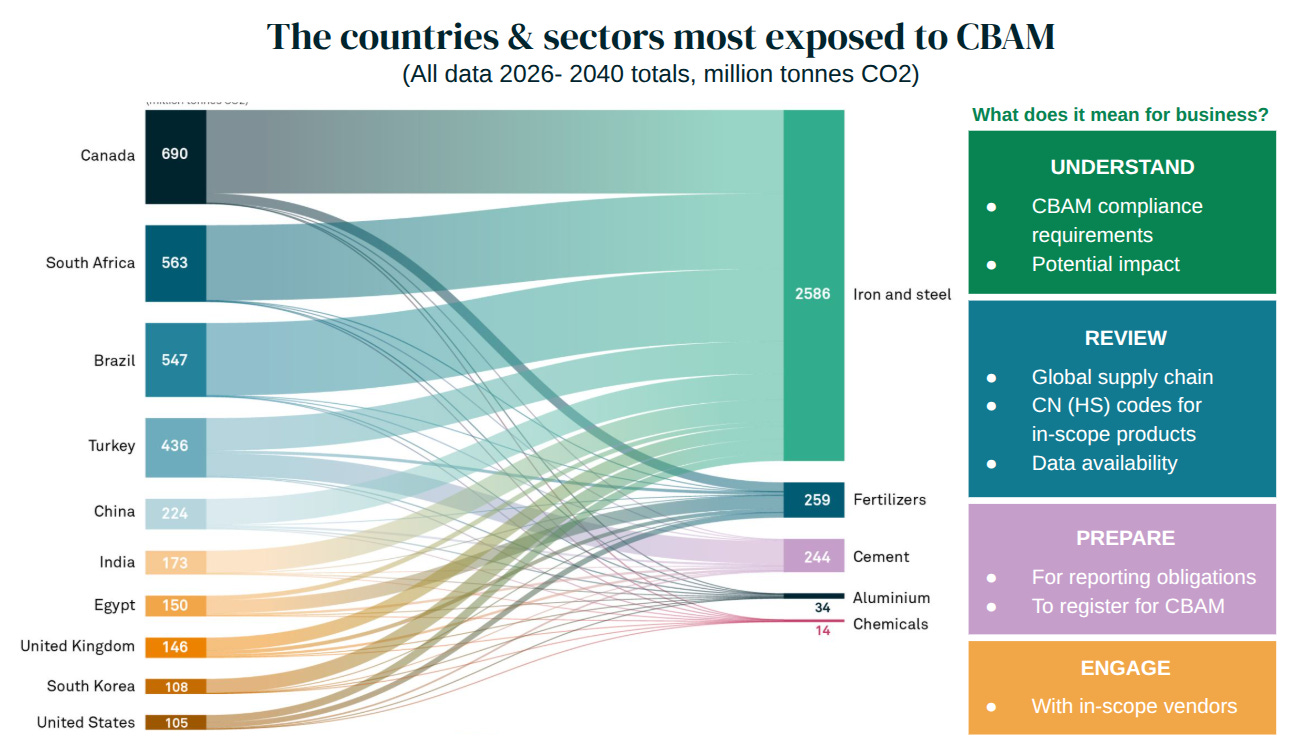
CBAM’s aim is to price carbon fairly and incentivise lower-emission production. But for Africa, the stakes are high—and uneven. One study suggests CBAM could slash Africa’s GDP by $25 billion, more than three times the EU’s annual development aid to the continent. Read
However, CBAM is not just a risk—it may also create industrial openings:
❌ South Africa, with coal-heavy electricity, could see steep CBAM tariffs on its cement and aluminium exports, threatening competitiveness and jobs.
✅ Ghana, which exports ~80% of its aluminium to Europe, may gain if it can demonstrate lower-carbon production.
With the EU's environmental omnibus legislation set to be finalised in late 2025, engagement in EU consultations to shape CBAM’s implementation is crucial.
EBRD and Banque Misr have signed a US$ 100 million sustainability-linked loan to promote green on-lending to women-led businesses and under-served segments in the Egyptian private sector. Read
Tanzania’s CRDB Bank has listed its inaugural green bond on the Luxembourg Stock Exchange (LuxSE) on the back of a $65.7 million subscriptions windfall in its first two years of operation. Read
The Development Bank of Namibia (DBN) received its official accreditation by the Green Climate Fund (GCF) as a direct access entity under the medium-sized project category. Read
Absa and BYD partner to expand sustainable green vehicle financing and boost access to affordable new energy vehicles (NEVs) across South Africa. Read
Equity Bank is emerging as a key driver of Uganda’s clean energy access through its transformative Equi-Green credit facility. Since its launch in 2022, the Bank has disbursed an Equi-Green credit facility worth over sh22 billion. Read
No posts
Comments
Nothing yet. Say the first thing.
Sign in to join the conversation.