
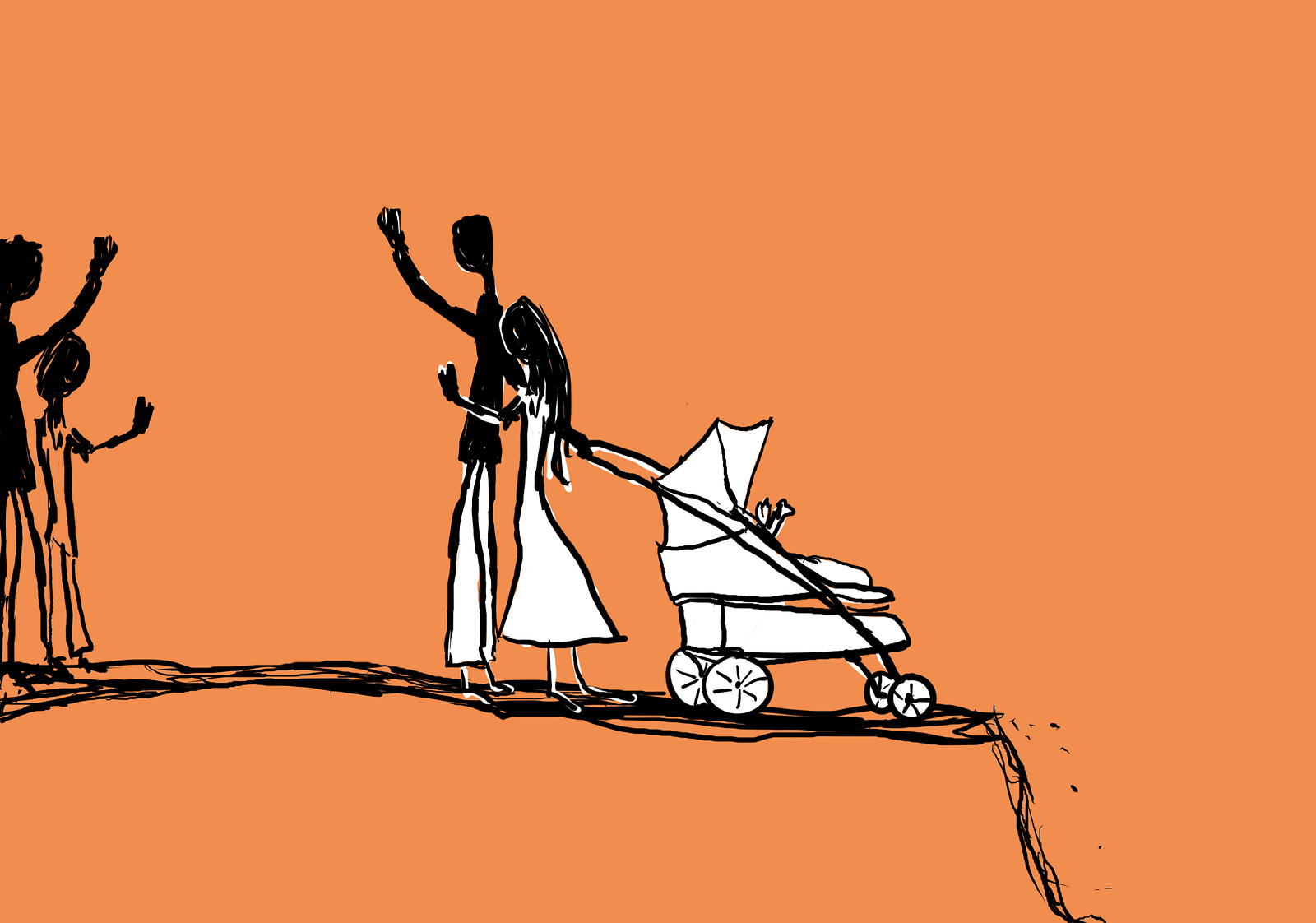
“Do you see how many adults are actively sharing childcare right now?” I ask my sister, watching my baby crawl across the floor toward the cat food.
“Seven. It’s seven adults in this house. And still the baby care is a lot.”
Seven helpful adults (sister included) stayed at my parents’ house near Seattle in the two weeks leading up to Robert’s and my wedding. We were still exhausted.
In the span of eighteen months, Robert and I had already managed two transatlantic moves, gotten married, and birthed a child. Naturally, I decided we should cap it off by hosting a wedding at my childhood home — and then leaving our support network entirely.
If you’re going to host a big backyard wedding eight months after giving birth, you probably shouldn’t DIY it — but if you do, you’re going to need friends like mine.
This is what it means to have a village. Friends and family showed up for four months of weekly work party/dinner parties. My parents housed us, and friends shared food.
When we spent a solid chunk of the wedding budget on yellow cedar lumber, friends brought tools to help build our own benches and tables. They hauled branches from the venue, leveled surfaces, designed and hand-made more than twenty cakes and pies, built bespoke salads from greens they helped to grow. They shared baby care so well that on Sundays, we often had no idea where he was.
In the wedding month, a few out-of-town friends flew in early, listened to a two-hour verbal vomit of the whole event plan, and turned it into shopping lists and daily tasks. Friends homebrewed, bartended, hauled chairs, photographed, foraged greenery, officiated, played the piano. They even stayed late on wedding night, and still showed up early the next day to help with cleanup.
On the day, my baby passed from arms to loving arms until he fell asleep — and my groom and I had space to just be us.
The central theme of any wedding is love. Robert’s and mine was a celebration not just of our love for each other, but of our home within a community. It was extravagantly handmade, intensely personal. We felt cherished, awed by the love all around us.
Ten days later, we moved 5,000 miles away and left everyone behind.
Landing in London wasn’t quite a vacuum. But we chose a new neighborhood — inconvenient to our handful of London friends. Between London’s transit geography and syncopated nap schedules, visiting mums from my old neighborhood fell quickly out of practicality.
More jarring yet, our support fell away. The two of us had been passing the baby off between each other and my parents several times a day: diaper changes, mealtimes, walks around the trail. But we moved because paternity leave was over: no parents in-country, no husband most of the day.
With Robert back at work, the already full-time shared job of caregiver was a mostly solo task, and a lonely one.
Americans have an international reputation for gregariousness — not so, the Brits. When I first moved to London a year and a half ago, it took me months to make my first friend.
I volunteered at parks, frequented cafes, and met strange young women from Facebook groups just to have people to talk to. Most of the time, I never saw these women again.
Though I did eventually make real friends, I also discovered that for me, even surface interaction can greatly alleviate the loneliness. I hope to grow a community, but my expectations are low. If I’m leaving the house and talking to a human, that’s enough for a while.
My mother tells me that it’s easier to make friends when you’re a mom. My first opportunity to investigate comes at our new library: baby balanced on my hip as I ask for a library card.
“We also have Baby Bounce on Tuesdays,” the librarian tells me, eyeing my ride-along.
“Oh, lovely!” I respond. “…what is that?”
The next Tuesday, I’m there — but we seem to have missed an indoctrination. I don’t usually feel out of place in London, but suddenly, my Americanness shows through.
There’s a rhyme about dicky-birds named Peter and Paul. There’s one with a red bus, and one about winding a bobbin — all new to me. There are hand gestures, and everyone knows them. I’ve never been so relieved to hear The Itsy Bitsy Spider in my life.
Even the songs I thought I knew, I find myself singing with the wrong tune or an out-of-place word. “Row Row Row Your Boat” has been given some inane new sound effects. And for the record, “zed” doesn’t rhyme with “won’t you sing with me.”
All the British babies clap and bounce with their mothers. Mine, oblivious, tears away to “Ooo” loudly at the cartoon bugs on the rug. I’m left knee-walking back and forth across the circle after my errant child, half-heartedly faking the lyrics.
Although I’m writing off Baby Bounce as a disaster, apparently my displacement isn’t apparent to everyone: one of the other moms asks for my number. She’s local, my child is fascinated with hers, and she tells me about a hidden playground for littles that we can go to together.
I’m thrilled. I go to the playground.
I never see her again.
I don’t yet know this, but this will be a pattern: initial encounters, implied plans for a second meet, then silence. Everyone’s busy. Most people don’t have kids when they’re brand-new in-country.
I meet other mums on the playground. My baby fast-crawls over and happily slaps at their kids’ eyes.
“I’m sorry,” I tell them.
“No, he’s used to it,” they typically respond. “He goes to nursery.”
Or it’s the other way around, and I find myself explaining that it’s probably good for my son to get whacked in the face occasionally. “Maybe he’ll learn empathy,” I hope aloud.
Often, the other kids are older, jealously guarding their toys, or weirded out by my son’s alacrity. Sometimes they run away.
Occasionally, one of these playground mums will want to exchange numbers — so we do, though I’m not sure why. They don’t text me, and I don’t text them; other than having kids, we have nothing in common.
Still, the sentiment is nice. Though these women will never be my friends, their overtures make me feel less alone.
I approach a woman who is drawing in a cafe.
“I draw, too!” I relate, proud to connect over something other than children. I walk away triumphant, her number in my phone.
But when she invites me to a life drawing event, I have to decline: its start time is my bed time (7pm). We exchange a few more texts, but it peters out.
It might be easier to make friends with other moms, but everything else is harder. If I can’t bring my baby, I probably can’t go — and if I bring him, I’ll have to chase him around anyway. I’m not sure drawing in cafes is an option for me anymore.
One day, I arrive at the playground just as several mums are leaving for a playgroup.
“It’s just up the hill,” one of them tells me. “Tea and biscuits, and it’s just a pound.”
“Oh,” I recognize the invitation. “I’ll come along!”
We don’t connect, especially. At the playgroup, I sit on the floor with my suddenly shy boy; the other mums cluster at the corner couches while their children tumble across the plastic toys.
The mum who invited me kindly brings me tea. “And there’s a play group on Tuesdays, too, a better one!” She makes sure I have the information on my way out the door.
I’m not sure why, but I don’t go.
The beginning of success feels the same as the failures. I’m just a woman with a baby, floundering into spaces full of strangers, over and over again.
One Tuesday in September, I follow a flyer to volunteering at a local community garden. When I finally find the entrance, I feel I’m interrupting: seven or eight adults sipping coffee go quiet as I enter, baby in my arms.
“Hello,” I offer tentatively. “I’m here for the volunteering?”
Someone pulls out a chair, smiling.
“Are you going to be my buddy?” A young guy addresses my child. A bright-eyed woman around my age introduces herself as the head gardener. I’m offered coffee, tea, introductions. It becomes the first place people notice me for me: for my thoughts and sense of humor, not just the baby I carry.
Soon, I have a pickaxe in my hand and my baby is busy taking apples out of a bucket. He’s occupied, and I get to do something physical. The other volunteers commiserate while we tear out a shabby lawn.
Volunteering runs 10–4: a long day out with a baby. But I’m surprised when four rolls around.
“I’ll be back,” I promise — and this time, I am.
One October Tuesday, there’s a tree down at the garden. This is my wheelhouse.
“You can take the girl out of Seattle,” one of the other regulars quips, “but you can’t take the Seattle out of the girl.”
I offer to trade him my baby for a crack at the handsaw.
He accepts, awkwardly holding my child as I muscle through the awkwardly low trunk. It servers just as the baby starts fussing for a feed.
When I reclaim the baby and pop out a boob at a nearby table, I’m delighted to find the other chair occupied by another woman mid-breastfeed. We watch the continued clearance of the downed tree while bonding over our labor traumas: neither birth was as smooth as we’d hoped.
“See you next week?” She asks. I nod. And she is there the next week, and the one after that.
I invite her on a 10k walk I’ve been meaning to do, forest trails to a quaint cafe. She invites me to tacos by the cemetery. Thus, a friendship begins.
I join a Facebook group called “Mum’s Gone Climbing.” Once a month or so, the mums meet up to be each other’s belay partners while someone else watches their kids.
I mean to go to the October meet, but when the day comes, the weekend with both of my guys is too precious to sacrifice.
We go as a family instead, Robert and me trading off bouldering attempts. Whichever of us isn’t climbing corrals our would-be waterbottle thief along the back edges of the climbing mats.
At the garden, we’ve started a parents’ group–and it’s growing. Parents wander in, and we add them on WhatsApp. There’s enough of us now that the board has invested in a changing mat.
In theory, we’ll collectivize childcare so we can do more garden work. In practice, we parents cluster around the easy tasks. I’m fully occupied letting my almost-walking child lead me around, poking gumnuts and poisonous berries back out of his mouth as he puts them in. Nobody minds; the little ones are welcome in this garden.
One of the other garden mums tells me about “Mamma Swim,” a group that meets at a nearby reservoir for open-water swimming.
Immediately, I know this will be where the cool moms hang out. If you’ve recently birthed a baby from your body and still want to jump into freezing cold water, you’re probably the right kind of crazy.
Unfortunately, I’m the wimp. On the day I arrive, the reservoir is 13C, and wind is blowing. Knowing there are no hot showers for after, I made a thermos of tea at home — but left it on the kitchen counter.
“If it’s your first time,” the lifeguard tells me, “you might not want to do the marked-distance routes. You can just swim to the dock and back.”
I pull the required red swim cap over my hair, affix the tow float to my ankle, and swim exactly to the dock and back. Two minutes and I’m ready to emerge.
“You did great,” the lifeguard reassures me, catching my chagrined look.
Inside, there’s a big hall where I strip and towel dry. I do actually feel warm and amazing, now that I’m out. Clothed again, I rejoin the circle of mothers that’s got my kid corralled with the rest.
This system works. The little ones crawl around, entertained by fresh faces and the novelty of other kids’ toys.
I really like the other moms at swimming, but I don’t make it back. I’m sick, then traveling, then too far into winter to make the transition to even colder water.
Luckily, there’s crossover: swimming moms start showing up at the garden — and other families, slowly, until Tuesdays are reliably full of parents doing what volunteer work they can.
“Can you watch my baby while I use the bathroom?” becomes “Want me to hold him for a while so you can do real work?”
The other mums are on mat leave, babies six months younger than mine. We start to have tea in each other’s homes, and my baby volunteers to check their babyproofing. They make tea and pass me their (so light!) barely mobile babies while mine grabs everything in reach.
When I joined the garden, I was the first mum volunteering. But come November, it’s hard to imagine. There’s often one or two women breastfeeding at the benches, and lunchtime typically features a couple of sleeping babies.
I’ve watched one older child learn to walk, and some I met as newborns start to slither-crawl. My own child takes tentative first steps toward a basket of leaves, bounces, babbles chattily at his friends.
It’s not just the parents sharing childcare; it’s a village. One regular holds my little boy’s finger and lets him help water the garden. A woman with teenage kids at home takes frequent shifts enjoying the babies, while mums get precious hours with empty arms. We plant bulbs, dig up three-cornered leek, rake the meadow. It’s not just me who needed a place to go.
One day, in rare November sunshine, I realize we’ve done it: I hear my baby belly-laughing somewhere across the garden, while my hands are deep in the dirt. It’s not my home village, but I helped to grow this. I smile. This is enough of a home.
Kelsey Breseman is an American writer living in London, writing about motherhood, identity, and building community far from home.
Previous: Crawling Towards Autonomy | Next: A Better First Trimester
Crawling Towards Autonomy
·
October 31, 2025
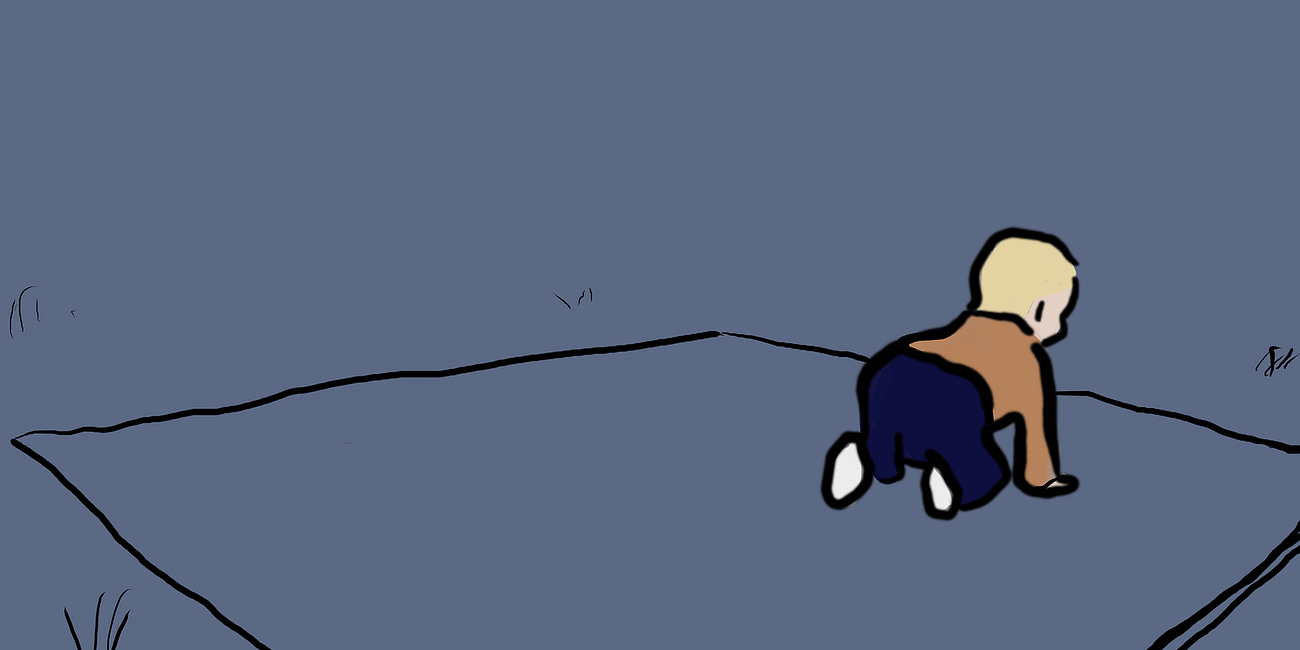
I am boring the baby. He’s sitting on the kitchen table, playing with container lids. Or rather, I’m trying to get him to play. His alert little face is seeking novelty elsewhere.
A Better First Trimester
·
Feb 16
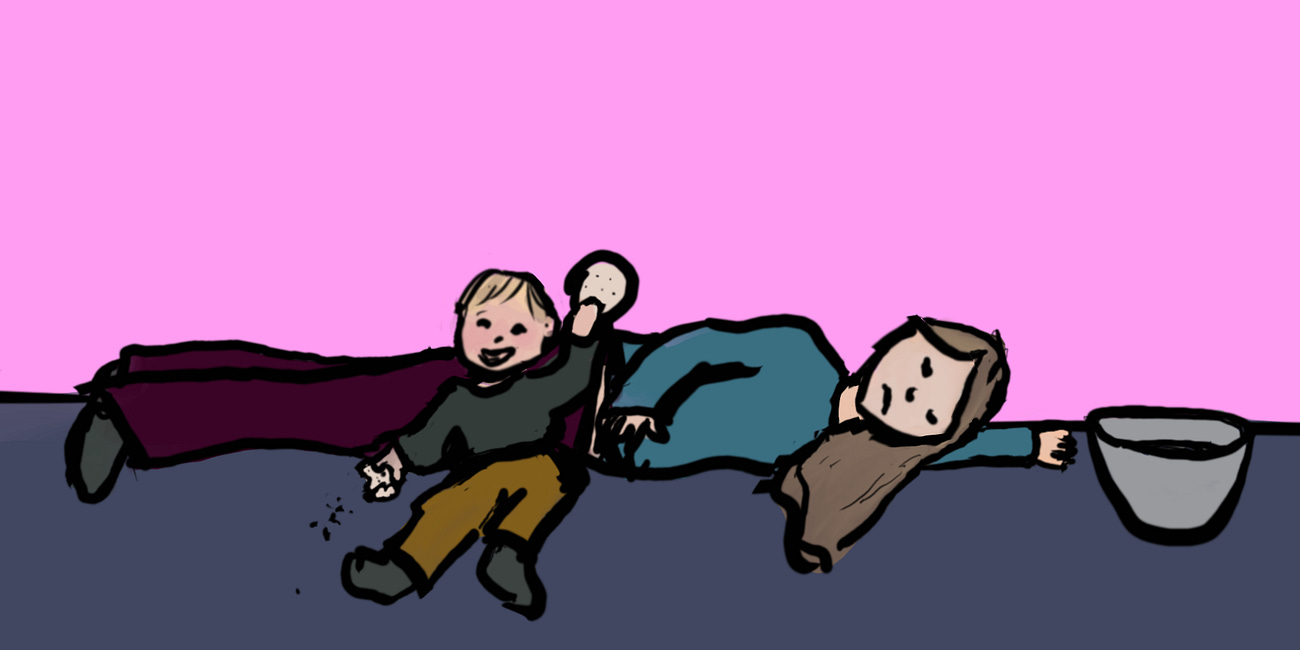
After my harrowing 58-hour labor, one of my first thoughts was, “I could do that better.” I could do the whole thing better, I think: pregnancy, childbirth, all more competent next time around.
Comments
Nothing yet. Say the first thing.
Sign in to join the conversation.