
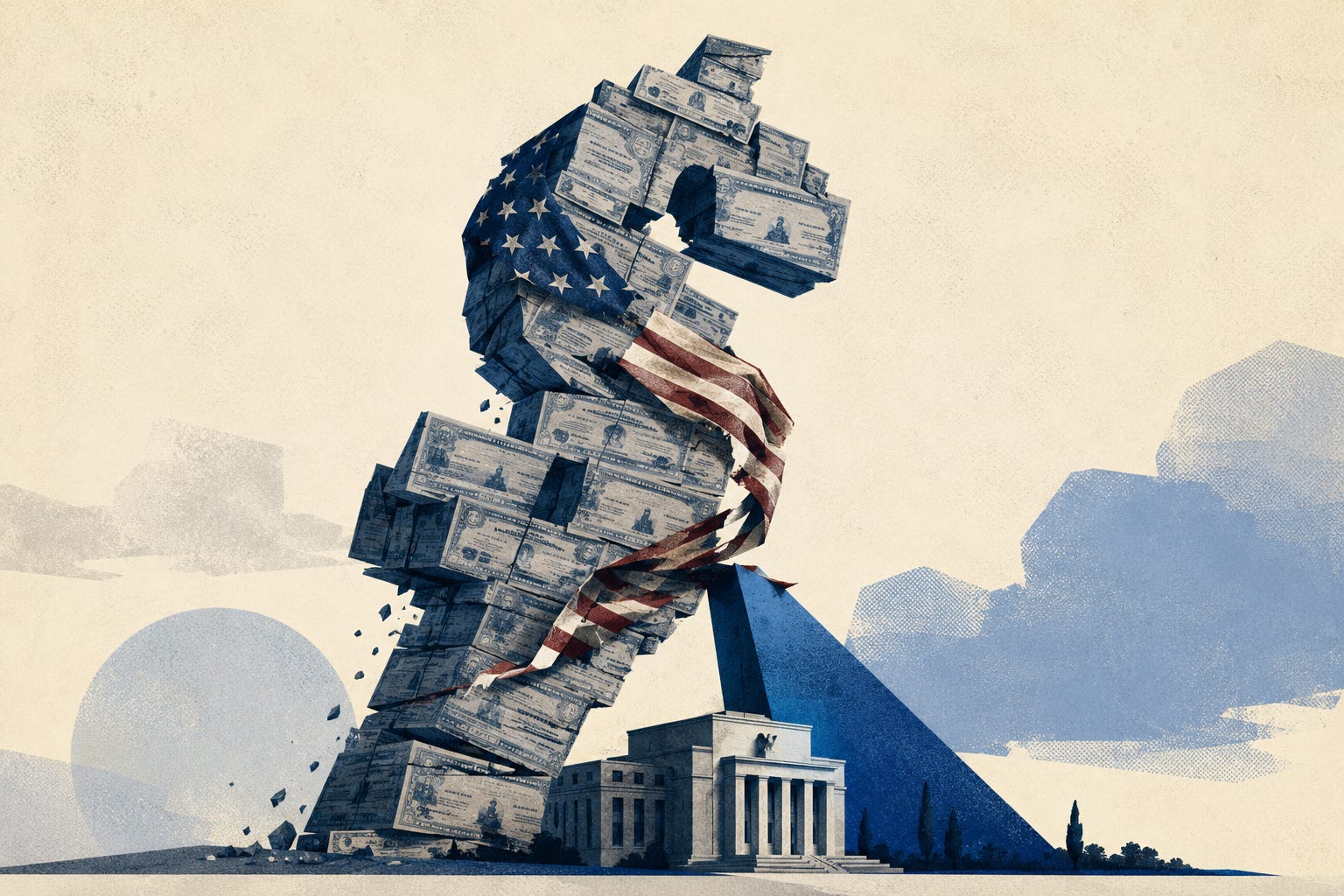
Kevin Warsh, the new chair of the Federal Reserve, was not appointed to administer this bitter medicine to the US economy. But like all central bankers, he will not want to be remembered as the man who monetised the public debt and allowed inflation to rise. In the end, he will do what is necessary, whether Donald Trump likes it or not
IEP@BU does not express opinions of its own. The opinions expressed in this publication are those of the authors. Any errors or omissions are the responsibility of the author
The most significant economic statistic released last week is that the US public debt has exceeded $40tn, its highest level on record.
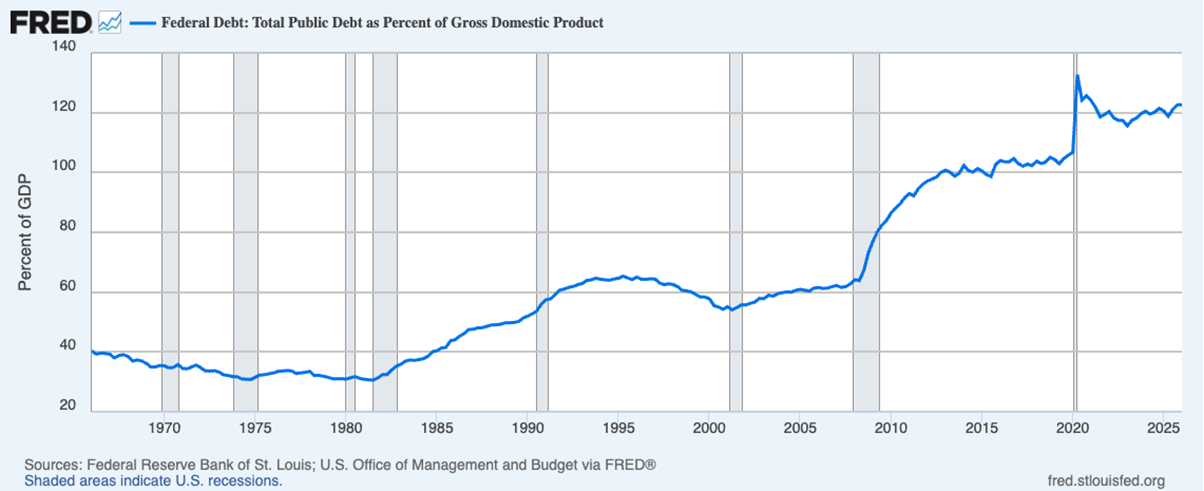
By itself, however, this figure means little unless it is assessed against the country’s capacity to service its debt over time. That depends, in particular, on the trajectory of debt relative to gross domestic product and on the cost of interest payments.
US public debt has already reached 125 per cent of GDP. The year-end figure is expected to be revised upwards by at least a couple of percentage points.
Interest payments now absorb almost 20 per cent of US tax revenues, more than double the share recorded a decade ago.
By international comparison, in Japan, which has the highest public debt among advanced economies, debt servicing accounts for about 15 per cent of tax revenues. In Italy, the figure is below 9 per cent.
The solution to the US problem appears relatively straightforward: increase tax revenues, which are low compared with the average for advanced economies, at about 30 per cent of GDP against 36 per cent across the G7.
In the current political climate, however, few measures appear more difficult to implement, in the US or elsewhere.
This became clear after the Supreme Court ordered the US administration to refund the revenues collected through the illegal tariffs imposed last year. The repayments will be financed through additional borrowing, meaning a higher deficit and more public debt, rather than through new taxes.
With the midterm elections due in early November, the administration has carefully avoided announcing any new taxes, apart from reintroducing import tariffs in a different form. It is apparently hoping that Americans still believe such measures have no direct effect on their purchasing power.
Even after November, it seems unlikely that the administration will attempt to reduce the budget deficit, given that the country will vote again in 2028, this time in a presidential election.
Financial market participants have understood that America’s public debt problem is first and foremost political. The rise in long-term interest rates, driven by a wave of selling in fixed-rate government bonds, reflects concerns that a solution will continue to be postponed and that the issue will not be addressed until serious market tensions emerge.
That view has been reinforced by the unconvincing statements of Treasury Secretary Scott Bessent, who has argued that economic growth will solve the debt problem.
In reality, US public debt has doubled over the past 20 years even though economic growth averaged more than 3 per cent.
Extraordinary interventions in the US Treasury market have further increased uncertainty. The Treasury has purchased long-term securities in the market while issuing new short-term debt.
This highly unusual operation, which would have been regarded as a de facto debt restructuring had it been carried out by an emerging economy, failed to produce the desired results. Long-term rates did not fall as expected.
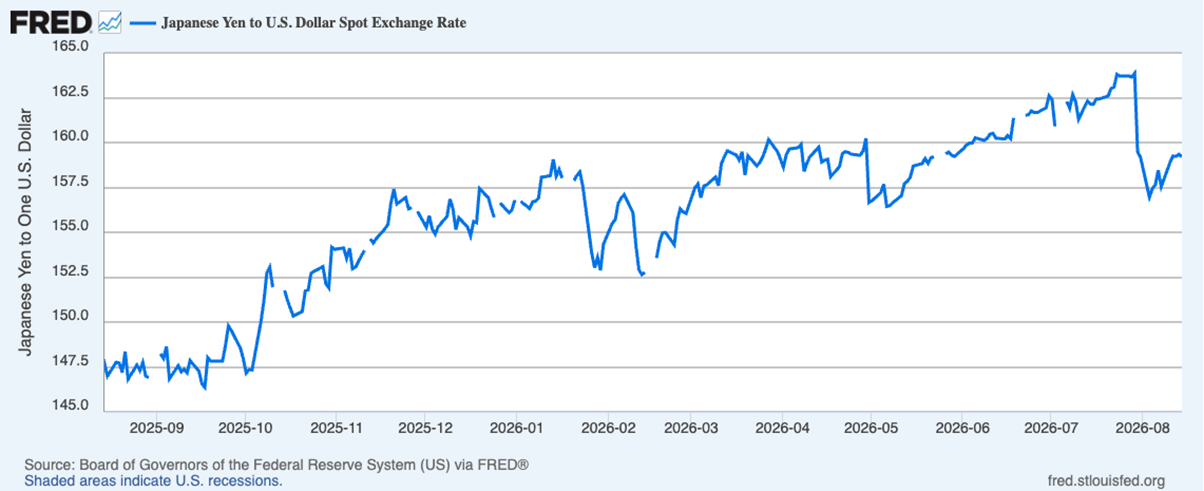
This failure came shortly after another unsuccessful intervention, conducted jointly with Japan’s finance ministry and intended to strengthen the yen. That operation had only a temporary effect.
These financial operations have reinforced the impression that the administration lacks a credible strategy to address the problem and restore confidence. Its only response has been the familiar attacks on the Federal Reserve for failing to lower interest rates.
As a result, investors increasingly believe that the only solution to America’s increasingly unsustainable debt trajectory will be to monetise the debt through inflation.
Inflation remains elevated in the US, driven not only by commodity prices but also by strong domestic demand supported by the budget deficit.
The more this interpretation is shared in the markets, the more US government bond yields will rise. Given the dollar’s central role in the international monetary system, the effects will spill over to other advanced economies.
History suggests that there is only one way out of this vicious circle of expectations: a sharp increase in interest rates.
Kevin Warsh, the new Federal Reserve Chairman, was not given the task of administering such a bitter medicine to the US economy. But like all central bankers, he certainly doesn’t want to be remembered for having monetised the public debt and allowed inflation to rise.
In the end, he will do what is necessary, whether Donald Trump likes it or not.
A previous version of this article was published in the Italian daily Il Foglio

Lorenzo Bini Smaghi holds a degree in Economic Sciences from the Université Catholique de Louvain (Belgium) and a Ph.D in Economic Sciences from the University of Chicago. He has been Chairman of the Board of Directors of Société Générale since 2015. He is an IEP@BU non-resident fellow
Putin’s Red Lines Are Written in Disappearing Ink
·
Aug 20

We should give Ukraine everything it needs. That means offensive weapons to strike the military machine Putin uses to wage this war. It also means air defences to protect Ukrainian civilians from the daily terror of Russian missiles and drones, and to shield the power stations, water plants and hospitals that Putin targets on purpose. Half measures do n…
Europe is Paying for Putin’s War
·
Jul 17

We are approving tens of billions of pounds in military and financial aid so that Ukraine can fight off the Russian army. At the very same time we are sending Russia billions of pounds that it uses to fund that same army. We arm the victim with one hand and pay the aggressor with the other. It is not a policy. It is a farce
Making EU Inc. Fit for Venture Capital
·
Jul 17

The proposed amendments share a single guiding rationale: that innovative startups (as well as scaleups) need, and should be granted, materially greater contractual freedom than the Proposal currently envisages. The reason is grounded in how high-growth firms are financed
Europe Between Empire and Rules
·
May 27

There are two ways to avoid double standards. One is the Trump way: remove the standards. Trump is not hypocritical because he has no standards. The other is to try to live up to one’s standards and narrow the gap between norms and power

Founded by Bocconi University and Institute Javotte Bocconi, the Institute for European Policymaking @ Bocconi University combines the analytic rigor of a research institute, the policy impact of a think tank, and the facts-based effort of raising public opinion’s awareness about Europe through outreach activities. The Institute, fully interdisciplinary, intends to address the multi-fold obstacles that usually stand between the design of appropriate policies and their adoption, with particular attention to consensus building and effective enforcement.
The Institute’s mission is to conduct, debate, and disseminate high-quality research on the major policy issues facing Europe, and the EU in particular, its Member States and its citizens, in a rapidly changing world.
It is independent of any business or political influence.
Marta Cartabia
President
Sylvie Goulard
Vice-President
Paloma Lopez-Garcia
Director
Silvia Colombo
Deputy Director
Carlo Altomonte
Arnstein Aassve
Valentina Bosetti
Elena Carletti
Daniel Gros
Eleanor Spaventa
Nathalie Tocci
Comments
Nothing yet. Say the first thing.
Sign in to join the conversation.