Lecture M (2025-12-02): Final Exam Review
In this lecture, we prepare for the final exam and give a brief review of all topics from the course.

Archived lectures from undergraduate course on stochastic simulation given at Arizona State University by Ted Pavlic
Subscribe:.rss.atom.json.md.m3u.pls
Live Last read · last published · next check
Saves to your Listen queue, to pick up on another day or another device.
In this lecture, we prepare for the final exam and give a brief review of all topics from the course.
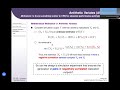
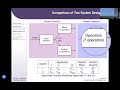
In this lecture, we review four different Variance Reduction Techniques (VRT's). Namely, we discuss common random numbers (CRNs), control variates, antithetic variates (AVs), and importance sampling. Each one of these is a different approach to reducing the variance in the estimation of relative or absolute performance of a simulation model. Variance reduction is an alternative way to increase the…
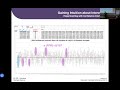
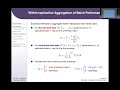
In this lecture, we start by reviewing approaches for absolute and relative performance estimation in stochastic simulation. This begins with a reminder of the use of confidence intervals for estimation of performance for a single simulation model. We then move to different ways to use confidence intervals on mean DIFFERENCES to compare two different simulation models. We then move to the ranking…
In this lecture, we review what we have learned about one-sample confidence intervals (i.e., how to use them as graphical versions of one-sample t-tests) for absolute performance estimation in order to motivate the problem of relative performance estimation. We introduce two-sample confidence intervals (i.e., confidence intervals on DIFFERENCES based on different two-sample t-tests) that are…
In this lecture, we start by further reviewing confidence intervals (where they come from and what they mean) and prediction intervals and then use them to motivate a simpler way to determine how many replications are needed in a simulation study (focusing first on transient simulations of terminating systems). We then shift our attention to steady-state simulations of non-terminating systems and…
In this lecture, we review estimating absolute performance from simulation, with focus on choosing the number of necessary replications of transient simulations of terminating systems. The lecture starts by overviewing point estimation, bias, and different types of point estimators. This includes an overview of quantile estimation and how to use quantile estimation to use simulations as…
In this lecture, we introduce the estimation of absolute performance measures in simulation – effectively shifting our focus from validating input models to validating and making inferences about simulation outputs. Most of this lecture is a review of statistics and reasons for the assumptions for various parametric and non-exact non-parametric methods. We also introduce a few more advanced…
In this lecture, we review statistical fundamentals – such as the origins of the t-test, the meaning of type-I and type-II error (and alternative terminology for both, such as false positive rate and false negative rate) and the connection to statistical power (sensitivity). We review the Receiver Operating Characteristic (ROC) curve and give a qualitative description of where it gets its shape in…
At the start of this lecture, we review statistical topics and fitting techniques from Unit G (particularly Lecture G3, on goodness of fit). In particular, we review hypothesis testing fundamentals (type-I error, type-II error, statistical power, sensitivity, false positive rate, true negative rate, receiver operating characteristic, ROC, alpha, beta) and then go into examples of using Chi-squared…
In this lecture, we (nearly) finish our coverage of Input Modeling, where the focus of this lecture is on parameter estimation and assessing goodness of fit. We review input modeling in general and then briefly review fundamentals of hypothesis testing. We discuss type-I error, p-values, type-II error, effect sizes, and statistical power. We discuss the dangers of using p-values at very large…