Delivering world-class research, learning and teaching that transforms the knowledge, action and leadership needed for more equitable and sustainable development globally. Our vision is of equal and sustainable societies, locally and globally, where everyone can live secure, fulfilling lives free from poverty and injustice. We believe passionately that cutting-edge research, knowledge and evidence are crucial in shaping the changes needed for our broader vision to be realised, and to support…
As climate shocks become more frequent across East and Southern Africa, building resilience is critical to reducing poverty and improving wellbeing. In this episode of the IDS Between the Lines podcast, researchers from the Chronic Poverty Advisory Network discuss new evidence on how households can better cope with climate crises and why integrated support is key to achieving lasting escapes from…
African countries must work more closely together at regional and continental levels if they are to overcome barriers to innovation and drive sustainable development, experts have warned. In this episode of the IDS Between the Lines podcast, IDS Senior MEL Specialist Jo Carpenter interviews Emmeline Skinner, Social Development Adviser, Foreign, Commonwealth and Development Office and Brando Okolo…
Social protection is seen as a solution to many problems of development, including poverty, food insecurity and access to services. But we also know that social protection has its limitations. So how do we justify getting Governments to invest in social protection programmes rather than investing in infrastructure or job creation or other services like health and education? In this episode of the…
IDS was recently honoured to welcome the Hon. Prime Minister of Sri Lanka, Dr Harini Amarasuriya to mark the 60th anniversary of IDS. She shared her journey from her career as an academic and an activist before entering politics and being elected as Prime Minister of Sri Lanka in 2024. In this special episode of the IDS Between the Lines podcast we present the Prime Ministers speech and her…
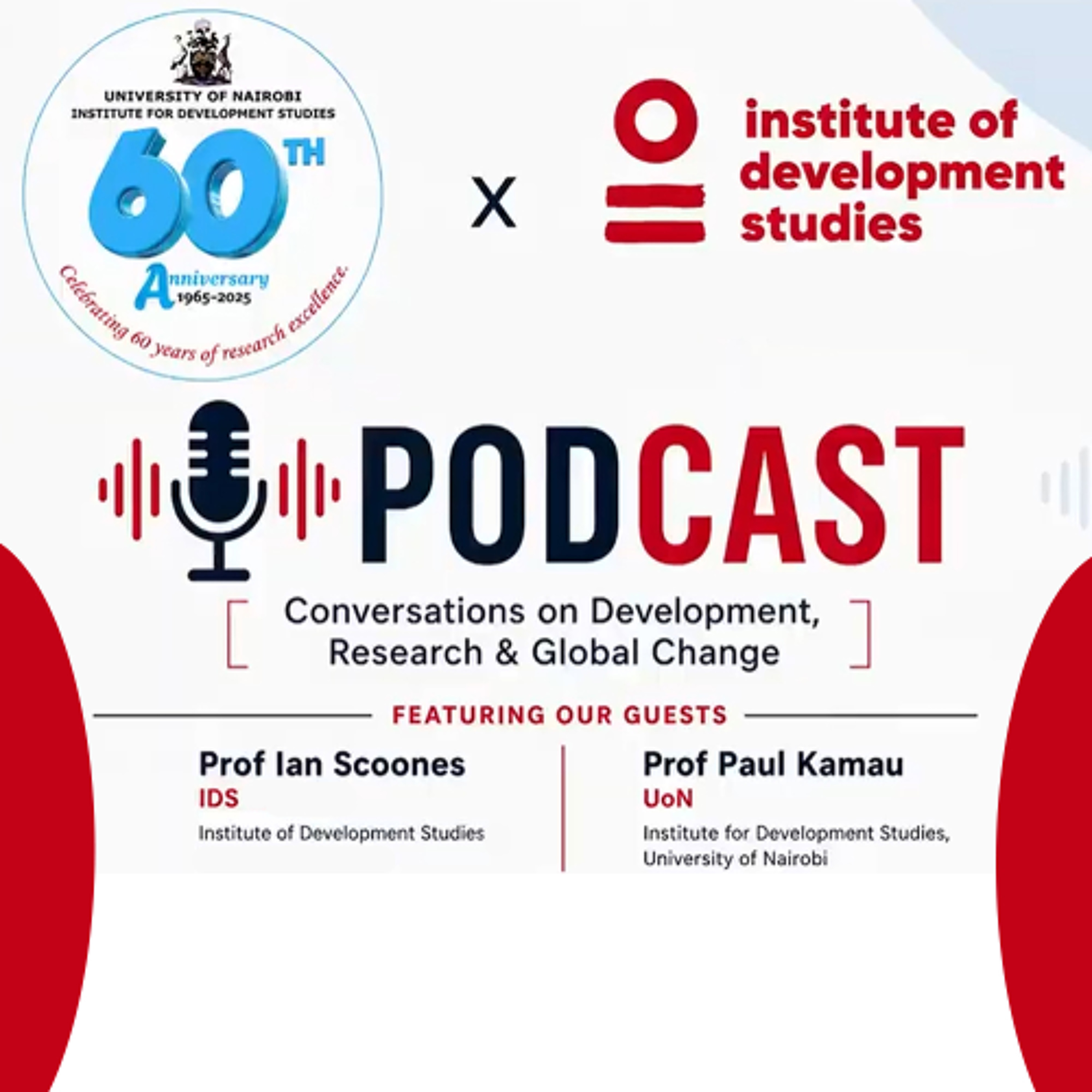
Last month a series of events were held at the University of Nairobi to celebrate 60 years of IDS together with alumni and other partners. The host was our namesake the Institute for Development Studies at the University of Nairobi, which celebrated its 60th anniversary last year. At the event this podcast was recorded: 'What is the future of ‘development studies?' It featured commentaries by…
Disability is very much part of the human experience, with an estimated 16% of the world’s population experiencing significant disability. Despite this, people with disabilities often remain excluded or underrepresented in development programmes and research. In this new episode of the IDS Between the Lines podcast, researchers - whose articles have been published in the recent IDS Bulletin…
Climate change is no longer a distant threat. Heatwaves, wildfires, hurricanes and flooding are reshaping lives and ecosystems across the world. Adaptation efforts to date have largely been incremental and insufficient for the scale of change now underway. In this book talk, Dr Susannah Fisher discussed her new book, Sink or Swim: How the World Needs to Adapt to a Changing Climate, which argues…
This Between the Lines podcast features a conversation between IDS Fellow Rosie McGee and authors John Gaventa and Gabe Schwartzman about their new book, Power and Just Transitions: Struggles for a Post‑Coal Future in an Appalachian Valley. The book examines how power is transformed during energy transitions, using the Clearfork Valley in Appalachia as an in‑depth case study.
Automation and digitisation are set to impact on many areas of work and livelihoods in developing countries and there is an urgent need for robust empirical work to address this issue. Participants at the 2017 Digital Development Summit, convened by IDS, called for research institutions to create cross-cutting partnerships across disciplines, geographies and sectors both to develop research and to…
Most development thought is based upon the assumption that the uplifting of the world’s poor is to be carried out by elite actors (states, corporations, NGO’s) , rather than the poor themselves. This way of thinking, paradoxically, helps justify new ways of oppressing and exploiting the poor. In this talk Professor Benjamin Selwyn from the School of Global Studies at the University of Sussex,…